


 Price:

Set a breakage budget before choosing the feed path
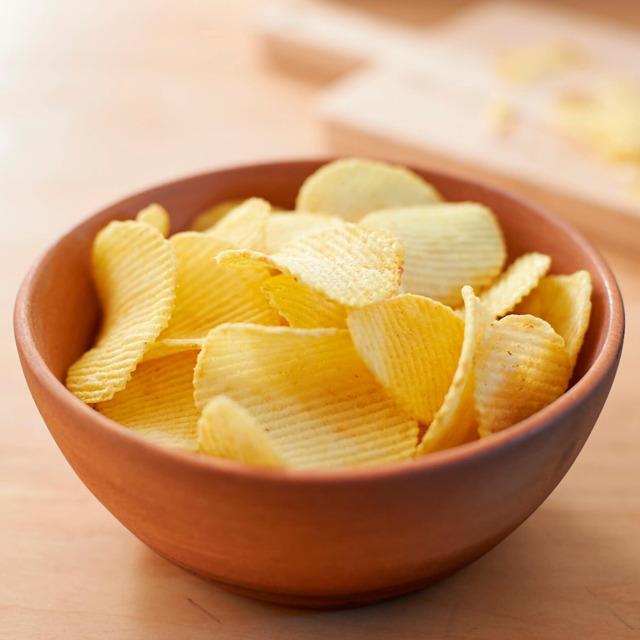
Sieve or hand-sort a representative incoming sample and record whole slices, partial pieces and fines. Repeat the same method after the weigher, product drop and finished-bag collection. A low final weight does not show whether chips were lost, broken or simply dosed differently. Define the acceptable change in each fraction and keep labelled samples from the same raw-material lot.
| Product variable | Machine consequence | Trial observation |
|---|---|---|
| Large curved slices | They can bridge or require more headspace. | Feed continuity and highest product level |
| Thin brittle chips | Drop height can create fragments and fines. | Before-and-after breakage comparison |
| Oily surface | Residue can collect on chutes or weaken a contaminated seal. | Contact-point and seal-face inspection |
| Mixed slice sizes | A weight may pass while the visual fill varies. | Piece distribution in retained pouches |
An electronic scale still needs product-specific settings
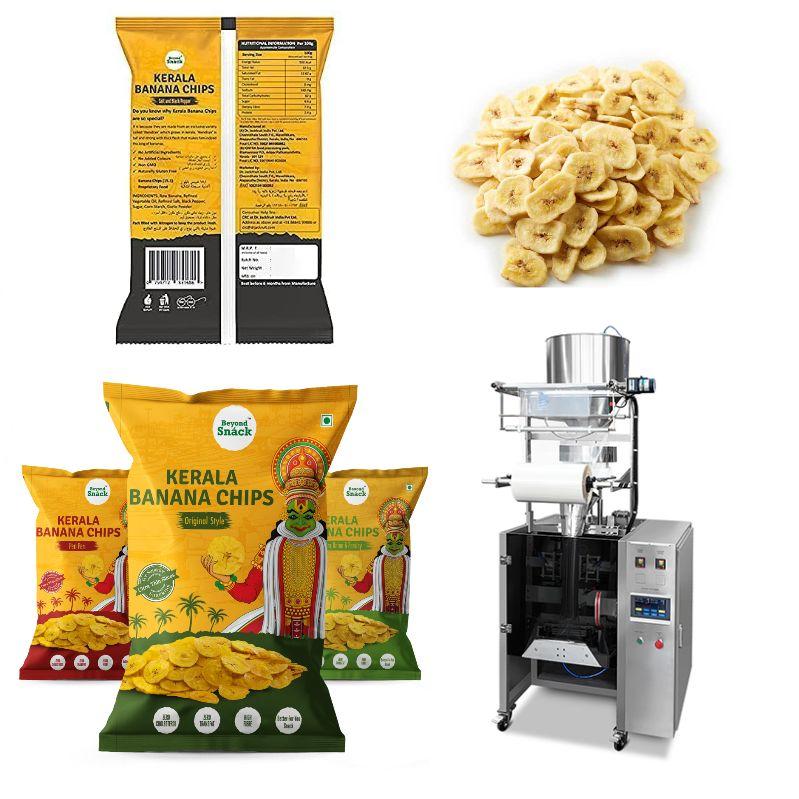
The stored features identify an electronic scale. Weight measurement does not eliminate feed effects: vibration amplitude, feed time, target combinations and product level can change both output and breakage. Run the smallest and largest commercial packs with the production chip. Record individual weights, giveaway, incomplete discharges and the amount of product left on contact surfaces.
Map every vertical drop and transfer impact
Observe where chips fall from the feeder, into the scale, through the forming tube and onto the takeaway. Measure or at least document each impact point and whether the product hits metal, film or an accumulating pile. A slower, controlled discharge can produce more accepted bags than a fast cycle that fills the floor of the pouch with fragments.
Headspace prevents chips entering the seal
Use the intended bag drawing and largest normal slices to set fill height. Watch whether late pieces remain in the tube when the transverse jaws close. Open retained bags and inspect the full seal for chips, crumbs, oil, folds and channel leaks. Delayed leak and compression tests should follow the handling expected after the machine.
The stored bag-format records do not agree
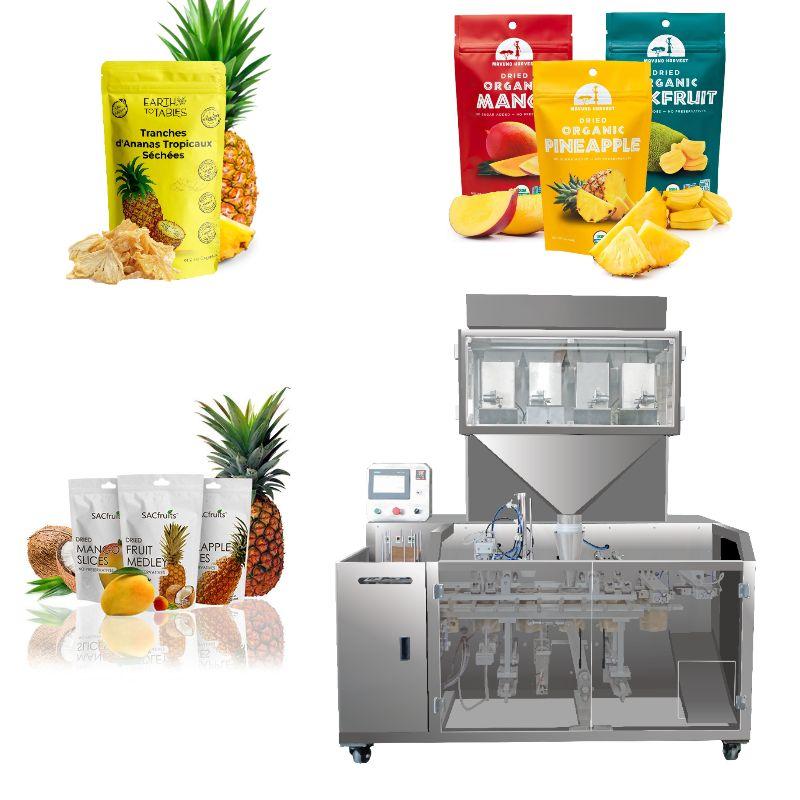
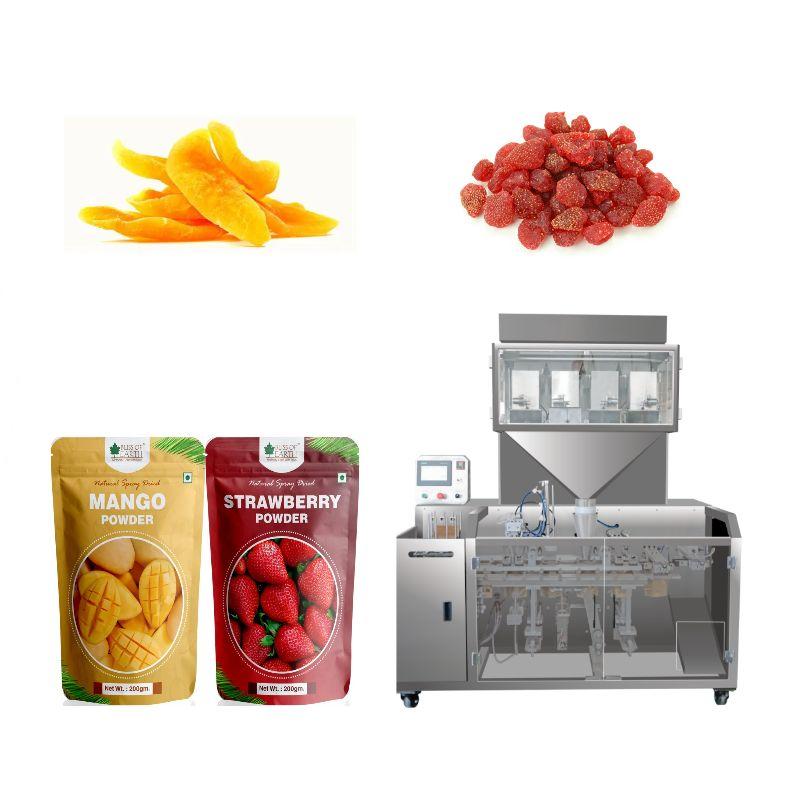
The specification describes roll film with back or three-side sealing, while another field refers to aluminum or plated prefabricated bags and the summary also mentions four-side sealing. The machine image appears consistent with a vertical roll-film platform, but visual inference is not enough to rewrite the CMS specification. The quotation must identify one bag process, laminate, forming set and finished drawing.
Resolve 50 g versus 100 g with a retained run
The form summary lists 50-1000 g and the specification table lists 100-1000 g. Hold the lower target until the chosen banana chips can be weighed and discharged without unacceptable breakage or excessive empty headspace. Report set rate and accepted rate for each pack size; the saved 15-30 bags per minute is a planning range, not an automatic acceptance result.
Keep slice-size and breakage samples before the product enters the machine.
Record individual bags, giveaway and incomplete discharges at multiple hopper levels.
Compare whole slices, fragments and fines after the complete line.
Inspect headspace, trapped chips, seals and handling damage after discharge.
Cleaning and oil control affect the next production run
Banana-chip oil and fines can collect under feeders, around scale buckets, in the tube and near sealing components. Define access, dry-clean or approved wet-clean steps, residue inspection and reassembly checks. The maintenance record should also note loose fasteners, worn contact surfaces and film contamination that could be mistaken for a weighing issue.
Build the handover pack around one accepted chip lot: raw-product breakage sample, scale recipe, drop-path photographs, former and film data, weight distribution, finished-bag samples and post-clean inspection. Repeat this file for a materially different slice thickness or oil level. That distinction prevents an old setting from being treated as universal when the product has changed.

Buyer questions for fragile dried fruit
Does an electronic scale prevent chip breakage?
No. It measures weight, while feed vibration, drop height, impact and bag collection determine physical damage.
Which bag process belongs to this page?
The stored records conflict, so the delivered roll-film or premade-pouch process must be identified in the quotation.
Can the machine be approved at 50 g?
Not until the 50 g and 100 g lower-limit conflict is reconciled with the intended chips and pouch.
How should accepted speed be reported?
Count only bags that pass weight, breakage, headspace, seal and appearance checks.
Why inspect oil residue?
Oil and fines can change product flow, contaminate seals and make later cleaning or maintenance failures harder to diagnose.
Conclusion
Specify the YS-80K with a banana-chip breakage baseline, weighing study, drop-path review, signed bag drawing and seal evidence. The dried fruit packaging machine category is the relevant comparison point, while the lower fill and bag-process conflicts remain outside the commercial guarantee.

 Tel: +8617350750975
 Email: info@vffspackingmachinery.com
 MP/WhatsApp: +8617350750975
 Manufacturer Address:Meixi Road, Tongan District, Xiamen,Fujian,China