


 Price:

Water and juice require different qualification samples
Water is low viscosity and reveals dripping or splash, but juice can add sugar, pulp, foam and cleaning residue. Record viscosity, dissolved solids, pulp size, product temperature and whether the recipe foams when moved. If the commercial product contains particles, the outlet and cutoff must pass the largest normal inclusion. A filtered test liquid cannot establish that condition.
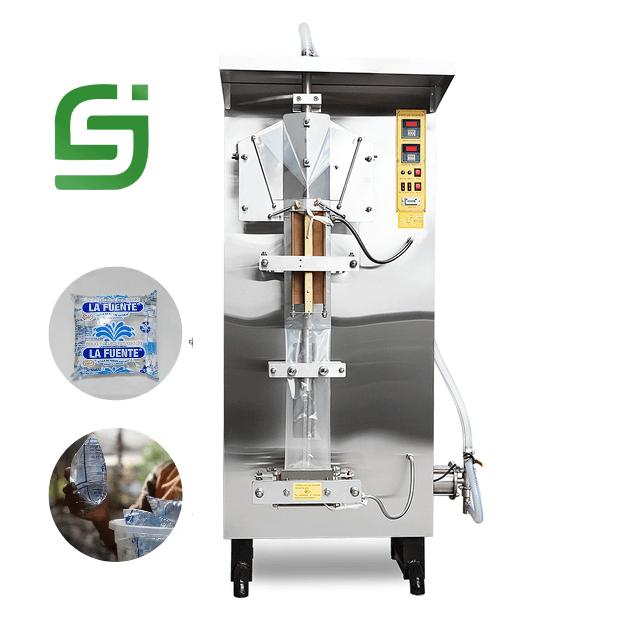
The old sources do not identify a confirmed pump or valve type. That prevents a defensible claim about the feed mechanism, but it does not prevent a useful trial. Ask the supplier to show the delivered liquid path, how the target amount is adjusted and what happens when upstream pressure or tank level changes.
| Liquid condition | Possible failure | Check to retain |
|---|---|---|
| Still water | Fast flow can splash or continue after cutoff. | Nozzle view and first pouch after a stop |
| Sweet juice | Residue can become sticky on guides and seals. | Sustained-run inspection and cleaning record |
| Foaming drink | Air can distort the fill level and wet the seal area. | Settling time and headspace photographs |
| Juice with pulp | Particles can obstruct the outlet or lodge in a seal. | Largest-particle passage and leak samples |
The feed source must stay stable through the production cycle
A liquid filler can change behavior as the supply tank empties, warms or receives a refill. Run at the normal high and low levels and note any change in dose time, splash or air inclusion. If the machine depends on gravity or an external feed source, include the actual elevation and pipe arrangement in the test. The accepted setup should not exist only on a temporary demonstration stand.
Resolve the lower capacity limit before quoting the range
The specification table records 50-500 ml, while the summary field records 100-500 ml. This is a material conflict for buyers planning a small drink pouch. Keep the lower boundary outside the commercial guarantee until the intended liquid, bag and feed system produce an individual fill study. At 500 ml, also check whether the bag has enough headspace for sealing and whether the film can carry the filled weight.
Measure the first released pouches after the feed path is primed.
Collect individual results without pooling several pouches into one measurement.
Repeat while the supply level changes and watch for air entering the path.
Pause with liquid present, restart normally and inspect quantity, splash and seal condition.
Back-seal geometry must keep liquid away from the jaws
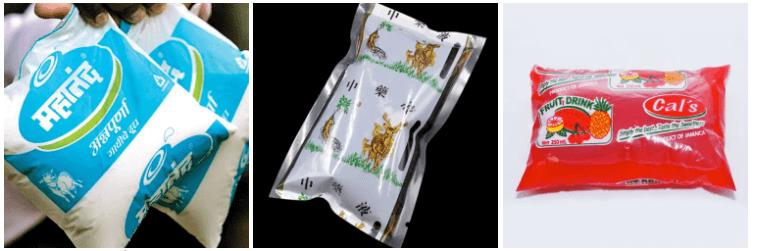
The stored format is a back-sealed pouch made from PE composite film. Approve film thickness, sealant layer, web width and finished drawing together. The vertical seam and both transverse seals must remain flat after filling. A small amount of liquid at the top can create a channel that is difficult to see until the pouch is squeezed or transported.
Set cutoff timing with the fastest-flowing approved liquid, then repeat after the machine has warmed. Inspect the seal face, peel or burst behavior defined by the buyer, and the cut edge. Retain failed pouches that show wrinkling, a wet channel or an incomplete seal so the reject rule is concrete.
Discharge handling is part of the seal test
A freshly sealed liquid pouch is flexible and carries its load directly through the seams. Observe the drop height, landing surface and accumulation at the discharge. A pouch that survives gentle hand placement may fail when it falls onto another filled bag or becomes trapped in a bin. Define the maximum accumulation and the transfer method to the next operation.
If secondary packing is planned, test the interface with actual filled pouches. Count leaks after normal movement and a defined hold period, not only at the machine exit. This distinguishes a sealing problem from damage created by collection or downstream compression.
Use confirmed values for layout and hold the disputed ones
| Planning item | Stored record | Project action |
|---|---|---|
| Bag dimensions | 50-150 mm long; 40-150 mm wide | Approve the exact drawing and film width |
| Capacity | 50-500 ml table; 100-500 ml summary | Do not release the lower limit without a trial |
| Nominal output | 33-37 bags/min | Measure accepted, leak-free pouches at discharge |
| Machine data | 880 x 760 x 1800 mm; about 275 kg; 220 V 50 Hz 1.6 kW | Confirm the delivered nameplate and service clearance |
Cleaning evidence should follow the complete liquid path
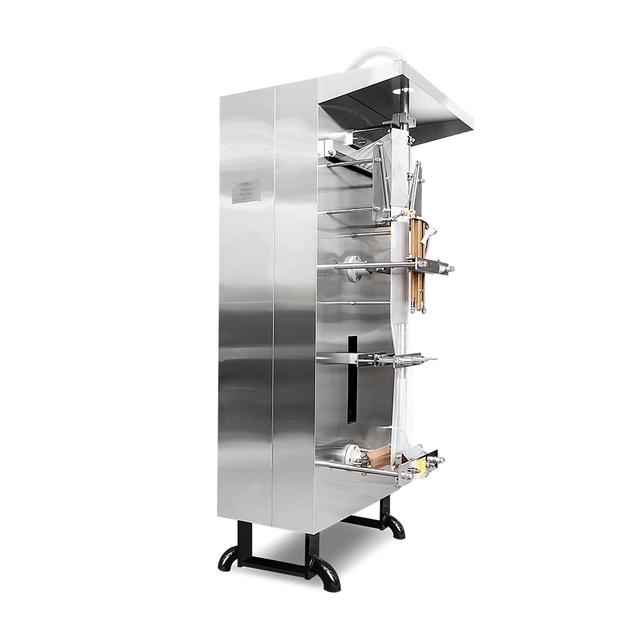
Map every wetted section from the supply connection to the outlet. The cleaning record should state how the path is drained, which parts are removed, where residue can be inspected and how the first product after cleaning is released. Juice sugar can leave a film even when rinse water looks clear. If different flavours or allergens share the machine, define a verification method suitable for that risk.
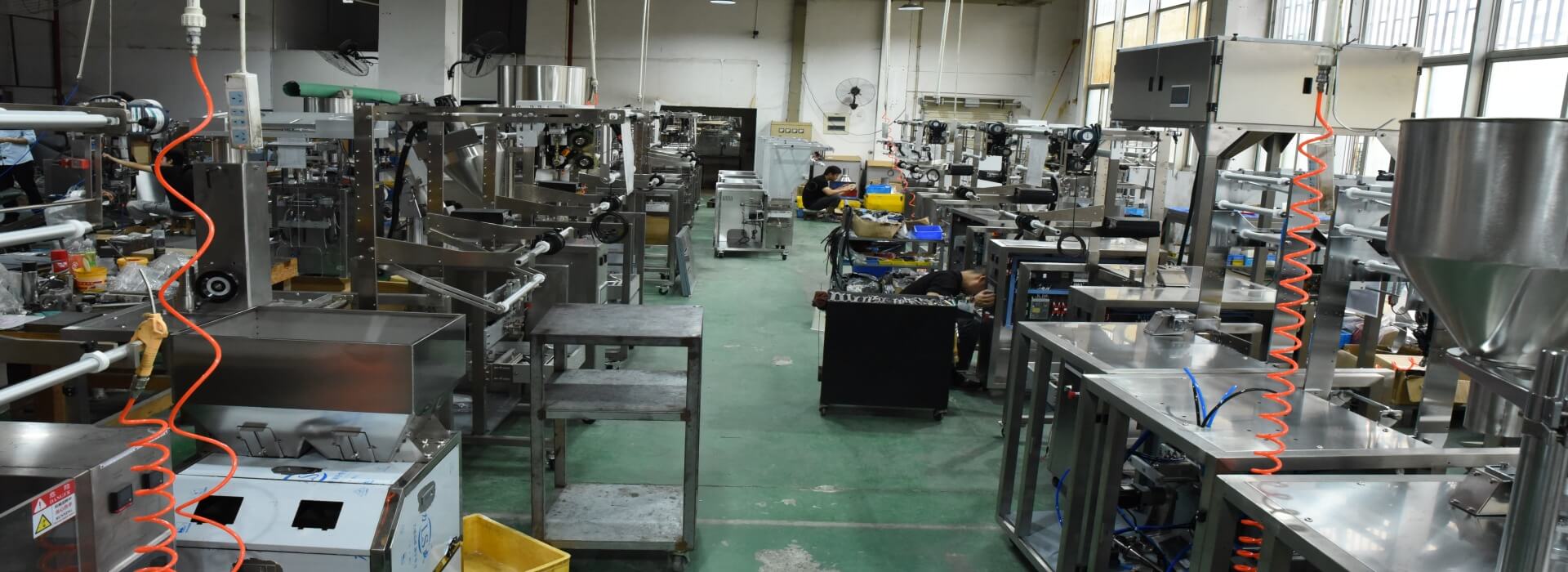
This page has only three verified product-specific site images. They are retained instead of padding the article with unrelated tea-machine pictures from the previous draft. Additional imagery should be added only when it can be tied to this liquid machine or its finished pouch.
Questions for a water or juice pouch trial
Can the smallest pouch be quoted as 50 ml?
Not yet. The stored table says 50 ml while the summary says 100 ml, so a product-specific trial must resolve the lower limit.
Does a water test qualify juice?
No. Juice may foam, contain pulp, leave sticky residue or behave differently at the same feed setting.
Why test the bag after discharge?
Drop height, pile pressure and downstream handling can expose a weak seam that looked acceptable at the jaws.
Which film is supported by the stored page?
The record identifies PE composite film and back sealing; the exact structure and thickness still require sample approval.
What should be checked after a production pause?
Review the first fill amount, trapped air, nozzle drip, wet seal area and the first pouch that meets the release rule.
Conclusion
Specify this project with one liquid recipe, supply condition, pouch drawing, PE-composite film and handling test. The liquid packaging machine page provides the product context, while the conflicting lower capacity limit must remain unresolved until accepted filled-pouch evidence is available.


 Tel: +8617350750975
 Email: info@vffspackingmachinery.com
 MP/WhatsApp: +8617350750975
 Manufacturer Address:Meixi Road, Tongan District, Xiamen,Fujian,China