

Hot Keyword:
Author:YISEN Pouch Packing Machine Manufacturer TIME:2025-02-28
For a buyer, the useful decision is therefore wider than selecting a pouch filler. The project must connect the recipe, headspace, retort-rated laminate, closure design, filling method, sealing controls, cooling method, and inspection plan. The following review explains how to define those interfaces and how to test a proposed Doypack packing machine without relying on broad claims about quality or efficiency.
A Doypack line can prepare pouches for retort processing only when the pouch structure, fill condition, seal geometry, and downstream thermal process have been validated together. The packing machine contributes consistent handling and a clean, repeatable top seal; it does not by itself make an ordinary pouch suitable for sterilization.
Retort packaging normally involves at least two connected operations: making a hermetically closed pack and applying a validated thermal process to that closed pack. A Doypack packing machine may pick a premade pouch, open it, dose the product, manage the pouch top, and create the final heat seal. Retort baskets, thermal equipment, process schedules, cooling, drying, and post-process inspection sit outside that basic machine cycle. Treating these operations as separate but coordinated systems prevents an important purchasing mistake: assuming that a good-looking seal before sterilization proves performance after exposure to heat and pressure.
Start the specification with an interface map. Identify who owns the pouch design, who establishes the thermal schedule, who approves fill weight and headspace, and who releases the finished package. Note where pouches accumulate, how they are loaded into carriers, and whether orientation must be controlled. This map should also identify product-contact boundaries and the point at which a filled pouch changes from an open food container to a sealed unit awaiting retort. These responsibilities matter because a defect created during filling may not become visible until after processing.
Recipe behavior at the filler affects both dose control and seal cleanliness. Record viscosity at the intended filling temperature, suspended particle size, oil separation, foam tendency, stringing, splash, and the time the product can wait before its behavior changes. A smooth sauce and a sauce containing meat or vegetable pieces can require different nozzle geometry even when both use the same nominal pouch volume. Product temperature can also influence pouch stiffness, operator exposure, filling accuracy, and the amount of vapor or condensation near the top seal.
Representative trials should include the least cooperative approved recipe, not only the easiest sample available. Observe product supply to the filler, refill events, the final cutoff at the nozzle, settling inside the pouch, and contamination on the inner top surface. If particulates can lodge below the nozzle or bridge at a passage, document the corrective design rather than asking operators to clear it repeatedly. The trial record should connect every product condition to the filler parts and recipe settings used, allowing the same state to be reproduced during factory acceptance.
A stand-up shape is not evidence of retort suitability. The converter should specify a laminate and sealant system intended for the product and validated processing conditions. Buyers need controlled drawings for pouch width, height, bottom gusset, seal bands, corner geometry, opening, and any feature such as a tear notch or fitment. Material stiffness and surface friction must allow reliable denesting and opening, while the sealant layer must respond within the practical sealing window of the proposed equipment. Printed samples used for testing should represent production construction rather than a convenient substitute.
Pouch variation deserves the same attention as nominal dimensions. Review curl, waviness, blocking, zipper or feature position, and the flatness of the top sealing region across more than one material lot. A pouch that opens easily when empty may behave differently after hot filling or when a bulky product occupies the gusset. Agree on incoming checks and retain identified samples from approved trials. Any later change to laminate, adhesive, sealant, pouch maker, or geometry should trigger a documented assessment instead of being treated as a routine purchasing substitution.
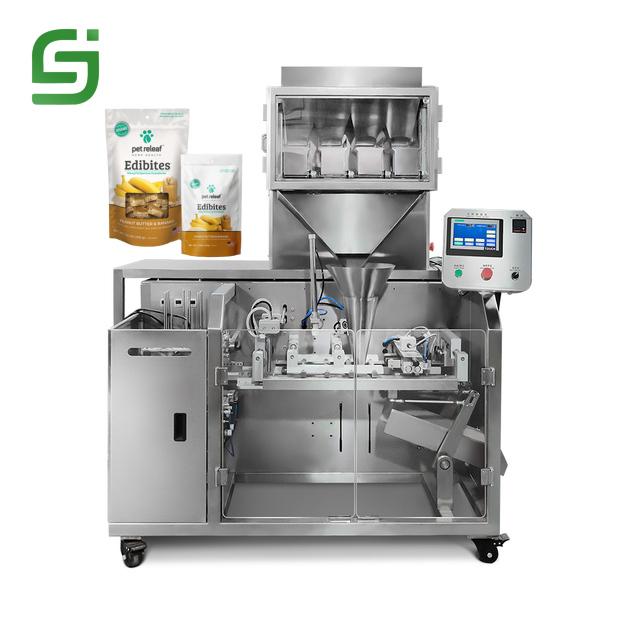
The machine sequence should prevent a pouch from advancing when pickup, opening, or filling has not been confirmed. At the magazine, examine double-pouch separation and the effect of static or warped stock. At the opening station, verify that the mouth is wide enough for the nozzle without scraping product onto the seal band. During dosing, the nozzle position and cutoff should limit droplets and strings. Before sealing, the pouch top should be controlled so wrinkles, trapped particles, and uneven presentation do not become hidden channels.
Heat, pressure, dwell, alignment, and cooling all contribute to a repeatable top seal, but suitable settings must be established with the approved material. The operating recipe should restrict changes to authorized personnel and retain practical setup guidance for each pouch. Inspect seals across startup, stable production, brief stops, and restart because jaw temperature and pouch presentation may differ during those states. A Doypack packing machine should make it possible to detect or segregate obvious process failures; final acceptance still depends on the package tests selected for the actual product and thermal process.
Headspace influences pouch shape, loading density, internal pressure behavior, and heat transfer. It should be specified as a controlled package characteristic rather than left as an incidental result of fill volume. Excess product near the top may narrow the available seal area, while excessive gas may create handling or processing concerns. If air removal, steam flushing, or another headspace-control method is proposed, test its effect with the recipe and pouch construction. The filling line and thermal process owner should agree on how headspace is checked and what variation is acceptable.
Movement after sealing also deserves trial work. Conveyors, drops, basket loading, compression, heating, cooling, unloading, and drying can stress a flexible package in different ways. Track sample pouches through the complete route and retain their position when investigating defects. Visual appearance immediately after the sealer is only one checkpoint. Seal integrity, package shape, print condition, delamination indicators, and handling damage need evaluation after the defined thermal cycle and cooling step. Process validation belongs to qualified specialists using the intended product, package, and equipment conditions.
A useful acceptance run follows consecutive pouches and records conditions instead of presenting a few selected examples. Identify the product batch, temperature range, pouch lot, fill recipe, sealing recipe, installed change parts, operators, and inspection method. Include startup, normal running, a controlled stop, and restart. Count interventions and segregated packs, then examine why they occurred. The objective is not to declare a universal rate; it is to show whether the proposed configuration can repeat the buyer's approved pack under a stated set of conditions.
| Decision point | Evidence from the trial | Question before approval | Owner |
|---|---|---|---|
| Pouch feeding | Pickup and opening log using production pouch lots | Are doubles, misses, and incomplete openings detected or controlled? | Machine supplier and pouch converter |
| Fill condition | Consecutive weights plus observations of splash and particulates | Does the difficult recipe stay inside the agreed filling boundary? | Buyer and filler supplier |
| Top seal | Seal samples from startup, steady run, stop, and restart | Is the band clean, aligned, and testable under the approved method? | Buyer quality team |
| Retort interface | Traceable packs before and after the validated thermal cycle | Does the complete package remain acceptable after processing? | Process authority and buyer |
| Recovery | Alarm history and first-off checks after intervention | Can trained operators return the line to an approved state? | Operations team |
Open issues from the run should be written as actions with an owner and evidence requirement. For example, "improve sealing" is too vague; name the observed defect, affected pouch lot, product state, machine position, proposed change, and retest needed. Keep retained pouches and photographs linked to the event log. This discipline separates a correctable setup issue from a material or process incompatibility and gives both buyer and supplier a fair basis for deciding whether the equipment scope is ready.
Wet, oily, or particulate recipes can collect around the nozzle, pouch grippers, guards, and seal area. Review access with the final filler and options installed, including drip trays and product-supply connections. The sanitation plan should define removable contact parts, cleaning agents approved by the buyer, inspection points, drying, reassembly, and line clearance. Parts that look similar but belong to different pouch sizes should be identified clearly. Avoid cleaning assumptions based on an empty demonstration machine because hoses, pumps, nozzles, and guarding can change access significantly.
A changeover trial should begin with the outgoing product still present and end only after the incoming pack passes first-off checks. Record drainage, product recovery, disassembly, cleaning, inspection, reassembly, recipe selection, pouch loading, and release. The practical benefit of faster changeover is usable production time, but speed should never obscure allergen, recipe, or packaging controls. Maintenance checks on grippers, opening devices, seal-jaw faces, sensors, and temperature-control components can be placed at defined points in this sequence so that wear is found before it creates repeated pouch defects.
Ask suppliers to respond to one shared document containing the product range, filling temperatures, particulate limits, pouch drawings, retort-related boundaries, utilities, hygiene expectations, and acceptance plan. Their response should name the proposed filler, pouch handling stations, seal arrangement, controls, change parts, exclusions, and required upstream or downstream equipment. The relevant Doypack packing machine category can help frame available machine concepts, but the purchase decision must use the exact configuration demonstrated with the buyer's materials.
Commercial comparison becomes clearer when interfaces are visible. List responsibility for the pouch specification, coding equipment, conveyors, retort loading, validation support, manuals, training, recommended spares, and remote or on-site assistance. Require drawings and an open-point register before final approval. This approach does not promise that one machine will fit every retort product; it ensures that each approved combination has a traceable technical basis and that unresolved conditions remain explicit before shipment.
Can any stand-up pouch be used in a retort? No. The pouch construction and sealant system must be selected and validated for the product, package geometry, and defined thermal process. Shape alone does not establish compatibility.
Does the packing machine perform sterilization? A typical premade-pouch line fills and seals the package. Thermal processing is performed by separate equipment under a validated schedule, although the two operations must be coordinated.
Why should trials use product at the intended filling temperature? Temperature can change viscosity, splash, vapor, pouch handling, and sealing conditions. Room-temperature substitutes may hide behavior that appears during production.
Which pouches should be retained after an acceptance run? Keep traceable samples from startup, steady operation, stops, restart, and any observed event. Include samples taken before and after the approved retort cycle.
What is the most important supplier question? Ask which exact product, pouch, operating state, and inspection method support each capability statement. An answer tied to evidence is more useful than an unqualified compatibility claim.
Successful retort Doypack production begins with a validated package system, not with a machine label. The filler and sealer must handle the real recipe, preserve a clean top region, create a controlled seal, and transfer the pouch without damage. The approved laminate, headspace, thermal schedule, cooling, and post-process inspection then determine whether the closed package performs as intended.
Before ordering equipment, give shortlisted suppliers production pouch lots and representative recipes, witness a consecutive-pouch trial, and record conditions for every sample. Close responsibilities for retort validation and connected handling in writing. That evidence-led route allows quality, capacity, and changeover decisions to be made on the finished package rather than on an unsupported headline rate.

YISEN MACHINERY - The ONE-STOP VFFS PACKING MACHINE SOLUTION SUPPLIER
 Tel: +8617350750975
 Email: info@vffspackingmachinery.com
 MP/WhatsApp: +8617350750975
 Manufacturer Address:Meixi Road, Tongan District, Xiamen,Fujian,China