

Hot Keyword:
Author:YISEN Pouch Packing Machine Manufacturer TIME:2024-08-20
For a buyer, the essential question is whether one coordinated system can handle the exact pouch and product reliably. Pickup, opening, filling, zipper preparation, sealing, cooling, coding, and discharge must remain synchronized across normal pouch tolerances.
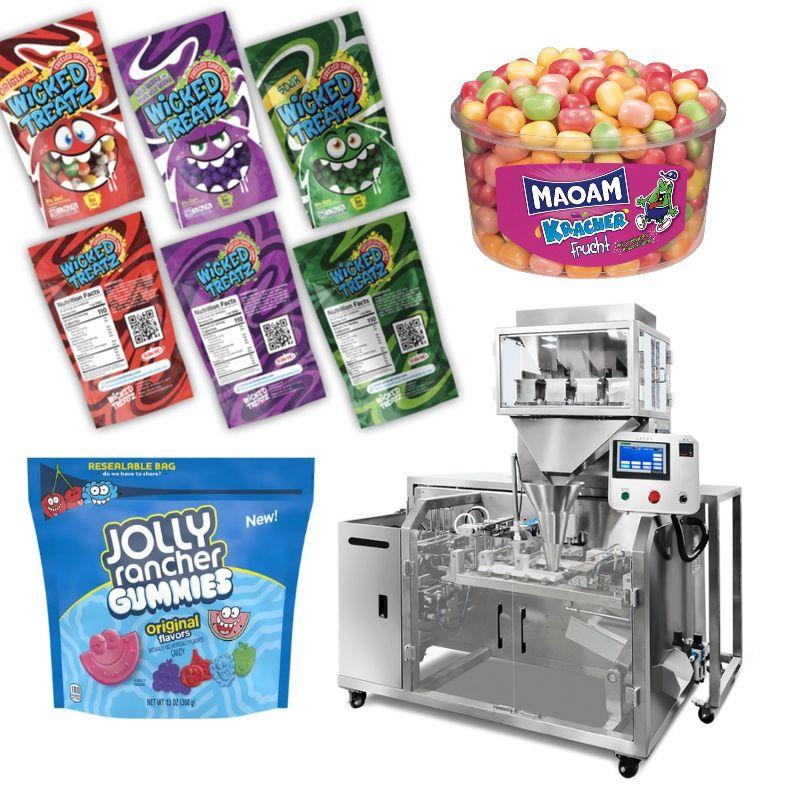
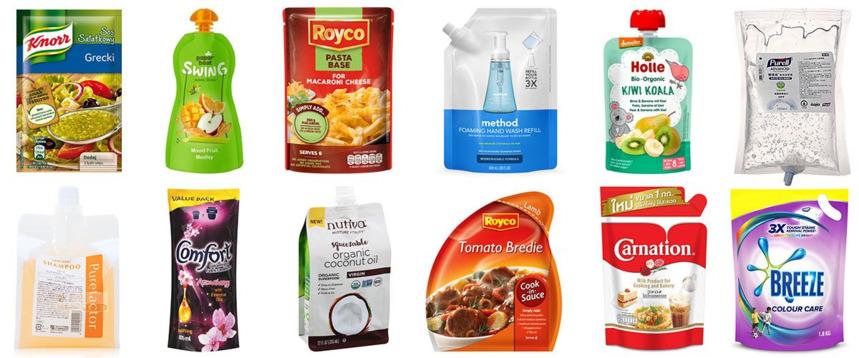
A doypack pouch packing machine is an automated system that takes premade stand-up pouches, opens them, fills them, and closes the top seal. It is selected when the package's finished shape, gusset, zipper, or printed presentation is better supplied as a manufactured pouch than formed from rollstock on the packing line. The name describes the package route; the correct dosing equipment still depends on the product.
The empty pouch normally arrives with its side seals and bottom gusset already made. It may also include a zipper, tear notch, rounded corner, hanging feature, or shaped profile. The packing machine presents that pouch to a series of stations rather than creating it from a continuous web. This distinction affects material purchasing, changeover, waste, and the styles that can be offered.
Premade packaging can support strong shelf presentation and lets a converter manufacture complex pouch features under controlled conditions. In exchange, the line must separate individual pouches, grip them consistently, and tolerate normal variation in thickness, curl, static, and mouth position. A beautiful pouch that cannot be opened reliably is not production-ready.
The term “doypack machine” does not identify the filler. Granules may use a weighing system, powders may use an auger, and sauces may require a pump or piston-style arrangement. The pouch handler and product dosing device must exchange signals and operate at compatible timing.
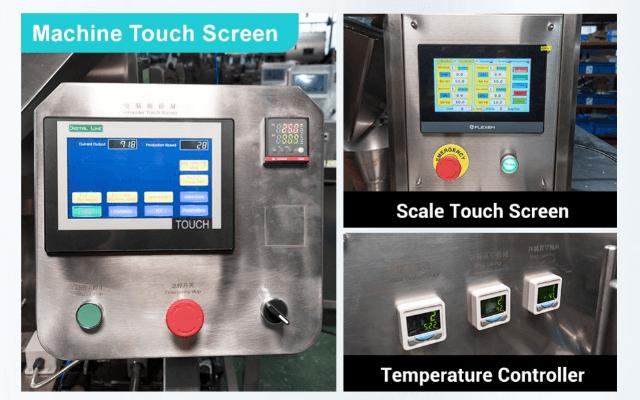
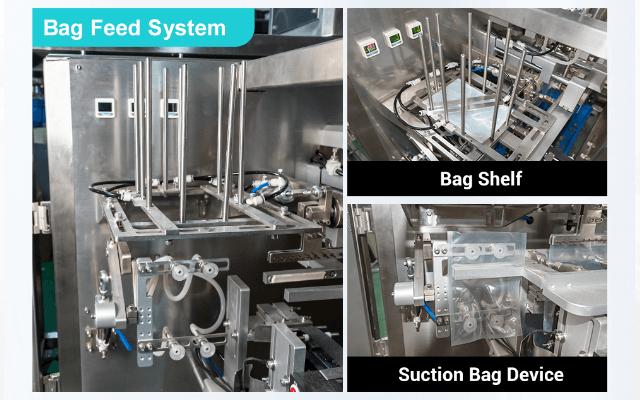
A typical sequence begins at a magazine or pouch feeder. A pickup device removes one pouch and transfers it to grippers. Sensors can confirm presence before the machine continues. The pouch is then presented for opening, often using vacuum devices and mechanical assistance. An opening check helps prevent product from being discharged into a closed or missing pouch.
At the filling station, the dosing unit releases a measured portion while the pouch is held open and supported. Optional actions may include gas flushing, settling, product-level control, or a second fill. If a zipper is present, its upper area must be correctly opened before filling and returned to the intended condition before the final top seal.
The pouch next enters sealing and cooling stations. More than one heat-seal stage may be used to develop a stable closure without demanding all thermal work from one brief contact. Cooling supports the seal before discharge. Coding and inspection can be located where the print surface and machine layout allow consistent results.
Dry, free-flowing pieces can be weighed in combinations and released through a chute, but fragile snacks need attention to drop height and impact. Fine powder requires dust control and a filler designed for its flow characteristics. A viscous sauce needs clean nozzle cutoff so the mouth remains sealable. Products with chunks require a passage large enough to avoid damage and blockage.
The pack size also matters. A narrow mouth may restrict the filling tube or funnel, and a small pouch leaves little margin between the product stream and seal zone. Large or heavy fills may require bottom support while the grippers maintain position. Before selecting hardware, prepare filled-pouch drawings and physical samples at the minimum and maximum targets.
Upstream supply must be included in the layout. A weigher, auger, or liquid hopper may sit above or beside the pouch machine and needs safe access for replenishment and cleaning. Product cannot be evaluated independently from platform height, transfer path, and downstream takeaway.
Give the supplier a controlled drawing for every pouch code. Include overall width and height, bottom gusset, top headspace, zipper position, tear notch, seal bands, opening width, filled thickness, print orientation, and any valve or fitment. State material construction and thickness tolerance. Samples should come from the intended converter and production process.
Grippers need suitable unsealed side areas and a consistent pouch presentation. Vacuum pickup depends on the surface, stiffness, perforations, and flatness. A zipper or gusset changes local thickness. These details can determine whether standard settings are enough or format-specific parts are required.
When several sizes are proposed, build a matrix showing the gripper adjustment, magazine setting, opening devices, filling funnel, recipe, and seal-jaw requirement for each. “Within width range” is not sufficient because a pouch may meet width limits while its mouth or feature position conflicts with the process.
Failed opening can cause empty packs, spills, contamination, and stoppages. Trials should include fresh pouches, material stored under expected plant conditions, and the full range of print designs. Observe double picking, slipping, curled mouths, zipper resistance, and the sensor response when opening is incomplete.
Top-seal performance depends on the inner sealant, combined layer thickness, jaw design, dwell, pressure, temperature, and cooling. Product in the seal band can create channels. The filling profile, dust extraction, nozzle cutoff, pouch settling, and mouth cleaning options should be evaluated together instead of trying to solve every defect by raising temperature.
Seal acceptance must be defined by the package owner. Visual appearance, peel behavior, leak checks, compression, and distribution trials each answer different questions. Use methods appropriate to the product and pack, and retain labeled samples from the approved setup.
The format is attractive for products that benefit from a stand-up base, broad printable faces, zipper reclosure, premium shapes, or multiple barrier structures. Snacks, coffee, dry foods, pet products, powders, and sauces can all be candidates when the filler and pouch are properly matched. The route can also simplify introducing a distinctive package because specialized converting occurs before filling.
However, pouch purchase cost, storage space, converter lead time, and format-change labor belong in the comparison. Rollstock equipment may be a better fit for some standardized bags and very high-volume applications. The decision should consider total accepted-pack cost, not presentation alone.
A doypack packing machine is especially useful when the commercial pack has already been defined around premade features. It should not be selected merely because “flexible packaging” appears in the project brief.
| Project condition | Configuration focus | Question for the trial |
|---|---|---|
| Fragile pieces in a wide pouch | Gentle weighing, controlled drop, pouch support | Do breakage and seal contamination remain acceptable? |
| Fine powder with zipper | Auger control, mouth protection, zipper preparation | Can the zipper and top seal stay free of dust? |
| Viscous sauce with particles | Suitable pump path, nozzle cutoff, large clearances | Does filling avoid drips and particle damage? |
| Many pouch sizes | Documented adjustments, recipes, listed change parts | Can trained staff repeat the complete changeover? |
| Heavy filled pouch | Bottom support, gripper capacity, cooled seal handling | Does the pouch remain controlled through discharge? |
Send production product, pouches, and a written test protocol. The run should cover magazine replenishment, normal continuous operation, a planned stop, restart, and each critical format. Count missed pickups, opening failures, spills, weight rejects, contaminated seals, code errors, operator interventions, and accepted packs.
Test the smallest mouth, the pouch with the most demanding zipper or gusset, and the heaviest filled format. If product properties vary, include the condition most likely to challenge the filler. Agree on how settings may be adjusted and which final recipe will be recorded.
Before approval, confirm machine guarding, alarm behavior, manuals, format parts, recommended spares, utilities, cleaning access, and training. Identify interfaces to the dosing system, printer, check equipment, conveyor, and factory controls. This turns a machine demonstration into evidence that the complete line can be installed and operated.
One final review should compare the approved pouches with incoming production lots. Measure critical dimensions, check zipper and gusset position, and keep samples showing acceptable flatness and opening. This incoming control is especially useful after artwork, converter, or material changes because the packing line is often the first place a small converting shift becomes visible.
Does a doypack machine make the pouch from film?
Normally no. It receives premade pouches with the gusset and side seals already converted, then performs opening, filling, top sealing, and discharge.
Can the same line fill powder and liquid?
The pouch handler may support more than one product category, but each requires an appropriate filler, product path, cleaning method, and validated recipe. A change can involve more than selecting a screen setting.
Are zipper pouches always compatible?
No. Zipper position, opening force, mouth width, layer buildup, and final seal area must match the machine's stations. Physical samples are necessary.
Why does the machine reject a pouch before filling?
A presence or opening check may detect a missing, double-picked, misplaced, or incompletely opened pouch. Correct rejection prevents product from being discharged into an unsuitable pack.
What is the most useful acceptance sample?
Use production pouches from the intended converter and product representing normal variation. Include the hardest format rather than testing only the easiest mid-size pack.
A doypack system automates the journey of a premade stand-up pouch, but its success depends on far more than the basic sequence. Pouch tolerances, opening behavior, dosing, mouth cleanliness, seal development, and downstream support must be validated as one process. Buyers who define those interfaces and test their difficult combinations can judge whether premade packaging delivers both the shelf format and the production stability they need.

YISEN MACHINERY - The ONE-STOP VFFS PACKING MACHINE SOLUTION SUPPLIER
 Tel: +8617350750975
 Email: info@vffspackingmachinery.com
 MP/WhatsApp: +8617350750975
 Manufacturer Address:Meixi Road, Tongan District, Xiamen,Fujian,China