

Hot Keyword:
Author:YISEN Pouch Packing Machine Manufacturer TIME:2024-08-20
Buyers should request a tested operating window for every planned SKU rather than accept a single minimum-to-maximum number. The smallest dose challenges metering resolution and cutoff; the largest fill requires time, headspace, pouch support, and a seal that can carry the load.
Oil pouch packing machines do not have one universal capacity range. Capacity must be defined in two ways: the fill volume or mass that the dosing system can control, and the number of acceptable pouches the complete line can produce under stated conditions. Both limits change with pouch dimensions, oil properties, filling principle, sealing time, and downstream handling.
Fill capacity describes the amount delivered to one pouch. It is governed by the displacement or measurement range of the filler, the nozzle, product supply, and the control resolution. Production capacity describes accepted packs over time. It includes pouch transport, dosing time, seal dwell, cooling, coding, inspection, and ordinary interruptions.
A quotation might state a mechanical rate that is achievable with a small, easy-running pack, while the buyer intends a larger pouch with a longer fill and seal cycle. Conversely, a filler sized for a large dose may not control a very small portion well. Ask the supplier to connect each output claim to a particular oil, target amount, pouch, and acceptance criterion.
Use one unit consistently when comparing fill results. Volume is convenient for package development, but trade and quality controls may be based on mass. Oil density changes with formulation and temperature, so document the conversion basis and verify it under the intended process condition.
Edible oils generally flow readily, but viscosity still changes with temperature and product type. Suspended seasoning, fine solids, or infused ingredients can alter the filling path and cutoff. Nonfood oils may require different seals, hoses, contact materials, and cleaning arrangements. The machine builder needs a representative sample and a process description, not just the word “oil.”
State the normal temperature range at the filler, density, viscosity or agreed flow test, particle presence, foaming tendency, sensitivity to air or light, and permitted product-contact materials. Identify whether the system changes between products and how residual material is recovered or disposed of during cleaning.
Stable supply pressure is important. A filler fed from an inconsistent upstream tank may show variation that is incorrectly blamed on its control system. Define tank level control, transfer pump, pipe route, filtration, and any recirculation as part of the filling boundary.
Different projects may use a piston-type volumetric filler, timed or flow-controlled pump, or another liquid dosing arrangement. Each has a useful operating envelope. A piston provides controlled displacement but requires suitable sizing and seals. A pump-based system can support flexible recipes, yet its repeatability depends on the product, supply condition, calibration, and feedback method.
Nozzle behavior is just as important as measurement. Oil left as a tail or droplet can mark the pouch, contaminate the seal band, and create housekeeping problems. Evaluate shutoff response, suck-back where appropriate, nozzle height, and the fill profile at both short and long doses.
Cleaning and changeover may determine which concept is practical. Review drainability, dead spaces, hose connections, disassembly, seal access, and how operators confirm that the previous product has been removed. Do not trade an overly broad capacity claim for a product path that is difficult to inspect.
At the lower end, a short dosing event can magnify valve delay, dripping, resolution limits, and variation in the product supply. The pouch has less room for the nozzle, and a small absolute error may represent a large percentage of the target. Testing should use individual pack measurements rather than an average alone.
At the upper end, filling time may become the cycle constraint. The pouch needs sufficient usable volume and headspace, and it may require bottom support as weight increases. Product motion after filling must settle before the top seal closes. A larger seal band or longer cooling period may be needed to protect the loaded package.
If the required range is unusually wide, separate dosing hardware or format-specific nozzles may be more reliable than forcing one setup across every SKU. Ask which parts change, how long the work takes, and how the correct configuration is verified.
Nominal pouch volume is not the same as an approved fill. The package needs headspace for opening, dosing, and sealing; its gusset must deploy; and the finished pack must remain within the intended dimensions. Material strength and seal construction must withstand handling, stacking, and transport at the chosen fill.
Provide width, height, gusset, opening, top seal band, film construction, and filled thickness for every pouch. Oil in the seal area can create channels, so the nozzle and pouch presentation must protect the mouth. Transparent test pouches can help observe filling, but final seal approval belongs on production material.
For rollstock sachets, film width and repeat constrain dimensions. For premade pouches, gripper capacity, opening reliability, and support set other boundaries. The selected liquid packaging machine should have its capacity stated by actual format, not by filler displacement alone.
Increasing pump flow does not necessarily increase accepted output. Faster filling can cause splashing, foam, pouch movement, or a longer settling requirement. Sealing may remain the slowest operation, especially for thick gussets or structures with a narrow process window. Cooling and discharge must protect the fresh seal.
Upstream product supply and downstream conveyors should run without starving or blocking the pouch machine. Add the proposed coder, check system, leak inspection, and collection method to the trial whenever they influence timing or pack handling. A line is only as stable as its limiting interface.
Measure good packs during a representative period. Record starts, planned stops, product replenishment, film or pouch loading, rejects, and operator intervention. This evidence lets production planners estimate usable capacity instead of extrapolating from an empty cycle.
| SKU characteristic | Likely limiting factor | Capacity evidence |
|---|---|---|
| Small dose in a narrow sachet | Metering resolution, nozzle access, seal cleanliness | Individual fill results and contaminated-seal count |
| Medium dose in a standard pouch | Combined fill and seal cycle | Accepted packs from a sustained normal run |
| Large dose in a gusseted pouch | Fill time, headspace, support, seal cooling | Filled dimensions, drop handling, and leak results |
| Cold or more viscous oil | Flow through pump, pipe, and cutoff valve | Trial at the lowest declared process temperature |
| Several oils on one product path | Drainage, cleaning, recipe control, cross-contact risk | Documented changeover and first-off approval |
Agree on test conditions in writing. Identify the oil batch and temperature, pouch code, target amount, permitted tolerance, sampling frequency, reference instrument, seal test, run duration, and treatment of planned pauses. Include enough material for stabilization and restart rather than measuring a short selected sequence.
Run the minimum target, maximum target, and any SKU with unusual viscosity or package geometry. Log settings, individual fills, pouch waste, drips, seal defects, and stoppage reasons. Retain labeled packs from the final configuration and list all format parts included with the machine.
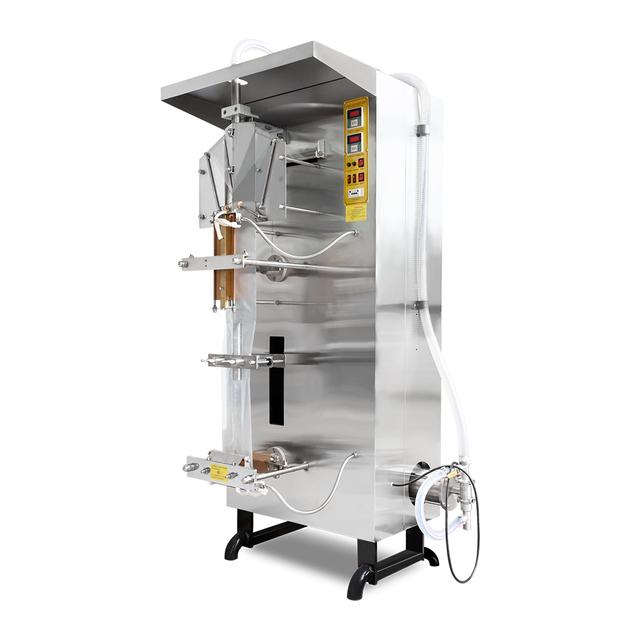
After the test, translate results into an approved matrix: product, temperature range, pouch, dose, recipe, hardware, demonstrated output, and inspection frequency. That matrix is the defensible answer to the project's capacity question.
Capacity planning should also include the transition between oil SKUs. Product left in transfer lines, filters, pumps, and nozzles affects yield and changeover duration. If the next oil cannot receive that carryover, the cleaning and flushing sequence may consume more scheduled time than package conversion. Measure this loss during commissioning and include it in weekly capacity rather than assuming every available hour is a filling hour.
Environmental conditions deserve review when pouches and oils are stored in spaces with large temperature changes. Cold oil can lengthen the dose; warm laminate may handle differently in the magazine or sealing station. The approved matrix should state reasonable room and product boundaries, plus the action required when a condition falls outside them.
Can one filler cover every oil pouch size?
Not necessarily. Very wide dose ranges can exceed practical resolution, valve timing, nozzle, or support limits. Trials determine whether change parts or separate dosing hardware are needed.
Why can the largest pouch reduce line output?
It may require a longer dosing event, more settling time, additional support, and slower sealing or cooling. These constraints occur even when the machine can physically hold the pouch.
Should capacity be stated in milliliters or grams?
Use the unit required by the product specification and market, and document density when converting between them. Verify results at the intended filling temperature.
Does thin oil guarantee faster filling?
No. Pouch opening, clean cutoff, seal time, inspection, and downstream handling may govern the cycle. Excess flow can also create splashing.
What range should appear in the purchase contract?
List the approved SKUs and the demonstrated condition for each, including product, temperature, package, tolerance, and accepted-output method.
An oil pouch line's capacity is a set of verified operating points, not a universal brochure interval. Define dose and output separately, connect both to oil condition and pouch design, and test the difficult extremes. An SKU matrix built from witnessed results gives purchasing, quality, and production a realistic basis for planning.

YISEN MACHINERY - The ONE-STOP VFFS PACKING MACHINE SOLUTION SUPPLIER
 Tel: +8617350750975
 Email: info@vffspackingmachinery.com
 MP/WhatsApp: +8617350750975
 Manufacturer Address:Meixi Road, Tongan District, Xiamen,Fujian,China