

Hot Keyword:
Author:YISEN Pouch Packing Machine Manufacturer TIME:2024-09-23
Free-flowing fine salt may behave very differently after it absorbs moisture, while coarse crystals or blended seasonings add size and segregation concerns. Feeder selection should therefore begin with product characterization and consecutive dosing trials, not a general rule that all granular materials use the same device.
No feeder is universally best for salt. A volumetric cup, auger, or weighing system can each be appropriate when its measuring principle matches the crystal size, flow stability, target dose, accuracy method, moisture exposure, changeover needs, and package rate. The correct choice is the one that remains controllable with the buyer's actual salt.
Record particle-size distribution, bulk density, angle of flow, fines, crystal hardness, moisture sensitivity, additives, and any blended ingredients. Table salt, coarse sea salt, and flavored salt can demand different handling even at the same pack weight. Collect samples from realistic storage and production conditions. A freshly opened dry bag may flow freely during a supplier demonstration but fail to represent product exposed to humid air or transported through the plant.
Define the dose range and how it will be verified. Small sachets can expose feeder resolution and cutoff behavior; larger bags test refill, hopper capacity, and sustained flow. If legal or commercial weight requirements apply, the buyer should establish the sampling and scale method. Feeder performance needs to be assessed after accounting for package tare and normal product variation, rather than from a few selected results.
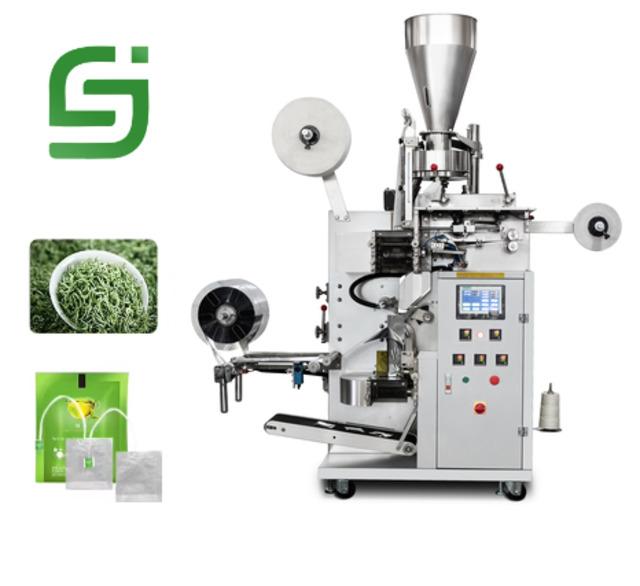
A cup filler measures a defined volume and discharges it into the package. It can be a straightforward option for a consistently free-flowing product whose bulk density remains controlled. Adjustment may change the effective cup volume within the equipment's designed range. Because the principle meters volume, changes in density can change delivered weight even when the cup setting is unchanged. This relationship should be measured using production salt conditions.
During trials, watch how cups fill, level, and empty. Fine crystals should not leak excessively through clearances, while coarse pieces should not jam gates or prevent complete discharge. Check the response after refill and a pause. A cup system can be attractive for its mechanical simplicity, but that advantage becomes less useful if operators frequently correct weights because moisture or density changes. Cleaning and change-part work also belongs in the comparison.
An auger meters product by controlled screw rotation through a funnel or outlet. It is often associated with powders, yet it may be evaluated for fine salt when the goal is to control material that does not behave ideally in open gravity flow. Screw pitch, diameter, speed, agitation, clearances, and product head influence output. Crystal damage, wear, leakage, and buildup should be observed rather than assuming that an auger automatically gives better accuracy.
Use the proposed screw at the smallest and largest doses. Note whether salt compacts, bridges above the screw, or continues to trickle after cutoff. Agitation that keeps product moving may also alter density or separate a blend. The supplier should identify parts and recipes for each salt family. If several screws are required, include storage, identification, and cleaning in the ownership cost.
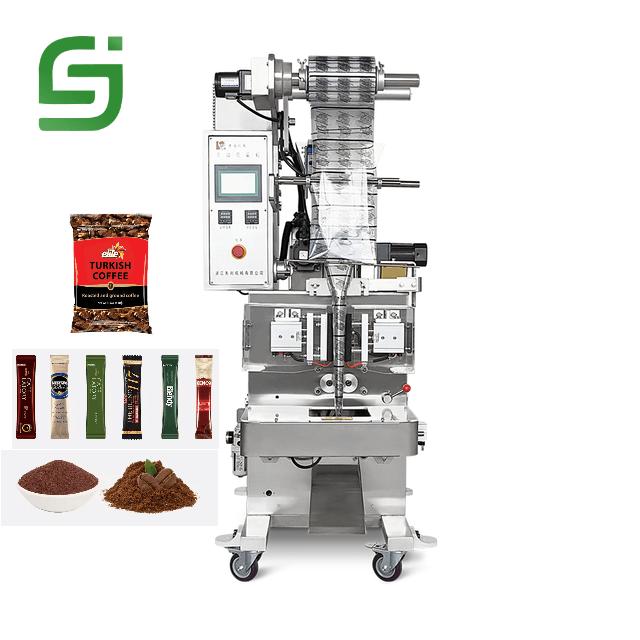
Weight-based systems measure product mass during the dosing process. Linear weighers or other arrangements may suit free-flowing granules when the intended dose range, target control, available height, and cycle allow. They reduce direct dependence on bulk density compared with a fixed-volume cup, but stable feeding, gate cutoff, vibration, and scale environment still matter. Air movement, vibration from adjacent machinery, and salt buildup can influence a sensitive weighing process.
Test repeated doses through low and high supply states and annotate every event. Coarse crystals may continue moving after a gate command; fine salt may leak or form a tail. A weighing system also occupies space above the packer and needs safe cleaning access. Selection should compare accepted package results and operating work, not assume that the most instrumented option is always the best value.
Every feeder depends on a stable supply. Product head can influence cup filling, auger loading, and the feed stage of a weighing system. Define hopper working levels and test near the normal refill point. A level sensor should trigger a clear action before the feeder is starved. Bulk supply equipment must avoid segregation, excessive fines, or uncontrolled aeration. Refill should not send a sudden column of product that disturbs the dose sequence.
Moisture control begins with storage and product transfer. Covers, sealed routes, dehumidified areas, or shorter exposure may be relevant depending on the plant, but these measures require site-specific review. Do not expect stronger agitation to solve salt that has formed hard lumps. Observe product after a planned wait and define how out-of-condition material is identified and handled.
The feeder outlet, chute, forming tube, and bag opening must create a continuous path. Fine salt can escape through gaps and reach sealing surfaces; coarse crystals can bounce or become trapped in cross seals. Match discharge timing to the package cycle and allow the complete dose to clear. Bag dimensions should provide adequate top space, and film movement should remain stable under the falling product.
Develop sealing settings with approved packaging material and inspect for crystals, wrinkles, and abrasion. Salt on code areas or conveyors can create housekeeping and tracking problems. The granular packing machine category can support initial system selection, but the filler and packer need to be tested as one line. A feeder result collected into a rigid container does not prove the same outcome in a moving flexible bag.
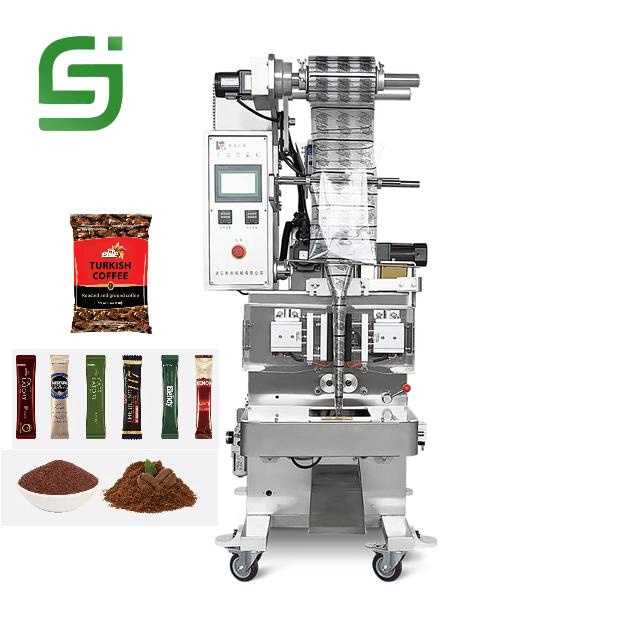
Salt can be demanding on exposed surfaces, particularly when moisture is present. The buyer should provide product data and site cleaning methods, while the supplier identifies contact materials, finishes, fasteners, seals, and protected components in the proposed scope. A general stainless-steel description is not enough to assess every location. Review crevices, ledges, electrical enclosures, and areas where spilled salt may accumulate.
Cleaning access should cover hopper, feeder, gates or screw, chutes, forming set, seal area, guards, and collection points. Define dry or wet methods according to the product and plant, including drying before restart where needed. Dust extraction may be considered for fine material, but its effect on product composition and airflow needs evaluation. Maintenance checks should focus on wear points, clearances, scale condition, and sealing surfaces.
Give candidate suppliers the same product lots, dose range, package material, and operating events. Use sequential data and record each machine's installed parts and settings. The table highlights where feeder principles differ and what must still be proved.
| Feeder principle | Useful application question | Trial risk to observe | Ownership factor |
|---|---|---|---|
| Volumetric cup | Is product density stable enough for volume to represent weight? | Incomplete filling, leakage, density shift, or poor emptying | Adjustment range, cups, and simple cleaning access |
| Auger | Does screw control improve the selected fine-salt doses? | Trickle, compaction, wear, bridging, or crystal damage | Screw sets, seals, agitation, and disassembly |
| Weight based | Does direct measurement suit the range and line cycle? | Gate tail, vibration, buildup, or slow stabilization | Height, scale care, calibration process, and access |
| Product supply | Can normal refill keep every feeder consistently loaded? | Starvation, surge, moisture exposure, or segregation | Hopper, level controls, and upstream transfer |
| Package interface | Does the complete dose enter and seal cleanly? | Spillage, trapped crystals, dusty codes, or film disturbance | Chute, timing, forming set, and seal maintenance |
Calculate useful output from accepted packs, product loss, adjustments, cleaning, changeovers, and interventions. The lowest variation in a short ideal run may not represent the easiest feeder to control through a full shift. Keep untested salt conditions outside the approved range and document what evidence would be required to add them later.
Are volumetric cups suitable for fine salt? They can be when flow and bulk density are stable and clearances contain the product. Actual dose trials must confirm the intended range.
Does an auger always give more accurate salt doses? No. Screw geometry, salt condition, head pressure, cutoff, and operating range influence the result. Compare sequential samples.
Why consider a weighing feeder? Direct mass measurement can reduce reliance on density, but feed control, environment, speed, cleaning, and scale care still determine suitability.
What product condition should be sent for testing? Include normal material and the realistic boundary for fines, crystal size, moisture exposure, additives, and bulk density.
How should the final decision be made? Compare accepted packs, dose evidence, spillage, seal cleanliness, changeover work, maintenance, and complete cost for the same salt and package.
Before final approval, repeat the preferred feeder test with a second representative salt lot and the production packaging. This additional run helps distinguish a robust product window from a result that depended on one unusually dry or uniform sample.
Cup, auger, and weighing feeders solve different salt-handling problems. Stable free-flowing product may suit a simple volume approach, fine or less cooperative material may justify screw control, and some applications benefit from weight-based dosing. None of these conclusions is valid without the actual dose range and product state.
Characterize the salt, stabilize its supply, test each candidate through refill and restart, and inspect the complete bag. The feeder that produces controlled accepted output with manageable cleaning and maintenance is the better choice for that specific line.

YISEN MACHINERY - The ONE-STOP VFFS PACKING MACHINE SOLUTION SUPPLIER
 Tel: +8617350750975
 Email: info@vffspackingmachinery.com
 MP/WhatsApp: +8617350750975
 Manufacturer Address:Meixi Road, Tongan District, Xiamen,Fujian,China