

Hot Keyword:
Author:YISEN Pouch Packing Machine Manufacturer TIME:2025-02-28
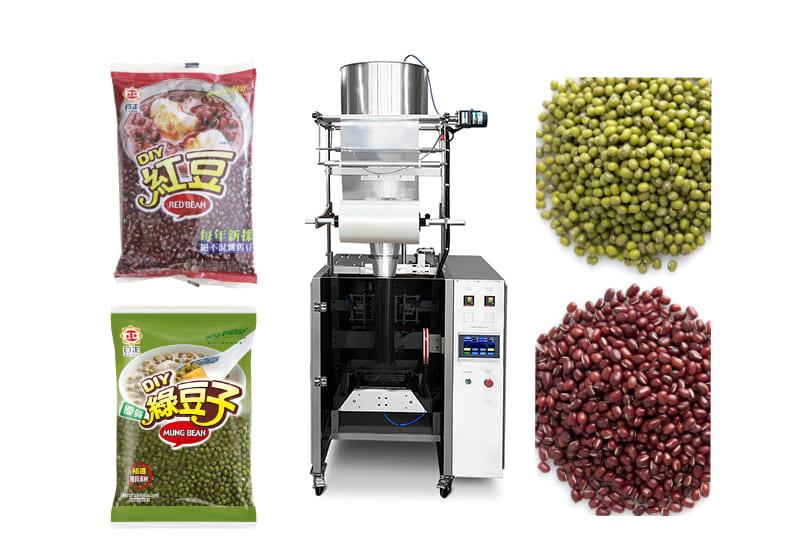
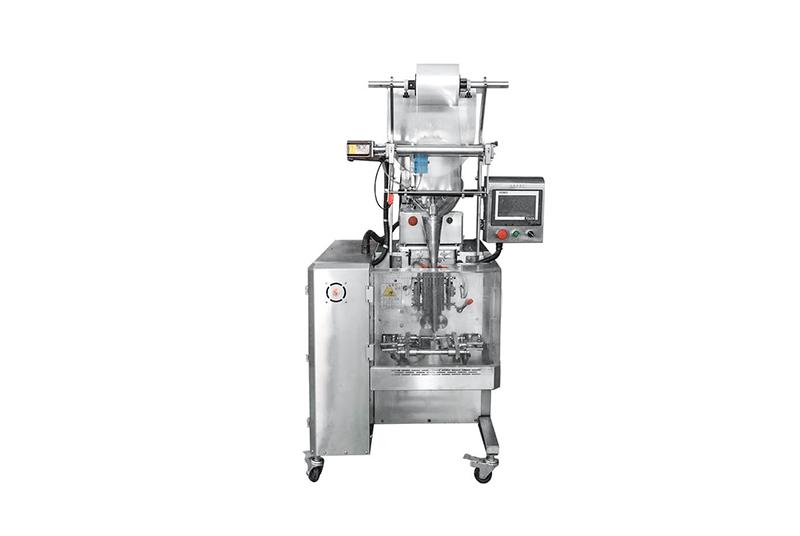
A granule packing machine combines controlled feeding, quantity measurement, package handling, and sealing for products that move as particles or pieces. Its main benefit is a repeatable packaging process, but the result depends on matching the equipment to particle size, density, flow, fragility, and the commercial bag. Granules range from salt and seeds to snacks and hardware, so buyers should select a configuration for named products rather than expect one universal solution.
Free-flowing crystals, uniform pellets, mixed snacks, seeds, nuts, confectionery, pet food, and small non-food components may all be described as granules. Their machinery needs still differ. Fine salt can leak through gaps and absorb moisture. Fragile food can break. Mixed products can segregate. Irregular hardware may jam a narrow chute or damage film.
Define particle dimensions and distribution, bulk density, flow, dust, static, moisture sensitivity, surface oil, fragility, temperature, and tendency to bridge. State whether pieces are uniform or blended and whether any item can interlock. The narrowest passage from feeder to bag must safely pass the largest normal piece.
Applications should also be separated by hygiene and material compatibility. Food, agricultural, chemical, and hardware duties can require different contact parts, cleaning, dust, corrosion, and contamination controls. A machine used for one category should not be reassigned to another without a formal review.
Granules move under gravity, vibration, gates, or conveyors, but the rate is influenced by shape, friction, moisture, and product head. Bulk density determines how much package volume a target weight occupies. It can change after vibration or refill. A mixed product may separate when transported over long distances or exposed to repeated drops.
Gentle handling matters when saleable appearance is important. Reduce unnecessary drop height and abrupt impact, while still maintaining a clear product stream. Slowing every movement is not automatically gentler if it allows pieces to rub or accumulate. The transfer route should be observed with real material.
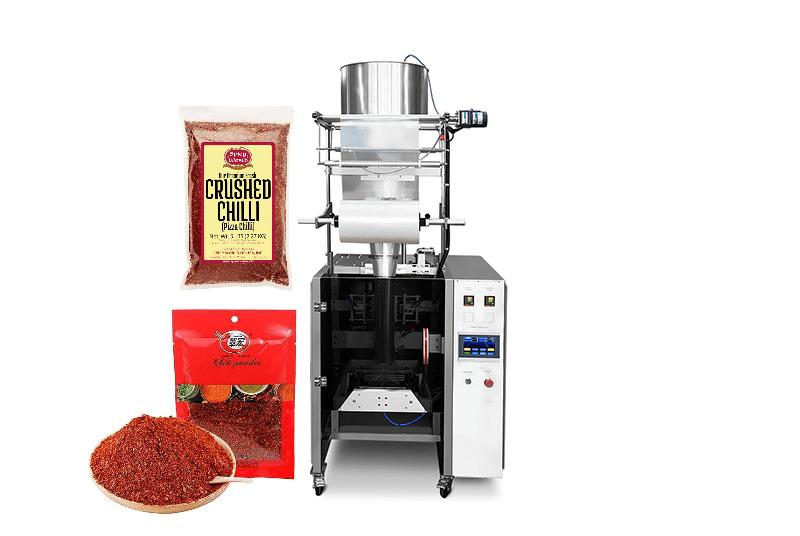
For difficult flow, diagnose the mechanism before adding agitation. A bridge may need different hopper geometry or controlled vibration; sticky surfaces may need an accessible low-retention path; oversized pieces may require a wider chute. Product testing is more reliable than selecting options from a generic list.
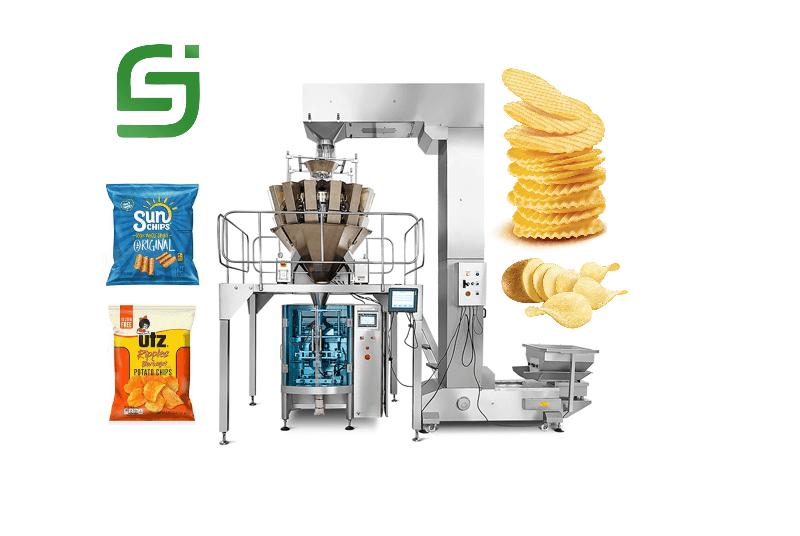
Weighing systems measure mass and can suit many granular products, but feeder control, bucket capacity, resolution, combination logic, and discharge timing determine their useful range. Multihead weighing can combine portions for speed and control in appropriate applications. Linear weighing offers another arrangement for simpler duties. Fragility and mixed-component distribution must be checked.
Volumetric cups meter a chamber volume. They can be straightforward for products with consistent density and flow, yet weight changes when density changes. Counting systems may be appropriate for discrete pieces when count, orientation, and sensor reliability support them. No principle is best for every granule.
A granule packing machine proposal should name the filler, target range, required change parts, and supply conditions. Evaluate ordered quantities at startup, during steady operation, after refill, and following restart. Measure giveaway and variation rather than only reporting an average.
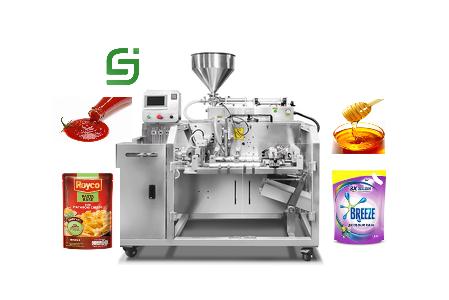
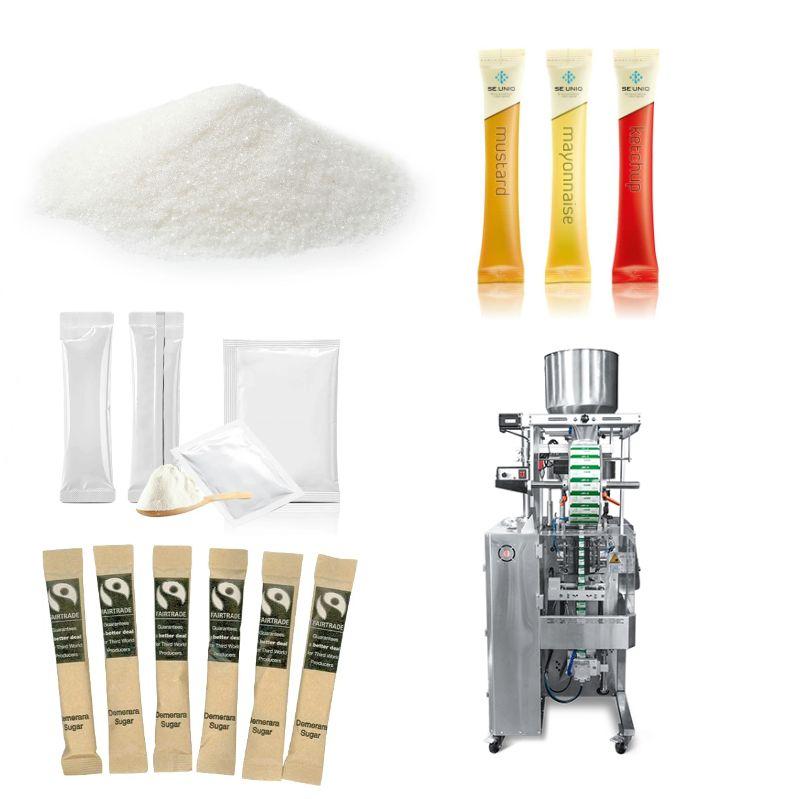
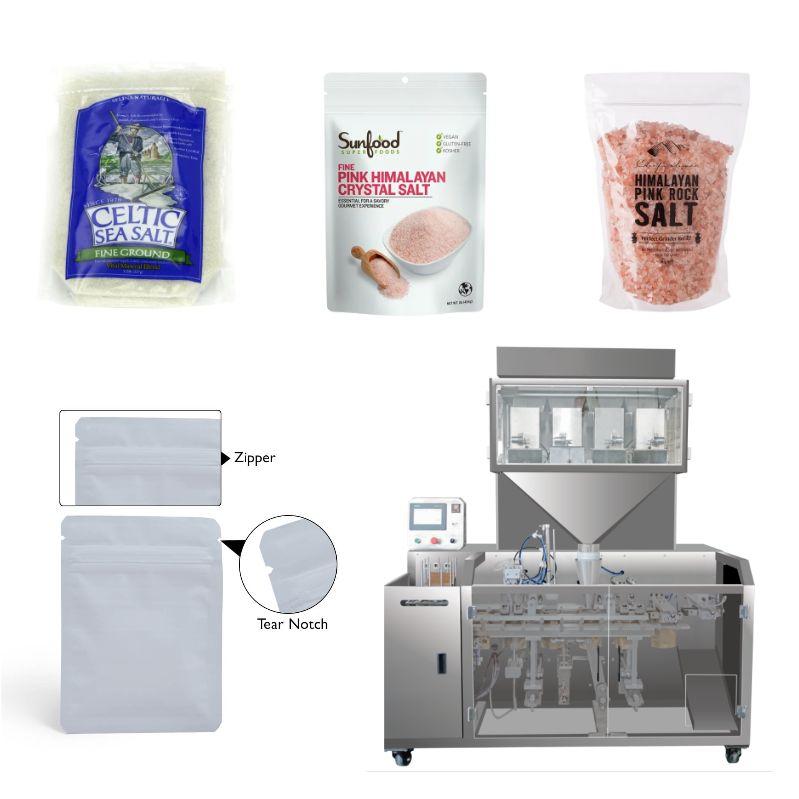
Vertical form-fill-seal machines create bags from rollstock and can suit many pillow, gusseted, or related formats. Premade-pouch systems fill converter-produced bags and can offer finished features such as zippers or stand-up shapes. Rigid containers and bulk bags require different handling again. The product, retail presentation, material economics, and production plan guide the choice.
Package dimensions must accommodate normal product volume and enough headspace for filling and sealing. Sharp or heavy pieces may need stronger material and controlled drop. Barrier and compatibility are determined with the product and film supplier, then the intended material is tested on the equipment.
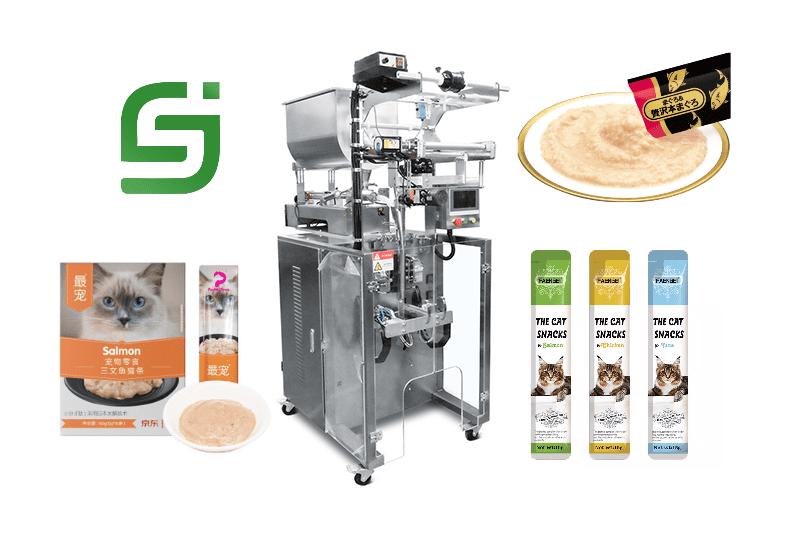
For multiple sizes, map recipes and physical parts. Width changes can require forming sets or pouch-handling adjustments; quantity changes can require filler components. Coding and downstream case orientation should be included in the format definition.
Automation can reduce repeated manual measuring, improve package consistency, and provide a controlled sequence for forming or handling bags. It can also support traceable recipes and fault monitoring. These benefits are conditional: unstable product supply, poor packaging material, difficult cleaning, or frequent unplanned changes can erode them.
Measure labor by task. Operators may still load material, replenish product, sample packages, clean, change formats, clear routine faults, and manage downstream cases. The value is often a safer and more repeatable allocation of work, not the complete removal of people.
| Potential benefit | Condition needed | Useful measure |
|---|---|---|
| Consistent quantity | Suitable filler and stable product supply | Ordered weight or count results and giveaway |
| Higher usable output | Balanced dosing, bagging, replenishment, and discharge | Accepted packs during a representative period |
| Reduced material waste | Controlled tracking, filling, sealing, and fault response | Product and package rejects by cause |
| Repeatable changeover | Recipes, labeled parts, setup references, and training | Observed change plus first-off approval |
| Improved process visibility | Clear alarms and meaningful production records | Fault history linked to corrective action |
Product quality can be lost through breakage, segregation, contamination, moisture exposure, or excessive residence. Package quality can be lost through poor forming, product in the seal, incorrect quantity, unreadable coding, or rough discharge. Review the whole route instead of assigning every defect to the sealing jaws.
Use sensors and interlocks for clear purposes. No-bag/no-fill logic prevents spills; level control stabilizes dosing; registration monitoring protects printed position; temperature alarms identify abnormal sealing conditions. The response to each fault should state what happens to affected product and packages.
Cleaning access supports quality between runs. Contact parts should be reachable, removable where justified, and reassembled to known references. The owner defines sanitation and cross-contamination acceptance for its products.
Upstream conveyors, elevators, or hoppers should deliver granules without uncontrolled surges, segregation, or damage. Agree on high- and low-level signals with the filler. The packaging machine should pause in a known state if product or film is unavailable.
Downstream, filled bags may pass through inspection equipment chosen for the application, then conveyors, counters, or case packing. Heavy bags need support; fragile packs need gentle transfer. Define how rejected packages are separated and reconciled so they do not return unnoticed to good output.
Layout drawings should include loading and service space, operator routes, utility points, cleaning zones, and removal paths for components. Physical fit alone is not enough if a hopper cannot be lowered or a guard cannot open.
Build a test matrix around density extremes, fragile or irregular pieces, smallest controlled dose, largest product volume, demanding package material, and meaningful changeover. Use the intended supply method and commercial film or pouches where possible. Define inspection and sampling before the test.
Record accepted packs, quantity distribution, breakage, segregation, film or pouch losses, contaminated seals, coding, interventions, and refill response. Include stop and restart. If the demonstration omits downstream equipment or uses substitute material, state the limitation.
Compare suppliers on evidence, accessible design, changeover work, documentation, spares, training, and defined support. Nominal speed, accuracy, or broad application claims need named conditions to be useful.
Review maintenance exposure before deciding between configurations. Abrasive granules can change gate, chute, screw, or sealing clearances; oily products can attract fines; sharp pieces can mark contact surfaces. Ask which components are expected to wear, how their condition is checked, and whether replacement disturbs calibration. A practical spare-parts plan should reflect product severity and local delivery time rather than a generic kit.
Operator training should connect visible symptoms to action. A change in feeder rhythm, unusual breakage, repeated underweight after refill, or granules in the seal area each points to a different process location. Clear escalation limits prevent repeated setting changes from hiding a mechanical, product-supply, or material problem.
Incoming packaging control belongs in the operating plan. Rollstock and premade pouches should be stored under supplier guidance and checked against the approved specification. Changes in stiffness, friction, thickness, curl, registration marks, or sealant can create machine symptoms even when the product and recipe have not changed.
Retain defect samples with their machine position and event when practical. A jammed particle, puncture, weak seal, or distorted bag can then guide corrective work instead of becoming an untraceable reject count.
Which filler is best for granules?
The answer depends on density stability, particle size, fragility, dose, speed, and quantity requirement. Test the proposed weighing, volumetric, or counting method.
Can mixed granules be packed without segregation?
Handling can be designed to limit separation, but representative trials must check feed distribution, transfer, and composition in finished packs.
Are rollstock bags cheaper than premade pouches?
Material economics vary by package, volume, region, artwork, waste, and operation. Compare total package and production cost using actual quotations.
What limits the largest pack?
Product volume, filler capacity, bag dimensions, forming or gripping hardware, filled weight, sealing, and discharge can each become the limit.
How should output be quoted?
Use accepted finished packages for a named product, dose, bag, and test condition, with rejects and routine interventions visible.
Granule packaging equipment creates value when feeding, metering, package handling, and sealing are matched to a defined application. Characterize the particles, choose an appropriate filler and bag platform, plan interfaces and cleaning, and test the difficult combinations. That approach turns general benefits such as consistency and productivity into results the buyer can verify and reproduce.

YISEN MACHINERY - The ONE-STOP VFFS PACKING MACHINE SOLUTION SUPPLIER
 Tel: +8617350750975
 Email: info@vffspackingmachinery.com
 MP/WhatsApp: +8617350750975
 Manufacturer Address:Meixi Road, Tongan District, Xiamen,Fujian,China