

Hot Keyword:
Author:YISEN Pouch Packing Machine Manufacturer TIME:2024-11-11
A premade-bag line can reduce packaging waste when it prevents empty pouches from being filled, keeps product away from the closure, repeats changeovers, and rejects only packages with a defined defect. Automation does not make waste disappear by itself. The buyer must separate empty-package loss, product giveaway, damaged packs, setup scrap, and saleable product held after faults, then prove which controls reduce each stream under production conditions.
Begin with a mass and count balance for a representative shift. Record empty pouches issued, good packs released, pouches damaged before filling, filled packs rejected, product spilled, product left in equipment, giveaway above target, rework, and packages placed on hold. Include setup, replenishment, planned stops, unplanned faults, changeover, cleaning, and shutdown.
Use clear reason codes instead of one “scrap” total. An opening failure requires a different response from a contaminated seal or wrong code. Weigh product waste where practical and count packages by type. Record pouch and product lots because converter variation or a changed recipe can drive a sudden increase. A baseline over several normal runs prevents an unusually easy shift from overstating improvement.
Define the commercial value of each loss. A discarded empty pouch costs less than the same pouch after it contains product, labor, code, and inspection. Excess net content remains saleable but still consumes margin and capacity. Held product carries investigation and inventory costs even if it is later released. These categories help prioritize controls with the largest verified benefit.
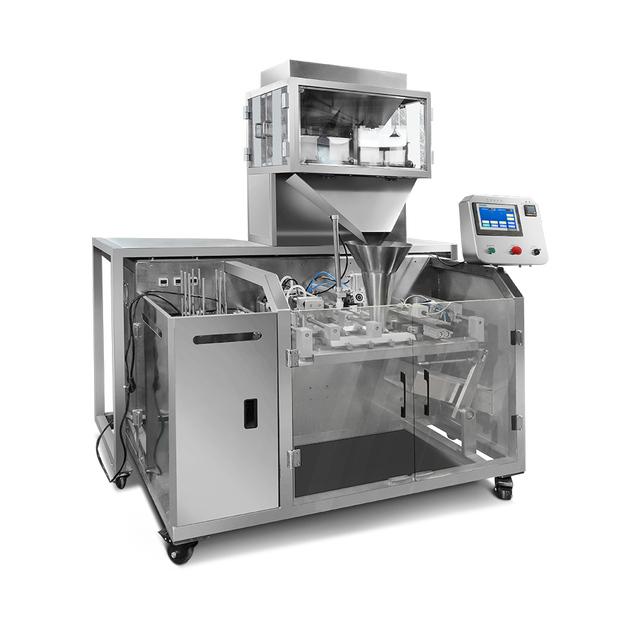
Bag dimensions, stiffness, friction, curl, zipper position, gusset formation, surface coating, and stack condition affect pickup. A machine set around ideal samples may double-pick, drop, or fail to open normal production bags. Establish converter tolerances for the dimensions used by magazines, suction cups, grippers, openers, fillers, and seal jaws.
Store pouches in conditions that avoid distortion, blocking, contamination, or uncontrolled moisture change. Operators should load them in the correct orientation and avoid compressing stacks beyond the magazine design. Refill method matters: disturbing the stack while the machine runs can change pickup pressure. Sensors need to distinguish no bag, two bags, and a bag that is present but not sufficiently open.
Use “no pouch, no fill” logic so an opening fault consumes an empty bag rather than a product dose and a contaminated machine. A failed pouch should leave through a defined route and be counted. Repeated faults should stop or alert the operator instead of silently discarding packages. Track the loss by pouch lot to support evidence-based discussion with the converter.
The dosing method must match the product. Weighers serve many granules, augers meter powders, pumps handle liquids or sauces, and counters place discrete items. Each relies on consistent upstream supply and a clear path into the open bag. Oversized pieces, sticky surfaces, dust, splashing, or a narrow mouth can cause product to strike the zipper, spill outside, or remain in a chute.
Position confirmation should prevent discharge into a missing, skewed, or partly opened pouch. Fill timing needs enough margin for the complete dose to enter before transfer. A clean cutoff protects liquids and sauces; powder tubes and extraction can control airborne loss; low drop height reduces broken snacks. Product recovery trays should be hygienic and governed by a defined disposition procedure.
Giveaway is a separate waste stream. Verify tare, scale accuracy, and ordered net weights during startup, stable operation, replenishment, low hopper level, stops, and restart. Automatic weight feedback should use bounded corrections and an appropriate sample response. It cannot fix bridging, segregation, valve leakage, or a bag-handling problem, so physical causes must be corrected first.
A filled pouch becomes waste when product contaminates the zipper or heat-seal area, the laminate wrinkles, or the closure does not receive adequate heat, pressure, dwell, and cooling. Protect headspace through package sizing and dose control. Mouth spreaders, settling, extraction, wipe devices, clean-cut nozzles, and zipper closers may be useful, but each should be tested with the actual residue.
Confirm seal settings against the laminate supplier's qualified window. Worn jaw coatings, uneven contact, heater failure, loose temperature sensors, and buildup can create local weak points. Sample across warmup, target output, pauses, and restarts. Map defect positions so maintenance can connect repeated corners or bands to specific hardware.
Inspection should detect meaningful defects without rejecting good packs unnecessarily. Vision, seal inspection, leak tests, and checkweighing each have limitations. Challenge the device with documented samples and secure its reject route. Review false-reject rates as well as escapes, because an oversensitive or poorly maintained system can become a substantial source of avoidable waste.
Changing bag width or product can involve magazine guides, pickup points, gripper spacing, opening devices, filler parts, nozzle position, settling, zipper closure, seal jaws, code position, and discharge guides. Recipes save control values, but physical adjustments need scales, gauges, stops, identified parts, and a checklist. Tribal knowledge leads to repeated trial bags and inconsistent startup.
Set an approval sequence for the first packs. Confirm correct materials and code, pouch handling, net content, appearance, zipper function, seal position, integrity, and inspection response before normal release. Keep the startup quantity visible in the waste record. If operators know exactly which observations authorize production, they are less likely to generate a long run of uncertain packs.
Time the entire change from last accepted package to first accepted package, including line clearance, cleaning, parts exchange, warmup, priming, trial fills, and quality checks. Analyze which steps are internal while stopped and which preparations can occur safely beforehand. Organized part storage and preverified recipes reduce both downtime and discarded setup material.
Controls should track pouch status through pickup, opening, fill, closure, code, inspection, and discharge. When a sensor fails or a downstream device blocks, the sequence must stop product at the correct point and identify packages of uncertain status. Poorly coordinated lines may continue dosing after bags stop moving or reject every package following a brief interruption.
Define restart behavior for each important fault. Operators need to know which pouches remain empty, which are filled but unsealed, and which have completed processing. The line should support controlled removal and reconciliation without bypassing guards or forcing bags manually through moving stations. Alarm text should point to the relevant station and confirmation, not merely display a generic stop.
Trend repeated microstops. Short pickup misses, code retries, seal-temperature warnings, and reject-bin confirmations may consume more material over a month than a dramatic breakdown. Link event data to waste reason codes and maintenance observations. Correcting the highest-frequency event often improves both accepted output and material yield.
At the end of a batch, product can remain in hoppers, weighers, augers, pumps, hoses, chutes, nozzles, extraction systems, and partly processed pouches. Equipment design should allow controlled emptying without mixing lots or sending uncertain material into good packs. The food-safety and quality teams must decide what may be recovered, reworked, or discarded.
Short product paths and accessible contact zones generally reduce retained inventory, but hygiene and maintenance still govern the design. Dry products may need vacuum recovery and dry cleaning; wet products may require drainable circuits, flushing, or dismantling. Avoid improvising recovery with compressed air or unapproved containers, which can spread contamination and destroy traceability.
Measure residual mass after normal shutdown and after the proposed recovery procedure. Include the first material used to prime the next run and any packages consumed during cleaning verification. A lower residual quantity is valuable only when the method remains safe, repeatable, and compatible with allergen, batch, and shelf-life controls.
Test the prefabricated bag packaging machine with production products, approved pouch lots, target speeds, and normal operators. Run a challenging size and product combination long enough to include pouch refills, product replenishment, a planned stop, restart, inspection challenges, and a complete changeover. Use the same waste categories established in the baseline.
| Loss stream | Machine control to assess | Comparison measure |
|---|---|---|
| Empty pouch scrap | Pickup, opening confirmation, magazine stability | Lost pouches per thousand attempts |
| Product spill | Pouch-present logic, discharge path, cutoff | Collected mass by operating event |
| Giveaway | Dosing stability and bounded feedback | Ordered net weights and mean excess |
| Seal rejects | Mouth protection, jaw process, inspection | Defects by type and pouch position |
| Changeover scrap | Recipes, scales, parts, release checklist | Packs and product used before approval |
Report good packages, each loss category, occupied time, interventions, and all assumptions. Do not convert a brief demonstration into annual savings without accounting for the production mix, material prices, staffing, maintenance, and actual hours. Retain raw counts, weights, rejected samples, settings, and lot numbers so the improvement can be repeated after installation.
Does automation always reduce packaging material use?
No. It can reduce handling and process errors, but poor pouch consistency, setup, dosing, sealing, or fault recovery may still create substantial loss.
Why count giveaway as waste if the package is saleable?
Product above the required target consumes ingredients and capacity without creating equivalent revenue, so it belongs in the economic yield calculation.
What is the benefit of no-pouch-no-fill control?
It prevents product from being discharged when a pouch is missing or not properly opened, reducing spills and filled-pack scrap.
Can rejected product be returned to the process?
Only when the site's safety, hygiene, allergen, batch, and traceability procedures explicitly permit controlled recovery.
How long should a waste trial run?
Long enough to include normal refills, operating drift, minor stops, restart, inspection checks, and changeover rather than only stable short-duration output.
Premade-bag automation reduces waste through disciplined pouch handling, interlocked filling, stable dosing, protected sealing, reproducible changeover, controlled fault recovery, and measurable product recovery. The improvement should be proven against a detailed baseline, not assumed from machine speed. When each lost pouch and gram of product has a reason code, buyers can choose controls that improve both material yield and accepted production.

YISEN MACHINERY - The ONE-STOP VFFS PACKING MACHINE SOLUTION SUPPLIER
 Tel: +8617350750975
 Email: info@vffspackingmachinery.com
 MP/WhatsApp: +8617350750975
 Manufacturer Address:Meixi Road, Tongan District, Xiamen,Fujian,China