

Hot Keyword:
Author:YISEN Pouch Packing Machine Manufacturer TIME:2025-03-05
The best premade-pouch machine is the configuration that repeatedly produces acceptable packages across the buyer's real product mix, changeovers, sanitation requirements, utilities, staffing, and downstream limits. A model with more stations or a higher advertised rate can be the wrong investment if pouches do not open reliably, the filler damages product, seals are contaminated, or service tasks consume production time. Selection should therefore begin with a documented operating envelope and finish with a witnessed acceptance run.
List every product planned for the line, not only the launch item. Record flow, density, particle size, fragility, dust, stickiness, oil, viscosity, temperature, inclusions, aeration, settling, and cleaning concern as relevant. Identify normal and challenging conditions. A supplier cannot choose the dosing or transfer path responsibly from a product name such as snack, powder, or sauce.
For each pouch, provide a dimensioned drawing and samples from production lots. Include width, height, gusset, zipper, tear notch, hang hole, spout, laminate, stiffness, friction, printed registration, and intended fill. Show the usable grip, opening, fill, and seal zones. Converter tolerances matter because the equipment must handle normal variation, not a carefully selected sample.
Connect each product to its approved package, target fill, expected output, campaign length, and change frequency. This matrix exposes worst combinations: a bulky product in the smallest mouth, a fine powder near a zipper, a hot sauce in a soft laminate, or a fragile piece with a high drop. These combinations should drive the trial plan.
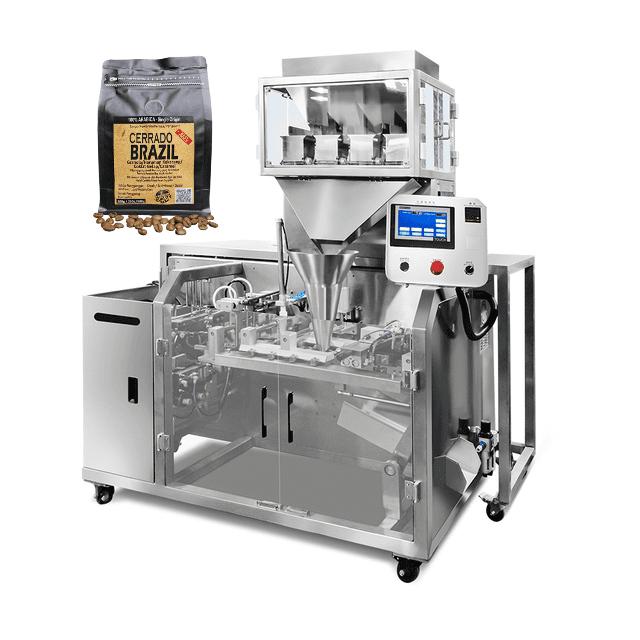
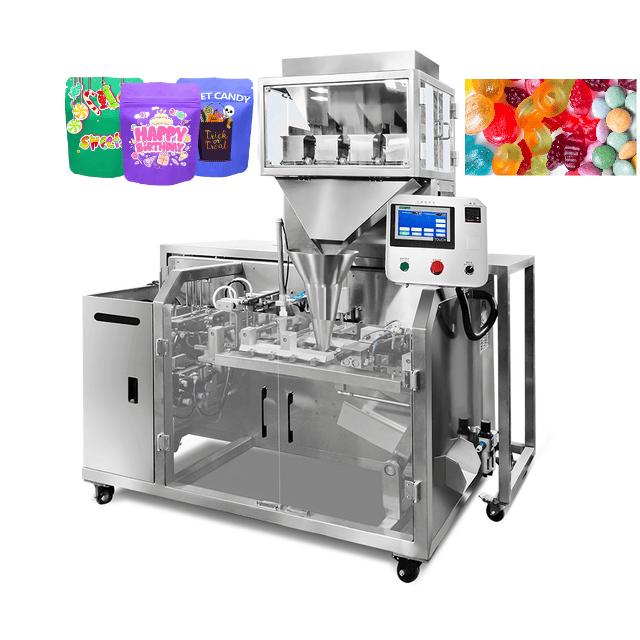
Rotary baggers carry pouches around indexed stations and often provide a compact arrangement for pickup, opening, filling, sealing, and discharge. Horizontal machines move pouches along a straight path and can offer different access or station flexibility. The labels do not establish performance. Compare space, access, number of functions, bag support, cleaning boundaries, and integration points.
Review the facility drawing with maintenance clearances, not only frame dimensions. Operators need room to load pouches, refill product, change parts, clean, remove rejects, and reach controls. Technicians need access to grippers, vacuum components, fillers, seal jaws, heaters, sensors, drives, and electrical enclosures. Confirm floor loading, overhead restrictions, doors, delivery route, and lifting provisions.
List every required service separately, including power, plant air, vacuum, local extraction, process gas, thermal water circuits, and any product-heating connection. Obtain pressure, flow, quality, peak demand, and connection locations. A machine that performs on a supplier's stable air supply may miss pouches when installed on an undersized plant network.
The bag magazine, separators, suction cups, grippers, openers, and sensors must handle the intended materials. Stiffness, coating, static, curl, zipper force, and stack pressure affect separation. Run the magazine from full to normal refill level and replenish it using the proposed production method. Count misses, doubles, drops, incomplete openings, zipper damage, and skew.
Confirm “no pouch, no fill” operation and the response to a partly opened bag. A presence sensor alone may allow product to discharge against a closed mouth. The control should stop the fill, route the failed pouch predictably, and record or alarm repeated events. Ask how gripper width, pickup position, and opening motion are changed for each size.
Stops and restarts deserve testing. Pouches held in grippers can slip, cool, or remain under process conditions longer than intended. Simulate a blocked discharge, missing bag, low pouch level, and operator stop. The recovery sequence should identify uncertain packages without bypassing guards or manually forcing material through moving stations.
Multihead weighers are common for many granules and snacks, linear scales for some lower-rate applications, augers for powders, pumps for liquids and sauces, and counters for discrete pieces. The filler needs a suitable upstream feed, stable product condition, and enough cycle time. Its discharge chute or nozzle must enter the available pouch opening without striking the zipper or sidewall.
Measure performance at the smallest and largest targets and with worst-case product. Fragile items need low impact; dusty powders need containment and settling; sticky sauces need a clean cutoff; chunky liquids require adequate valve passages. Net weight should be sampled through startup, stable output, replenishment, low level, pause, and restart. Inspect product damage and distribution, not weight alone.
Define what the base quotation includes. Product elevators, tanks, conveyors, platforms, extraction, gas systems, printers, checkweighers, metal detectors, and reject devices are often separate. Identify controls ownership and mechanical interfaces for every module. A bagger cannot achieve the requested line rate if the filler or takeaway repeatedly starves or blocks it.
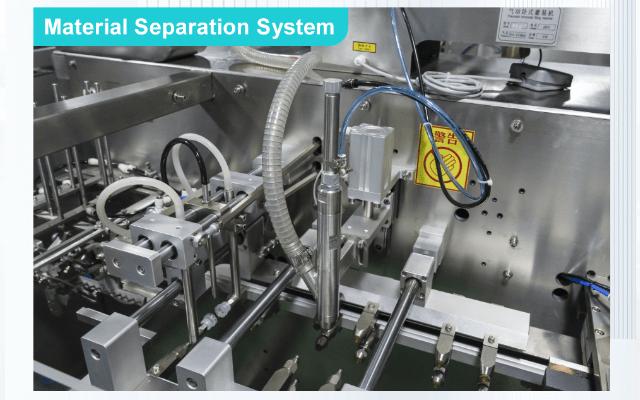
The line may need mouth spreading, settling, dust removal, wiping, zipper closing, one or two heat seals, cooling, and shaping before discharge. Map those functions to available stations. Product must clear the seal area, and the package needs adequate headspace. Adding heat cannot compensate for powder, crumbs, oil, or sauce trapped between sealant layers.
Qualify jaw temperature, pressure, dwell, alignment, and cooling for every laminate. Define visual and physical integrity tests with the quality team. Run samples after warmup, during normal production, at target output, after a pause, and after restart. Check zipper operation, tear features, wrinkles, seal position, and exterior cleanliness.
Coding requirements should identify technology, message source, position, readability, and verification response. Inspection equipment needs a secure reject path with confirmation and challenge tests. Establish how rejected packages are reconciled and how the line reacts when a reject bin is full or a device is unavailable.
A complete change can involve pouch magazine, pickup, grippers, opening devices, filler parts, chutes or nozzles, settling, zipper closer, seal jaws, printer, and discharge. Recipes reduce repeated data entry, but mechanical settings need scales, stops, gauges, and identified parts. Watch normal operators perform the change with the intended tools.
Cleaning scope depends on product and risk. Inspect hoppers, weigh buckets, augers, pumps, hoses, chutes, filling tubes, nozzles, guards, drip zones, extraction, and hidden ledges. Confirm removal, lifting, draining, drying, and protected storage of contact parts. Allergen or flavor changes may require separate sets or verified procedures.
Ask for maintenance intervals, consumables, critical spares, calibration needs, diagnostics, remote-support requirements, and local service arrangements. Examine access to suction cups, grippers, heaters, thermocouples, jaw coatings, drives, belts, sensors, and lubrication points. Calculate service time and production interruption, not only spare-part price.
Advertised cycles per minute represent only one element of capacity. Calculate accepted packs during occupied time after pouch faults, product refills, quality checks, minor stops, cleaning, changeover, and planned maintenance. Use the actual product mix and campaign schedule. A moderate machine with fast, reproducible changes may deliver more weekly output than a faster unit with long cleaning and setup.
Cost modeling should include equipment, options, integration, freight, installation, utilities, platforms, extraction, inspection, training, validation, packaging materials, giveaway, rejects, labor, parts, service, and expected downtime. Avoid annual savings based on an unproven headline rate. State operating hours, efficiency assumptions, product prices, and material loss so the result can be challenged.
Commercial terms should define scope, documents, drawings, software or recipe backup, language, manuals, recommended spares, training, factory test, site acceptance, warranty, response, and exclusions. Confirm who owns integration and performance when several suppliers provide parts of the line.
Shortlist configurations against the same written requirements, then test the proposed prefabricated bag packaging machine with production product and approved pouches. Include challenging combinations, normal refills, sustained output, planned stops, restart, inspection challenges, and a full changeover. Identify the exact filler, grippers, pouch-opening parts, seal equipment, code system, and software version used.
| Selection area | Question for the trial | Acceptance evidence |
|---|---|---|
| Pouch range | Do normal lots pick, open, and remain aligned? | Fault counts by pouch lot and size |
| Product handling | Is fill accurate without spill or damage? | Ordered weights, loss, condition samples |
| Closure quality | Are zipper and seals clean at target output? | Integrity results and defect map |
| Changeover | Can operators reproduce setup and release? | Elapsed time, checklist, first approved packs |
| Line recovery | Are uncertain packs contained after faults? | Challenge observations and reject records |
Retain raw data, rejected and accepted samples, defect photographs, settings, product batches, pouch lots, operator actions, and stop history. Resolve deviations in writing and repeat affected tests. After installation, confirm critical results with local utilities, upstream and downstream equipment, and trained staff before normal production release.
Is a rotary premade-pouch machine always the best choice?
No. Layout, access, stations, product behavior, pouch range, cleaning, integration, and accepted output determine suitability.
How many pouch samples should be tested?
Use enough production pouches from representative lots to run full and low magazine conditions, replenishment, sustained output, stops, and changeover.
What speed should appear in the purchase specification?
Define accepted packages per minute for named product and pouch conditions, together with quality limits and allowed interventions.
Can one machine run powders, snacks, and sauces?
A bag handler may support several fillers, but product supply, dosing, contamination control, cleaning, and change parts must be qualified for every application.
What documents should be retained after the factory test?
Keep raw measurements, settings, samples, material lots, faults, interventions, drawings, component identities, deviations, and signed acceptance results.
Choosing premade-pouch equipment is an engineering and production decision, not a comparison of frame size and headline speed. A complete product-package matrix, realistic layout review, proven pouch handling, suitable dosing, qualified sealing, practical changeover, maintainable components, and lifecycle economics narrow the options. Witnessed testing under the buyer's actual conditions provides the strongest basis for a defensible purchase.

YISEN MACHINERY - The ONE-STOP VFFS PACKING MACHINE SOLUTION SUPPLIER
 Tel: +8617350750975
 Email: info@vffspackingmachinery.com
 MP/WhatsApp: +8617350750975
 Manufacturer Address:Meixi Road, Tongan District, Xiamen,Fujian,China