

Hot Keyword:
Author:YISEN Pouch Packing Machine Manufacturer TIME:2025-04-22
The five areas are connected. Faster product transfer is not an improvement if it creates crumbs; accurate weighing is wasted if pieces enter the seal; a good short run does not prove manageable changeover.
A high-quality snacks packaging machine should meet five standards: it handles the snack without unacceptable damage, controls each dose, makes a protective package, sustains accepted output, and supports hygienic, repeatable operation. These standards should be verified with the buyer's product and film rather than inferred from frame appearance or a maximum-speed figure.
Chips, crackers, nuts, candy, dried fruit, cereal, and mixed snacks react differently to vibration, gates, chutes, and drops. Define acceptable breakage, fines, coating loss, and component distribution. Compare samples at filler inlet and in the finished package so damage created by the line is visible.
Review elevator type, feeder amplitude, weigh-hopper gates, chute angles, drop height, pouch support, and downstream collection. A gentle path may require larger clearances or controlled timing. Product contacting a narrow edge or being squeezed between gates can create damage even at modest speed.
For mixed snacks, total weight does not prove correct composition. Vibration may separate pieces by size or density. Sample across startup, refill, and end of run using a product-specific composition criterion.
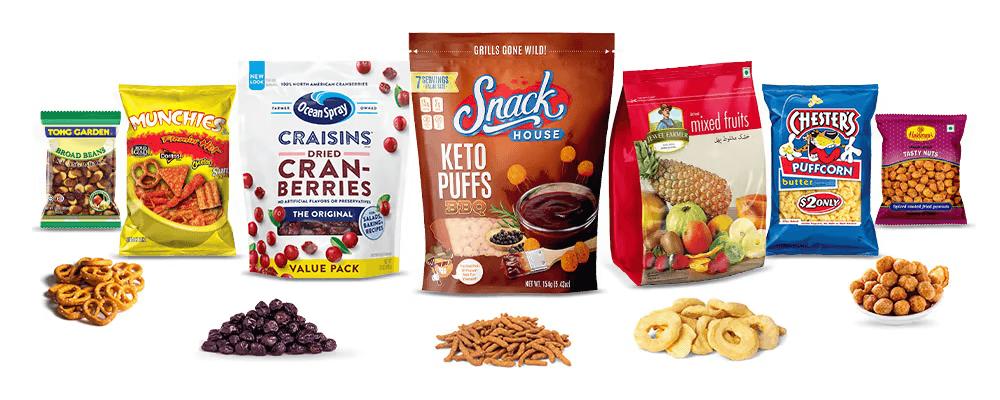
The dosing system should meet the approved range with normal product variation. Multihead weighing is common for many snacks, but hopper size, feeder response, combinations, target, stabilization, and piece shape determine results. Volumetric or counting methods can suit other products.
Review consecutive individual packs, average, spread, low and high rejects, and giveaway. Include product refills and restarts. A centered average with wide variation is not controlled; an unnecessarily high average uses excess product to protect against lows.
Ensure the measured dose reaches the bag. Spills, product left in chutes, and pieces trapped in seals can make the finished package fail despite a correct weigher record.
The machine must control rollstock forming or premade-pouch opening, maintain enough headspace, and keep pieces below the seal. Film or pouch construction should provide the barrier and strength established by package development while sealing within a stable process window.
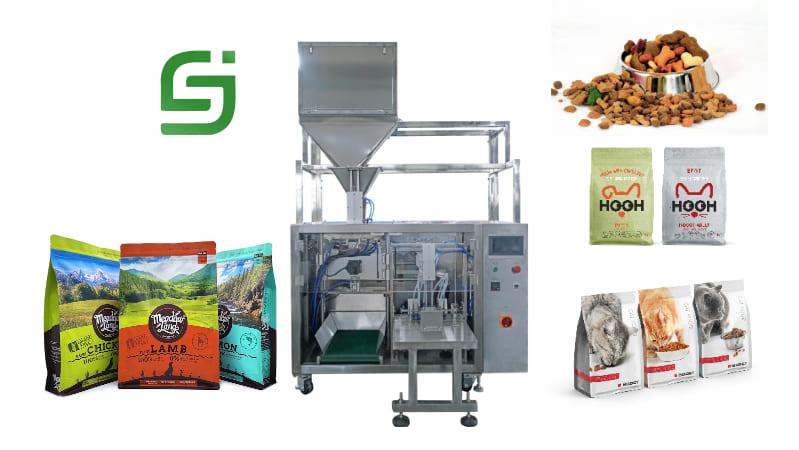
Check registration, code, cut, tear feature, filled shape, and appearance. Test seals with methods suited to the product and distribution. If gas flushing is part of the specification, define supply, monitoring, sample method, and acceptance rather than assuming the option guarantees a result.
Observe discharge, checkweighing, conveying, and collection. A fresh closure can be damaged by bending, compression, or a blocked downstream path.
Measure good bags over a defined period using production product and package. Include packaging replenishment, product loading, brief stops, and restart. Record weight rejects, seal rejects, product damage, coding faults, and manual intervention.
Stable output requires balanced equipment. The elevator should not starve the weigher, the weigher should discharge only to a ready bag, and the downstream line should not block the packer. Interface signals and accumulation need clear fault and recovery behavior.
Watch micro-stops. Frequent corrections for film tracking, pouch pickup, product bridging, or code position may consume more capacity than one visible breakdown. A quality machine provides access and diagnostics that help identify the cause.
Snack lines can handle flavors, allergens, oils, salt, and crumbs. Product-contact parts should be accessible for the required cleaning method. Witness removal, cleaning, inspection, drying, storage, and reassembly. Look for hidden ledges and parts that are difficult to identify.
Format change should have controlled reference points, correct parts, recipe selection, code confirmation, line clearance, and first-off approval. Measure the complete sequence rather than only mechanical adjustment.
The selected granular packing machine should support safe roll or pouch loading, product replenishment, sampling, and routine service. Ergonomics influence both downtime and the likelihood that procedures are followed.
Recipes should be named by controlled product and format codes, protected by access levels, and backed up. Alarms should explain the affected function and guide safe investigation. Sensors should trigger a defined stop, reject, or quality action.
Review electrical drawings, parts lists, manuals, training, calibration points, preventive-maintenance schedule, and recommended spares. Confirm responsibility for the elevator, filler, packer, printer, inspection, reject, and downstream equipment.
Remote service and production data can be useful when they follow the factory's cybersecurity and access rules. Technology should make recovery and traceability clearer, not create dependence on an undefined connection.
| Quality standard | Trial measurement | Unacceptable shortcut |
|---|---|---|
| Product care | Damage and composition before and after full line | Showing only attractive finished packs |
| Dose control | Consecutive individual weights and giveaway | Reporting only the average |
| Package integrity | Seal, code, cut, appearance, and handling tests | Using plain film instead of final material |
| Stable output | Good packs across refill, stop, and restart | Quoting empty mechanical cycles |
| Repeatable operation | Witnessed cleaning and format change with first-off release | Timing only one adjustment |
Select the most fragile product, a mixed recipe, smallest target, largest or bulkiest fill, difficult film or zipper pouch, and critical changeover. Supply enough product and packaging for stable operation and normal events. Define pass criteria and sample ownership before testing.
Record individual weights, breakage, composition, packaging defects, waste, stops, and interventions. Sample by lane or station. Include product and film replenishment, a planned pause, restart, and downstream transfer. Open the machine afterward to inspect accumulation.
Close gaps through named actions and evidence. Verify that delivered parts, recipes, manuals, and spare list match the tested setup. Quality is established by repeatable results and support, not by one demonstration.
Incoming packaging quality supports all five standards. Set checks for roll width, winding, splice, pouch dimensions, zipper position, flatness, material code, and artwork. A machine cannot repeatedly correct material that falls outside the approved range, and hidden manual adjustments make later lots harder to diagnose.
Product supply deserves the same discipline. Define acceptable piece size, fines, coating, density, temperature, and storage. Inspect what arrives at the weigher after the elevator because transfer can change the sample. Hold out-of-range product for review before it creates damage or unstable weighing.
Safety is a sixth purchasing gate even though it is not a quality-performance standard. Review guarding, emergency stops, elevated access, hot surfaces, stored air, safe cleaning states, and lifting of roll or format parts. Apply the buyer's local risk assessment and compliance process to the installed line.
Maintenance quality can be evaluated through recovery tasks. Ask technicians to replace a heater or temperature sensor, inspect a weigh-hopper gate, restore a recipe backup, and identify a vacuum fault. Access, drawings, component labels, and diagnostic messages determine how quickly the machine returns to a controlled state.
Package-material reduction or a new barrier structure should pass the same five standards again. A thinner film may track or seal differently and can change finished-bag stiffness. Sustainability or sourcing goals should be supported by package-development evidence and a full production trial, not an assumed recipe copy.
Use reference samples carefully. A golden pack can show dimensions, print, and general appearance, but seals and product quality still require defined tests. Store samples so aging or damage does not turn them into misleading standards.
At handover, establish the review rhythm for early production. Track accepted output, giveaway, damage, packaging defects, sanitation duration, and top stop reasons by SKU. Supplier and factory teams can then close commissioning issues using the same evidence that justified the purchase.
Quality also includes honest limits. Document products, formats, materials, and conditions that were not tested or did not pass. Clear boundaries protect operators from pressure to run an unsupported combination and give engineering a controlled starting point for future development.
Supplier quality is visible in action closure. During the test, classify each gap, assign an owner, define objective evidence, and set review authority. A cosmetic item and a failed seal criterion should not have the same shipment decision. This disciplined record protects both parties from relying on recollection.
Production teams should know the boundaries of any temporary bypass used for setup. Sensors, reject confirmation, guards, or quality checks must be restored before accepted running. The test report should state the final enabled configuration so a staged sample is not mistaken for normal automatic operation.
Is stainless-steel construction enough to prove machine quality?
No. Materials and finishes matter, but product handling, dosing, seals, controls, access, documents, and demonstrated output must also pass.
How should snack breakage be measured?
Use a product-specific method comparing representative samples before and after the line, including fines and visibly damaged pieces.
Why test a zipper pouch with actual snack?
Crumbs and seasoning can affect zipper use and top sealing. Empty-pouch tests miss contamination and filled handling.
Does a high lane count prove high quality?
No. Every lane must meet weight, seal, registration, and cut criteria during sustained operation.
What should be checked after a format change?
Line clearance, parts, recipe, product, code, fill, seal, dimensions, appearance, and any lane-specific setting require first-off approval.
The five standards make snack-machine quality measurable: gentle product handling, controlled dosing, reliable packaging, sustained good output, and repeatable operation. A supplier that can demonstrate all five with difficult production cases provides stronger evidence than one offering isolated speed or feature claims.

YISEN MACHINERY - The ONE-STOP VFFS PACKING MACHINE SOLUTION SUPPLIER
 Tel: +8617350750975
 Email: info@vffspackingmachinery.com
 MP/WhatsApp: +8617350750975
 Manufacturer Address:Meixi Road, Tongan District, Xiamen,Fujian,China