


 Price:

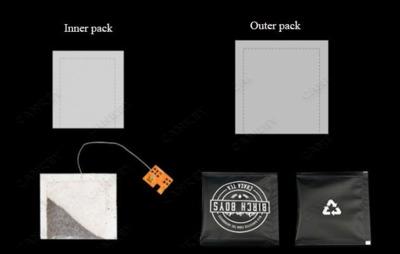
Start from the nested pack drawing
Define inner-bag length and width, outer-envelope dimensions, filter material, envelope laminate, thread length, label position and the way the consumer opens the pack. The saved dimensional windows are 50-70 by 45-80 mm for the inner bag and 80-120 by 75-95 mm for the envelope. Each commercial combination still needs a signed drawing and compatible tooling.
| Interface | Failure to watch | Acceptance record |
|---|---|---|
| Tea to inner bag | Late leaves or dust enter the closing zone. | Fill weights and opened inner seals |
| Thread and label | Attachment shifts, tangles or obstructs transfer. | Position measurements and pull samples |
| Inner bag to envelope | The bag folds, misses the pocket or arrives out of time. | Transfer rejects by run phase |
| Outer envelope | Registration, seal or cut does not match the artwork. | Finished-envelope samples and waste count |
Tea blend behavior affects dosing and inner-bag closure
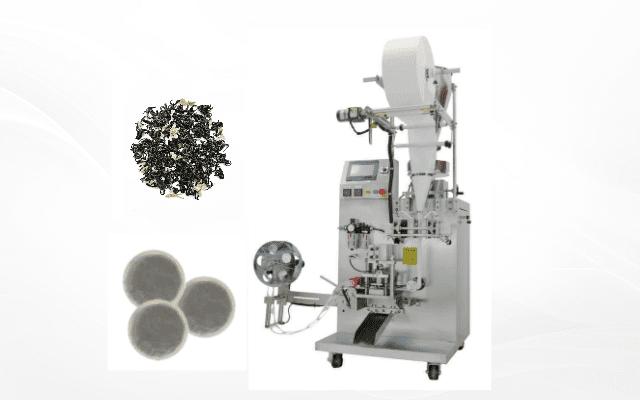
The stored range is 1-10 g and the page lists measuring cups and screw as possibilities. Identify the fitted arrangement and test the final blend, including its longest leaves and finest dust. Collect individual weights at startup, stable running, refill, low hopper and restart. For a blend, inspect visible ingredient distribution as well as total mass.
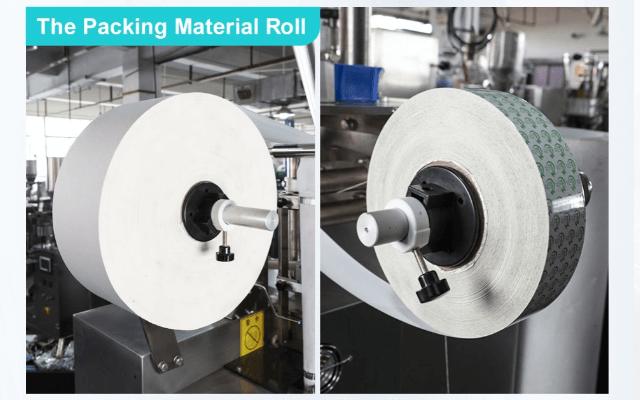
Two material rolls require two registration records
The filter web and outer-envelope web do different jobs and can drift independently. Mark roll direction, splice method, eye-mark position, tension setting and acceptable waste for each. During a roll change, record when the inner bag becomes acceptable and when the outer artwork and seal return to tolerance; the later point determines release.
Thread, label and cutter timing need retained samples
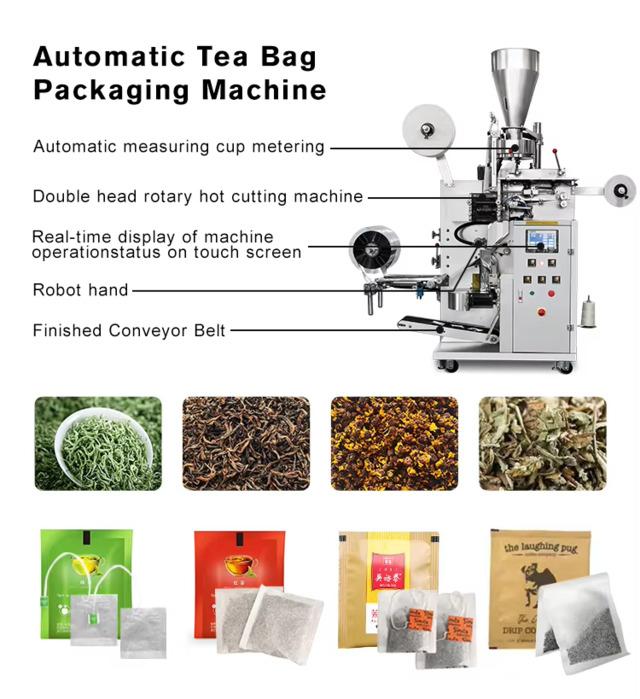
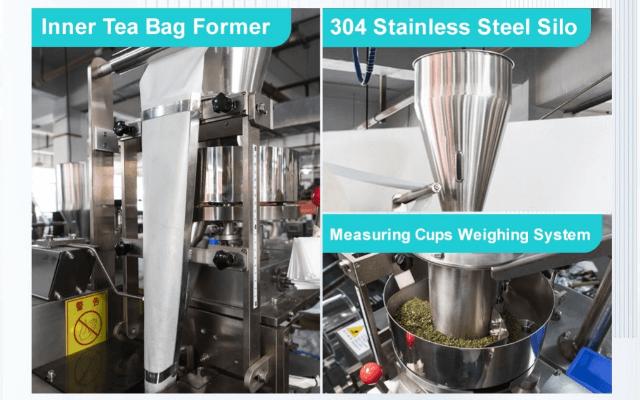
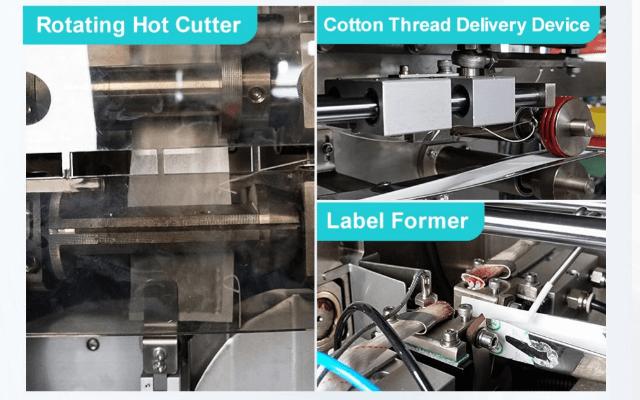
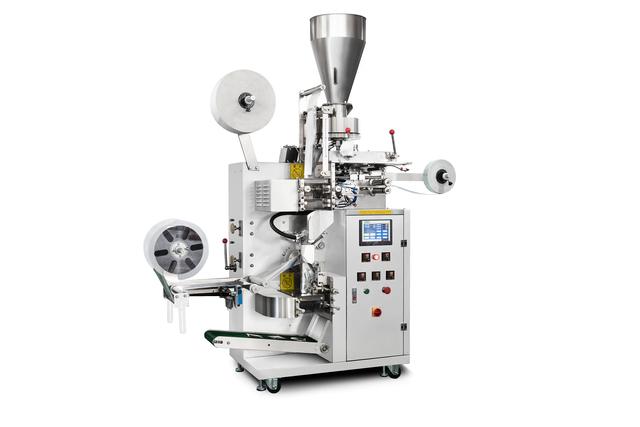
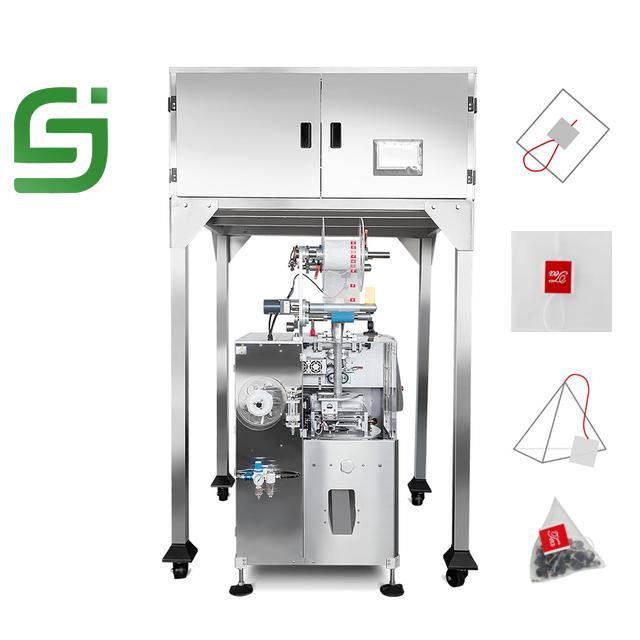
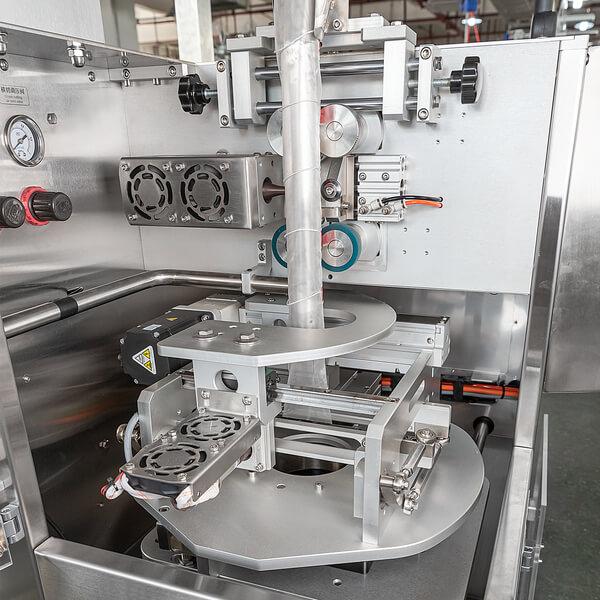
The saved imagery shows a rotating hot cutter, cotton-thread delivery and label former. Treat them as an integrated timing sequence. Check thread placement, label orientation, attachment strength and whether the assembly catches during transfer. Retain samples from a normal pause and restart, when slack and timing errors are more likely than during a short uninterrupted demonstration.
Envelope headspace must protect the inner bag
The outer envelope must accept the filled inner bag without folding it into a seal or crushing the label. Open completed packs and inspect inner-bag orientation, thread location, envelope seal width and cut. Define how a missing or skewed inner bag is detected or rejected; do not assume that a sealed outer pack contains a correct inner unit.
Use the final tea recipe and keep phase-labelled individual weights.
Record registration and waste separately for filter and envelope rolls.
Classify missed, folded, doubled or poorly oriented inner bags.
Measure thread, label and cut position on retained finished packs.
Do not combine contradictory output numbers
The summary and technical table state 30-50 bags per minute, while a feature line mentions a two-head rotating cutter and speed up to 80. The article should not average these numbers or select the larger one. A factory test must report set cycles and fully accepted nested packs after all tea, inner-bag, thread, transfer and envelope rejects are deducted.
Machine weight also requires source reconciliation
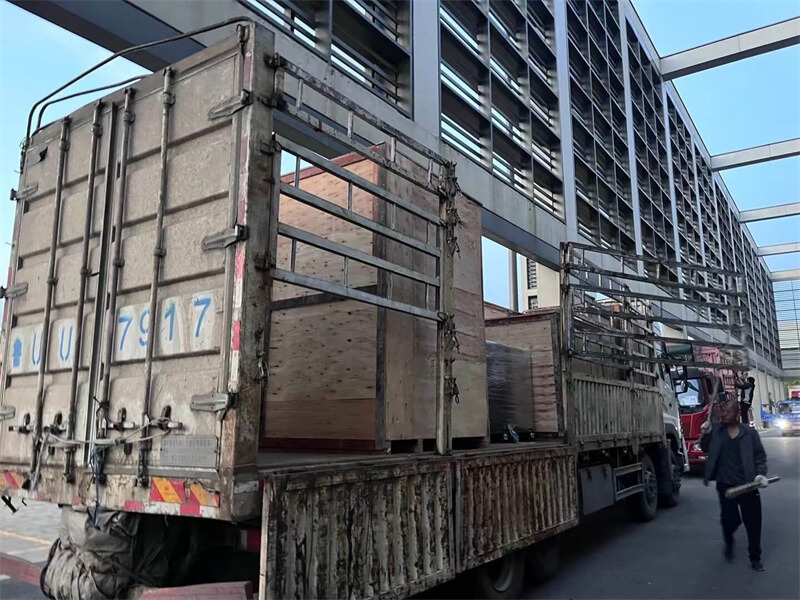
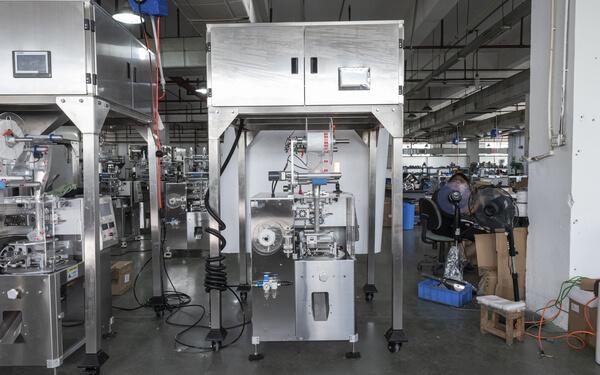
One field records 450 kg and the table records 500 kg. This difference affects delivery planning and floor review, not just copy editing. Confirm the shipped configuration and obtain a controlled packing list or nameplate record. The stored 1750 by 740 by 1950 mm dimensions can guide layout discussion, but service clearance and material-roll handling need additional space.
Close the handover package with the tea lot, metering recipe, inner and outer roll specifications, attachment settings, rejected examples and approved nested packs. Photograph the threaded web paths and label every change part. A later shift should be able to restore the accepted configuration without relying on a generic video or an unversioned screen image.
Questions for an inner-and-outer tea bag line
Can only the inner tea bag be tested?
No. Transfer, thread, label and envelope operations can introduce separate failures.
Is 80 bags per minute confirmed?
No. It conflicts with the 30-50 range and requires controlled source evidence.
Which machine weight is correct?
The 450 kg and 500 kg records must be reconciled before shipping plans are final.
Do both webs use one registration setting?
No. Filter material and printed envelope film need separate setup and release checks.
What should a retained pack show?
It should preserve tea weight, inner closure, attachment position, transfer orientation and outer-envelope quality.
Conclusion
Release the YS-169 only after the tea recipe, two web specifications, thread-and-label sequence and complete nested pack have passed together. Review adjacent options in the tea bag packaging machine category; keep speed and shipping weight outside the guarantee until their records agree.



 Tel: +8617350750975
 Email: info@vffspackingmachinery.com
 MP/WhatsApp: +8617350750975
 Manufacturer Address:Meixi Road, Tongan District, Xiamen,Fujian,China



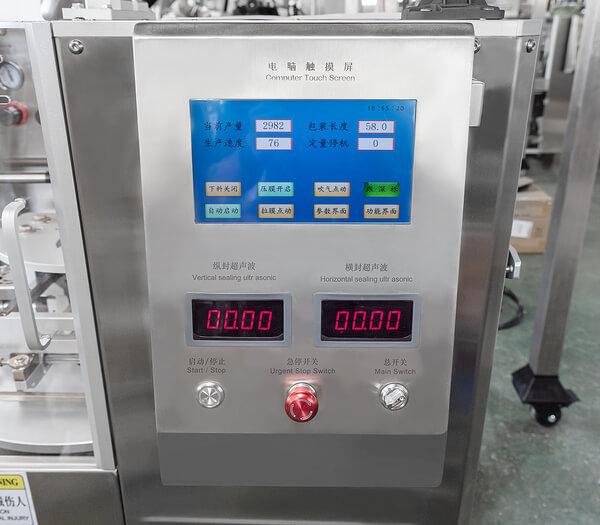
User-Friendly Design The intuitive design of this machine makes it easy for our operators to handle without extensive training.2024-08-09
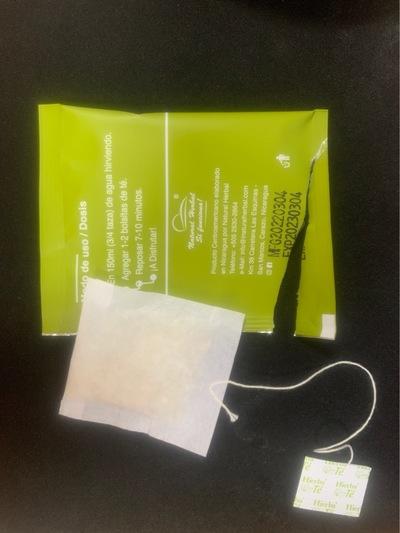
Cost-Effective Solution Investing in this machine has proven to be a cost-effective solution for scaling our tea production operations.2024-08-09
The machine runs very stably, and the ultrasonic bonding speed and stability are very high. I am very satisfied2024-08-09
Efficient and Reliable Our tea bag packaging machine has been incredibly efficient and reliable, meeting our production demands effortlessly.2024-08-09