


 Price:

Bulk density decides what a volumetric cup actually delivers
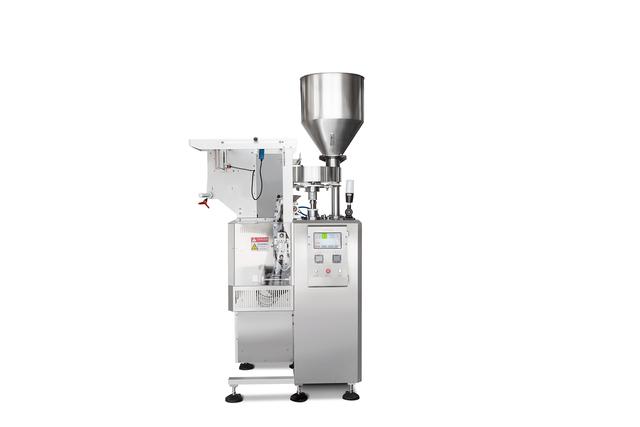
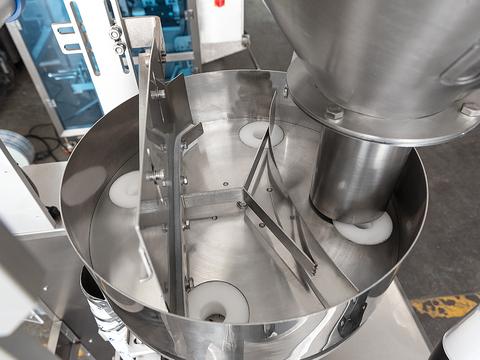
The specification identifies a volumetric cup system. A cup repeats volume, not mass. Rice, salt, seeds and coated snack pieces can therefore produce different weights from the same apparent cup setting. Start with measured bulk density, particle size distribution and the target pack tolerance. If the product contains broken pieces or fines, test whether they segregate in the hopper during a longer run.
The stored table lists 1-100 g while a summary field lists 3-100 g. Neither lower limit should be copied into a purchase guarantee until the intended granule is demonstrated. For a small target, collect individual packs rather than pooling them. At the upper target, watch whether the cup empties completely and whether the falling product clears the sealing jaws before they close.
| Granule behavior | Cup or feed risk | Observation |
|---|---|---|
| Uniform free-flowing grains | Volume may repeat well but density can shift between lots. | Compare beginning and end of each raw-material lot |
| Mixed sizes | Fines can settle while larger pieces remain near the top. | Inspect ingredient distribution and hopper residue |
| Light irregular pieces | A nominal volume may overfill the bag headspace. | Check bag shape and product above the intended fill line |
| Fragile or coated pieces | Impact and the knocking device may create damage. | Measure breakage before and after the machine |
High output depends on an empty sealing window
The old page describes a knocking device on the former and a vibration-assisted product path. Their purpose is to help material move down before the next seal. More motion is not automatically better. Excess vibration can increase breakage, move dust into the seal or disturb a light product. Set the device with the slowest-clearing production sample, then inspect the vertical path at full, half and low hopper conditions.

Count good bags after dosing and sealing are both stable
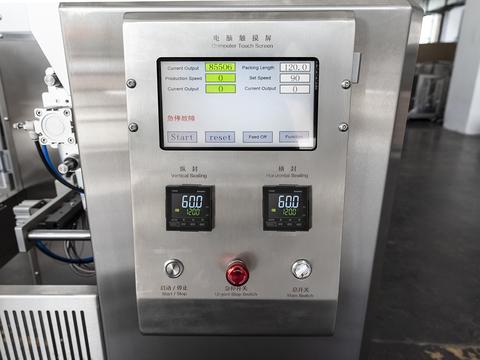
The title and summary field state 90-130 bags per minute, while the stored specification table states 80-130. This conflict prevents a clean speed claim. A trial should report the set cycle rate and the accepted discharge count separately. Deduct packs rejected for weight, trapped product, registration, weak seals or poor cuts. Include the coder and normal operator checks because a speed measured with those functions disabled is not a production result.
Record film waste and the time until both weight and seal checks reach the release condition.
Collect consecutive bags long enough to expose a repeating cup, registration or jaw-timing issue.
Repeat around a refill and at low product level to identify density or feed changes.
Stop with granules present, restart normally and inspect the first group for trapped pieces.
Narrow rollstock magnifies tracking and cut errors
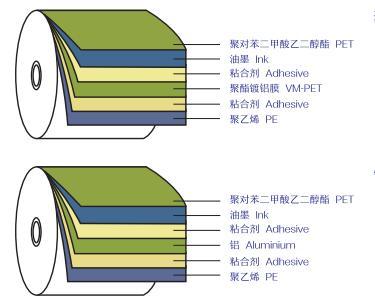
The stored bag window is 30-180 mm long and 20-75 mm wide. At the narrow end, a small lateral movement consumes a meaningful part of the seal allowance. Supply the printed repeat, eye-mark location, web width and roll direction with the film sample. The recorded servo film control should be evaluated through repeated starts, roll changes and speed transitions rather than by watching one uninterrupted run.
Back seal and three-side seal are identified in the table, while another summary also mentions four-side seal. Because the stored sources do not agree, the required package construction must be tied to a drawing and an actual sealed sample. Do not assume an extra seal format from a generic field.
The operating window must be tied to one product recipe
| Stored item | Evidence in the record | Release treatment |
|---|---|---|
| Fill range | 1-100 g in the table; 3-100 g in a summary | Hold the lower limit until a product trial reconciles it |
| Speed | 80-130 in the table; 90-130 in title/summary | Report set rate and accepted rate from the same run |
| Bag size | 30-180 mm long; 20-75 mm wide | Approve former, film and print repeat for each SKU |
| Machine planning | 790 x 1050 x 1600 mm; about 300 kg; 0.6 MPa field | Confirm utilities and access on the delivered configuration |
Wear and residue can change the cup result
Volumetric surfaces, gates and transfer chutes should be checked for retained particles, polished wear or sticky coating. A small clearance change can alter the released volume or leave pieces to fall late. Define which parts the operator removes, where rejected granules are collected and how the cup is returned to its verified setting. For mixed products, inspect whether one component remains after the rest has discharged.
Keep a simple maintenance baseline from the accepted trial: cup setting, product lot, weight distribution, vibration or knocking setting, seal temperature and representative bags. That record helps distinguish a material change from mechanical drift when output later declines.
Questions that expose a high-speed granule risk
Why can the same cup produce a different pack weight?
The cup repeats volume. A change in bulk density, particle mix or settling changes the mass occupying that volume.
Is 130 bags per minute the acceptance result?
Not by itself. The accepted count must exclude weight, seal, registration, cut and product-trap rejects.
What does the knocking device prove?
Only a trial can show whether it improves clearance without increasing breakage, dust or seal contamination.
Which lower fill limit should be used?
Neither conflicting stored value should be guaranteed until the intended granule is run and weighed individually.
Can four-side seal be assumed?
No. The stored table and summary differ, so the required construction needs a drawing and sample confirmation.
Conclusion
Release this machine only after the granule, cup setting, fall timing, rollstock and reject rules have produced a traceable accepted count. Compare the available granule packing machine configurations, but keep the conflicting speed and fill boundaries outside the guarantee until the source record is reconciled.




 Tel: +8617350750975
 Email: info@vffspackingmachinery.com
 MP/WhatsApp: +8617350750975
 Manufacturer Address:Meixi Road, Tongan District, Xiamen,Fujian,China