

Hot Keyword:
Author:YISEN Pouch Packing Machine Manufacturer TIME:2025-02-28
This approach prevents a common purchasing error: selecting equipment by an advertised output rate before confirming how the product behaves inside the hopper, feeder, bag, and seal. A well-matched line may use an auger, a cup, or another dosing method, but every component must work as one controlled process.
The right powder packaging machine is the one that can dose your actual powder, protect the seal area from dust, and produce acceptable packs across the full size range. Machine type alone does not settle the choice. Buyers should compare the powder's flow, aeration, bulk-density variation, dust level, target package, cleaning needs, and the evidence available from a test with production material.
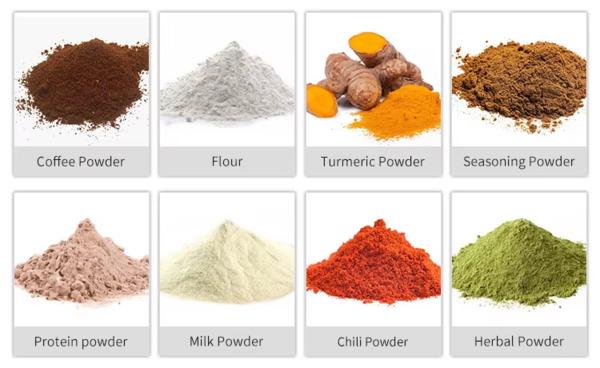
Ask the supplier to evaluate a representative sample rather than relying on a general label such as flour, spice, detergent, or protein powder. Two products sold in the same category can behave differently. Fine material may hold air after mixing, a hygroscopic blend may form lumps, and an abrasive mineral can accelerate wear. A free-flowing granulated powder may fill consistently by volume, while a cohesive formulation can bridge above the dosing device.
Record loose and settled bulk density, typical particle distribution, moisture sensitivity, tendency to create airborne dust, and any change after transport or storage. Also note whether ingredients separate during vibration. These observations affect hopper geometry, agitation, level control, dosing principle, dust extraction, contact-part finish, and the amount of time required for cleaning.
A sample should represent the difficult condition, not only a fresh laboratory batch. If seasonal humidity, warm product, or long warehouse storage changes flow, include that condition in the test plan. Stable filling begins with a realistic description of the material entering the line.
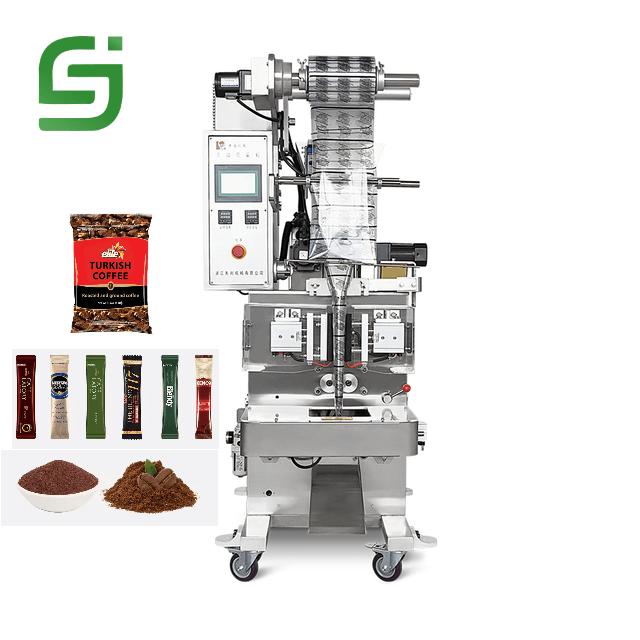
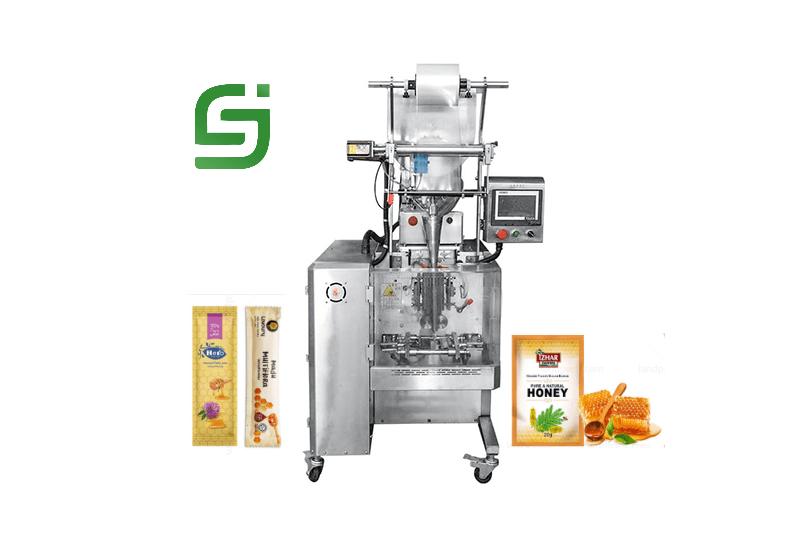
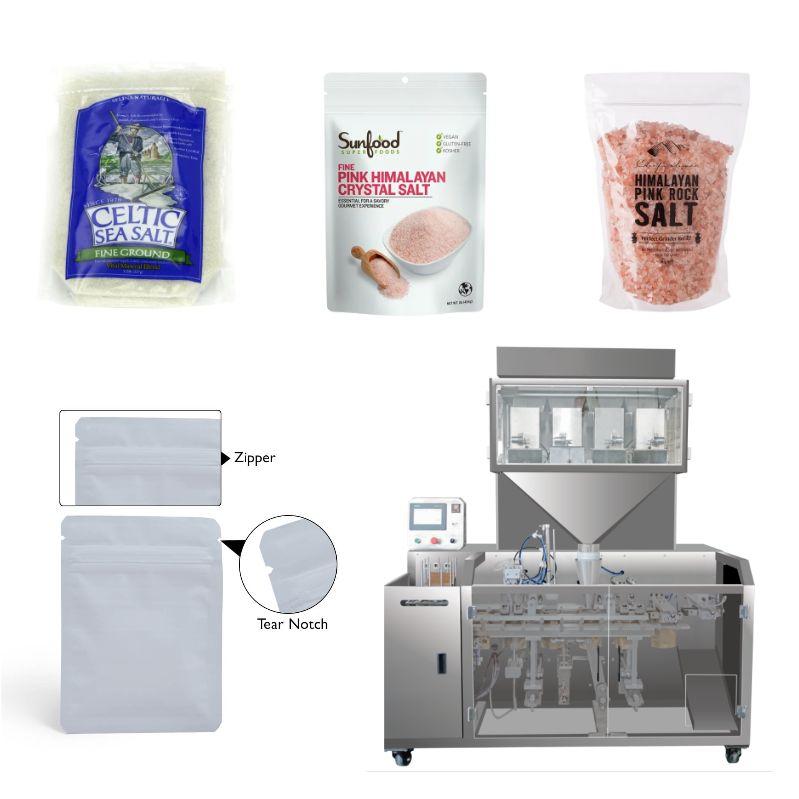
Form-fill-seal equipment converts rollstock into bags and is often considered when standard pillow, gusseted, or related formed formats are acceptable. A premade-pouch system handles bags manufactured separately and may be appropriate when the package requires a zipper, a shaped profile, a specific gusset, or a retail presentation that is difficult to form on the filling line. Small sachets and narrow stick packs create another set of film-tracking and dosing constraints.
The commercial package should therefore be defined before comparing frames. Provide a drawing with width, length, gusset, seal locations, usable fill opening, target fill weight, and maximum filled thickness. Include the laminate structure and roll or pouch dimensions. The machine supplier can then identify which formats are standard, which need change parts, and which are outside the operating envelope.
Do not assume that a wide size range on a brochure means every combination runs equally well. The smallest pack may challenge dosing and film control, while the largest may limit settling time, bag support, or seal cleanliness. Treat both ends of the range as separate acceptance cases.
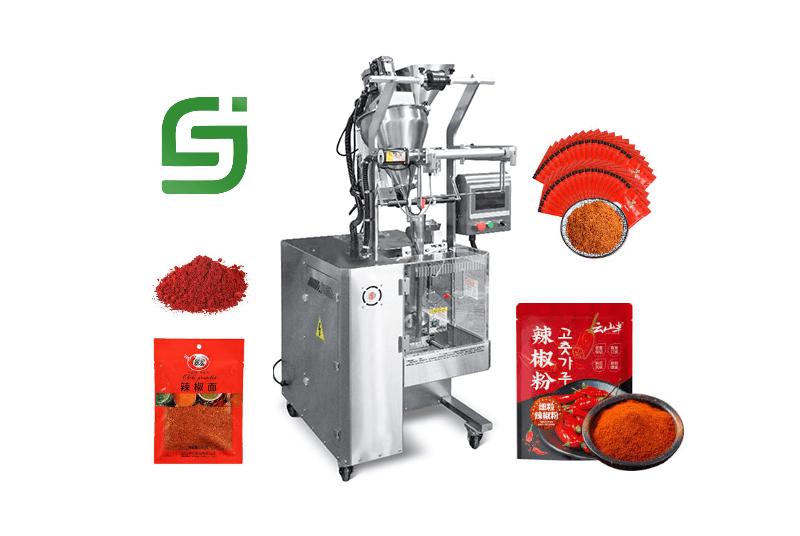
An auger filler meters product by screw rotation and is widely considered for fine powders and products that require controlled displacement. Performance depends on screw geometry, tube clearance, product head pressure, agitation, and recipe settings. Volumetric cups can suit products with sufficiently stable bulk density and flow, but a change in density changes the mass delivered by a fixed volume. Weighing systems measure mass directly, although product feeding, dust, target weight, and stabilization time still influence the result.
The useful question is not which device is universally most accurate. It is which arrangement meets your declared tolerance with your material at an acceptable operating rhythm. Review individual pack data instead of a simple average. A mean value can look correct even when too many packs fall outside the acceptable band.
For products that retain air, the line may need controlled agitation, deaeration, settling time, or additional bag support. These measures must be tested because aggressive vibration can also cause segregation or contaminate the seal area.
The package is part of the machine specification. Barrier properties should be selected for the product's sensitivity and intended distribution, while the sealant layer must provide a practical operating window on the proposed sealing system. Film stiffness, thickness, coefficient of friction, and curl influence tracking and forming. Premade pouches add pickup, opening, and presentation requirements.
Dust near the top seal is a frequent source of weak or leaking powder packs. Evaluate how the filling tube enters the bag, where displaced air exits, and whether extraction or cleaning devices keep the seal faces clear. A high nominal cycle rate has little value when contaminated seals create rework or customer complaints.
Ask for seal trials with the intended printed laminate. Clear test film can help commissioning, but it does not reproduce every property of production material. Printed registration, coding position, static behavior, and splice handling also belong in the evaluation.
Efficiency should describe saleable packs produced during a defined period, not the fastest mechanical motion observed without product. Establish how start-up, refilling, film changes, product changeovers, cleaning, minor stops, and rejected packs will be recorded. This turns a speed claim into an operating measure that production and purchasing can both understand.
For a fair comparison, run the same powder, package sizes, film, tolerance, and inspection method on each candidate. Count seal defects, weight rejects, coding errors, incomplete cuts, and interruptions. Record the reason and duration of every stop. A slightly slower machine with stable feeding, accessible cleaning points, and repeatable recipes may provide more accepted output over a shift.
Labor also matters. Check how operators load film or pouches, replenish powder, clear a safe stoppage, confirm a recipe, and collect samples. The goal is not to remove every manual action, but to make routine work predictable and controlled.
Food powders often require attention to allergen control, contact-part cleaning, dust containment, and documentation of materials. Nutritional blends may demand careful lot changeover and protection against ingredient separation. Detergents can be dusty, chemically aggressive, or moisture sensitive. Mineral and industrial powders may place greater emphasis on abrasion resistance, operator exposure control, and robust product-contact components.
These differences affect the boundary of supply. Confirm whether the quoted system includes the product elevator or vacuum loader, dust collection interfaces, checkweigher, metal detection, printer, discharge conveyor, and downstream case packing connection. The selected powder packing machine must also fit the available room, utilities, access routes, and cleaning method.
Never infer regulatory suitability from stainless-steel appearance alone. Ask the supplier to identify materials, finishes, accessible zones, and documentation included in the proposal. Your own quality team should decide which requirements apply to the product and market.
The table below provides a practical screening method. It does not declare one technology the winner; it shows what should be demonstrated before a candidate advances.
| Observed requirement | Likely design focus | Evidence to request |
|---|---|---|
| Fine, dusty, cohesive powder | Controlled hopper agitation, auger geometry, dust management | Continuous run using aged production material and seal inspection |
| Bulk density varies by batch | Mass-based control or recipes supported by frequent verification | Individual weight records from low- and high-density samples |
| Several retail pack styles | Defined format envelope, listed change parts, repeatable setup | Changeover demonstration for the smallest and largest packs |
| Frequent allergen or flavor changes | Tool-free contact-part removal and inspectable product paths | Documented cleaning trial and post-clean first-off checks |
| Abrasive nonfood material | Wear-resistant contact components and contained dust points | Material declaration, maintenance access review, spare-parts list |
A useful factory acceptance test defines pass criteria before the machine is built or shipped. Supply enough product and packaging material for stable running, restarts, adjustments, and destructive seal checks. Include the most challenging powder condition, smallest dose, largest pack, and any format that requires a substantial changeover.
Agree on the sampling frequency, calibrated reference equipment, acceptable weight band, seal inspection method, output calculation, and treatment of planned pauses. Confirm which recipes and change parts will be delivered. Photograph or record setup details that will help the receiving team repeat the result.
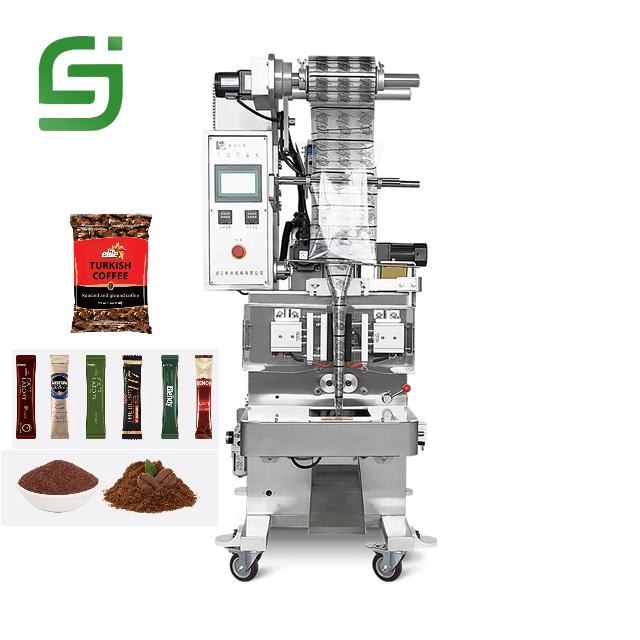
Approval should also cover guarding, alarms, manuals, electrical documentation, recommended spares, and training scope. A successful test is not a staged demonstration of a few attractive bags; it is evidence that the proposed system can recover from normal operating events and continue making conforming packs.
Is an auger filler always required for powder?
No. An auger is common for many fine or less free-flowing products, but the decision should follow material testing, dose range, tolerance, cleaning, and output needs. Some stable products may suit cups or weighing arrangements.
Should the fastest quotation be preferred?
Only after speed is defined under production conditions. Compare accepted packs, waste, stops, refilling, and changeover time with the same powder and package.
Can one machine run every bag size?
Every platform has a practical format envelope. Request written limits and test the extreme sizes because fill opening, bag support, forming, and sealing demands change across the range.
How can dust-related seal failures be reduced?
Control the drop path and displaced air, keep product away from the seal faces, and use extraction or cleaning features where trials show they are needed. The laminate's seal window must also be verified.
What samples should be sent to a supplier?
Send representative product from normal production, including the most difficult expected condition, plus production film or pouches and a completed pack specification. State storage and handling conditions for the sample.
Selecting powder equipment is a controlled matching exercise. Define the material, finished pack, dosing tolerance, hygiene boundary, and accepted-output target first; then make suppliers prove the difficult cases with your samples. That evidence reveals whether the filler, package handling, sealing system, and daily operating method belong together, which is far more useful than choosing from a machine name or an isolated rate.

YISEN MACHINERY - The ONE-STOP VFFS PACKING MACHINE SOLUTION SUPPLIER
 Tel: +8617350750975
 Email: info@vffspackingmachinery.com
 MP/WhatsApp: +8617350750975
 Manufacturer Address:Meixi Road, Tongan District, Xiamen,Fujian,China