


 Price:

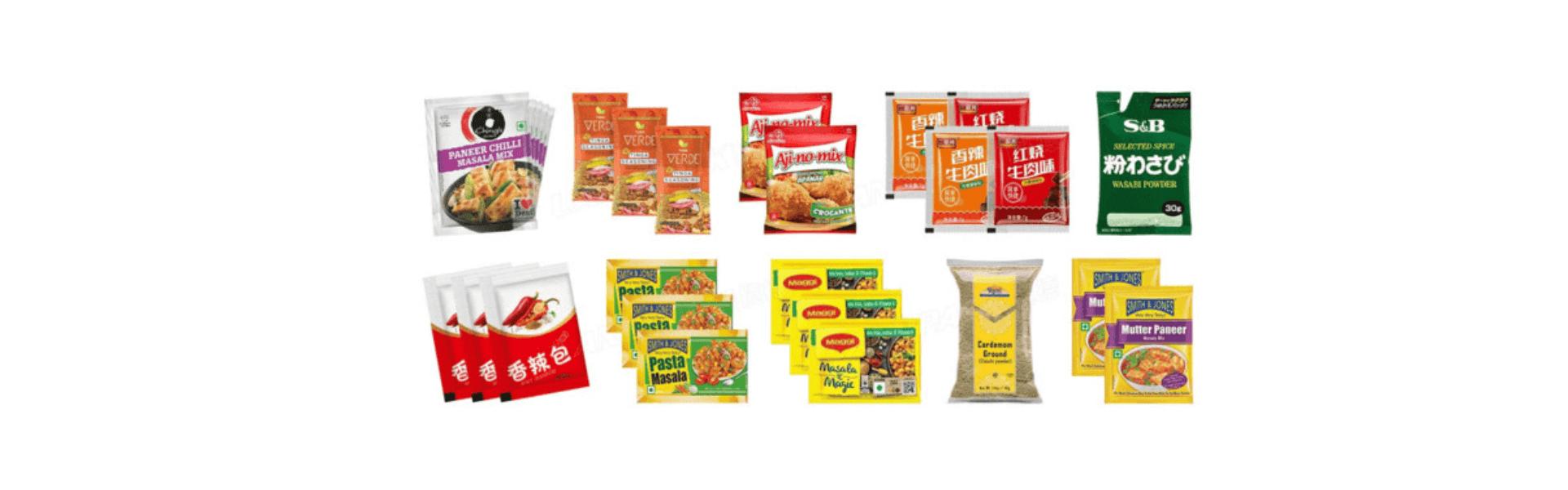
Define the blend by components that can separate
List each major ingredient, its particle size, approximate proportion, density, oiliness and sensitivity to humidity. Note visible inclusions such as herb flakes, pepper pieces or dehydrated vegetables. Supply a production-mixed lot and state the maximum time between blending and packing. A small laboratory jar may not reproduce segregation during hopper refill and low-level operation.
Weight data must be paired with blend-distribution evidence
Collect consecutive bags during startup, stable running, immediately after refill, near the planned low-level point and after a normal pause. Weigh each bag, then open selected samples and compare visible components or use the buyer's approved composition method. A correct average cannot compensate for alternating salt-heavy and herb-heavy sachets.
| Blend variable | Process risk | Trial observation |
|---|---|---|
| Fine salt or sugar | Dense particles settle and may dominate later portions. | Open-pack composition by run phase |
| Light herb flakes | Low-density pieces can remain above the dosing zone. | Ingredient distribution at low hopper level |
| Oily spice | Adhesion changes discharge and leaves residue. | Contact-point inspection and cleanup time |
| Hygroscopic powder | Lumps and bridges appear after room exposure. | Timed conditioning and refill behavior |
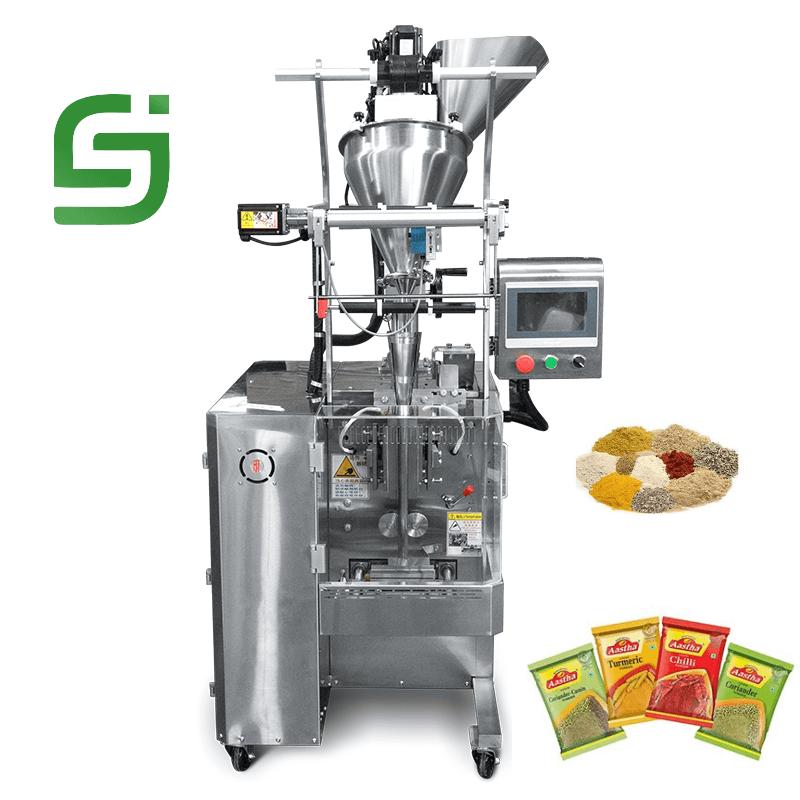
The fitted measuring device must match the commercial dose
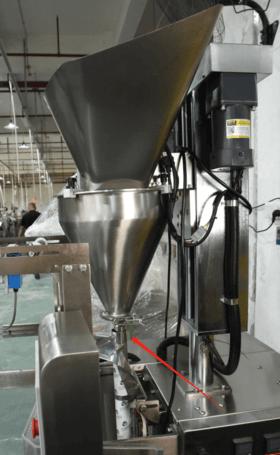
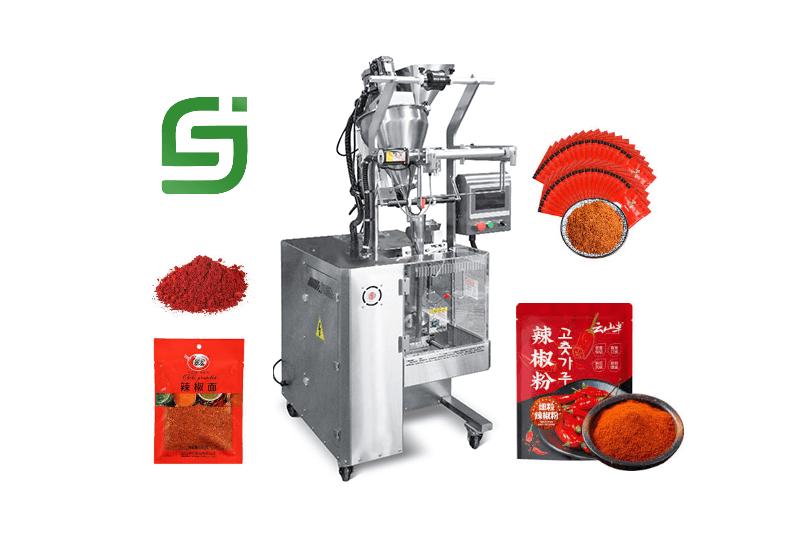
The current imagery shows a compact powder machine and hopper, but the delivered metering parts must be identified on the quotation. Approve the screw or other measure using the target dose, bulk density and largest inclusion. Record mechanical parts, recipe values and hopper level with the accepted samples so the setting is traceable after maintenance.
Protect the seal from late powder and oily residue
Watch the outlet after each dose and after a pause. A tail of powder can fall while the transverse jaws close. Inspect seals from a sustained run for dust, oil, wrinkles and channel leaks. Retain opened failures and link them to the product condition and machine setting. The acceptance rule should state when cleaning is required and how the first pack after cleaning is released.
Artwork, former and dose must use the same sachet drawing
The page lists 30-170 mm length and 30-130 mm width. Final width depends on the selected forming parts and web, while length also affects headspace and print repeat. Approve seal allowances, eye-mark position, roll direction, tear feature and code zone. Repeat acceptance for a materially different width or laminate instead of treating the whole stored window as one setup.
Record recipe, batch, conditioning time and representative ingredient sizes.
Keep weights and opened sachets from refill, low level, pause and restart.
Classify trapped powder, oil, wrinkles and delayed leakage.
Document emptying, contact-point cleaning and the first acceptable new blend.
Minimum fill is disputed where precision matters most
The summary records 3-100 g while the technical table records 1-100 g. Do not silently inherit the lower number from a related chili-powder page. The intended small dose must be proven with this seasoning blend, fitted measure, sachet and agreed tolerance. Until then, the bottom of the range remains an unresolved commercial limit.
Shipping and layout data need a controlled machine weight
The stored dimensions agree at about 900 by 1100 by 1900 mm, but machine weight appears as 400 kg in one field and 350 kg in the table. Confirm the delivered configuration before floor loading, lifting or freight plans are released. Add access for hopper filling, roll replacement, cleaning and operator movement to the layout.
The technical file should retain the blend batch, fitted measuring parts, recipe, former, web specification, seal settings and phase-labelled good and rejected sachets. Record which values an operator may edit and which changes require mechanical parts. This prevents a later product switch from being treated as a simple name change on the control screen.
Buyer questions for blended seasoning sachets
Does correct net weight prove a correct seasoning blend?
No. Dense and light ingredients can separate while total mass remains within tolerance.
Is a 1 g dose confirmed?
No. It conflicts with the 3 g lower field and needs a product-specific trial.
Why inspect opened seals?
Powder and oil can form leak paths that are not visible on the closed sachet.
Can one recipe cover every seasoning?
No. Density, particle size, oil and humidity response alter the feed setting.
Which machine weight should be used for freight?
Neither conflicting value should be final until the delivered configuration is documented.
Conclusion
Approve this YS-61F around one controlled blend, phase-separated composition and weight samples, a signed sachet drawing and residue-aware changeover. Compare machines in the powder packing machine category, but keep the lower fill and machine weight outside the guarantee until source evidence is reconciled.




 Tel: +8617350750975
 Email: info@vffspackingmachinery.com
 MP/WhatsApp: +8617350750975
 Manufacturer Address:Meixi Road, Tongan District, Xiamen,Fujian,China



User-Friendly Interface "The interface is so intuitive; even our new staff learned to operate it within minutes. Saves us a lot of training time!"2024-08-20

Precision Packing "Impressed with its accuracy! Every packet is consistently filled to the exact weight we need. No more wastage2024-08-20

Quiet Operation "Surprisingly quiet during operation. Doesn't disrupt our workspace like other machines we've used."2024-08-20

Efficient and Reliable "This machine has made our spice packing process incredibly efficient. It's reliable2024-08-20