

Hot Keyword:
Author:YISEN Pouch Packing Machine Manufacturer TIME:2024-08-20
The sequence sounds simple, but edible and industrial oils can expose weak points quickly. A small drip can travel into the top seal; temperature can alter flow; air in a supply line can disturb dosing; and a soft pouch can move while it is being filled. Understanding each stage helps buyers specify the right filling principle and helps operators diagnose defects without changing unrelated settings.
An oil pouch packing machine meters liquid from a controlled supply, presents an open pouch or forms one from rollstock, deposits the dose without contaminating the seal area, closes the package, and discharges it for inspection. Reliable operation depends on keeping product flow, pouch movement, filling cutoff, and sealing timing in balance.
The filling cycle begins upstream of the pouch. Oil may arrive from a day tank, heated vessel, tote, or process line, and its condition at the metering inlet should remain reasonably stable. Record the operating temperature, viscosity range, suspended seasoning or particles, foaming tendency, and whether the product separates while waiting. Supply pressure, tank level, pipe diameter, valves, filters, and refill logic can all influence the amount available to the dosing device. An accurate filler cannot compensate for a feed that repeatedly runs short or contains air pockets.
Design the supply route so it can be drained, isolated, inspected, and restored safely. Long hoses with high points may trap product or air, while poorly placed pumps can produce pulsation that reaches the dosing chamber. If temperature control is required for flow, define how it is monitored without overheating the product. The operator should be able to distinguish a low-product condition from a filling fault. A level signal or supply alarm is useful only when its response is clear and it does not allow partially filled packs to mix with accepted production.
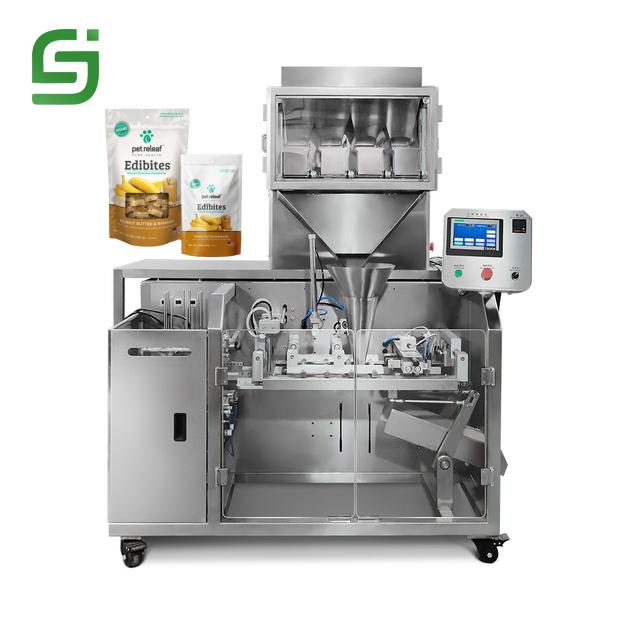
Different fillers control volume or mass in different ways. A timed gravity valve can suit a freely flowing, consistent liquid when head pressure is controlled. A piston arrangement mechanically draws and discharges a defined chamber volume and can offer a clear adjustment range for many viscous products. Pump-based systems can provide flexible product movement when pump selection, speed, and cutoff match the oil. A weighing approach measures delivered mass and may be considered where density or process conditions make volume-based control less suitable. No principle should be chosen from the product name alone.
Compare methods with the smallest and largest approved dose and with the oil at its realistic temperature limits. Watch refill behavior, valve response, aeration, product shear, and material left in the circuit after a stop. Samples should be collected consecutively rather than selected after the run. The filling specification must also state the scale and method used to verify doses, because tare variation in flexible pouches can affect interpretation. Separate dosing variation from pouch-weight variation before deciding that the machine needs adjustment.
Oil can be packed in pouches formed from rollstock or in premade formats, and the package path differs. A form-fill-seal configuration unwinds film, shapes it around a forming set, creates longitudinal and cross seals, fills, and cuts individual packs. A premade system separates finished pouches, opens their mouths, confirms presentation, fills, and applies the top seal. The correct choice depends on approved format, material construction, graphic requirements, changeover mix, and the way the filled pouch will be handled downstream.
In either format, the package must remain stable under the weight and movement of liquid. Film tension, registration, gripper position, pouch support, and fill timing should prevent skew or pull on a fresh seal. Test material lots that represent production friction, thickness, stiffness, and printing. For premade stock, examine opening consistency and top-edge flatness. For rollstock, observe tracking and seal overlap. Retain sample material and its specification with the recipe so a later packaging change is evaluated instead of silently introduced.
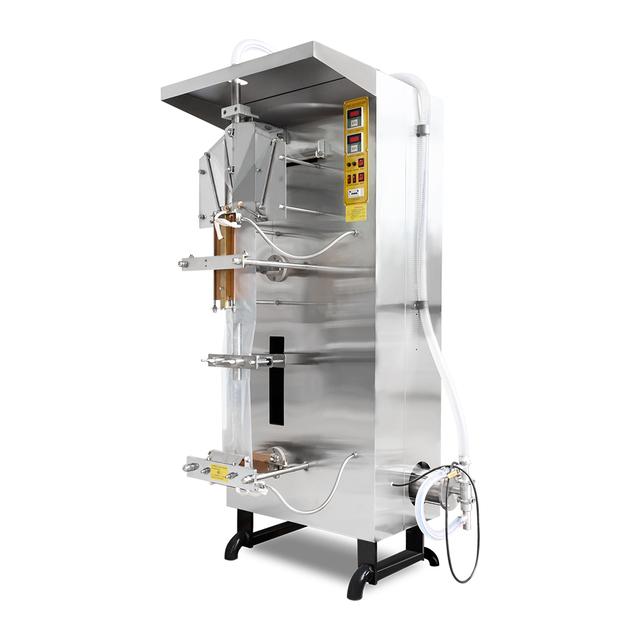
Once the pouch is presented, the nozzle enters or aligns with the opening and the dosing command begins. Nozzle diameter, tip design, diving movement, and distance from the product surface affect splash and cycle timing. The ideal cutoff ends the flow cleanly before the pouch moves. Oily strings or droplets that follow the nozzle can coat the inner seal band, machine surfaces, or pouch exterior. A drip-catching feature may help during transitions, but it should not hide an unstable valve, worn seal, unsuitable product temperature, or poor dosing profile.
Observe more than the steady cycle. At startup, confirm that lines are primed and that the first packs follow a defined release process. During a short stop, determine whether pressure continues to push oil through the nozzle. At restart, segregate pouches until fill and seal conditions are confirmed. When an alarm interrupts the stroke, the control system needs a known disposition for the pouch already under the nozzle. Clear recovery logic prevents an operator from manually completing a questionable pack and returning it to normal output.
A pouch can receive the correct amount of oil and still fail because its closing surfaces are contaminated. Allow enough unfilled top area for nozzle clearance, product settling, and stable seal presentation. Mechanical fingers or guides may flatten and control the mouth before sealing. The seal recipe must suit the approved film or pouch construction, with heat, pressure, dwell, alignment, and cooling considered together. Settings should be established through trials and restricted from casual alteration once the package is approved.
Inspect top seals for wrinkles, channels, product traces, displacement, and damage from downstream transfer. Leakage checks should follow a documented method appropriate to the package and its use. Coding also needs a dry, stable target area and synchronized trigger. If a code unit, seal station, or discharge conveyor rejects a pack, the reject path should be controlled so it cannot return unnoticed. The finished package, rather than machine motion alone, is the basis for deciding whether a cycle was successful.
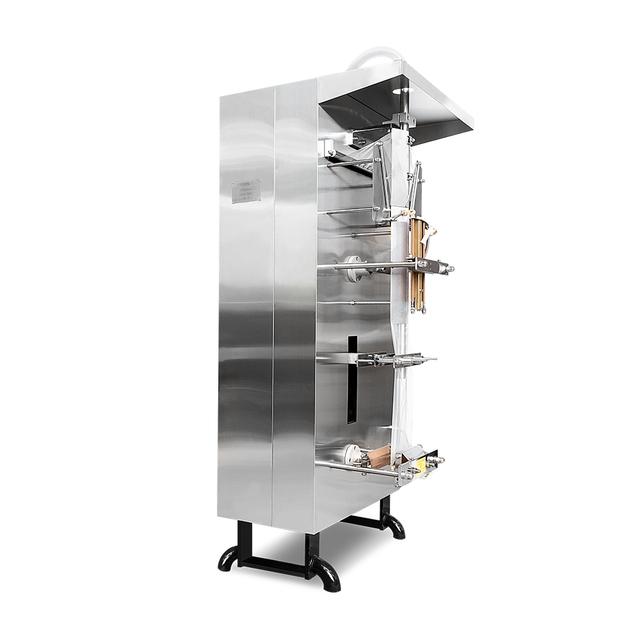
Useful controls connect physical events to pack disposition. Typical checks may monitor material position, pouch presence, opening confirmation, product availability, temperature status, guarding, and downstream readiness. Their exact arrangement depends on the machine, but each alarm should answer three questions: what stopped, what happened to the current pouch, and what must be verified before automatic operation resumes. An alarm list without recovery instructions leaves operators to invent decisions under production pressure.
Recipes should contain only parameters relevant to the approved product and format, with access levels for critical changes. A saved name does not guarantee that the correct nozzle, hose, seal tooling, or pouch guide has been installed, so change-part checks remain physical. First-off release after a recipe change should include dose, seal, code, appearance, and leak criteria defined by the buyer. Trend records can be useful for maintenance, but they should support observation rather than replacing routine inspection of product-contact parts and sealing surfaces.
Oil films are easy to spread and difficult to judge by a quick visual glance. Review the complete contact path from supply connection through pump or dosing chamber, valves, hoses, and nozzle. The cleaning method should define recovery or disposal of remaining product, safe isolation, disassembly, approved cleaning agents, rinsing where applicable, drying, reassembly, and inspection. Dead spaces, threaded joints in contact zones, low points, and inaccessible seals deserve attention during design review because they can retain old product.
Changeover evidence should include the time and work needed to reach the buyer's line-clearance standard, not only the moment when filling stops. Identify parts by product or size where mix-ups are possible, and provide storage that protects cleaned surfaces. After maintenance on a valve or piston seal, the first production run should include leak observation and dose verification. A clean exterior does not prove that the internal circuit is ready; documented contact-path inspection gives a stronger basis for release.
A purchase trial should combine the actual oil, approved package, proposed filling parts, and intended operating states. Record product temperature, supply level, pouch or film lot, recipe, operators, run duration, stops, interventions, and inspection results. The following matrix helps separate equipment function from evidence that still belongs to the buyer's product and package approval work.
| Stage | Observe during the run | Decision evidence | Common follow-up |
|---|---|---|---|
| Product supply | Level changes, air entry, pressure, and refill events | Stable feed at the metering inlet | Revise tank, pipe, pump, or alarm scope |
| Metering | Consecutive dose results at realistic temperatures | Variation assessed with a defined measurement method | Adjust filler principle, range, or product conditioning |
| Nozzle cutoff | Splash, strings, drips, and interrupted strokes | Seal band remains clean through normal operating states | Change tip, valve response, motion, or fill profile |
| Pouch closure | Alignment, wrinkles, oil traces, code, and transfer | Approved seals and appearance after handling | Review package material, support, or seal recipe |
| Restart | Pouch disposition and first-off inspection | Written recovery returns the line to accepted output | Improve alarm message and release procedure |
The relevant liquid packaging machine range can provide a starting point for configuration discussions. Final selection should follow a witnessed trial and a written scope covering product supply, filling method, pouch type, sealing, coding, discharge, guarding, utilities, manuals, training, and spare parts. Any condition not demonstrated should remain open with a named owner and a defined retest, rather than being converted into an implied guarantee.
Why does oil temperature matter to the filler? Temperature can change viscosity and flow response, which may affect valve cutoff, filling time, splash, and the behavior of a volume-based dose. Trials should cover the intended production range.
Is a piston filler always better for oil? No single filling principle is automatically best. Dose range, viscosity, cleanliness, particles, supply conditions, changeover, and verification method should guide the choice.
What causes oil to enter the top seal? Common contributors include nozzle drips, splash, overfill, insufficient headspace, unstable pouch support, and movement before product settles. Evidence from the exact cycle is needed before adjustment.
Should the first pouches after a stop be accepted? They should follow the buyer's defined restart and first-off inspection procedure. Priming, product pressure, and sealing conditions may differ after an interruption.
Can one setup handle every pouch size? A machine may cover an agreed range with recipes and change parts, but each approved size still needs trials for presentation, filling clearance, support, sealing, coding, and discharge.
Oil pouch equipment works by synchronizing a stable liquid supply, suitable metering device, controlled package path, clean nozzle cutoff, and verified sealing cycle. Most performance problems arise at the interfaces between those functions, which is why a complete-line observation is more informative than testing the filler or empty pouch transport in isolation.
Buyers should bring representative oils and production packaging to the trial, record consecutive results, and deliberately include refill, stop, alarm, and restart. When the accepted pack definition and recovery rules are written before purchase, supplier comparisons become clearer and the eventual handover gives operators a practical basis for controlling output.

YISEN MACHINERY - The ONE-STOP VFFS PACKING MACHINE SOLUTION SUPPLIER
 Tel: +8617350750975
 Email: info@vffspackingmachinery.com
 MP/WhatsApp: +8617350750975
 Manufacturer Address:Meixi Road, Tongan District, Xiamen,Fujian,China