

Hot Keyword:
Author:YISEN Pouch Packing Machine Manufacturer TIME:2024-08-20
A pet food packing line receives product from storage or processing, meters a defined portion, presents a pouch or forms one from film, fills it, keeps product away from the seal zone, closes the package, prints traceability data, and sends acceptable packs downstream. Dry kibble, treats, powders, and moist foods need different feeding and dosing equipment.
Product may arrive through a bucket elevator, incline conveyor, vacuum transfer line, pump, or manually loaded hopper. A buffer keeps the doser supplied without crushing pieces or allowing unnecessary residence time. Level sensors request replenishment, while the dosing device releases one portion when the packaging section is ready.
The bagger opens a premade pouch or pulls rollstock over a forming collar. It verifies package presence, dispenses the dose, settles food below the seal area, and closes the top. A coder applies lot or date information, and inspection devices may check weight, metal contamination, seal quality, or printed data. Coordinated controls prevent one station from continuing when the next cannot accept a pack.
Upstream and downstream interfaces must be included in the operating sequence. A full weigher with a stopped bagger needs a controlled hold; an empty weigher should prevent empty bags from reaching the sealer. Downstream accumulation should slow or stop new packs before they collide. These interlocks protect food and packaging material while giving operators a predictable restart point.
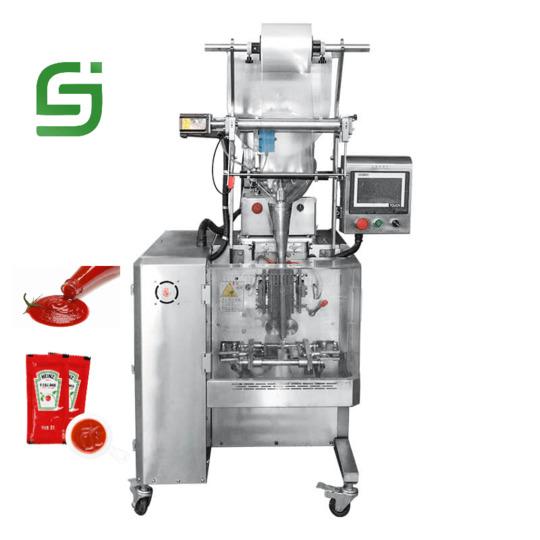
Dry pet food is not always easy-flowing. Coated kibble can leave oil on contact surfaces, mixed shapes can separate during vibration, and brittle treats may break at steep drops. Hopper angles, gate openings, vibration, drop height, and conveyor speed affect the condition reaching the package. Supply should remain steady without excessive agitation.
Trials should include fines from the bottom of a bin and intact pieces from the top. If a blend contains different densities or sizes, sample composition as well as total weight. Bridging above the doser creates intermittent starvation, while harsh movement increases crumbs. Access for removing lodged pieces must be safe and should not require reaching into moving equipment.
Multihead weighers are widely used for kibble and discrete treats because several partial weights can be combined efficiently. Linear weighers suit some simpler products or lower outputs. Volumetric cups are economical where bulk density is stable, but recipe or coating changes may shift net weight. Powdered supplements often need auger dosing, while wet food requires a pump or piston path designed for its texture.
Evaluate individual weights and average giveaway. The declared-quantity plan may include a minimum, so repeatability alone does not set the target. Check calibration, vibration isolation, refill behavior, buildup, and timing between doser and bagger. A pet food packaging machine should reject or stop for a missing bag instead of releasing a measured portion to the floor.
Mixed products require an additional composition check. A pack can meet total weight while containing too few high-value pieces because vibration has separated the blend. Collect samples from different points in the bulk supply and from the beginning, middle, and end of a run. If composition changes, adjust handling and replenishment before increasing dosing corrections.
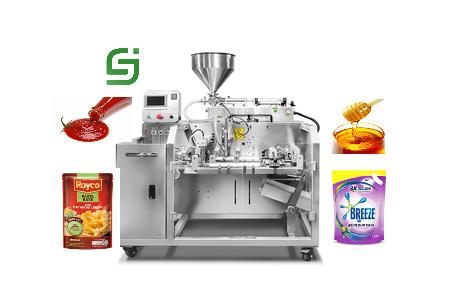
Premade-pouch equipment picks a finished bag, indexes it through opening and filling stations, and can handle zippers or stand-up formats. Vertical form-fill-seal equipment creates a bag from rollstock, commonly offering economical material use and compact integration. The choice depends on size, closure features, output, material specification, and shelf presentation.
For rollstock, tension, registration marks, forming geometry, and pull belts keep the web aligned. For premade bags, pickup, opening vacuum, gripper position, and pouch stiffness are central. In both cases, material variation must be tested. A bag that runs when perfectly flat may fail after transport introduces curl, while zipper position can restrict filling clearance.
The measured portion should travel through a path sized for the largest piece without sharp transitions. A long uncontrolled drop can break kibble and generate dust. Timing must let the dose clear before sealing begins. Settling devices may reduce trapped product near the top, but aggressive shaking can separate a blend or damage fragile treats.
Powder coatings and crumbs collect around filling tubes and jaws. Local extraction can help if airflow does not remove light ingredients from the dose. The bag needs enough headspace for a clean closure and any required gas flushing. Operators should inspect the contact route at planned intervals rather than waiting until buildup causes leakage.
Bag volume should be reviewed with bulk density and trapped air, not net weight alone. A light extruded kibble can require much more space than a dense treat at the same weight. Overfilled bags are difficult to seal and case-pack, while excessive empty volume wastes material and transport space. Test product settling through normal conveyor movement before fixing bag length.
Seal performance depends on laminate structure, temperature, pressure, dwell, alignment, and a clean interface. Oily dust or trapped kibble can create a channel even when the closure looks complete. Establish an appropriate peel, burst, or leak evaluation and define visual criteria. Condition samples first if strength changes during cooling.
Modified-atmosphere applications add gas-flow, residual-oxygen, bag-volume, and timing controls that must follow the product shelf-life plan. Zippers should remain usable without weakening the primary seal. Finished packs need adequate support before being dropped, conveyed, or stacked. Weak transfer design can damage an otherwise sound package.
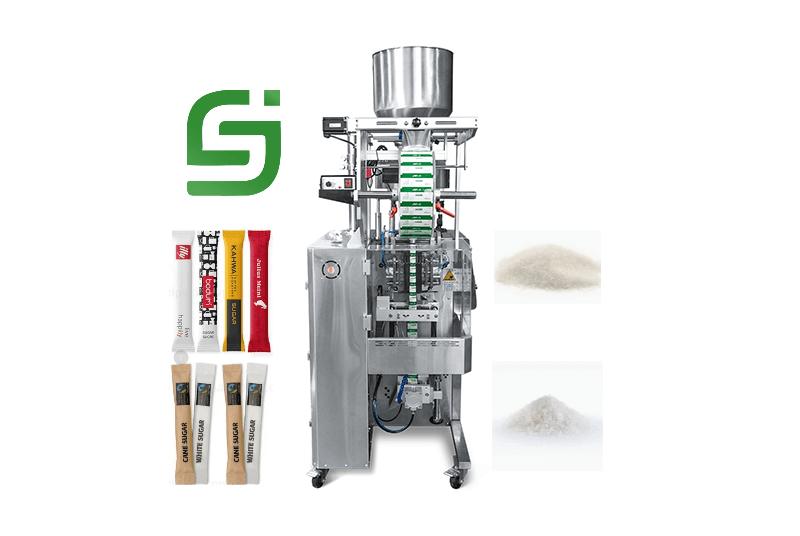
The controller synchronizes feeder demand, dosing release, package motion, filling, sealing, and discharge. Sensors verify film marks, pouch presence, guards, temperature, air pressure, and downstream availability. Recipe screens reduce setup time, but access levels should prevent casual changes to critical values. Each alarm needs a recovery procedure that protects product already inside the system.
Coding belongs to release quality. Confirm content, position, legibility, and timing after roll or pouch adjustments. When checkweighing, metal detection, or vision inspection is fitted, challenge the reject path and ensure rejected packs cannot return to accepted output. Production records should connect product lot, recipe, material batch, inspection checks, and significant stops.
Alarm recovery should identify which packs are uncertain. Product between the doser and sealer during a power interruption may have an incomplete dose or no traceability code. Define the physical zone to clear, the waste container, and the authorization to resume. This prevents questionable packs from being manually placed back on the accepted conveyor.
An acceptance run should use representative food and production packaging. Include smallest and largest doses, difficult pieces, normal fines, startup, steady operation, replenishment, an intentional stop, and restart. Count accepted packs for a defined period and record interventions instead of quoting only the maximum cycle setting on the panel.
| Process area | Buyer check | Evidence to keep |
|---|---|---|
| Feeding | No bridging, excess breakage, or separation | Samples and observation log |
| Dosing | Weights and giveaway meet the plan | Sequential data with conditions |
| Bag handling | Approved materials open or form reliably | Material lots and retained bags |
| Seal quality | No trapped food and tests pass | Finished packs and test record |
| Recovery | Restart does not mix rejected output | Alarm challenge checklist |
Inspect cleaning access and perform a realistic format change. Note parts, tools, settings, time, and first released packs. Approve the related pet food packing machine only with feeder, doser, package material, inspection equipment, and downstream interfaces identified.
Site acceptance should repeat critical checks with local utilities and production personnel. Compare air pressure, power quality, product transfer distance, room conditions, and material storage with the supplier test. Any difference that changes results should be recorded with a correction and retest. The handover package needs settings, change-part lists, calibration instructions, sanitation steps, and agreed spare parts.
Maintenance planning should connect wear points to food and package defects. Weigher gates, load cells, pull belts, vacuum cups, heaters, release tapes, temperature sensors, and cutting parts deserve condition checks suited to their function. After maintenance, verify calibration, guarding, recipe selection, and first-off packs before releasing normal output. This closes the gap between mechanical repair and product-quality approval.
Can one line pack kibble and pet food powder?
The bagger may be shared, but the products normally require different dosing and dust-control arrangements. Changeover controls must be tested.
Why is a multihead weigher used for kibble?
It combines portions from several weigh hoppers, supporting useful speed and accuracy across discrete pieces with natural variation.
What causes food to enter the top seal?
Common causes include excess fill height, poor settling time, dust, bouncing pieces, or sealing before the dose has cleared.
Does faster cycle speed always raise output?
No. Feeding shortages, weight corrections, opening failures, seal defects, and downstream stops can reduce accepted production.
Which materials should be taken to a supplier test?
Bring normal and difficult product lots, approved rollstock or pouches, coding consumables, and enough material for stable operation plus stops.
Pet food packing is a coordinated process rather than one filling action. Feed stability, suitable dosing, controlled package presentation, clean sealing, traceability, inspection, and restart behavior all determine saleable output. The clearest evaluation uses real food, normal fines, approved materials, and the operating events that factory teams will face after installation.

YISEN MACHINERY - The ONE-STOP VFFS PACKING MACHINE SOLUTION SUPPLIER
 Tel: +8617350750975
 Email: info@vffspackingmachinery.com
 MP/WhatsApp: +8617350750975
 Manufacturer Address:Meixi Road, Tongan District, Xiamen,Fujian,China