

Hot Keyword:
Author:YISEN Pouch Packing Machine Manufacturer TIME:2024-09-18
Granular packing machines can be customized for different packaging sizes when the requested weights, bag dimensions, product volumes, and sealing needs fit a defined machine configuration. Flexibility comes from a suitable filler range, forming or pouch-handling parts, stored recipes, and repeatable changeover. It should not be interpreted as unlimited size coverage. The safest specification lists every planned product-pack combination and proves the extremes with representative material.
A statement such as "small to large bags" is not sufficient for engineering. Net weight tells the commercial quantity; bulk volume tells how much space the product occupies; width affects forming, gripping, and seal length; finished length affects film draw, headspace, and discharge. Gussets, closures, and seal allowances add further dimensions.
Create one row for each planned stock-keeping unit. Include product name, target quantity, expected density range, bag type, flat dimensions, film or pouch specification, code area, and case orientation. Flag new formats that have not yet been converted into packaging samples. The resulting matrix becomes the common reference for filler, bagger, and downstream review.
Nominal dimensions should include tolerances. Premade pouches can vary by converter lot, while rollstock changes in thickness or stiffness can influence tracking and forming. The machine must handle approved production variation, not only a perfect drawing.
Granules vary widely. Dense salt, light expanded pieces, irregular pet treats, fragile snacks, mixed components, and dusty crystals create different volume and handling requirements. The largest net weight may not produce the largest bag, and the smallest weight may be difficult if the product is bulky or the filler cannot meter it steadily.
Measure bulk density under conditions that resemble production. Note flow, bridging, segregation, breakage, dust, static, and moisture sensitivity. For mixtures, verify that feeding and transfer do not separate components. Include the least cooperative normal lot when choosing the format extremes for trial.
Leave appropriate headspace for the filling stream and sealing process. A tightly filled bag may look efficient but can place product in the jaw area or prevent a pouch from closing flat. A bag that is much too large can look underfilled and move poorly through downstream handling.
A weighing system must have suitable resolution, bucket capacity, and feed control at the smallest and largest doses. A volumetric system needs stable density and a chamber or cup range appropriate to each product. Large ratio changes may justify alternative components or separate fillers. A touchscreen target does not override the physical metering range.
Review dose time as well as quantity. A large fill may take longer to deliver and settle; a tiny fill can become a small fraction of the filler's normal capacity. Product supply should keep the hopper level stable without overloading the feeder. Check behavior when the supply refills and after the line restarts.
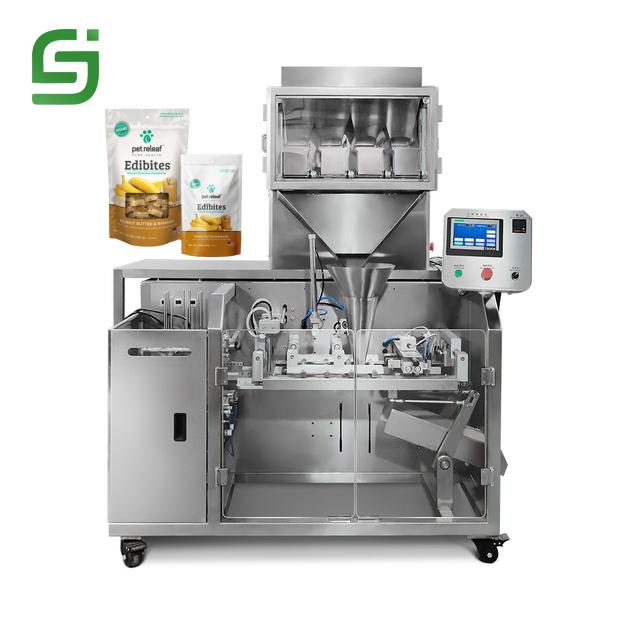
The proposed granular packing machine should have each filler configuration identified in the size matrix. If a product needs another weigh head, cup set, gate, chute, or feeder surface, list it as a format part rather than hiding it inside a generic customization claim.
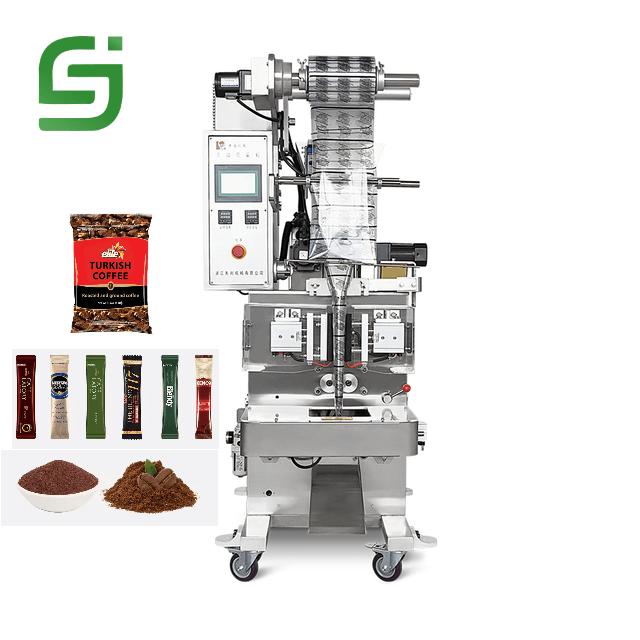
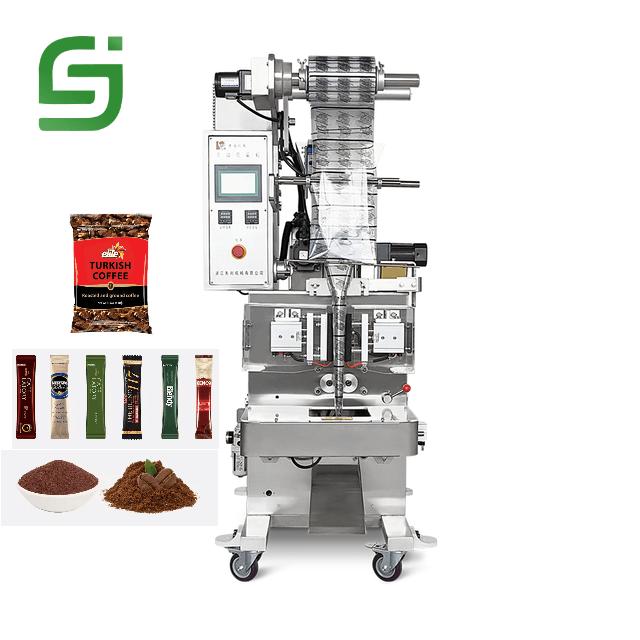
On a vertical form-fill-seal line, bag width is related to the forming set and film path. Different widths may require separate forming collars and tubes. Bag length is commonly controlled through film draw and registration within an approved range. Seal jaws, gusset devices, hole punches, and coding positions also need to suit the format.
On a premade-pouch line, size change affects magazine guides, suction pickup, grippers, opening devices, fill clearance, support, and top sealing. Width and length are not independent because a particular pouch shape must travel through every station. Obtain approval for specific combinations.
Film structure is part of the size decision. A heavier pack may require different strength, while another product may need a different barrier. Material suitability should be validated with the product and packaging supplier. The machine trial then confirms tracking, presentation, and sealing.
Recipes can store target quantity, feed behavior, bag length, registration, sealing values, and timing. Physical width, pouch grip, filling passage, guides, or supports may still require parts and manual setup. A complete changeover sheet should show both categories in sequence.
Use durable identification for format sets. Provide storage that prevents damage to forming surfaces, seals, and guides. Reference marks or indexed positions help operators restore the approved setup. The machine should be locked and safe before components are moved, following the manufacturer's procedure.
After change, inspect a first-off set before releasing production. Confirm product identity, quantity, bag dimensions, print position, seal condition, code, and appearance. A saved recipe is useful only when it is paired with the right hardware and material.
Name recipes by product and package code, not informal descriptions. Restrict quality-critical edits to authorized users and retain a record of justified changes. An operator may need a limited correction window, while engineering values remain protected. This reduces accidental overwriting of a proven format.
Document the product condition expected by the recipe. A volumetric dose can shift when density changes; a weighing process can become unstable when feed behavior changes. Recipe control is not a substitute for incoming-product and supply control. Link abnormal results to troubleshooting before changing the target.
| Format element | Often recipe-controlled | May require hardware or review |
|---|---|---|
| Target quantity | Setpoint and feeder behavior | Filler capacity, resolution, cup, gate, or chute |
| Finished length | Film draw and registration value | Machine travel limit or downstream support |
| Bag width | Limited guide positions | Former, tube, grippers, magazine, or sealing width |
| Product handling | Vibration or timing within limits | Contact geometry for fragility, dust, or bridging |
| Seal process | Approved temperature and timing recipe | Jaw pattern, material compatibility, or contamination control |
A broad size range has value only when the factory can use it efficiently. Estimate film or pouch replacement, product removal, cleaning, parts exchange, mechanical positioning, recipe selection, coder adjustment, trial packs, and quality release. A quick electronic change can still be followed by a long sanitation or approval period.
Consider production scheduling. Grouping compatible sizes may reduce work and material loss. Frequent movement between the smallest and largest formats can consume capacity and increase setup risk. Sometimes two narrower-range configurations provide better availability than one heavily modified line serving every order.
Include spare and replacement planning for dedicated format parts. Record part references and ownership. If a future package is only a possibility, decide whether to reserve space or capacity now and leave final hardware until samples exist.
Select trial formats by technical difficulty, not simply smallest and largest net weight. Include the lowest stable dose, the highest product volume, the widest or narrowest bag, the most fragile or irregular granule, and a demanding film or pouch. One format may cover several extremes, but the choice should be explained.
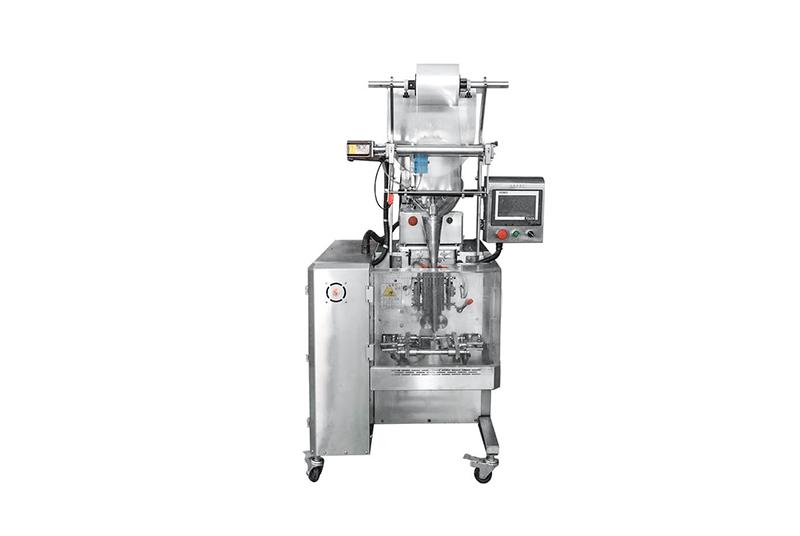
Run each configuration long enough to observe startup, steady output, refill, stop, and restart. Measure ordered quantities, bag dimensions, material tracking or pouch opening, product loss, seal contamination, coding, discharge, and operator intervention. Demonstrate at least one representative changeover and record the setup.
Classify matrix rows as tested, accepted by documented similarity, or still requiring review. This status is more honest and useful than claiming every theoretical combination. Future additions can then follow the same approval path.
Downstream equipment should be included in the size review. A compact bag may pass easily through a checkweigher and case conveyor while a long, lightly filled bag folds or changes orientation. A heavy large pack can overload a short transfer or strike a guide. Verify conveyor width, detector aperture, reject action, accumulation, and case presentation for the formats at both ends of the matrix.
Keep approved filled samples beside the format documentation when site procedures permit. They give operators a physical reference for fill level, seal position, and final shape after settling.
Can one filler cover a very wide weight range?
Sometimes, but accuracy, resolution, chamber volume, feed stability, and dose time must remain acceptable at both ends. Alternative components may be necessary.
Does changing bag length require a new forming tube?
Often length is adjusted within the control and travel range, while width is more closely tied to forming hardware. The exact machine configuration decides.
Can package sizes be added after installation?
Yes when they fit the mechanical and filling envelope, but drawings, samples, product volume, film, change parts, and a validation run still need review.
What is the most important trial format?
The technically hardest combination, which may be a low dose of light product, a bulky fill, a narrow bag, or a format with difficult sealing.
How should format parts be managed?
Label them by package code, protect them in dedicated storage, record setup references, and include condition checks in preventive maintenance.
Customization can give a granular line a useful package range when that range is defined as real product-and-bag combinations. Map weight, volume, dimensions, material, filler setup, physical parts, and recipe values for every format. Prove difficult corners and the change between them. The resulting matrix tells production what flexibility is available, how to reproduce it, and which future requests still need engineering.

YISEN MACHINERY - The ONE-STOP VFFS PACKING MACHINE SOLUTION SUPPLIER
 Tel: +8617350750975
 Email: info@vffspackingmachinery.com
 MP/WhatsApp: +8617350750975
 Manufacturer Address:Meixi Road, Tongan District, Xiamen,Fujian,China