

Hot Keyword:
Author:YISEN Pouch Packing Machine Manufacturer TIME:2024-09-20
Choose the machine type after defining the retail package, target quantity, sauce range, production pattern, and cleaning method. Similar-looking packs can require very different mechanisms and operating responsibilities.
Ketchup equipment is commonly divided by package source and format: rollstock machines that form sachets or bags, premade-pouch systems that open and seal supplied pouches, and filling systems integrated with rigid containers or specialized packs. Within each group, the liquid supply and dosing design must still match ketchup viscosity, particulates, temperature, and cutoff behavior.
Rollstock equipment creates a package from film during the cycle. Premade systems receive an already converted pouch with its shape, zipper, spout, or other features. Rigid-container lines handle bottles, cups, or trays through separate filling and closing operations. Start with this distinction because it determines material supply, changeover parts, sealing motion, and the relationship with the package converter.
Next define the finished package drawing. Include dimensions, fill opening, headspace, seal widths, closure, code area, artwork direction, cut or tear feature, and downstream orientation. The drawing should be reviewed by marketing, package development, quality, production, and machine suppliers. Selecting machinery before these details are stable can lock the project into the wrong forming or handling method.
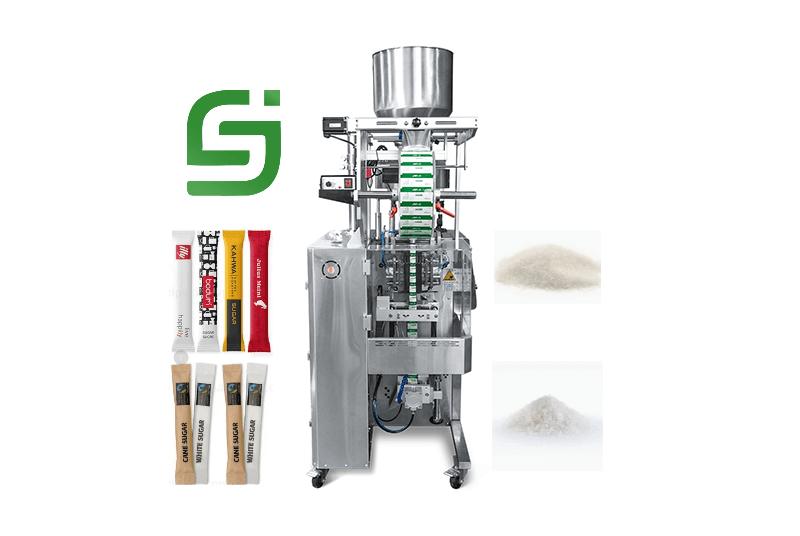
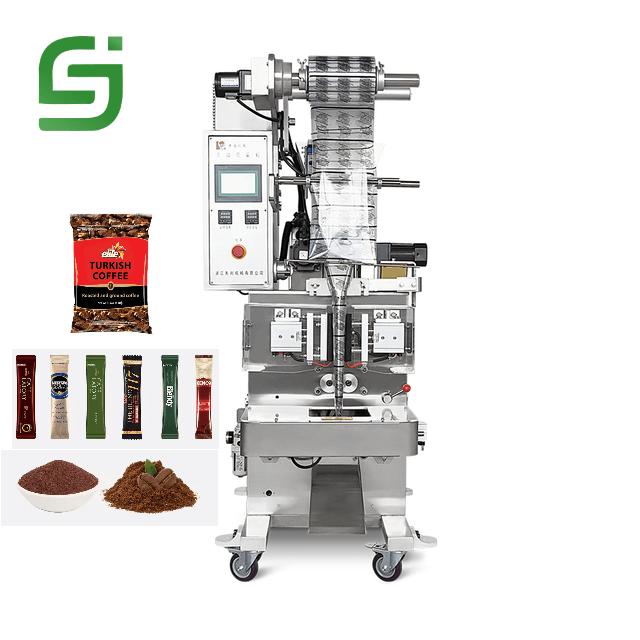
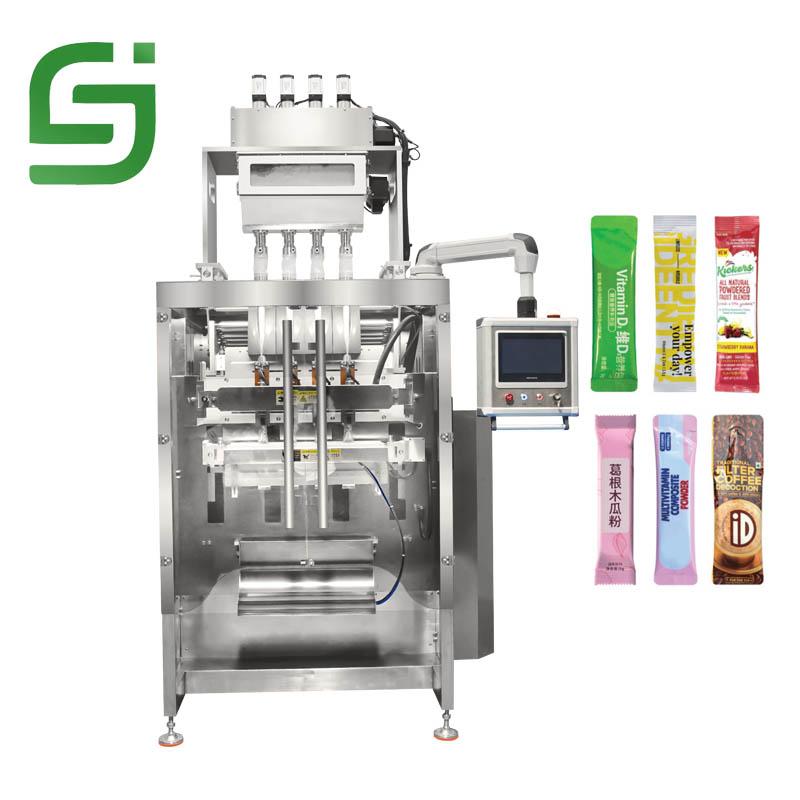
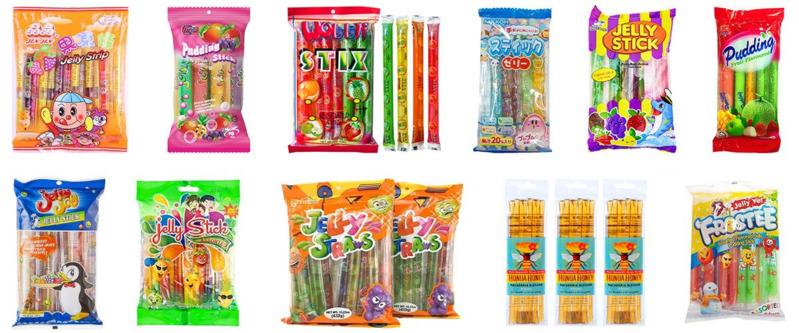
Small single-serve ketchup portions are often made from rollstock on sachet or stick-style equipment. Film is guided, formed, sealed, filled, and cut in a synchronized sequence. The compact package can support portion control and high material utilization, but its small opening makes clean nozzle cutoff and accurate web positioning especially important.
Choose between three-side, four-side, back-seal, or another available construction according to the required appearance and the machine's demonstrated capability. Verify film structure, registration, seal geometry, cut position, tear behavior, and code. Narrow packs leave little room to recover from sauce strings or a misplaced nozzle, so trials should use the thickest permitted ketchup condition.
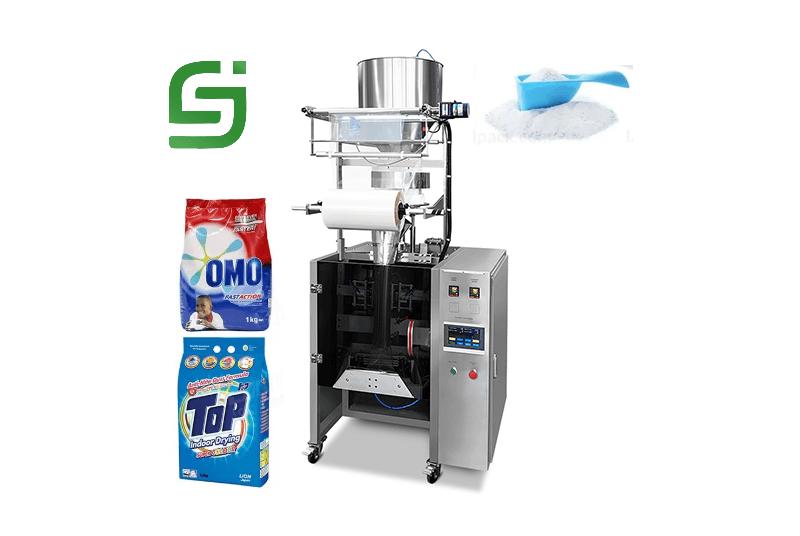
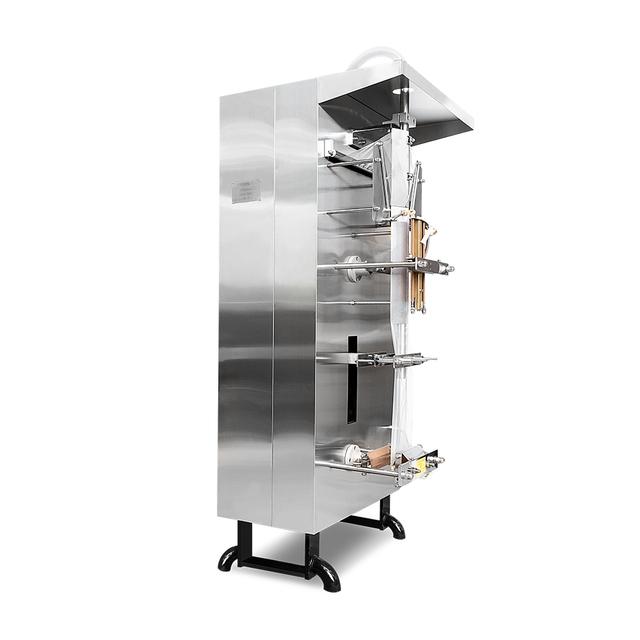
A vertical form-fill-seal arrangement may be considered for larger flexible bags where film travels around a forming set and the product is delivered through a central path. The product volume, bag width, headspace, fill tube, and seal-zone protection must be engineered together. Larger quantities increase the consequence of leakage and the load placed on the bottom or transverse seam.
Evaluate bag support and discharge. A heavy liquid pouch can stretch a hot seam or fall awkwardly from the machine. Cooling time, takeaway conveyors, and transfer height affect finished quality. Test intended handling, not merely the instant after sealing. If the desired package includes a complex closure or shape, a premade format may be more practical than trying to create it from basic rollstock.
Premade-pouch machines pick individual packs, open them, confirm presentation, fill, and seal. The converter can supply stand-up shapes, zippers, spouts, or other prepared elements, although each feature changes feeding and opening behavior. This route can support premium presentation and format flexibility, but pouch tolerance and reliable pickup become central controls.
Test the narrowest and largest approved pouches, including normal dimensional variation. Check magazine loading, pickup, opening confirmation, nozzle clearance, fill support, zipper cleanliness, top-seal position, and rejection of unopened packs. The supply specification should define bundle direction, static, curl, and storage. A beautiful pouch that cannot be presented consistently will reduce accepted output.
Piston, pump, gravity, or other filling principles may be proposed depending on ketchup flow, particulates, quantity, and package opening. Review the complete product circuit: supply tank, conditioning, refill, valves, hoses, nozzles, and drainage. A filler demonstrated with water does not prove performance with viscous sauce, and a tabletop dose test does not expose the timing needed to protect a moving pouch.
Cutoff is as important as quantity. Watch for stringing, splashing, air, delayed drops, and sauce coating the nozzle. Evaluate consecutive finished packs through startup and restart. If different products need separate nozzles or contact parts, document each combination and the required cleaning and storage procedure.
A single lane may simplify setup, cleaning, sampling, and format change. Multiple lanes can increase simultaneous output for narrow packs, but they multiply film paths, dosing points, seals, cuts, and quality observations. Lane-to-lane variation must be measured rather than hidden inside an overall average. One restricted nozzle or misaligned jaw can create a localized defect.
Capacity analysis should use accepted packs during available running time. Include product refill, film replacement, coding supplies, inspection, cleaning, and downstream collection. Multi-lane output is useful only when upstream sauce supply and downstream handling can support it. Also assess the team's ability to maintain and troubleshoot several parallel channels.
Use a matrix to narrow options before requesting detailed trials. The entries below are decision prompts rather than universal performance ratings; the exact configuration still needs evidence.
| Machine family | Typical project fit | Primary evidence to request | Common constraint to examine |
|---|---|---|---|
| Sachet or stick form-fill-seal | Small portions made from rollstock | Clean dosing into narrow pack and registered seals | Limited opening and sauce in the seam |
| Larger vertical bagger | Flexible bags with greater fill quantity | Bag support, sealing, and safe discharge | Load on hot seams and product drop |
| Premade-pouch system | Stand-up or feature-rich converted pouches | Pickup, opening, filling, and top-seal repeatability | Pouch tolerance, curl, and zipper contamination |
| Multi-lane liquid packer | Repeated small packs requiring parallel output | Lane-specific dosing and seal results | Complex cleaning and uneven lane performance |
| Rigid-container filler | Bottles, cups, or similar containers | Container handling, fill cutoff, and closing interface | Not interchangeable with flexible-pouch mechanics |
Remove categories that cannot make the package or fit the site's process. Then compare shortlisted systems using one requirement document so scope differences remain visible.
Run representative sauce and commercial packaging through the exact proposed filler and pack-handling method. Include difficult viscosity, smallest opening, largest fill, refill, stop, restart, and cleaning access. Record all manual help, temporary parts, rejects, and interventions. Accepted samples should pass quantity, appearance, code, seal, and the buyer's chosen leak checks.
The ketchup packing machine family provides possible starting configurations, while the final scope should identify model, options, change parts, utilities, guarding, coding, discharge, controls, documentation, training, spares, and acceptance responsibilities. Unwitnessed products and pack styles should remain open items rather than being described as guaranteed flexibility.
Is a sachet machine the same as a premade-pouch machine?
No. A sachet line commonly forms packs from rollstock, while a premade system handles individual converted pouches. Their material controls and changeovers differ.
Which type works for ketchup with visible particles?
The filler and product path must pass particles without damage or blockage, and distribution must remain representative. Test the actual maximum particle condition.
Does a multi-lane design always have lower unit cost?
Not automatically. Consider accepted output, cleaning, lane sampling, tooling, maintenance, material use, staffing, and upstream or downstream capacity.
Can one machine make both tiny sachets and large stand-up pouches?
Usually these formats involve different material handling and geometry. Ask suppliers to state the proven range and required conversion rather than assuming full overlap.
What should be decided before requesting a quotation?
Define sauce conditions, package drawing and material, quantity range, operating schedule, cleaning expectations, utilities, code, downstream transfer, and acceptance tests.
Some projects combine primary packs into secondary packages, such as sachets collected into cartons or larger bags. That downstream requirement can affect cut style, pack orientation, spacing, counting, and discharge. Define whether individual sachets must remain connected, separated, counted, or transferred without folding. The machine category should be screened against this final destination rather than ending the study at the sealing jaws.
Intermittent and continuous motion are further configuration choices within machine families. They describe aspects of how film or sealing operations move, but neither term alone proves better ketchup results. Compare material control, sauce cutoff, seal process, changeover, maintenance, and accepted output on the exact model. Avoid using a motion label as a substitute for a product trial.
Future packaging plans should be ranked by certainty. Include confirmed formats in the acceptance test, reserve interfaces for plausible additions where practical, and label speculative ideas clearly. Buying complex tooling for an unapproved package can increase maintenance without creating value. Conversely, ignoring a well-defined second size may force an early replacement. A documented roadmap lets the supplier distinguish installed capability from later conversion work.
Primary-package type also affects secondary packaging and distribution. Small sachets may need counting and cartoning, larger bags may require supported conveyors, and premade pouches may need orientation before case packing. Include these destinations in the machine-type comparison. A configuration that creates the desired pouch but discharges it tangled, unsupported, or in the wrong orientation may need significant extra equipment and floor space.
Retain signed package drawings and accepted samples with the selected machine type for future reference.
Ketchup machines differ first by how they create or receive the package and then by how they supply and meter the sauce. Match form-fill-seal, premade-pouch, multi-lane, or other systems to a finished-pack specification and real plant conditions. A trial with commercial materials should decide among shortlisted types, while an itemized scope prevents package features or interfaces from being assumed.
Product trials should determine machine type.

YISEN MACHINERY - The ONE-STOP VFFS PACKING MACHINE SOLUTION SUPPLIER
 Tel: +8617350750975
 Email: info@vffspackingmachinery.com
 MP/WhatsApp: +8617350750975
 Manufacturer Address:Meixi Road, Tongan District, Xiamen,Fujian,China