

Hot Keyword:
Author:YISEN Pouch Packing Machine Manufacturer TIME:2024-09-20
Yes, sachet and stick-pack equipment can be customized, but useful customization means selecting proven modules around a defined product and package rather than redesigning every part. Dose range, product flow, number of lanes, packet dimensions, seal pattern, coding, controls, cleaning access, and line interfaces can all change. Each choice should be linked to samples and an acceptance test so flexibility remains operable after delivery.
Customization begins with a frozen requirement brief. Provide representative product, target quantities, permitted variation, film structure, packet drawings, artwork repeat, tear features, operating hours, changeover schedule, room conditions, utilities, and downstream handling. Also identify which future products are genuinely planned; a long wish list can create a complex machine that is difficult to clean and set up. The objective is an approved operating window with documented parts and recipes. Packaging engineers should distinguish selectable options from custom engineering, because those routes have different cost, delivery, spare-parts, and validation implications. A module already used on comparable equipment may carry less integration risk than a one-off mechanism, but similarity still needs to be demonstrated with the buyer's materials. Procurement should also separate current production from optional expansion. Current packs deserve complete acceptance criteria and a committed parts list. Future formats can be reserved through space, control capacity, or a documented upgrade route without pretending that untested hardware is already qualified. Ask which modifications can be completed by trained site personnel and which require a service visit, new software, or factory machining. Capture drawing revision, software version, electrical documentation, recommended spares, and lead times for custom wear parts. If one module is removed for another product, define lifting, storage, connection protection, and post-installation checks. These details influence whether flexibility remains practical several years after commissioning, when the original project team may no longer be present.
Powder, granule, liquid, paste, and small solid products require different transfer and metering principles. Fine powder may need an auger with suitable agitation and dust containment; free-flowing granules may suit cups or weighing, while liquid products can require pumps, pistons, or other sanitary metering. These examples are starting points, not automatic selections. Record bulk density variation, flowability, particle size, fragility, viscosity at operating temperature, foaming, stringing, moisture sensitivity, and cleaning needs. The filler must fit above or within the chosen lane arrangement without creating an excessive drop or unstable distribution. Test the smallest dose as carefully as the largest, because residual material, cutoff, and adjustment resolution become more important when the packet contains only a small quantity.
Width, length, seal margins, longitudinal seam, tear notch, headspace, and stick slenderness affect both consumer use and machine design. A very narrow packet may look attractive but leave insufficient space for the product stream or reliable seals. A wide sachet may need different film handling and more material per dose. Give the supplier dimensioned drawings rather than a marketing image, and include tolerances from the film converter. Printed film requires a stable repeat and a registration mark compatible with the sensor. If easy-open features are specified, examine their position relative to seals and powder or liquid contact. Produce hand samples or converter samples early, then verify that the intended quantity fits without crowding the closing area or producing an impractical pack shape.
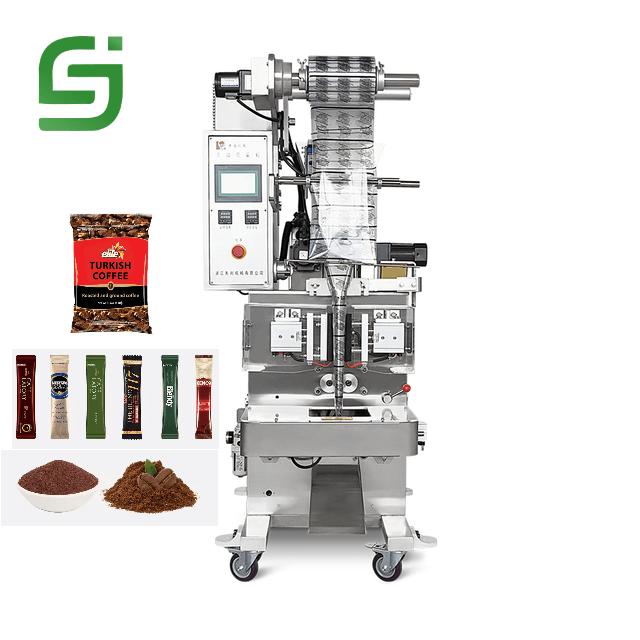
Adding lanes can raise theoretical output from one film web, but it also divides product, film, sensors, sealing pressure, and reject decisions across parallel paths. The upstream dosing arrangement must feed each lane consistently, and the frame must provide access for cleaning and adjustment. Buyers should review lane-to-lane fill results instead of relying only on the combined average. A fault on one lane raises an operational question: can that lane be isolated safely, must the entire web stop, and how are affected packets identified? Film width, room access, electrical load, compressed air, downstream counting, and cartoning also grow with the configuration. Select lane count from accepted-pack demand and campaign length, including normal stops and replenishment, rather than multiplying a single-lane cycle figure.
The machine can be configured for appropriate seal patterns and materials within its design, but the package owner must supply an approved laminate for the product and distribution plan. Thickness, sealant layer, coefficient of friction, stiffness, static, barrier, and printing influence web tracking and closure. A sealing trial should define temperature or energy settings, pressure, dwell, alignment, cooling where relevant, and acceptable appearance. Examine channels, wrinkles, product contamination, cut position, and tear performance on packets from every lane. Changing to a recyclable or thinner structure later may alter the window even when dimensions remain unchanged. Keep the material specification and retained samples with the recipe so operators know which film was demonstrated. Shelf-life claims require separate product-and-package evidence.
Date codes, lot data, registration marks, perforations, tear notches, and connected-stick patterns occupy limited space on a small pack. Decide what information is required and provide artwork that shows quiet zones and seal boundaries. The coder trigger must stay synchronized with the print repeat and machine index so text remains legible and does not cross a cut. If several packets are supplied as a strip, define the perforation strength and how downstream equipment counts or separates them. Vision inspection, code verification, or reject systems can be considered where the business case and quality plan support them, but their detection limits and response should be tested. A sensor that signals an alarm is useful only when operators know which packets are potentially affected.
Customization may include product-call signals, low-level requests, printer communication, extraction status, checkweigher feedback, counting, cartoner handshakes, and production-data collection. Document each interface with signal ownership, normal state, timeout, alarm response, and restart behavior. Avoid broad statements such as ready for integration without an agreed list of protocols and responsibilities. Recipe management should separate authorized parameters from ordinary operator actions and identify the installed product parts. During testing, interrupt upstream supply and block downstream takeaway under controlled conditions to see how packets in process are handled. The line should not create untracked product after a communication loss. Cybersecurity, user access, backups, and software support also belong in the project scope when networked controls are included.
A feature that improves one format can make another harder to clean or set up. Review hoppers, distribution manifolds, filler outlets, forming tubes, lane guides, seal faces, cutters, scrap paths, and guards with the actual product schedule in mind. Change parts should carry durable identification and have protected storage. A recipe change is not complete until physical parts, film, coder data, cleaning status, and first-off packets are verified. Time a representative conversion from final acceptable output through the first released packet of the next run. For allergens or potent materials, the owner must define an appropriate validated cleaning and verification program. The supplier should show access and removal methods without claiming that accessibility alone proves the sanitation result.
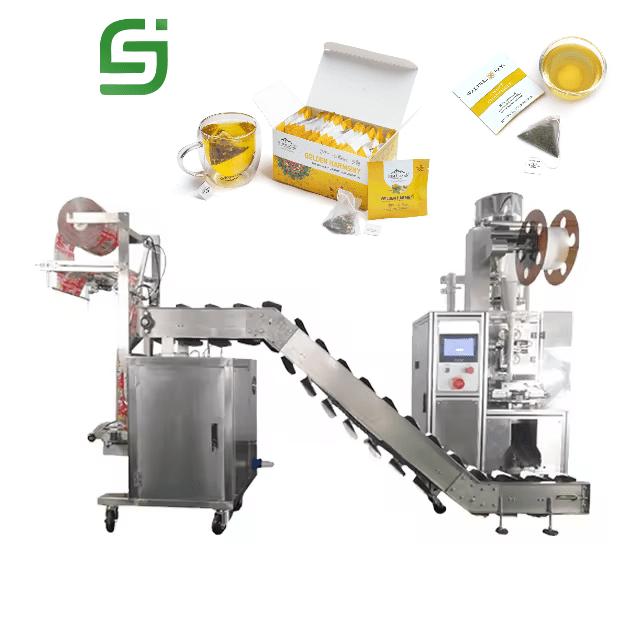
A configuration matrix links every promised pack to product parts, film, lane arrangement, settings, tests, and documents. It prevents optional language from becoming an undefined expectation and makes later change requests visible. The sachet and stick packing machine range can introduce available platforms, while the final design should be closed against the matrix below.
| Customization area | Input required from buyer | Proof before approval |
|---|---|---|
| Filling | Product samples, dose range, variation, cleaning needs | Consecutive results at range limits and restart |
| Packet | Drawings, film specification, artwork, opening features | Dimensioned retained packs from approved material |
| Lanes and output | Accepted-pack demand, campaign pattern, downstream rate | Lane-level results, stops, rejects, and interventions |
| Integration | Interface list, signals, data, fault response | Witnessed communication and recovery tests |
| Changeover | Product sequence and release requirements | Timed conversion with parts and first-off records |
Can one machine pack both powder and liquid sticks? A platform may support alternative fillers, but product paths, dosing, containment, cleaning, lane distribution, and change parts must be engineered and tested for each application.
Does a higher lane count always improve productivity? No. Useful output also depends on film handling, lane balance, refills, cleaning, fault response, rejects, and downstream capacity. Measure accepted packets under normal conditions.
Can packet width be changed through the touchscreen? Length and timing may be recipe-controlled within limits, but width often depends on film lanes, forming parts, seal layout, and cutters. Confirm the exact conversion hardware.
What should be included in a custom factory test? Use approved product and film, run range extremes, inspect every lane, challenge stops and restart, verify codes and seals, and document installed parts and open items.
How should future products be handled? Record them as provisional unless representative samples and requirements are available. Add a new product only after technical review, testing, cleaning assessment, and recipe control.
Sachet and stick equipment is highly configurable when customization is anchored to measurable products, packets, output, cleaning, and interfaces. The strongest project does not collect the most options; it selects modules that can be tested, changed over, maintained, and supported. A controlled configuration matrix, lane-level evidence, retained packs, and explicit integration responsibilities convert flexibility from a sales claim into a usable production capability.

YISEN MACHINERY - The ONE-STOP VFFS PACKING MACHINE SOLUTION SUPPLIER
 Tel: +8617350750975
 Email: info@vffspackingmachinery.com
 MP/WhatsApp: +8617350750975
 Manufacturer Address:Meixi Road, Tongan District, Xiamen,Fujian,China