

Hot Keyword:
Author:YISEN Pouch Packing Machine Manufacturer TIME:2024-09-26
This method keeps the project focused on saleable packs. Starting with lane count, maximum speed, or a generic machine type can lead to an impressive quotation that does not fit the product's flow, the film's seal window, or the plant's changeover pattern.
Choose a sachet packaging machine by converting your product and package range into testable requirements. Define what must be dosed, which sachets must be made, the acceptable fill and seal results, cleaning expectations, usable output, and factory interfaces. Then compare only machines that prove those conditions with representative materials.
For every current product, record target fill, tolerance, product condition at filling, sachet width and length, seal pattern, film code, artwork repeat, batch-code area, and planned volume. Mark the smallest dose, largest sachet, most difficult product, and shortest changeover interval. Separate confirmed launches from possible future ideas.
A reasonable allowance for growth is useful, but an unlimited flexibility request makes equipment larger, more complex, and harder to validate. Ask which future formats can be supported by recipes, which need change parts, and which would require a different filler or frame. Put these boundaries in the proposal.
Provide physical product and package samples together with drawings. A sachet's usable fill area is smaller than its outer dimensions because seals, cut tolerances, and headspace consume space. The approved filled pack, rather than an empty drawing alone, should guide the configuration.
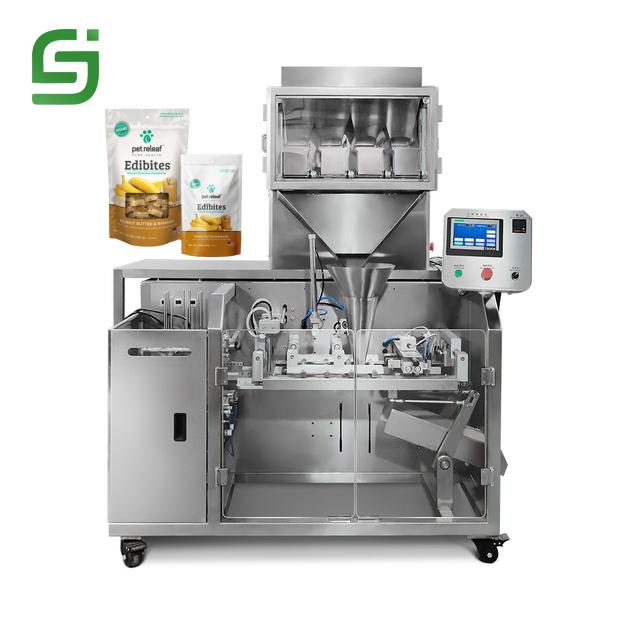
Free-flowing granules, fine powders, low-viscosity liquids, thick sauces, and tablets need different product paths. An auger may suit many powders; cups may suit stable free-flowing products; weighing may support mass control for appropriate solids; and pumps or pistons can meter liquids depending on viscosity and particles. These are starting points, not automatic selections.
Examine bulk-density change, dust, bridging, foaming, product temperature, particle damage, and cutoff. A filler must meet the declared tolerance across normal variation without sending product into the seal area. Upstream level control and transfer equipment influence performance and belong in the scope.
If the line will run unlike products, determine whether contact parts, hoses, nozzles, screws, or cups must change. Evaluate the time and risk of that conversion rather than assuming one universal filler.
Choose the seal layout and aspect ratio around product use, available print area, distribution, and the machine's forming method. Three-side, four-side, pillow, or stick-style packs have different film and hardware implications. Tear notches, perforations, easy-open behavior, and chain packs should be shown on controlled drawings.
Specify the complete film: construction, thickness tolerance, web width, roll diameter, core, unwind, eye mark, repeat, sealant side, and storage. Barrier selection should be justified by the product owner. The machine supplier must prove transport and sealing with final printed production material.
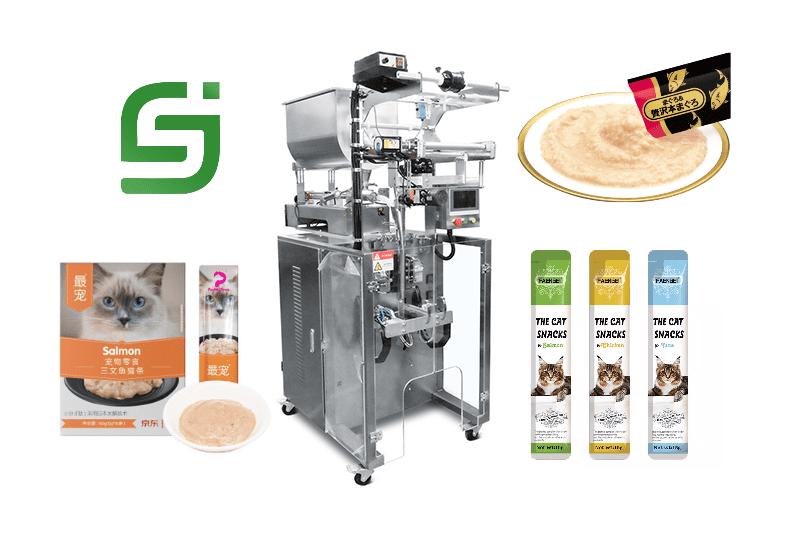
Multi-lane machines need quality across every lane. Filling distribution, jaw pressure, temperature, tracking, and cut alignment can vary by position. The acceptance sample plan should identify each lane rather than mixing all packs into one average.
Nominal cycles multiplied by lane count gives a theoretical number, not a production commitment. Product dosing, seal dwell, web behavior, code systems, and downstream handling may limit the rate. Changeovers, film replacement, replenishment, cleaning, inspection, and brief fault recovery reduce available time.
Build a simple demand model by SKU. Calculate required good sachets, operating days, shifts, planned sanitation, and expected changeovers. Compare this need with demonstrated accepted output under the correct product and film. Include a reasonable operating margin without forcing the machine to run continuously at its extreme setting.
Observe waste during startup and restart. A high-lane system can create many defective packs quickly if one setting is wrong. Controlled line clearance, first-off approval, and lane-specific rejection are important parts of efficiency.
Temperature monitoring, film-end sensing, registration control, product-level alarms, coding checks, and fill-weight inspection can support the process. Choose them according to the product risk and quality plan. For every sensor, define what happens when it detects a problem: stop, reject, hold material, or request inspection.
A check system must be able to associate a result with the correct sachet or lane. If product travels between measurement and rejection, item tracking needs verification. Reject confirmation and a secure collection method may be required by the plant's plan.
Do not assume that more screens equal better control. Operators need clear alarms, permission levels, recipe identification, and recovery instructions. Quality staff need records that can be traced to batches and material lots.
Review overall height, filler access, platform, roll-loading route, product supply, discharge level, guarding clearance, and maintenance space. Confirm power, air, extraction, temperature control, and network interfaces. Measure doors, lifts, and installation paths before shipment.
Inspect product-contact accessibility with the cleaning team. Ask for a demonstration of removal, washing or approved cleaning, inspection, drying, and reassembly. Identify allergen or flavor-change requirements. A short product run followed by a real cleaning exercise reveals more than a statement about “easy sanitation.”
The selected sachet stick packing machine should also have support appropriate to the plant: manuals, electrical drawings, training, critical spares, diagnostic access, and clear responsibility for the filler and downstream interfaces.
| Decision area | Evidence to compare | Reason to weight it |
|---|---|---|
| Product dosing | Individual fill results across difficult product conditions | Determines compliance, giveaway, and seal cleanliness |
| Film and sachet quality | Lane-specific seals, registration, cuts, and filled-pack tests | Protects the product and customer experience |
| Accepted output | Good sachets during a defined sustained trial | Connects the investment to real demand |
| Changeover and cleaning | Witnessed complete sequence with first-off release | Shapes downtime and cross-contact control |
| Lifecycle support | Included documents, spare list, training, and response scope | Supports recovery after the factory test is over |
The protocol should list products, condition ranges, film rolls, formats, targets, sampling, reference equipment, seal tests, run length, and pass criteria. Include the hardest SKU, roll replacement, planned stop, restart, and a meaningful changeover. State how setup waste and rejected sachets affect the output calculation.
Record every adjustment and identify the final recipe. Retain samples by lane and time. Review alarms, guarding, access levels, manuals, utilities, noise or dust concerns, and downstream transfer. Open the machine after the run to inspect product accumulation and then witness cleaning.
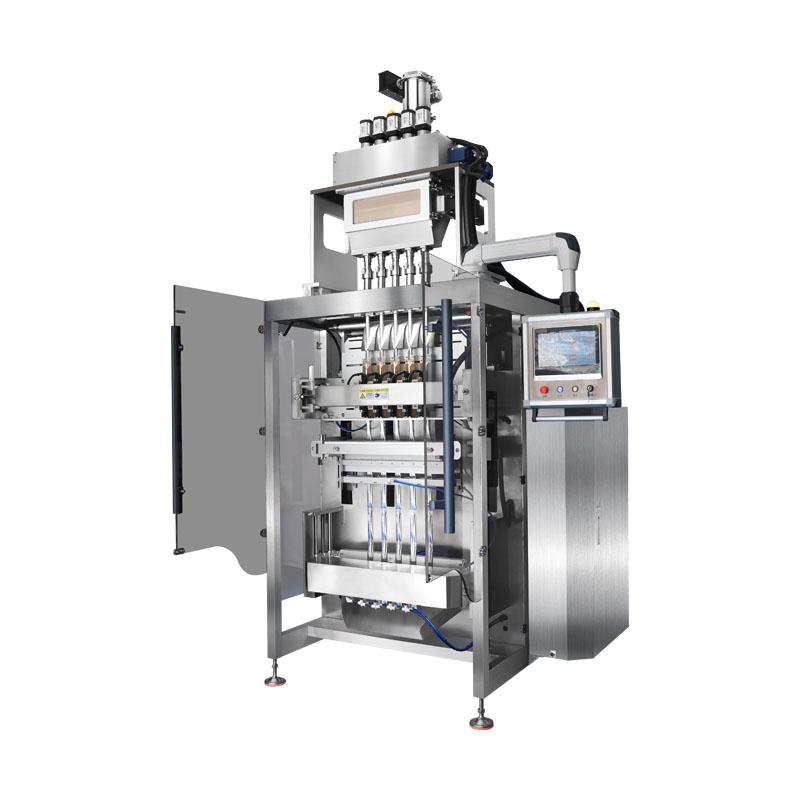
Close the test with an action list naming the owner and due evidence for each issue. Shipment approval should follow agreed closure rules, not pressure to finish the visit. The resulting record becomes the starting point for installation qualification and operator training.
Commercial comparison should normalize the scope of supply. One quotation may include the product elevator, platform, printer, inspection, discharge conveyor, installation supervision, and spare parts while another lists only the bagger and filler. Create an interface schedule identifying who supplies, mounts, wires, tests, and supports every device. Unpriced gaps often become installation delays.
Review the proposed control components and electrical standard against plant practice. Ask about backup files, software licenses, access passwords, replacement availability, and how a failed controller or operator panel would be restored. These questions do not require a premium automation package; they ensure the delivered machine can be maintained.
Reference checks are most useful when the application resembles yours. Ask how long the user has run comparable product and film, what changeovers are actually performed, and which support issues appeared after commissioning. Treat references as context rather than a substitute for your own acceptance test.
Finally, agree on installation and site-acceptance responsibilities. Product and packaging should be available, utilities qualified, operators trained, and downstream equipment ready. Repeating critical factory tests after shipping confirms that transport and installation did not change the approved result.
Machine availability should be reviewed against maintenance access, not only component reputation. Confirm how technicians reach heaters, sensors, knives, belts, fillers, and upper platforms; which routine jobs require production parts to be removed; and how long a critical component replacement takes. A common part can still create long downtime when access or restoration is difficult.
How many lanes should a buyer choose?
Choose enough demonstrated accepted output for demand and operating margin. More lanes add capacity but also increase width, film use, lane-specific setup, and inspection complexity.
Can the same machine pack powder and liquid?
The base web system may support different fillers in some configurations, but product paths, cleaning, nozzles, timing, and change parts must be evaluated separately.
Should future products be included now?
Include realistic near-term formats with samples or defined properties. Record untested ideas as options, not guaranteed capability.
What is the best proof of sealing quality?
Use production film and product, a mapped operating window, lane-specific samples, and package tests selected for the product and distribution risk.
Why is first-off approval part of machine selection?
It shows whether recipes, change parts, operator steps, and quality checks can restore a validated setup after normal changeover or cleaning.
A suitable sachet line is one whose verified operating range matches the SKU list, plant, and quality system. Product-first filler selection, exact film qualification, accepted-output planning, purposeful controls, and a demanding acceptance protocol make competing proposals comparable. That disciplined brief is the buyer's strongest protection against both undersized equipment and costly unused capability.

YISEN MACHINERY - The ONE-STOP VFFS PACKING MACHINE SOLUTION SUPPLIER
 Tel: +8617350750975
 Email: info@vffspackingmachinery.com
 MP/WhatsApp: +8617350750975
 Manufacturer Address:Meixi Road, Tongan District, Xiamen,Fujian,China