

Hot Keyword:
Author:YISEN Pouch Packing Machine Manufacturer TIME:2024-10-29
A sauce packaging machine becomes flexible when its product path, filler, nozzle, package handling, and cleaning method are configured for a defined range of sauces and formats. Flexibility does not mean that thin dressing, chunky salsa, hot-filled paste, and cold mayonnaise can share one setup without review. Good customization uses a product-and-package matrix, assigns hardware and recipes to each group, and proves the demanding combinations before production.
Start with every sauce planned for launch and the near-term commercial pipeline. Record target quantities, production condition, package, cleaning sequence, and demand. Classify later ideas separately. A quotation should state which combinations are included, which require change parts, and which remain subject to sample review.
Broad claims such as "for all liquids and pastes" are not enough. The line has physical limits in pump displacement, valve passage, nozzle size, hopper volume, pouch clearance, sealing width, and cycle time. Defining exclusions protects the buyer from discovering those limits after artwork and product schedules are committed.
Customization also assigns responsibility. The product owner approves formula condition, sanitation, package performance, and shelf life. The machine supplier demonstrates filling and package handling under agreed conditions. The packaging material supplier supports laminate or pouch selection.
Thin soy-style sauces flow and stop differently from ketchup, mayonnaise, fruit puree, or paste. Suspended herbs, seeds, vegetable pieces, or meat particles can block a narrow valve or settle in a hopper. Emulsions may be sensitive to shear. Temperature can change viscosity sharply, while long residence may alter consistency.
Describe apparent flow behavior at filling, largest inclusion, tendency to separate, acidity or other compatibility concerns, temperature, foaming, stickiness, and acceptable agitation. Supply difficult production samples. The label on a jar does not reveal whether two sauces can use the same pump and nozzle.
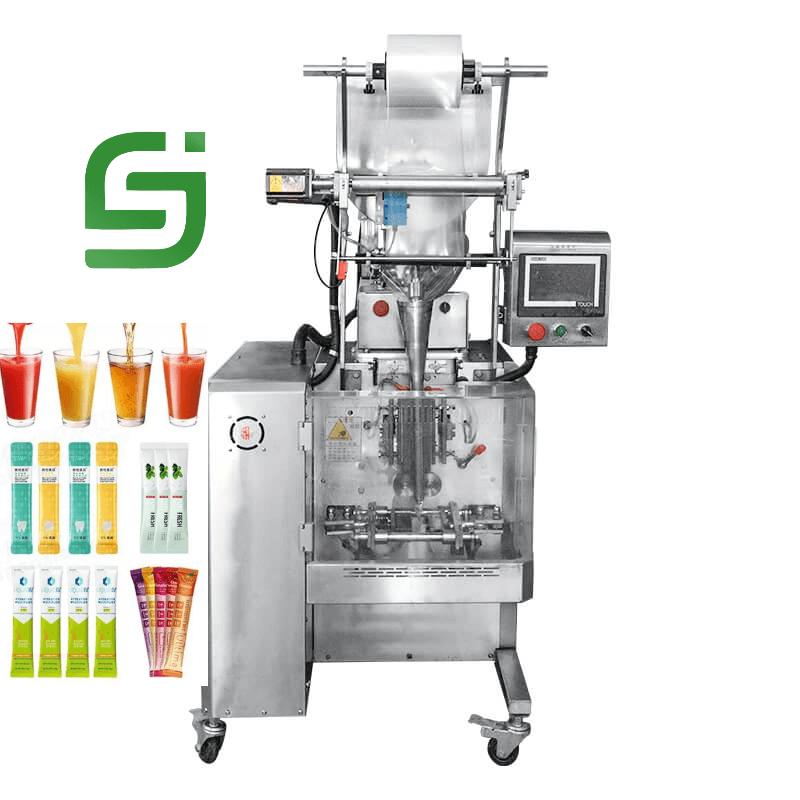
Use these groups to decide which recipes genuinely share hardware. A smooth viscous family may use one metering set with controlled adjustments, while a chunky product may need larger passages and different valves. The classification should remain visible in operating documents.
Piston and pump-based fillers offer different operating characteristics. Selection depends on dose range, viscosity, particles, cutoff, cleaning, and available filling time. Product supply must remain stable. A filler can meter correctly at the source and still make poor packs if hose restriction or nozzle tail disrupts delivery.
Nozzle diameter and shape influence flow speed, splash, stringing, and inclusion passage. Positive shutoff or suck-back may control drips for an appropriate product, but aggressive settings can introduce air or disturb the next dose. Nozzle entry and withdrawal need enough pouch clearance and stable alignment.
A customized sauce packaging machine should list each pump, cylinder, valve, hose, and nozzle set by product family. Contact-material and seal compatibility should be reviewed against actual formulas and cleaning agents, not inferred from a generic construction statement.
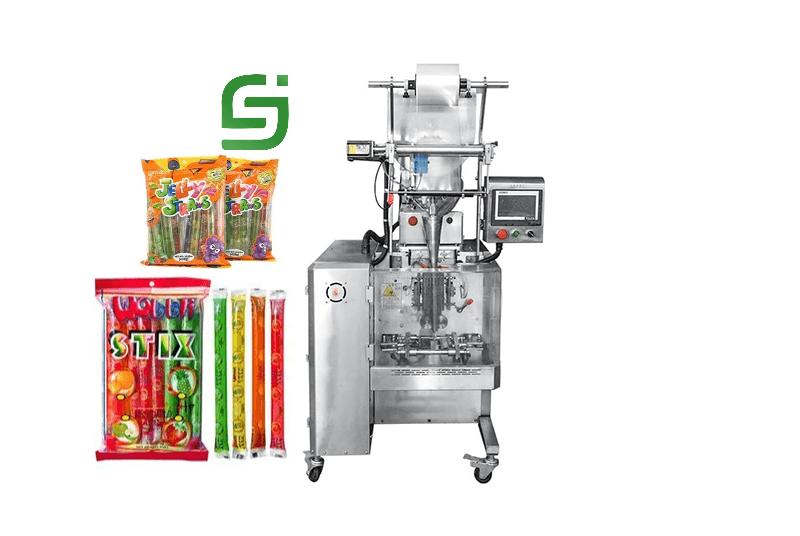
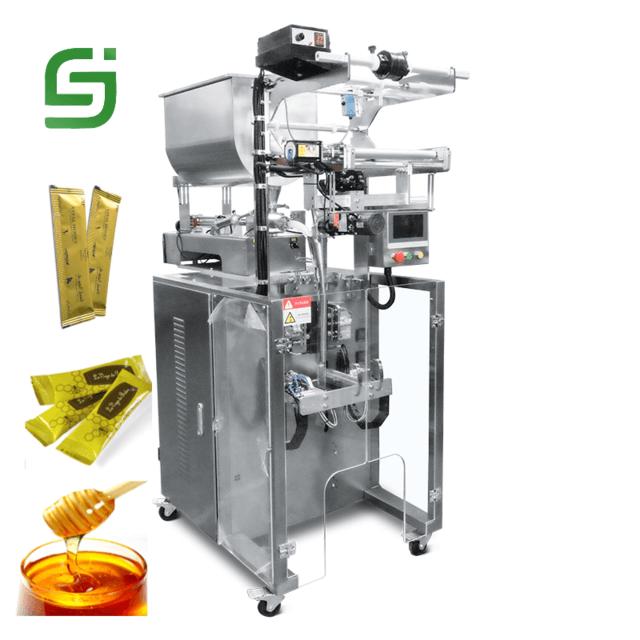
Rollstock machines form packages and can suit selected pillow or sachet formats. Premade-pouch systems can handle converter-created bags with zippers, spouts, or stand-up features when the machine is designed for them. Bottles and cups use a different container-handling architecture. One platform rarely covers every presentation economically.
Within a platform, define dimensions, fill volume, headspace, material, seal bands, closure, code, and downstream orientation. Liquid weight and movement affect grippers and support. A larger pouch may require longer filling time or a support plate; a small sachet may leave limited nozzle and seal clearance.
Package material must be qualified for product compatibility and distribution. The intended film or pouch should be used in trials because stiffness, friction, sealant, and construction influence machine handling.
Temperature-managed hoppers or lines may help keep a product condition stable when the food process allows it. Agitation may maintain inclusions or homogeneity when its action does not damage the sauce. Gas handling, flushing, or vacuum features may serve a validated package strategy. None should be added as a fashionable default.
For each option, write the problem it solves, operating range, control point, alarm response, cleaning method, and acceptance check. A heater display is not proof that product at the nozzle remains uniform. An agitator is not proof that particles stay evenly distributed. Evidence should follow the entire product path.
| Customization request | Question that must be answered | Proof during testing |
|---|---|---|
| Wider viscosity range | Which filler and nozzle serve each sauce group? | Stable doses and clean cutoff at range extremes |
| Products with particles | Can every passage handle normal inclusions? | No blockage, damaging shear, or visible separation |
| More pouch sizes | Which settings and parts change by format? | Repeatable setup and accepted first-off packs |
| Temperature control | What product condition is approved and measured? | Representative readings and fill behavior through stops |
| Integrated line controls | What occurs on upstream or downstream faults? | Demonstrated interlocks, product disposition, and restart |
Switching sauces requires removal of product from hopper, pump or cylinder, valves, pipework, hoses, and nozzles. Sticky, colored, allergenic, or strongly flavored residue may require a different procedure from a compatible same-family change. The producer's quality team should define and validate release criteria.
Design access around the planned method. Removable assemblies should drain, be safely handled, and return to a repeatable position. Connections need clear identification so supply and return paths cannot be crossed. Dedicated product-contact sets may simplify some changes but need controlled storage.
Format work can occur alongside cleaning: adjust pouch supply or forming parts, guides, nozzle position, code, seal values, and discharge. Estimate the complete change, including first-off quality approval, when deciding how much flexibility has practical value.
A recipe can store dose, pump movement, fill timing, nozzle action, pouch values, seal parameters, and station timing. Its name should include product and package code. It should also reference the physical filler set and expected product condition, because electronic values cannot detect the wrong valve or hose.
Protect critical settings with access levels. Define what operators may correct during normal variation and what requires technical review. Record changes with the reason and verification results. A recipe should represent an approved operating state, not become a diary of uncontrolled trial-and-error values.
First-off checks after recipe selection should cover identity, quantity, nozzle cutoff, headspace, pouch presentation, seal cleanliness, code, and leakage method. This confirms that software and hardware agree.
Choose tests that challenge lowest and highest viscosity, largest particles, smallest and largest dose, most difficult pouch, and demanding changeover. Include product refill, a controlled stop, and restart. Use intended packaging and enough sauce to observe residue buildup and supply behavior.
Record ordered fill measurements, product separation, air, splash, strings, drips, seal contamination, package integrity, rejects, and interventions. Demonstrate cleaning for a high-risk change and retain accepted samples and settings. If a product or package is represented only by similarity, state the rationale and limitation.
The approved matrix becomes the boundary for production. New sauces can be screened against it, but material differences should trigger a sample review rather than automatic recipe cloning.
Customization should also consider maintenance ownership. Extra pumps, heated circuits, agitation, valves, and format sets add inspection points and spares. For every engineered option, request component identification, isolation and cleaning instructions, wear checks, replacement references, and the effect of failure on production. The plant should be able to restore a known configuration without relying on undocumented supplier adjustments.
Commercial planning can then assign products to campaigns that make sense. Smooth compatible sauces may be grouped, while a strongly colored, allergenic, chunky, or temperature-sensitive product may need a dedicated sequence and deeper clean. This scheduling evidence helps determine whether one flexible line is practical or whether product separation would provide better availability.
At site handover, confirm the product matrix against the delivered parts and software. Run one setup from stored condition using local staff, then check whether drawings, hose connections, nozzle references, recipe names, and first-off instructions lead to the accepted result. That exercise tests the transfer of knowledge, which is part of usable flexibility.
Keep approved filled packages and configuration records where quality procedures permit. They provide a concrete reference when a later pouch or sauce behaves differently despite carrying the same internal code.
Can one sauce filler run both thin and thick products?
Sometimes within a tested range, possibly with valve or nozzle changes. Dose, cutoff, supply, particles, and cleaning all need confirmation.
Does customization require a completely new machine?
Not always. Standard platforms can use engineered options and format sets, but the final configuration and approved range should be documented.
Can future pouches be added later?
They may be added if transport, opening, filling, sealing, and controls have capacity. Drawings, samples, and trials are still required.
How should product recipes be protected?
Use clear names, access levels, links to physical parts, controlled adjustment authority, and first-off verification.
What customization has the most value?
The option that removes a defined production constraint or supports a confirmed product, with measurable acceptance and manageable maintenance.
Useful sauce-line flexibility is a documented collection of proven configurations. Group products by real flow and inclusion behavior, match filler and nozzle sets, define each package, justify process options, and design changeover before ordering. When the range is qualified at its difficult corners, customization supports commercial variety without turning daily production into repeated experimentation.

YISEN MACHINERY - The ONE-STOP VFFS PACKING MACHINE SOLUTION SUPPLIER
 Tel: +8617350750975
 Email: info@vffspackingmachinery.com
 MP/WhatsApp: +8617350750975
 Manufacturer Address:Meixi Road, Tongan District, Xiamen,Fujian,China