

Hot Keyword:
Author:YISEN Pouch Packing Machine Manufacturer TIME:2026-08-21
The safest approach is to classify requests as recipe changes, format conversions, component changes, or new engineering. This tells the buyer what can be produced immediately and what still needs design and trials.
Triangle tea equipment meets customized market needs by combining defined modules and tooling for tea feeding, dose, pyramid dimensions, mesh, string, tag, outer pouch, code, and discharge. Customization is reliable only when each option has a drawing, compatible material, control recipe, change parts, and acceptance evidence. A machine should not be described as infinitely flexible simply because several settings can be edited.
A customization brief should identify consumer, sales channel, serving vessel, tea type, quantity, price position, secondary package, expected order size, and launch date. Hotel rooms, specialty retail, office supply, gift boxes, cafes, and subscription assortments can demand different tag information, outer graphics, pack counts, and opening behavior.
Rank requirements as mandatory, preferred, and speculative. A confirmed cup size or legal code requirement belongs in the first group; a future shaped tag with no approved artwork may remain speculative. This prevents the project from adding complex hardware for a low-certainty feature while missing a basic package interface.
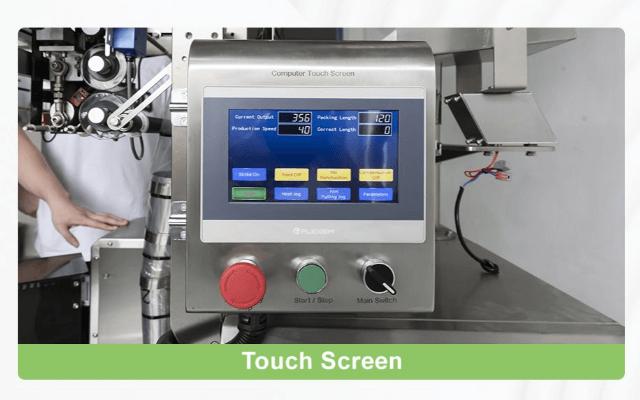
Leaf dimensions, density, fragility, dust, static, flowers, fruit pieces, and blend composition determine the feeder and dosing setup. Quantity can often be changed within an approved range through recipe and tooling, but a new large-leaf blend may need a different chute or measuring method. Test the actual difficult product.
Control blending and refill so customized ingredients remain representative. Record the incoming and packed condition, ordered dose samples, and any component segregation. A visually distinctive blend that loses large pieces during packaging does not meet the custom brief, even when total mass is correct.
Specify finished dimensions, fill space, seams, corners, material, cut, and any connection feature. The selected pyramid must fit the leaf and intended cup while remaining within the actual forming and sealing range. A small dimensional change can require different tooling or alter panel tension and seam location.
Material options vary in appearance, feel, strength, flow, and sealing response. Product-contact and environmental claims require qualified evidence outside the machine trial. The supplier should demonstrate roll handling, forming, seams, cutting, and use-condition integrity for the exact approved substrate.

Custom tags can carry logos, varieties, brewing cues, or campaign artwork. Define dimensions, thickness, stiffness, print orientation, supply presentation, string length and material, attachment position, and pull behavior. The component must pass through feeding and attachment without increased doubles, misses, or tangles.
Evaluate the tag through the outer-pouch cycle. It should not cover critical print, enter the seal, or make the outer pack bulky. Very long strings or unusual tag shapes may need new guides and timing. Treat them as engineering changes until a complete pack has been demonstrated.
Outer film can change by market language, variety, seasonal design, or required code while retaining one qualified structure and dimensions. This is usually simpler than changing sealant, thickness, width, or opening features. Keep critical text and graphics within the converter and machine registration tolerance.
Specify print mark, unwind, color control, code source and area, tear notch, seal widths, and secondary-carton orientation. New finishes or material structures can change friction, curl, sealing, and cutting. Test commercial rolls rather than assuming artwork approval establishes machinability.
A recipe change may cover an already qualified dose, length, code reference, or timing. A tooling conversion can involve dosing parts, former, guides, tag components, or sealing and cutting sets. New engineering may be required for an unsupported pyramid size, substrate, attachment method, or outer-pouch feature. Label each request before quotation.
Document installed ranges and conversion time. A control screen cannot detect the wrong physical parts, and a tooling promise does not show consumer performance. Use identified components, protected storage, access permissions, and first-off checks. Future capability should include the parts and validation work needed to make it real.
Trial the complete combination: representative tea, mesh, dimensions, string, tag, outer film, code, and discharge. Include replenishment, stop, restart, and a change from a common format. Record accepted packages, manual help, material loss, defects, setup, and open items. Retain samples for brewing and channel review.
| Customization request | Likely change level | Evidence required | Release owner |
|---|---|---|---|
| New tea within approved particle range | Recipe and cleaning review | Dose, blend, damage, bag fit | Product and production teams |
| Alternative tag artwork | Component confirmation | Feed, orientation, attachment, print | Brand and packaging teams |
| Different pyramid dimensions | Tooling or engineering | Forming, seams, fill space, brewing sample | Engineering and quality teams |
| New outer material structure | Material and process qualification | Tracking, registration, seal, cut, protection evidence | Packaging and product teams |
| New attachment method | Engineering and use review | Machine cycle, strength, convenience, outer fit | Cross-functional approval |
No table entry guarantees suitability. It identifies the work needed to close the request. The final approved matrix should connect product codes to physical parts, materials, recipes, and inspections.
Customization creates inventory: filter rolls, tags, thread, printed outer film, tooling, recipes, samples, and spare parts. Estimate minimum orders, storage, obsolescence, and campaign size. Reuse qualified structures where the consumer value remains, and avoid one-off components that cannot support realistic demand.
The triangle tea packaging machine purchase scope should identify every installed option, future conversion, drawing, interface, tool, software function, document, training task, and acceptance test. Change control after launch keeps successful customization from becoming an uncontrolled collection of near-duplicate formats.
Can a new tea variety use the nearest existing recipe?
Only after its particle, density, fragility, blend, dose, cleaning, and package fit are reviewed and affected conditions are confirmed.
Is custom artwork a machine modification?
Not when the qualified material, dimensions, mark, winding, seal areas, and code remain unchanged, but commercial roll behavior still needs confirmation.
Can any tag shape be added?
No. Feeding, separation, orientation, attachment, string path, outer wrapping, and consumer use constrain tag dimensions and material.
How should future options be purchased?
Define drawings, change parts, controls, utilities, expected evidence, price, and responsibility. Avoid treating an undefined future request as installed capability.
What limits the number of custom products?
Demand, component inventory, cleaning, tooling, changeover, quality sampling, campaign yield, staff skill, and material minimums create practical limits.
Market-specific customization can introduce legal, language, date, or labeling requirements. These must come from authorized business and regulatory sources. Build them into artwork, code templates, inspection, and release without assuming the machine supplier owns product compliance. Keep versions and effective dates controlled across film, tags, cartons, and digital data.
Artwork development should include mechanical tolerance from the beginning. Place logos, text, windows, marks, and code areas away from seals, cuts, folds, and expected registration movement. Print approval on a flat drawing is not enough; review formed inner and outer samples. A custom design that requires zero tolerance will produce avoidable visual rejects.
Secondary packaging may be the most visible custom element. Assortment boxes, gift tins, hotel envelopes, and customer cartons affect discharge orientation, counts, traceability, and labor. Define whether the primary line must separate varieties, maintain sequence, or interface with another machine. Include manual steps in the capacity plan when they are part of the intended launch.
Maintenance documents should identify custom parts and their standard equivalents. A unique former, tag guide, sensor bracket, or cutter needs drawings, spare strategy, storage, and post-replacement checks. Color-coded or serialized tooling can reduce mix-ups. Avoid modifications that cannot be restored to the approved base configuration.
Customer-specific recipes require governance. Use clear naming, access control, code references, material and tooling checklists, and first-off samples. Archive obsolete versions so operators cannot select them accidentally. When a customer changes a specification, assess the complete package and update training rather than editing one value at the line.
The final acceptance report should distinguish installed options, qualified combinations, and development items. For each custom product, record tea, components, drawings, settings, output, defects, cleaning, consumer-use samples, and open points. This boundary protects both buyer and supplier when future requests exceed the demonstrated design.
Prototype components should not move into normal production without final specifications. Hand-cut tags, short sample rolls, or manually placed strings can help development but conceal feeding and replenishment behavior. Require production-representative components and converter tolerances before the configuration is declared ready.
Review custom-product profitability after actual campaigns. Include component scrap, change parts, design work, setup, cleaning, small-order materials, quality sampling, and secondary packing. Keep custom features that create verified customer value and simplify or discontinue variants whose complexity exceeds their contribution.
Custom tooling ownership should be explicit. Identify who stores, inspects, replaces, and approves it, and prevent customer-specific parts from entering another product setup.
Preserve signed drawings and representative samples for every active customization, including its tooling revision and approved material supplier.
Triangle tea customization works when a market brief is translated into controlled product, format, attachment, branding, and code choices. Classify every request by change level, test the complete combination, and govern components after launch. This creates credible flexibility while protecting production from unsupported formats and uncontrolled inventory.
Tea trials should guide customization choices.

YISEN MACHINERY - The ONE-STOP VFFS PACKING MACHINE SOLUTION SUPPLIER
 Tel: +8617350750975
 Email: info@vffspackingmachinery.com
 MP/WhatsApp: +8617350750975
 Manufacturer Address:Meixi Road, Tongan District, Xiamen,Fujian,China