

Hot Keyword:
Author:YISEN Pouch Packing Machine Manufacturer TIME:2026-08-21
A useful loss program follows every input from storage to saleable pack and gives each category an owner. The largest cost may be premium tea, outer film, tags, downtime, or discarded complete packs rather than the most visible scrap.
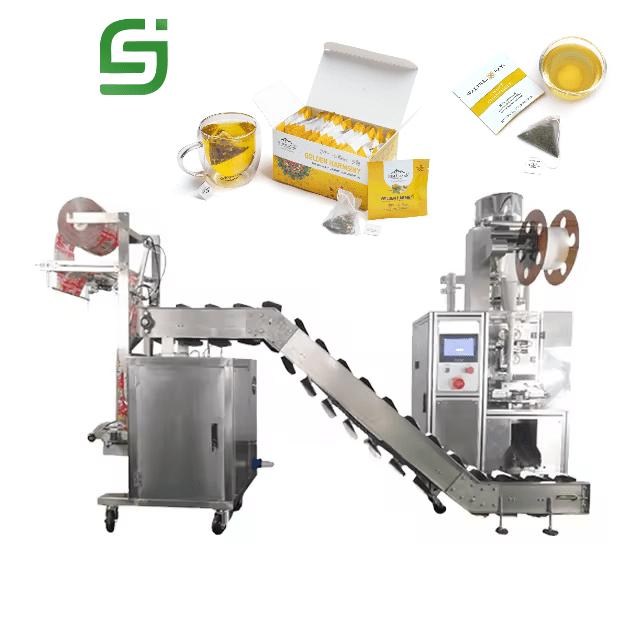
Triangle tea equipment reduces packaging losses by controlling tea feeding, dose, filter-material advance, forming, attachment, outer wrapping, and restart so fewer inputs become spills, damaged leaves, setup scrap, or rejected packs. Savings are not automatic. The line can consume material quickly when one station is unstable, so losses must be measured by source and compared with accepted output.
Separate tea spilled or retained, leaf damage, off-dose packs, filter roll setup, mesh defects, tags, thread, outer-film threading, print or code rejects, seal defects, startup samples, changeover, quality tests, and complete packs damaged downstream. Record quantity and reason using units that can be converted into cost.
Define the denominator. Loss per accepted pack or per accepted campaign is more useful than scrap per machine cycle. Keep planned development or quality samples separate from avoidable defects while still including their cost in the business case. Compare similar teas and package formats to avoid false conclusions.
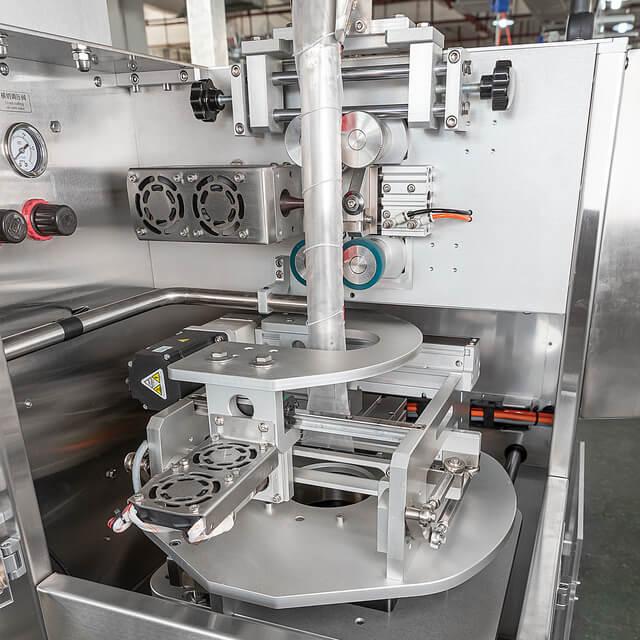
Match hopper, feeder, dosing parts, and chute to leaf size, density, fragility, dust, and blend. Smooth transitions and controlled vibration can reduce fines and spills. Stable level and refill prevent starving or flooding the doser. Close covers and extraction interfaces without removing unpredictable quantities of light ingredients.
Measure tea entering the line, accepted dose in finished packs, recoverable product under approved rules, dust or fines, and residue remaining at campaign end. A correct average dose does not show overfill or underfill loss. Ordered samples and defect categories reveal whether settings, refill, wear, or product variation drives waste.
Filter-roll waste often occurs during threading, forming adjustment, registration where used, seal warm-up, splices, and recovery after drift. Standardize loading direction and route with diagrams and reference positions. Prepare the correct former and guides before introducing material, and keep roll and substrate data with the recipe.
Clean rollers and sensors before increasing tension. Inspect roll winding, edge, width, curl, and joints. A converter defect can create repeated machine adjustment and unnecessary scrap. Preserve samples and lot information so purchasing and engineering can distinguish material variation from worn belts, guides, jaws, or cutters.
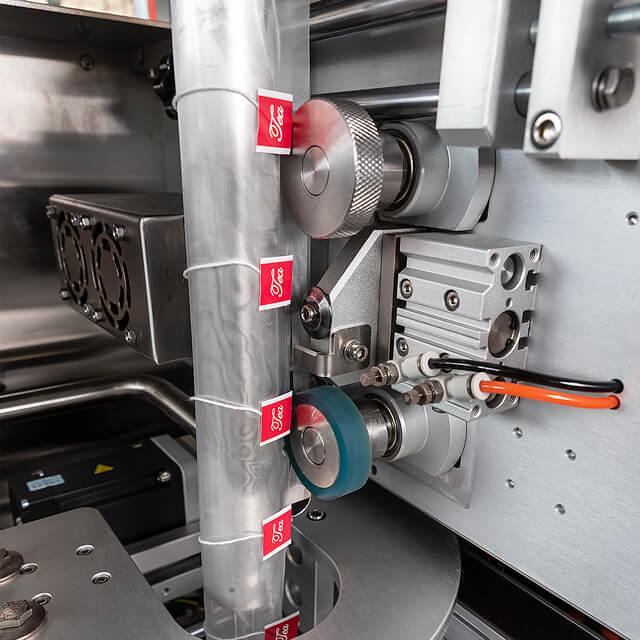
Missed tags, doubles, wrong orientation, thread tangles, poor attachment, and cutter faults can waste components and force rejection of an otherwise good inner bag. Verify tag presentation, dimensions, static, print, thread routing, tension, and attachment parts. Replenishment should preserve orientation and avoid loose components entering the machine.
Track attachment defects separately from inner and outer material. If one failed tag causes tea, mesh, thread, and outer film to be discarded, its true loss is the complete pack. Detection before outer wrapping can reduce added waste when the supplied control and reject logic handle the package safely.
Outer film can be lost through threading, registration, splices, coder setup, contamination, wrong code, poor seals, cutting, and downstream pulling. Use qualified rolls, documented unwind, clear marks, approved code templates, and stable jaw references. Keep thread and tag away from the transverse seam.
Classify defects before changing parameters. More heat cannot fix a tag in the seal; higher tension cannot correct a damaged roll edge; repeated code adjustments cannot fix an unstable trigger. Retain the failed pack and identify whether the originating condition is material, setup, attachment, control, or maintenance.
Count all product and components from the start of setup to the first accepted complete pack. Stage identified parts, tea, filter roll, tags, thread, outer film, code data, tools, and quality forms. Complete safe external preparation before stopping the previous campaign. Use controlled reference positions rather than trial-and-error adjustment.
At shutdown, empty product through the approved path, separate recoverable and rejected material, record residual tea, and leave the line in a known state. Scheduling compatible teas and formats can reduce cleaning and tooling changes. However, yield improvements must not weaken allergen, flavor, identity, or line-clearance requirements.
Choose a normal order size that includes roll and component replenishment, tea refill, quality sampling, a planned stop, restart, and campaign end. Weigh or count inputs and outputs with agreed methods. Record labor and downtime alongside materials because a low-scrap setting that needs constant intervention may not be economical.
| Loss source | Evidence to collect | Likely control | False saving to avoid |
|---|---|---|---|
| Tea and inclusions | Input, accepted dose, spill, fines, residue | Gentle feed, stable refill, correct tooling | Reusing product without approval |
| Filter material | Threading, setup, splices, tracking rejects | References, qualified rolls, clean transport | Accepting weak or distorted inner bags |
| Tags and thread | Misses, tangles, attachment rejects | Supply control, routing, early detection | Passing insecure consumer-use components |
| Outer film | Registration, code, seal, cut, startup length | Approved templates and physical defect diagnosis | Reducing seal margin without qualification |
| Complete packs | Station reason and downstream damage | Reject tracing and supported transfer | Counting rejected cycles as production |
Calculate improvement against a comparable baseline and state the trial scope. Avoid extrapolating one stable tea and roll to every customized product. Savings should remain traceable to a physical or procedural change.
Trend material lots, tea suppliers, wear parts, cleaning, adjustments, and defect rates. Rising filter or outer scrap may reveal belt wear, dirty sensors, loose guides, jaw damage, or changed converter tolerance. Maintenance release should include complete packs so restored motion is connected to yield and quality.
For a triangle tea packaging machine, purchasing should qualify tea components and packaging materials by their demonstrated specification, not lowest unit price alone. A cheaper roll that creates more setup waste may increase campaign cost. Keep supplier corrective evidence, accepted references, spares, and change control tied to the installed configuration.
Which loss should be measured first?
Begin with high-value tea and complete-pack rejects, then separate every material and time category to reveal the dominant controllable source.
Can faster production reduce unit loss?
Only if accepted quality remains stable. Higher cycles can increase leaf damage, tracking faults, attachment misses, seal defects, and intervention.
Should startup material be excluded from waste?
It can be classified separately from defects, but its cost belongs in campaign economics and should be improved through controlled setup.
How can converter-related loss be identified?
Keep roll lot, dimensions, winding, edges, splices, defect samples, machine state, and comparison with approved material before changing the baseline.
Does product recovery always improve yield?
No. Recovery must follow quality and food-safety approval. Uncontrolled reuse can create identity, contamination, damage, or traceability problems.
Product recovery needs explicit rules. Tea collected from a clean controlled point may or may not be reusable depending on identity, damage, exposure, and the quality program. Product from the floor, mixed waste, rejected outer packs, or dust extraction can have different disposition. Do not count uncontrolled reuse as a machine saving.
Secondary packaging losses should be added when evaluating the complete campaign. Misoriented outer sachets, incorrect counts, damaged cartons, mixed varieties, and unreadable case codes can discard otherwise acceptable primary packs. Trace the first cause and coordinate stop signals so a downstream fault does not continue consuming tea and materials.
Utility instability can create scrap patterns that appear mechanical. Low air or vacuum can affect attachment; power interruption can disrupt registration and coding; room humidity can change tea and roll behavior. Record these conditions around events. Repairing the support system is more durable than expanding machine tolerances.
Use simple visual loss reports that operators can complete accurately. Separate start, run, replenishment, stop recovery, changeover, and shutdown. Review defect examples beside the numbers. The purpose is to improve the process, not penalize reporting; hidden scrap prevents the business from learning where investment is needed.
Training should include correct threading and material handling. Damaged roll edges, reversed outer film, crushed tags, tangled thread, or wrong tooling create loss before the start button is pressed. A supervised setup and first-off check often removes more waste than another high-speed adjustment.
Material storage can be a hidden loss source. Protect filter and outer rolls from crushed edges, humidity, heat, dust, and incorrect orientation; keep tags flat and thread controlled. Use stock rotation and identify partial rolls. Damage before loading should not be treated as an unavoidable machine reject.
Set improvement targets by category rather than one absolute waste percentage. Tea, mesh, tags, outer film, complete packs, and downtime have different costs and causes. A balanced review prevents the team from reducing cheap film scrap while leaving high-value tea or finished-product loss unchanged.
Review yield after maintenance and supplier changes, not only during improvement projects. Stable control depends on detecting drift before material loss becomes routine.
Keep the loss ledger active.
Triangle tea lines reduce losses when every input is traced to an accepted pack and defects are corrected at their first station. Protect tea, standardize material setup, control attachments, diagnose outer-film faults, and count startup and changeover honestly. A campaign ledger turns waste reduction into verifiable engineering rather than a general automation claim.
Waste evidence should guide every adjustment.

YISEN MACHINERY - The ONE-STOP VFFS PACKING MACHINE SOLUTION SUPPLIER
 Tel: +8617350750975
 Email: info@vffspackingmachinery.com
 MP/WhatsApp: +8617350750975
 Manufacturer Address:Meixi Road, Tongan District, Xiamen,Fujian,China