

Hot Keyword:
Author:YISEN Pouch Packing Machine Manufacturer TIME:2024-11-16
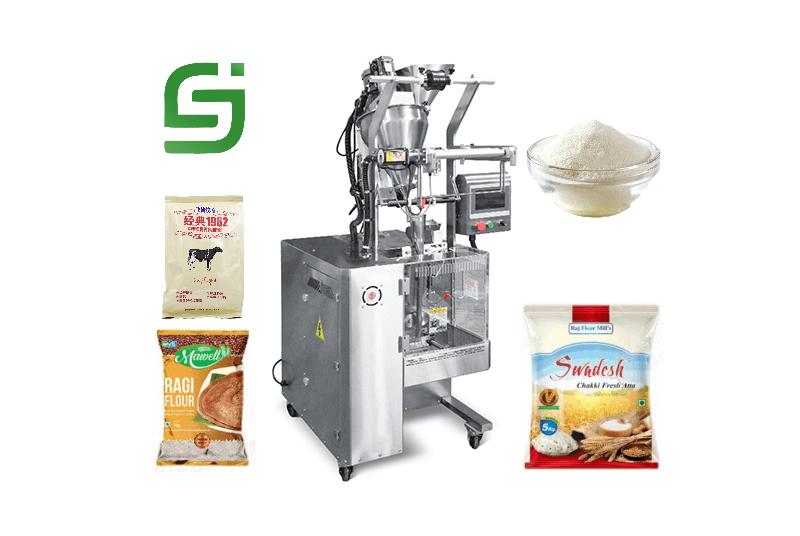
A powder packaging machine handles different densities by giving each approved powder a suitable metering configuration and a verified recipe, while keeping hopper supply and product condition stable. Density changes the mass delivered by a given auger movement and the volume needed inside the package. The machine can compensate within a proven range through filler selection, auger setup, controlled feed, calibration, and measured corrections. It cannot make uncontrolled aeration, compaction, or bridging disappear through software alone.
Bulk density describes how much mass occupies a volume, but the value depends on how the powder is prepared. A freshly transferred, aerated product can appear light. The same material may become denser after vibration or residence in a hopper. Laboratory values are useful only when the measurement method and product state relate to the packaging process.
Record density under conditions relevant to supply, dosing, and filled-package appearance. Add flow, moisture, particle size, cohesion, dust, and temperature information, because two powders with equal density can still feed differently. The packaging team should know whether the expected challenge is a different product family, batch variation, or change during one run.
Representative samples should cover normal limits. Do not calibrate only with a settled sample if production transfer aerates the powder, or with a dry sample if normal humidity creates cohesion. The machine response is only as useful as the conditions used to establish it.
An auger filler controls screw movement through revolutions, angle, or another drive reference. The displaced product volume is influenced by screw geometry, tube, clearance, hopper pressure, and flow. When density rises, similar movement may deliver more mass; when it falls, more movement may be required for the same net quantity. The relationship must be measured for each powder.
Weighing systems measure mass more directly, but they still depend on controlled feeding, suitable resolution, and discharge timing. Volumetric cups are particularly sensitive to stable density. Selecting the filler principle and size is therefore the first response to a wide density range.
A powder packaging machine should operate comfortably at the smallest and largest dose-density combinations. If a low-density large dose exceeds bag or hopper volume, or a dense small dose uses too little filler movement for stable control, alternate hardware may be needed.
The hopper is not only storage; it presents powder to the metering element. Large level changes can alter pressure around an auger. Agitation can promote flow but may compact or aerate the material depending on design and product. Refill can introduce a pulse of loose powder that changes several following doses.
Use appropriate level control and a balanced refill rate. Upstream conveyors should avoid extreme surges. If agitation is required, its setting belongs to the approved product configuration. Observe product movement safely during commissioning and relate quantity results to level and refill events.
After a long stop, powder may settle. Define whether the filler requires a controlled prime, purge, or first-off inspection before release. Simply resuming at full output can mix startup variation into accepted packages.
Install the correct auger, tube, agitation setup, and package format. Bring the product supply to its normal state. Start from a documented baseline and collect consecutive packs, retaining order. Use the producer's verified scale and tare method. Examine average quantity and spread.
Adjust the designated metering value in controlled increments. If the average responds consistently and variation remains tight, continue toward the approved operating position. If results scatter, stop adjusting and investigate flow, air, refill, leakage, or mechanical condition. More target movement does not cure instability.
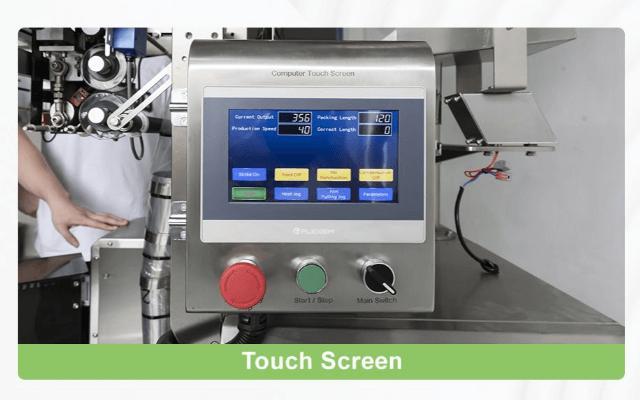
Save the recipe by product and package code and link it to the fitted parts. Include the expected powder state and normal supply level. Protect critical parameters with appropriate access and record justified changes.
Sample across startup, stable output, refill, low level, and restart. Ordered results show whether the process steps upward after replenishment, drifts as the hopper empties, or alternates because of a feed issue. A combined average can hide these patterns and give false confidence.
Checkweighing or feedback may support control when properly integrated. Define measurement quality, delay between filling and feedback, adjustment limits, and disposition of nonconforming packs. Feedback should trim a stable process, not chase every reading or conceal a recurring bridge.
Trend filler load, auger movement, level alarms, and operator interventions where those data are meaningful. Connect deviations to product lot and supply events. This creates evidence for recipe improvement and maintenance rather than encouraging undocumented manual compensation.
A lower-density powder occupies more room at the same mass. It may fill closer to the seal, require more settling time, or produce a bag that looks fuller. A denser powder can leave a package looking underfilled even when net quantity is correct. Commercial pack dimensions must account for normal density range and customer presentation.
Headspace is needed for a clean fill and seal. Powder should clear the jaws before they close. Settling or deaeration features can help in suitable applications but must be tested for dust, product quality, and cycle impact. Do not reduce bag size solely from a settled laboratory sample.
| Density-related observation | Likely interpretation | Appropriate response |
|---|---|---|
| Stable result shifts with a new powder | New mass per metering movement | Use the approved product recipe and verify calibration |
| Several packs change after refill | Aeration, compaction, or product-head disturbance | Stabilize refill and reassess hopper control |
| Random wide spread | Flow interruption, air, wear, or poor cutoff | Restore mechanical and product stability first |
| Correct weight crowds the seal | Bulk volume is larger than package allowance | Review bag size, headspace, and settling process |
| Correction reaches filler limit | Configuration is outside its useful range | Review auger, tube, or alternate metering hardware |
Remove the previous powder from upstream supply, hopper, agitator, auger, tube, forming area, guards, and collection points according to the approved procedure. Allergens, active ingredients, strong colors, or incompatible non-food material require particular attention from the owner's quality and safety teams.
Install and verify the new product-contact set. Clear labels and protected storage prevent similar augers or tubes from being mixed. Select the matching recipe only after mechanical setup. Confirm package material and coding, then prime the filler as documented.
First-off release should include product identity, quantity sequence, bag volume, seal cleanliness, and code. A correct touchscreen name does not establish that the proper hardware or powder has reached the filler.
First verify the measurement method, tare, product, recipe, and installed parts. Next inspect hopper level, refill history, agitation, bridge or flood signs, auger and tube cleanliness, leakage, and wear. Compare current density or product state with calibration information. Only then decide whether a recipe correction is justified.
A sudden shift often points to recipe, part, blockage, refill, or component change. A gradual trend can relate to settling, wear, temperature, moisture, or changing supply. Repeating a larger correction each shift may move the process beyond its qualified range and delay maintenance.
After correction, collect a new consecutive sample through the condition that previously caused the problem. Record the action and evidence. This closes the troubleshooting loop and protects the baseline recipe.
Where several powders share a line, review the historical quantity trend by product rather than combining all results. A pattern limited to one low-density formula suggests material presentation or its configuration, while similar drift across every recipe suggests a common filler, scale, utility, or maintenance issue. Product-specific records make that distinction visible before unnecessary parts are replaced.
Retain the reason for every authorized recipe correction. If the same product repeatedly needs movement in one direction, investigate whether its incoming density range, upstream transfer, storage, or filler wear has changed. A stable process should not depend on resetting the baseline at every shift change.
Check the scale and tare method before blaming density. A packaging process cannot be calibrated from uncertain measurements, and an unnoticed change in empty-bag mass can resemble a filler offset.
Can one recipe handle every batch-density change?
A recipe may tolerate a proven normal range, but significant product-state changes require verification and sometimes a controlled correction or another configuration.
Why is an auger sensitive to bulk density?
It meters controlled product movement or displacement, while the finished quantity is measured as mass. Density links those two values.
Will hopper agitation keep density constant?
Not necessarily. It can improve flow, but may also compact or aerate some powders. Its method and setting must be tested.
When is another auger set required?
Consider it when dose resolution, volume, fill time, flow, or cutoff cannot remain stable inside the current set's useful range.
Should pack volume be checked during calibration?
Yes. Correct mass must still fit with adequate headspace and acceptable appearance under normal density variation.
Powder-density handling is a controlled relationship among product state, hopper presentation, filler movement, and package volume. Configure the metering hardware for the range, calibrate each family with ordered measurements, test refill and restart, and preserve recipes with their physical parts. When results drift, diagnose flow and supply before changing the target. That discipline lets one platform serve several proven powders without pretending density no longer matters.

YISEN MACHINERY - The ONE-STOP VFFS PACKING MACHINE SOLUTION SUPPLIER
 Tel: +8617350750975
 Email: info@vffspackingmachinery.com
 MP/WhatsApp: +8617350750975
 Manufacturer Address:Meixi Road, Tongan District, Xiamen,Fujian,China