

Hot Keyword:
Author:YISEN Pouch Packing Machine Manufacturer TIME:2026-08-17
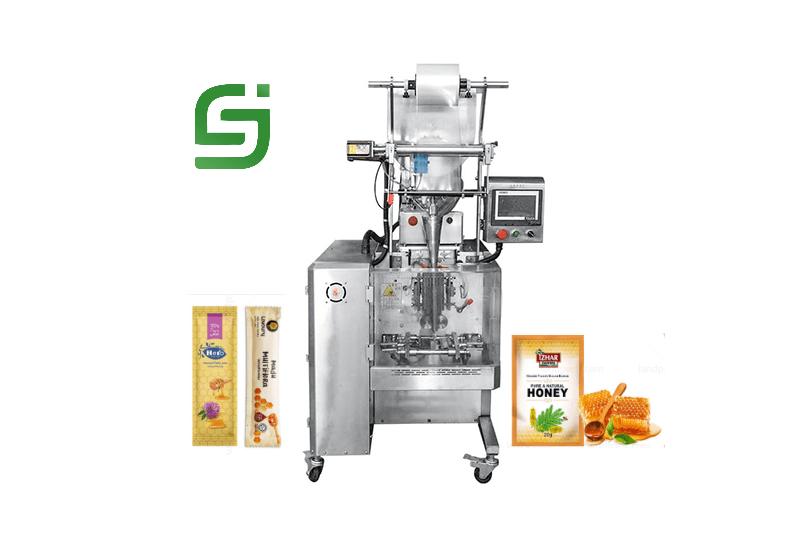
One sauce pouch packing machine can sometimes handle ketchup, honey, oil, paste, jam, chili sauce, peanut butter, and similar products, but only when the filling system, nozzle, pump, product-contact material, seal design, and cleaning method are suitable for the full product range. The machine frame may be shared, yet the filling path and settings must be selected around viscosity, particles, temperature, foaming, oiliness, and hygiene requirements.
The safest buying approach is to treat every sauce as a separate test case. Thin oil flows differently from honey. Ketchup behaves differently from chili sauce with seeds. Peanut butter may need a stronger piston or special hopper. A supplier should ask about viscosity, temperature, particles, target weight, pouch type, and cleaning standard before recommending a final configuration.
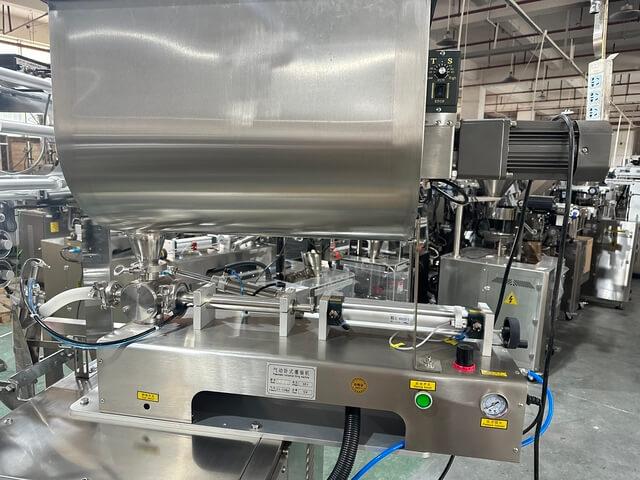
Viscosity decides how quickly the product can move, how accurately it can be dosed, and how easily it can be cut off at the nozzle. Low-viscosity liquids such as oil can drip if the nozzle is not controlled. Medium-viscosity products such as ketchup may need a piston filler or pump filler with anti-drip design. High-viscosity paste may need a hopper, pressure assist, heating, or larger filling passage. Products with particles require special attention because seeds, pulp, or spice pieces can block narrow passages.
| Product | Typical challenge | Practical machine detail |
|---|---|---|
| Oil | Dripping and seal contamination | Anti-drip nozzle, accurate pump, clean filling path. |
| Honey | Slow flow and stringing | Heated hopper or suitable piston, clean cut-off nozzle. |
| Ketchup | Viscosity and splash control | Piston filler, stable pouch support, controlled filling speed. |
| Chili sauce | Particles and oil separation | Wider product passage, agitation, particle-friendly valve. |
Sauce pouch packing normally uses pump fillers, piston fillers, or specialized liquid filling systems. A pump filler may be suitable for lower-viscosity liquid. A piston filler is often selected for sauces and pastes because it can move thicker product with better volume control. Servo control can improve adjustment, but mechanical design still matters. The filling nozzle should reduce dripping, prevent product from touching the seal area, and support the required pouch mouth width.
Factories comparing sauce pouch packing machine options should ask whether the quoted machine is designed for their thickest product, not only their easiest product. The thickest product usually sets the real limit for speed and filling stability.
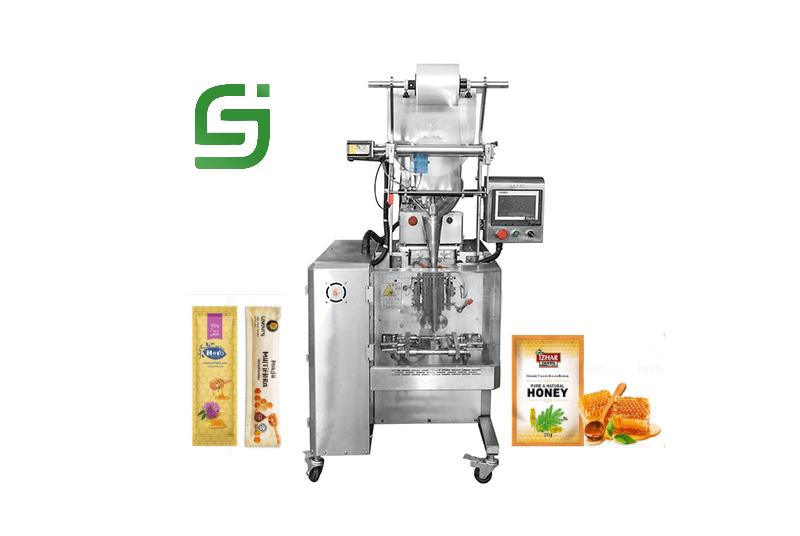
Case observation: In sauce packing projects, the product that looks simple in a cup can behave differently inside a machine. Temperature, settling time, particle size, and product separation may change the actual filling speed.
Leak control depends on both filling and sealing. If sauce touches the pouch mouth, even a good seal jaw may fail. The machine should position the pouch consistently, fill without splashing, and allow the seal area to stay clean. Heat seal temperature, pressure, dwell time, and pouch laminate all need to match. Buyers should not approve a machine only because a few sample pouches look good; they should check repeated seals after longer production.
A machine that handles many sauce products must be easy to clean. Changeover may require flushing the pump, removing product-contact tubes, cleaning the hopper, adjusting filling speed, changing nozzle height, and resetting seal temperature. If the factory switches from chili sauce to honey or from oil to paste, residue and odor control become part of the production plan. Buyers should ask for a cleaning demonstration, not only a production demonstration.
| Changeover task | Why it matters | Question to ask |
|---|---|---|
| Filler cleaning | Prevents cross-contamination and odor carryover | How many parts must be removed and washed? |
| Nozzle adjustment | Controls drip, splash, and seal contamination | Can operators adjust height and cut-off easily? |
| Seal setting | Different pouches need different temperatures | Are recipes saved in the control system? |
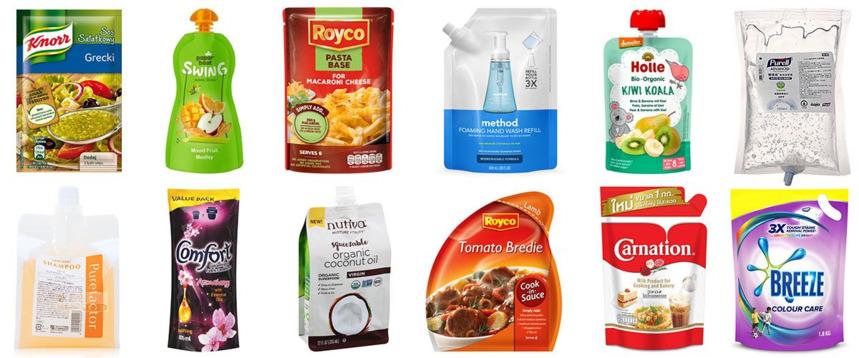
Before approving a sauce pouch packing machine, test the thickest product, the thinnest product, the smallest pouch, and the largest pouch. Record filling accuracy, leak rate, seal appearance, cleaning time, and operator steps. The buyer should also check whether spare parts include seals, nozzles, heater parts, temperature controllers, cylinders, sensors, and pump wear parts. If the supplier will export the line, packing, installation video, wiring marks, and remote support should be confirmed before shipment.
Mini decision summary: A shared sauce pouch machine is practical when the products have manageable viscosity differences and the filling system is designed for the hardest product. If products are extremely different, separate fillers or different configurations may be safer.
A sauce pouch packing line should be designed around product movement before it is designed around machine speed. The buyer should know whether the sauce will be fed from a mixing tank, storage hopper, transfer pump, or manual container. The product may need heating, stirring, filtering, or short holding time before filling. If the sauce separates, thickens, cools down, or traps air before it reaches the nozzle, filling accuracy and pouch appearance can change even when the machine settings remain the same.
Line design should also consider cleaning water, drainage, operator access, and product recovery. Sauce residue is more difficult to manage than dry granules because it can remain in pipes, valves, pistons, and nozzles. If the factory changes from one flavor to another, cleaning time may become the main production bottleneck. Buyers should ask the supplier to show which parts can be removed, how the pump is flushed, and whether the nozzle can be cleaned without dismantling half of the machine.
Factory layout note: Sauce lines need enough space around the filling area because operators often check the nozzle, wipe the seal area, replace product-contact parts, and clean spills. A tight layout may reduce real output even when the machine has enough rated speed.
For sauce pouch packing, operator control matters because product behavior can change during a shift. Honey may flow slower when the room is cool. Chili sauce may separate if it sits too long. Oil may drip if the nozzle cut-off is weak. Paste may create pressure changes inside the filling path. The operator should understand how filling speed, nozzle height, pump stroke, seal temperature, and pouch position affect the finished pack.
The control panel should be simple enough for daily workers, but the training should still explain the logic behind each parameter. If the operator only copies numbers without understanding them, small product changes can create leaks, underfill, or messy seals. A practical training session should include startup, first-sample checking, alarm recovery, cleaning, and safe shutdown. The supplier should provide videos or written steps that the local team can reuse after the engineer leaves.
Sauce pouch packing lines need spare parts that protect both filling and sealing. Buyers should prepare seal tape, heating elements, temperature sensors, nozzles, piston seals, pump seals, tubes, clamps, air cylinders, sensors, and belts according to the supplier list. Thick or oily products can wear product-contact parts faster than dry products, and cleaning chemicals may also affect seals over time. If the buyer imports the machine, keeping a small spare parts kit in the factory is usually cheaper than waiting for urgent international shipping.
The spare parts plan should match the production schedule. A factory running one shift with one product can keep a smaller kit. A factory running several sauces, frequent cleaning, or long daily hours should prepare more wear parts and train operators to replace simple parts safely. The supplier should explain which parts are normal consumables, which parts need technical support, and which parts should be ordered with the machine.
Can one sauce machine pack both oil and ketchup?
It may be possible, but the filler, nozzle, anti-drip design, and settings must support both products. Testing both products is necessary.
What causes sauce pouch leaks?
Common causes include product in the seal area, weak laminate, wrong temperature, poor pouch positioning, unstable air pressure, or worn sealing parts.
Is a piston filler always needed for sauce?
Not always. Thin liquids may use other pump systems, while thick sauce and paste often benefit from piston filling.
Should buyers test with real pouches?
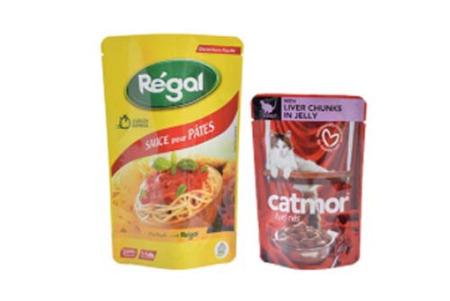
Yes. Pouch stiffness, mouth width, seal layer, and spout or zipper structure all affect the final result.
A sauce pouch packing machine can handle several products only when the full system is designed for viscosity, particles, cleaning, seal quality, and pouch format. Buyers should test the hardest products, ask detailed questions about filling and cleaning, and approve the machine based on repeated production behavior rather than a short demonstration.

YISEN MACHINERY - The ONE-STOP VFFS PACKING MACHINE SOLUTION SUPPLIER
 Tel: +8617350750975
 Email: info@vffspackingmachinery.com
 MP/WhatsApp: +8617350750975
 Manufacturer Address:Meixi Road, Tongan District, Xiamen,Fujian,China