

Hot Keyword:
Author:YISEN Pouch Packing Machine Manufacturer TIME:2024-08-20
One premade-pouch line can package both free-flowing liquids and viscous sauces, but only when its product path, filler, nozzle, pouch support, and cleaning method are selected for the hardest recipe. The shared frame is rarely the limiting factor. Flow behavior, particles, temperature, and contamination at the seal determine whether a common configuration is practical.
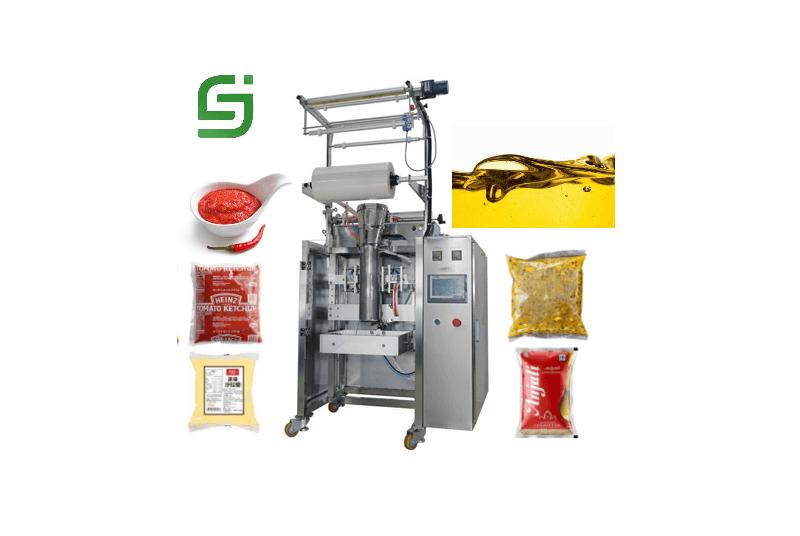
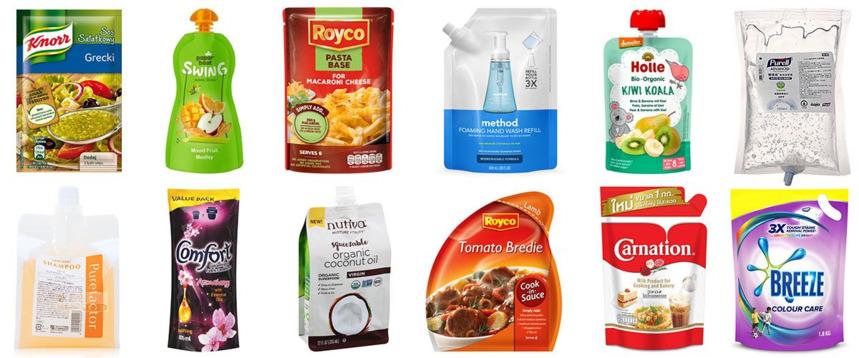
A Doypack packing machine can share pouch transport, opening, sealing, coding, and discharge stations across products with very different flow properties. What often changes is the equipment that brings product from the supply vessel to the pouch. Thin oil needs controlled pump delivery and positive shutoff. Ketchup may suit a piston or sanitary pump. Dense paste can require a heated or agitated hopper, wider passages, and slower nozzle withdrawal.
Compatibility means more than making one acceptable sample. The line must repeat the target fill after startup, replenishment, a short stop, and restart without dripping into the seal zone. It must also recover after cleaning without trapped water or an incorrect recipe. Buyers should define conversion time, change parts, operator steps, and first-off inspection for every product pair that will share the equipment.
Two recipes sold as sauce can demand different hardware. Record viscosity at the actual filling temperature, largest particle size, tendency to separate, foaming, stringing, oil content, acidity, and changes during holding or recirculation. Include the lowest and highest temperature expected at the hopper. A warm sample can flow easily during a supplier trial yet become difficult after cooling on the factory floor.
Observe how material moves through pipes and valves, not only in an open cup. Seeds can bridge a narrow port, fibrous pieces can prevent a valve from closing, and aerated mixtures can give unstable volumetric fills. Retained samples should represent normal batches plus the thickest or most particulate condition. This product map lets engineers size passages and select seals without relying on a broad suitability statement.
Product chemistry also affects component selection. Acids, oils, salt, cleaning agents, and flavor compounds may require particular elastomers or surface finishes. Ask the product technologist to review contact materials and permitted cleaning chemicals together. If a sauce is filled hot, thermal expansion, operator protection, and cooling before case packing become part of the study. These details can change valve life and sanitation frequency even when two recipes have similar viscosity.
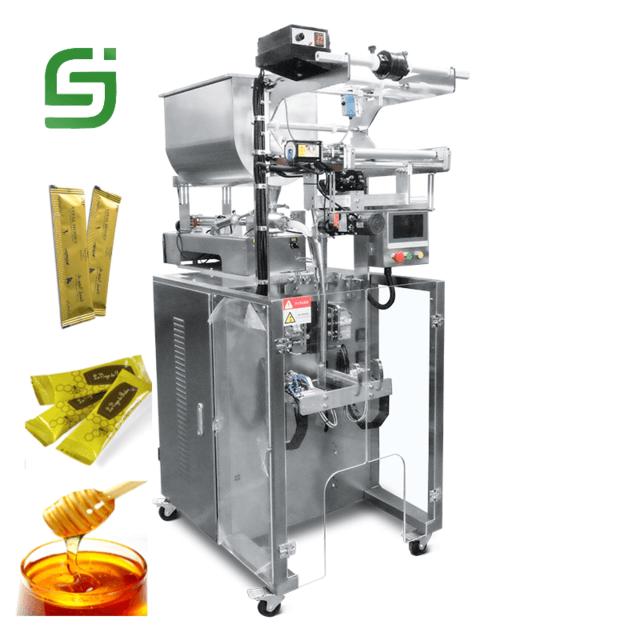
Gravity filling is simple for low-viscosity products, although cutoff control becomes important when oil continues to drip. Gear, lobe, or other sanitary pumps can meter many liquids while offering recipe adjustment. Piston filling is commonly considered for ketchup, dressings, and pastes because a defined stroke can move thicker material. The correct choice depends on cleanability, particles, dose range, and how gently ingredients must be handled.
Evaluate the entire feed circuit: supply tank, transfer pump, level control, hopper, hose diameter, valve, nozzle, and any recirculation route. A capable filler can still starve if replenishment is inconsistent. Ask which settings change between products and which parts must be exchanged. Recipe storage is useful only when operators can confirm that the installed nozzle and valve match the selected program.
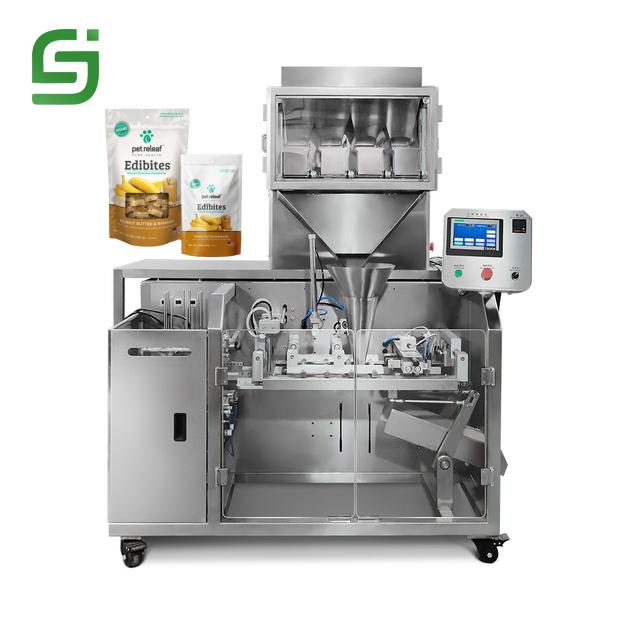
Premade pouches must arrive squarely, open completely, and remain supported while receiving the dose. A wide nozzle may be appropriate for particulate sauce but can leave little clearance at a small pouch mouth. If the pouch sags under product weight, the nozzle position changes and splashing becomes more likely. Grippers, opening vacuum, bottom support, and nozzle stroke should therefore be reviewed as one timed sequence.
Test the smallest mouth opening, largest dose, and heaviest product rather than a convenient middle format. Spouted, zipper, and shaped pouches introduce additional restrictions. Film manufacturing tolerance matters because curl or stiffness can affect opening. A successful run should show that the machine detects a pouch that did not open and prevents filling instead of releasing product into an empty station.
Many sauce leaks begin before the jaws close. A tail from the nozzle, splash during rapid filling, or product pushed upward by trapped air can contaminate the sealant layer. Anti-drip valves, bottom-up filling, controlled acceleration, and adequate headspace reduce this risk. The pouch needs time to settle before sealing, but extra dwell must be balanced against the required accepted output.
Inspect more than appearance. Agree on a leak test, seal-width check, and handling challenge that reflect distribution conditions. Review seals after the equipment reaches thermal stability and again following a pause. Different laminates may require separate temperature, pressure, and dwell recipes. Operators should correct the filling cause of contamination rather than compensate with excessive seal heat.
A shared platform is valuable only when changeover is controlled. Map every wetted surface and identify whether it is drained, flushed, removed, or manually cleaned. Blind hose ends, valve cavities, hopper corners, and nozzle threads deserve close attention. Product-contact parts should be identifiable so components used with an allergen or strong flavor are not installed on the wrong recipe.
Time the process from the last acceptable pack of one product to the first released pack of the next. Include recovery, disassembly, washing, inspection, drying, reassembly, recipe selection, and trial fills. Cleaning must suit the plant sanitation program and chemical compatibility. If conversion requires specialist tools or difficult lifting, apparent flexibility may not translate into usable daily capacity.
A useful factory test combines the hardest recipe with the most restrictive pouch, then challenges the easiest liquid for dripping. Measure consecutive accepted packs rather than selecting a few good examples. Record fill variation, leakage, opening failures, seal contamination, stops, operator interventions, and cleaning duration. Use identical defect definitions for each proposed configuration.
| Trial condition | What it reveals | Record to retain |
|---|---|---|
| Thickest product at low temperature | Flow restriction and refill capability | Cycle stability, pressure, incomplete doses |
| Thinnest liquid after a stop | Nozzle cutoff and drip control | Seal-zone cleanliness and first packs |
| Largest particles in smallest opening | Valve passage and pouch clearance | Blockages, damage, splashing |
| Full sanitation changeover | Access and practical conversion time | Steps, tools, residue findings |
| Restart at low hopper level | Supply control and recipe recovery | Fill trend and corrections |
Retain the pouch specification, product condition, installed parts, parameter record, sample sequence, and defect photographs. This makes later site acceptance meaningful. A short demonstration with an unrecorded recipe cannot prove that both product families will run under production constraints.
After shipment, repeat critical combinations during site acceptance with production utilities and trained local operators. Differences in air pressure, product transfer distance, ambient temperature, or pouch storage can change performance. The supplier and buyer should agree how a failed combination will be corrected, retested, and documented before routine manufacturing begins. Local teams should retain approved samples for later setup comparison.
One shared path is reasonable when viscosity differences are manageable, cleaning can be verified, and the same sanitary components cover the range. Separate filler modules may be better when products have incompatible particles, allergens, flavors, temperatures, or cleaning chemicals. A quick-change filler can preserve common pouch handling while limiting cross-contact and conversion work.
Compare ownership cost using accepted output and scheduled changes, not machine price alone. Include spare contact sets, sanitation labor, lost product, wastewater, warm-up time, and production held for inspection. The sauce packaging machine category can frame available configurations, but final scope should be based on tested recipes and approved pouches.
The production schedule provides the final reality check. A plant running one long campaign of oil followed by one weekly sauce change can tolerate more conversion work than a co-packer switching recipes several times per shift. Calculate available hours after sanitation, inspection, warm-up, and first-off approval. Also identify where cleaned parts will be dried and stored. A flexible machine without controlled part storage can lose time through missing seals, mixed nozzles, or uncertain cleanliness.
Can the same nozzle fill oil and ketchup?
Sometimes, although cutoff, passage size, and splash control may favor different nozzles. Test the smallest pouch and both viscosity extremes before approving one part.
Does heating solve every thick-sauce problem?
No. Heating can improve flow, but it may change quality, separation, or food-process controls. The permitted temperature must come from the recipe specification.
How is seal contamination checked during a trial?
Inspect consecutive pouches for residue at the mouth, then apply agreed leakage and seal-strength checks after normal cooling and handling.
Is clean-in-place always available on a small pouch line?
No. Many installations use removable hoses, pumps, and nozzles. Buyers should confirm the actual cleaning boundary and inspect hidden traps.
When are dedicated fillers the safer choice?
They are often justified by incompatible allergens, severe viscosity differences, abrasive particles, strong flavors, or sanitation changes that consume excessive capacity.
Liquids and sauces can share a premade-pouch platform when filling hardware, pouch handling, seal protection, and sanitation are engineered around the full product range. Approval should follow representative trials that include difficult temperatures, particles, pouch openings, stops, and a complete changeover. Where one wetted path creates excessive compromise, separate filler modules provide a clearer and often more reliable solution.

YISEN MACHINERY - The ONE-STOP VFFS PACKING MACHINE SOLUTION SUPPLIER
 Tel: +8617350750975
 Email: info@vffspackingmachinery.com
 MP/WhatsApp: +8617350750975
 Manufacturer Address:Meixi Road, Tongan District, Xiamen,Fujian,China