

Hot Keyword:
Author:YISEN Pouch Packing Machine Manufacturer TIME:2024-08-30
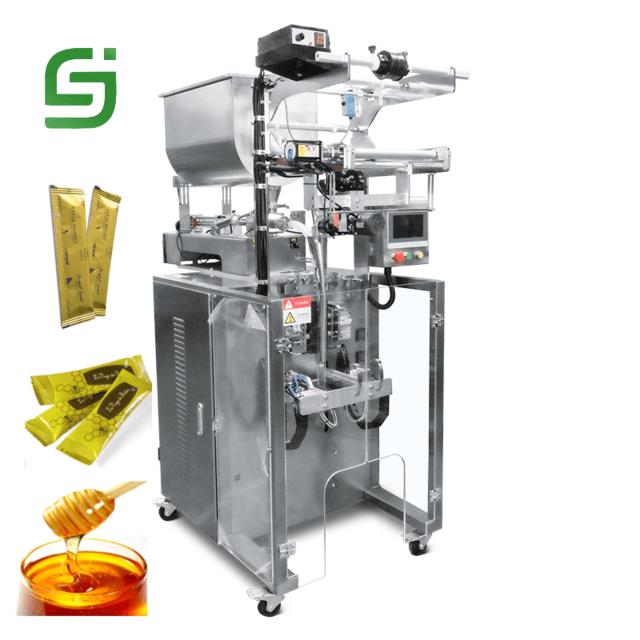
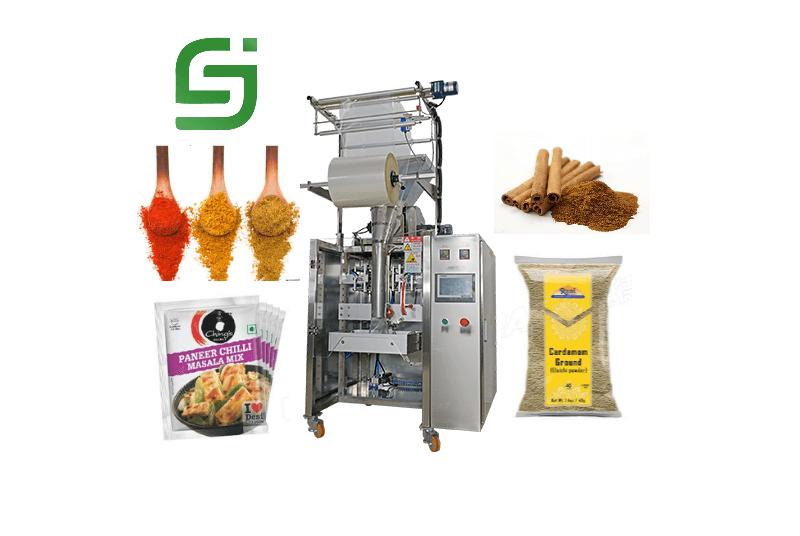
A vertical tomato ketchup packing machine unwinds roll film, forms it around a tube, seals the bag lengthwise, meters ketchup through a pump or piston filler, makes horizontal seals, cuts individual packs, and discharges them. Reliable operation depends on keeping viscous product moving consistently while preventing drips or splash from contaminating the hot seal area.
Rollstock travels through tension rollers and past a registration sensor before reaching the forming shoulder. Film wraps around a forming tube, and a longitudinal device closes the overlapping or fin-seal edge. Horizontal jaws make the bottom of the next bag. Once that cavity is ready, the filler releases ketchup through the center tube; the jaws then close the top and create the bottom of the following pack.
Intermittent equipment stops the web for sealing and filling, while continuous-motion designs coordinate jaw travel with moving film. Product must clear the seal zone within the available cycle. If the filler finishes late, ketchup can be caught by the jaws. When film movement and dosing lose synchronization, bag length, registration, fill position, and seal appearance can all change together.
The controller treats these events as one sequence, yet operators should understand the physical order. A film alarm can leave an open dose waiting above the tube, and a filler alarm can leave an empty formed bag between jaws. Recovery instructions must identify which partially completed packs are removed and how the next valid cycle is confirmed.
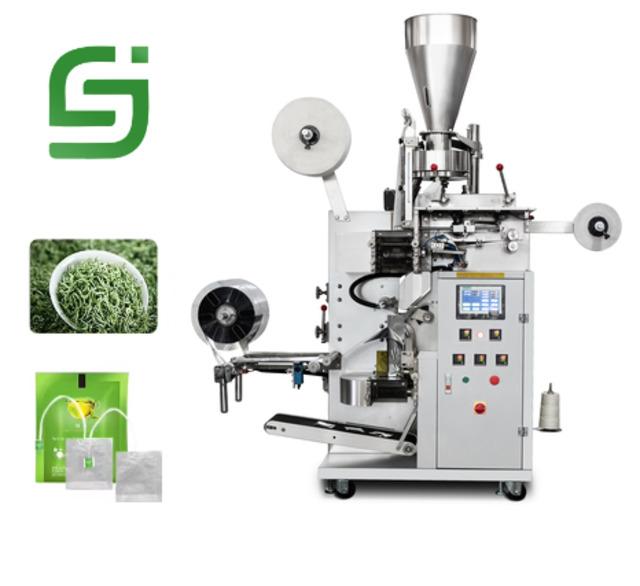
Ketchup viscosity depends on recipe and temperature, and some products contain seasoning or vegetable particles. The supply system should deliver a consistent condition to the dosing unit. This can include a sanitary transfer pump, buffer hopper, level control, gentle agitation, insulation, or permitted heating. The process specification must define acceptable temperature rather than letting operators warm product until it flows.
Hopper replenishment should not introduce air or large pressure changes. Low level can starve a piston inlet, while aggressive agitation creates bubbles that alter volume. Pipe and valve passages must suit the largest particle. During selection, follow product from the upstream tank through every fitting; the narrowest component often sets actual line capability.
Piston fillers are frequently used because a controlled cylinder stroke moves thick sauce with repeatable volumetric delivery. Sanitary pumps are another option when their flow range, product compatibility, and cutoff suit the application. Servo adjustment can improve recipe control, but valve condition, seal wear, supply stability, and trapped air still influence results.
Check performance using consecutive net weights at normal temperature. Include startup, hopper refill, a short pause, and restart. A volumetric dose may change in weight as density shifts, so record temperature and method. The target must consider declared quantity and allowable process variation, not merely the smallest deviation seen during a brief run.
Product particles deserve a separate passage test. Seeds or vegetable fragments should travel through the inlet valve, dosing chamber, outlet, and nozzle without cutting, blocking, or preventing closure. Inspect product after filling for visible damage. If a larger valve is required, verify that it still controls thin recipes and that its cleaning method reaches the expanded cavity.
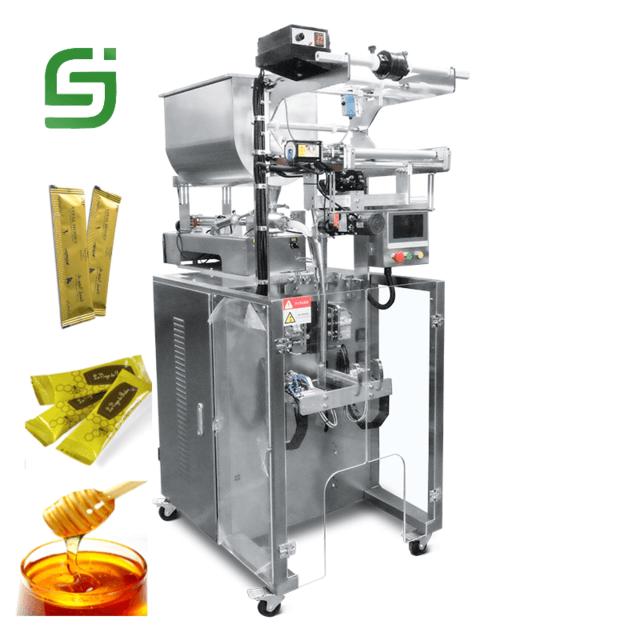
The forming set must match bag width, film stiffness, laminate thickness, and seal arrangement. Tension should remain steady so the web does not wander or wrinkle at the shoulder. Registration control corrects bag length to printed marks. Pull belts need enough grip without marking material. Dust, oil, or misalignment can create tracking errors that later appear as weak seals.
Test actual printed laminate, including normal roll joins and dimensional tolerance. Confirm unwind capacity, splice procedure, printer location, static control, and safe roll handling. A package that looks good with unprinted trial film may behave differently when ink, coating, or laminate construction changes stiffness and heat response.
The filling tube and nozzle guide ketchup into the open bag without touching the closure area. Product may be delivered above the bag or through nozzle movement that reduces splash. Positive shutoff, suck-back, or decompression can shorten the tail after dosing. Diameter must balance easy flow against clearance inside the forming tube and package.
Observe cutoff at production speed and during a planned stop. A thread that seems harmless while film moves may drip onto stationary material when the line pauses. Controls should finish or cancel the correct cycle and prevent uncontrolled filling after a film or jaw alarm. Trays make setup cleaner, but normal operation should not depend on constant wiping.
Filling acceleration also matters. An abrupt start can splash sauce upward; a slow profile may consume too much cycle time. Adjust the beginning, main flow, and final cutoff as separate phases where the controller allows it. Retain the approved motion values with the exact nozzle and product temperature, because copying them to another format without verification can move contamination closer to the seal.
Longitudinal and horizontal seals require compatible sealant layers, stable temperature, pressure, dwell, and alignment. Ketchup in the closure creates a channel that additional heat may not repair. The process needs enough headspace and time for the dose to settle. Jaw faces and release tapes should be checked for residue, damage, and even contact.
Cooling determines when the package can be pulled, cut, and dropped without distortion. Perforations or tear notches must not weaken the sealed area. Agree on visual criteria plus a suitable leak or burst test, then examine samples after thermal stability. Include packs made immediately after restart because jaw temperature and timing can differ from steady running.
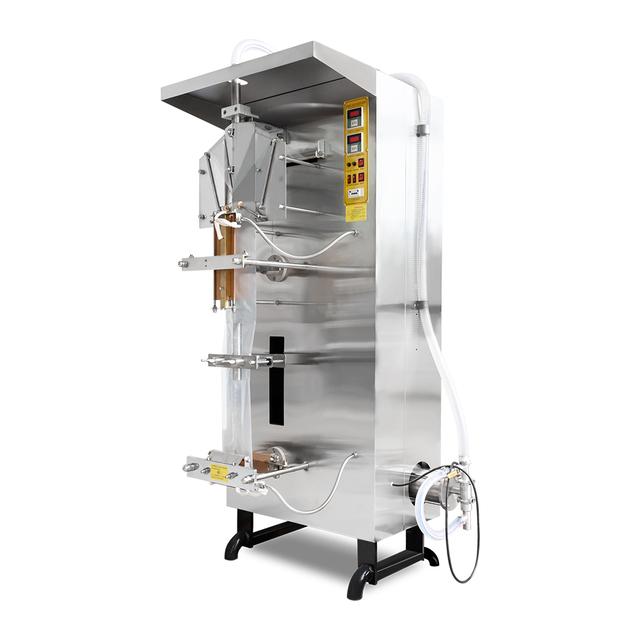
The PLC coordinates indexing, registration, jaw position, filler command, printer trigger, and discharge. Interlocks monitor guards, air pressure, temperature, film end, and downstream availability. A missing signal should move the line to a defined safe state rather than allow product to flow into an incomplete bag. Alarm text should explain what condition exists and what inspection is needed before restart.
Recipe management can store bag length, temperature, filler stroke, timing, and mark settings. Permissions should separate routine selection from engineering changes. After loading a recipe, operators still need to confirm the installed forming set and contact parts. Electronic parameters cannot detect that a nozzle for another size remains fitted.
Traceability includes the printer and inspection route. Challenge missing-code detection, unreadable marks, film registration faults, and the reject mechanism. If the line stops without an automatic reject, the work instruction should specify the suspect pack range. A counter is useful only when its definition of accepted output matches the factory release process.
A factory test should run actual ketchup and intended laminate long enough to expose warm-up, replenishment, buildup, and repeated cutoff behavior. Test smallest and largest packs where applicable. Count leaking, underweight, contaminated, misregistered, poorly coded, and manually corrected packages separately from accepted output.
| Test event | What to observe | Approval record |
|---|---|---|
| Cold product startup | Flow, pressure, first doses | Temperature and sequential weights |
| Normal hopper refill | Air entry and weight trend | Levels and affected packs |
| Intentional stop | Nozzle drip and film protection | Pause length and restart defects |
| Printed-film splice | Tracking and registration recovery | Waste and operator actions |
| Cleaning and assembly | Access, residue, correct setup | Time and first released samples |
Identify the installed pump or piston, valve, nozzle, forming set, coder, and inspection devices. Retain settings and representative packs. Review sauce packaging machine options as a category reference, then tie final configuration to tested product and film instead of a generic speed claim.
Repeat key conditions during site acceptance using production utilities and local staff. Transfer distance, compressed air, room temperature, and cleaning water may differ from the supplier floor. Document any changed setting and why it was needed. Training should cover film threading, safe sanitation, valve assembly, first-off checks, alarm recovery, and the boundaries operators may not adjust.
Preventive maintenance should link component wear to recognizable pack defects. Piston seals, product valves, nozzle closures, pull belts, registration sensors, jaw faces, heaters, thermocouples, release tape, and cutting parts affect different stages. After work, verify guards, temperature response, film tracking, dose weight, cutoff, and seal integrity. A mechanical repair is complete only when first-off packages meet the approved criteria.
Why is piston filling common for ketchup?
A piston can move viscous product through a defined stroke, but valve passage, particles, temperature, and cutoff still need testing.
Can a vertical machine make stand-up pouches?
Some vertical systems make gusseted formats, but complex finished Doypacks often use premade-pouch equipment. Confirm the exact construction.
What causes ketchup to leak through a heat seal?
Frequent causes are contamination, wrong laminate, unsuitable settings, wrinkles, misalignment, jaw damage, or handling before cooling.
How should fill accuracy be checked?
Use a verified scale and consecutive net weights across operating events. Record product temperature, settings, refill, stops, and rejects.
Which change parts are typical?
Bag width may need another forming set; dose or recipe changes can require a different nozzle, valve, piston range, hose, or seals.
The vertical ketchup process succeeds when roll-film control and viscous filling remain synchronized. Stable conditioning, suitable passages, clean nozzle cutoff, adequate headspace, verified heat seals, and disciplined restart checks matter more than an isolated maximum-speed demonstration. Real ketchup and production laminate should be tested together through refills, pauses, splices, and cleaning.

YISEN MACHINERY - The ONE-STOP VFFS PACKING MACHINE SOLUTION SUPPLIER
 Tel: +8617350750975
 Email: info@vffspackingmachinery.com
 MP/WhatsApp: +8617350750975
 Manufacturer Address:Meixi Road, Tongan District, Xiamen,Fujian,China