

Hot Keyword:
Author:YISEN Pouch Packing Machine Manufacturer TIME:2024-08-30
There is no universal zipper-pouch size range for every machine. The usable window is set by the installed pouch transport, opening mechanism, filler clearance, sealing width, product volume, and change parts. A supplier should confirm the smallest and largest approved pouch by dimensioned samples, not by fill weight alone. Buyers should submit the full pouch family and test its extreme combinations, because the widest pouch is not always the most difficult and the heaviest pack is not always the largest.
Published minimum and maximum dimensions describe a machine family only at a high level. The supplied machine may have a particular magazine, gripper travel, opening device, filling station, and seal jaw that narrow that envelope. Optional stations can also consume space. The quotation should identify the approved width and length range for the final configuration and list any dimensions controlled by separate hardware.
Do not combine unrelated extremes into a pouch the supplier has not reviewed. A catalog may show a minimum width and maximum length, but that does not necessarily mean the narrowest, longest bag can travel reliably. Similar caution applies to gusset depth and zipper position. Ask for a size chart that shows valid combinations or specific approved pouch codes.
The most useful limit is an operating range supported by samples and changeover instructions. If future sizes matter, include them during design review. Leaving a verbal promise for later can result in a pouch that fits the nominal range but conflicts with opening, filling, or sealing.
A dimension sheet should identify pouch width, total height, bottom or side gusset, zipper line, top edge, tear notch, hanging feature where applicable, seal bands, and the intended fill opening. Tolerances matter because premade pouches vary. The machine must grip and locate normal production material, not one carefully selected sample.
Mark the artwork orientation and any area that must remain free for coding. Record laminate structure and thickness range, since stiffness affects pickup and opening. A very flexible narrow pouch may collapse, while a rigid large pouch may resist the opening motion. Surface finish and static behavior can influence separation in the magazine.
Use the converter's drawing together with physical samples. Drawings reveal reference dimensions; samples reveal friction, curl, zipper stiffness, and manufacturing variation. Both are needed for a credible machine review.
The zipper occupies height and changes how the pouch opens. Its profile, end seals, and distance from the top can interfere with suction cups, opening fingers, filling nozzles, or the final heat seal. The area below the zipper is the usable product chamber, while the region above it must provide enough material for handling and the top closure.
Some pouches arrive with the zipper closed and require a station to open it; others use a presentation agreed with the pouch supplier. Verify the actual sequence. A pouch that can be opened by hand may still be difficult to open automatically if its lips cling together or the zipper has high engagement force.
Resealable function must survive the packaging cycle. Filling should not contaminate the zipper, and the final seal should not distort it. Include opening and reclosing checks in package approval rather than checking only whether the top seam looks straight.
Fill weight cannot predict pouch size without product density and settling behavior. The same net weight of dense granules, light snacks, and irregular pet treats occupies very different space. Mixed products may settle or segregate after filling. Product temperature, entrained air, and breakage can change the apparent volume further.
Determine the normal and worst-case bulk volume for the declared quantity. Leave enough headspace for the dosing stream and reliable sealing, but avoid an unnecessarily large pouch that looks underfilled. For products that settle after packing, agree whether package appearance is judged immediately or after the expected settling period.
A zipper pouch packing machine must also accommodate the filled pouch weight. Grippers, support plates, transfer motion, and discharge equipment need to hold the load without slipping or stretching the top. A large but light pouch and a compact heavy pouch create different handling demands.
Small pouches offer less surface for suction and less room for opening tools. Their edges can curl, and a short top area may crowd the zipper and seal bands. Large pouches can sag, swing during indexing, or require support below the grippers. Deep gussets may stay folded when the pouch should expand.
Observe every station during a format trial. The pouch should separate cleanly from the stack, reach a repeatable reference, remain secure in the grippers, open sufficiently for the filler, and present flat to the seal jaws. A sensor that confirms presence does not prove that the pouch is correctly opened.
Magazine adjustment should be repeatable. Reference scales, stops, or dedicated parts reduce trial-and-error setup. Operators need a loading method that keeps pouches oriented and does not compress or deform the stack.
The filler may set a more restrictive size limit than the pouch transport. A multihead weigher discharge chute needs enough opening area. A liquid nozzle may need to enter the pouch and withdraw without touching the zipper. Powder filling may require dust control and time for the product stream to clear before sealing. Oversized pieces need an unobstructed passage.
At the top of the range, check that the dose finishes within the station timing and that the filled pouch remains supported. At the bottom, make sure the nozzle or chute does not distort the mouth. The product must land inside the chamber without contaminating zipper tracks or top seals.
| Size review item | Small-format risk | Large-format risk |
|---|---|---|
| Pouch pickup | Limited suction area and curled edges | Stack weight, sag, and inconsistent separation |
| Opening | Crowded zipper and narrow mouth | Gusset may not fully expand |
| Filling | Restricted nozzle or chute clearance | Longer dose time and product settling |
| Transfer | Short grip area near functional features | Heavy filled pouch can slip or swing |
| Top sealing | Minimal headspace and contamination margin | Wide film needs flat, even jaw presentation |
Some dimensions can be adjusted with handwheels or controlled positions; others require grippers, guides, opening devices, nozzles, support plates, or sealing components. Ask for a format matrix listing each pouch code and its required parts. Shared parts should be identified, and dedicated parts should carry durable labels.
A short mechanical change can still require substantial qualification. Operators may need to select a recipe, load another pouch, adjust the magazine, center the coder, verify opening, confirm fill quantity, and approve seals. Include those checks when estimating changeover time rather than quoting only the wrench work.
Store format sets so surfaces are protected and pieces cannot be mixed. The setup instruction should include reference positions and first-off criteria. If future packs are expected, preserve the drawings and machine configuration needed for an engineering review.
A sensible factory trial covers the smallest pouch, the largest pouch, and any format with an unusual zipper, gusset, stiffness, or product. Test with intended material and representative contents. The largest dimension may not be the critical case; a narrow pouch with bulky pieces or a soft pouch with a rigid zipper can be harder.
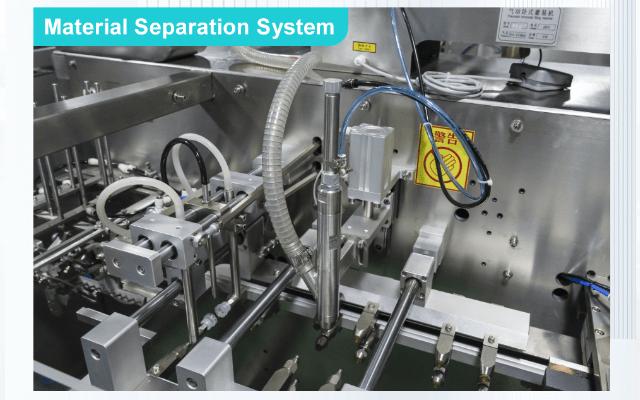
For each selected format, inspect pickup misses, double feeds, opening failures, product loss, grip marks, seal contamination, zipper function, and discharge. Include stop and restart behavior. Record adjustments and fitted parts so the accepted setup can be recreated.
Do not approve an untested future size as though it has already passed. It can be listed as subject to sample review and trial. Clear status protects the buyer from treating an engineering possibility as guaranteed production capability.
Ask the pouch converter to retain the approved dimensional references and notify the producer before changing zipper profile, laminate, or manufacturing tolerance. A material change can affect automatic opening even when the printed size code stays the same. Incoming checks should compare production deliveries with the samples used during machine approval.
Can fill weight be used to select a pouch machine?
Not by itself. Machine sizing needs pouch dimensions, product volume and behavior, filled weight, zipper geometry, material, and required stations.
Will one machine make every size inside its published range?
Only approved combinations should be assumed. Individual dimensions, options, and installed hardware can interact, so obtain a format matrix.
Does a gusset count as part of pouch width?
Converters and machine builders may reference dimensions differently. Use a marked drawing that clearly defines each measurement instead of relying on terminology alone.
Can a new zipper pouch be added later?
Possibly, after sample, drawing, filler, transport, and seal review. The machine's reserved adjustment range and required change parts determine feasibility.
Why can a small pouch be difficult to run?
It offers limited grip and suction area, less fill clearance, and little separation between zipper, product, and top seal.
Zipper-pouch capability is a tested range of complete formats, not one minimum and one maximum number. Define each pouch with drawings and samples, connect it to product volume and filled weight, and verify pickup, opening, filling, sealing, and discharge. A documented format matrix gives buyers a dependable answer about what can be produced and shows where change parts or future engineering will be required.

YISEN MACHINERY - The ONE-STOP VFFS PACKING MACHINE SOLUTION SUPPLIER
 Tel: +8617350750975
 Email: info@vffspackingmachinery.com
 MP/WhatsApp: +8617350750975
 Manufacturer Address:Meixi Road, Tongan District, Xiamen,Fujian,China