

Hot Keyword:
Author:YISEN Pouch Packing Machine Manufacturer TIME:2024-10-08
Buyers should first decide what the consumer receives, then choose the forming and dosing architecture that can prove that result. Width-to-length ratio, dose, film, seal layout, output demand, and cleaning frequency all influence the category.
The sachet stick pack machine category can be grouped by package shape, number of lanes, and dosing system. Common choices include wider sachet machines for three- or four-side-seal packs, narrow stick-pack machines, single-lane flexible lines, and multi-lane systems configured with powder, granule, liquid, paste, or piece-counting fillers. The correct type follows the finished pack and product, not the machine label alone.
A sachet is generally a compact sealed flexible pack whose width can accommodate a broad product presentation. A stick pack uses a narrow, elongated shape that can be convenient for controlled portions and dispensing. Both may be formed from rollstock, filled, sealed, and cut, yet their film paths, lane widths, forming parts, and usable fill openings differ.
Three-side-seal and four-side-seal descriptions refer to the seam layout. A pillow-style pack has a longitudinal seal plus cross seals. Exact availability depends on the machine. Do not rely on terminology alone; use a drawing showing external dimensions, seam widths, fill area, notch, perforation, and artwork orientation.
Product volume and behavior must fit inside that geometry. A bulky granule may need a wider opening, while a free-flowing powder portion may fit a narrow stick. Thick sauce or particles can demand a nozzle clearance that rules out the slimmest format.
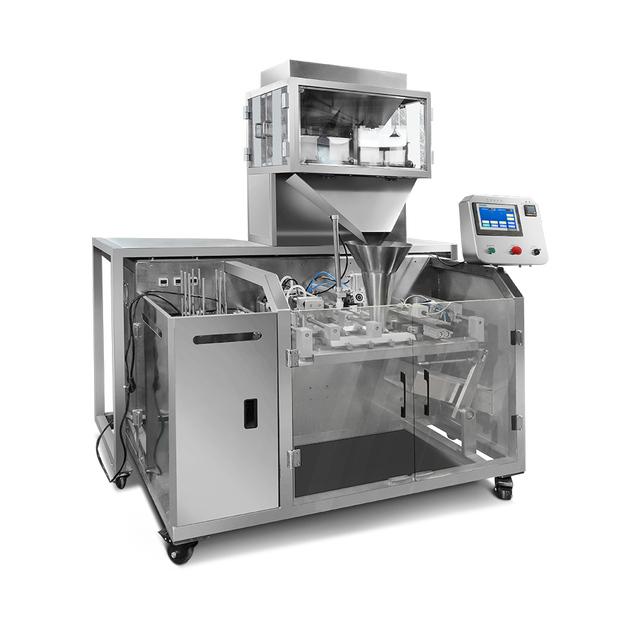
Sachet equipment is often considered for condiments, powders, granules, wipes, tablets, or other unit packs that benefit from a wider face. Depending on design, it may create seals on three or four sides or another formed pattern. The extra width can provide artwork space and accommodate a wider filler outlet.
Single-lane sachet machines can offer accessible setup and flexibility for moderate demand or varied products. Multi-lane sachet systems divide a wide web into several channels to increase output. Every lane requires balanced dosing, seal pressure, temperature, registration, and cutting.
When comparing sachet machines, review usable pack range rather than maximum film width alone. Seal bands, lane spacing, forming hardware, and cut arrangements consume web. Ask for a lane layout based on final artwork and tolerances.
Stick packs can suit drink powders, sweeteners, supplements, granulated products, and some liquids or pastes when the filler and opening are appropriate. Their slender shape can make controlled pouring convenient and can reduce package material for certain applications, although package-development evidence is still required.
The narrow tube leaves little room for product drift. Dust, a product tail, or an oversized particle can contaminate the cross seal. Film tracking and lane alignment need close control because a small positional error occupies a larger share of the pack width.
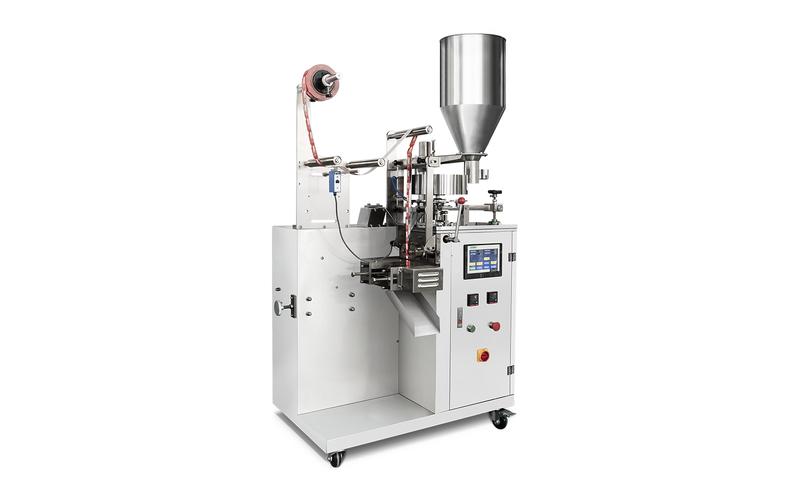
A stick format should be tested for consumer opening and product discharge. Tear behavior, static, powder retention, and liquid squeeze performance influence whether the shape works beyond the machine.
A single lane produces one pack per cycle and can simplify sampling, diagnosis, format changes, and film use. It may be suitable where product variety or batch size matters more than maximum output. A multi-lane machine produces several packs per cycle, making it attractive for sustained volume.
More lanes are not free capacity. The filler must distribute product consistently across channels. Seal jaws and knives must remain uniform across machine width. Inspection should identify which lane made each sample, and operators need a method to isolate or respond to a lane-specific issue.
Calculate required accepted packs per shift, then include product replenishment, roll changes, cleaning, quality checks, and expected changeovers. Select lane count from demonstrated net need rather than multiplying brochure cycles by the largest available number.
Augers are frequently used for fine powders when screw displacement can control the dose. Volumetric cups can handle suitable free-flowing products with stable density. Weighing systems may be selected for granules or pieces where mass measurement and gentle handling are important. Pumps or piston-type fillers can meter liquids and pastes according to viscosity, temperature, particles, and cutoff needs.
Counting devices may be used for tablets or discrete pieces when count, size, and feeding behavior are compatible. A project can also require special feeders for wipes or nonstandard contents. The base film machine must synchronize with whichever filler is fitted.
Each dosing type has a practical range and cleaning method. Test the lowest and highest targets with normal product variation. If a line changes between fillers, define lifting, storage, electrical interfaces, recipes, and line clearance.
Heat sealing is common for compatible flexible webs, but jaw design and motion vary. Intermittent systems stop the web for certain operations; continuous-motion designs coordinate sealing with moving film. Neither label guarantees better results. The selected arrangement must provide enough time, pressure, temperature control, and cooling for the material at the required rate.
Easy-open notches, perforations between packs, shaped cuts, embossing, coding, and registration sensing may be available as configured options. Each consumes space and affects tooling. Define whether packs are discharged individually, in strings, or grouped for cartoning.
A sachet stick packing machine should be ordered with one controlled format matrix. This prevents optional language from being mistaken for included hardware.
| Machine family | Project fit to investigate | Main validation concern |
|---|---|---|
| Single-lane sachet | Varied SKUs, moderate batches, broader packs | Changeover repeatability and accepted output |
| Multi-lane sachet | High sustained demand for a stable sachet family | Lane-to-lane fill, seal, registration, and cut consistency |
| Single-lane stick pack | Narrow portions with flexibility priorities | Product passage, seal cleanliness, consumer discharge |
| Multi-lane stick pack | Large volume of standardized narrow packs | Distribution across lanes and downstream pack handling |
| Special-product sachet line | Tablets, wipes, pieces, or difficult pastes | Purpose-built feeding, counting, placement, and cleaning |
Provide each product, final film, pack drawing, fill target, tolerance, demand, and cleaning requirement. Ask candidates to state their proposed package style, lane count, filler, seal motion, format parts, and demonstrated operating range. Exclude configurations that cannot clearly describe the difficult SKU.
During the test, sample all lanes and assess fill, seals, dimensions, registration, cuts, code, appearance, and consumer opening. Count good packs and stops. Include roll replacement, a restart, and the change between important formats. Examine product accumulation and witness cleaning.
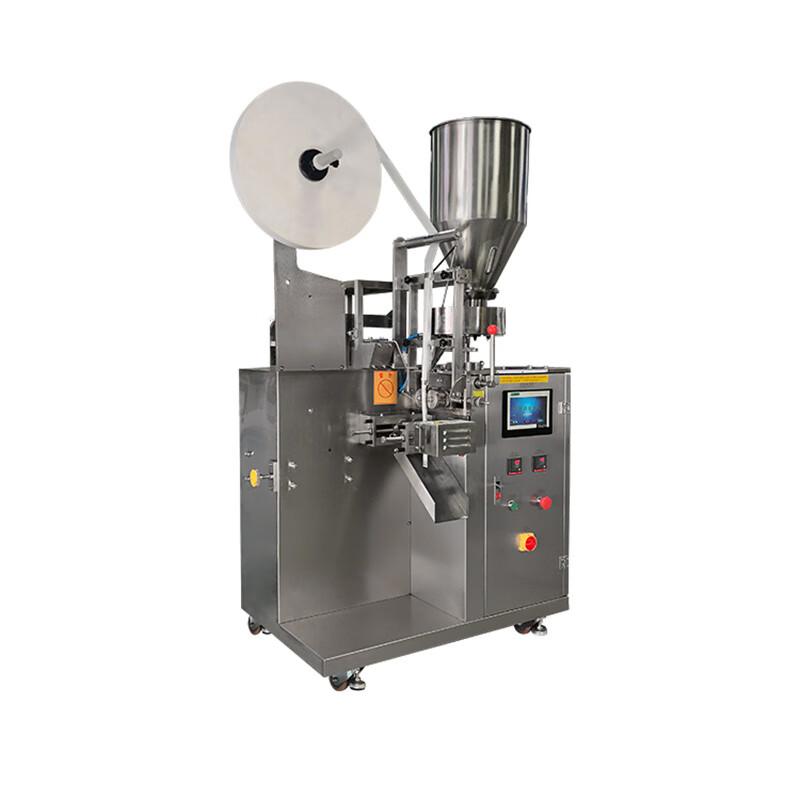
The final choice may be one flexible line, a high-output multi-lane system, or separate machines for unlike products. Select the arrangement whose proven operating window covers real demand with manageable complexity.
Intermittent and continuous web motion create another useful distinction. Intermittent designs stop the film during selected operations, which can simplify timing for some materials and features. Continuous systems coordinate sealing and cutting with moving web and may support other output profiles. The appropriate motion depends on film, dose, seal development, and package quality; neither term alone establishes superiority.
Machine width and room height increase with lane count, filler, and roll size. A multi-lane line may require elevated product supply, a wider maintenance zone, lifting assistance for parts, and a downstream system capable of organizing many packs. Confirm installation route and operator access before committing to the production category.
Change-part ownership also differs among types. Some sachet dimensions require a complete forming and sealing tool set, while small adjustments may use the same hardware. Request an itemized format matrix so capital budgeting includes every part needed for the launch portfolio.
When comparing two categories, calculate material use from the actual seal layout and web plan. A narrow stick can be efficient for a suitable dose, but lane trim, seal widths, artwork repeat, and rejected film must be included. Package development should verify consumer function alongside material use.
Product waste during a stop differs by machine family. Some fillers can hold a measured dose; others may continue to trickle, cool, settle, or change while the web is stationary. Ask suppliers to demonstrate the controlled stop, treatment of in-process material, and first packs after restart for the proposed category.
What is the main difference between a sachet and a stick pack?
The stick is narrower and more elongated, while a sachet generally offers a broader face. Exact geometry and seal pattern depend on the machine and drawing.
Does a multi-lane machine always produce more good packs?
It has higher theoretical capacity, but product distribution, lane setup, film, inspection, and downtime determine accepted output.
Can one machine use several filler types?
Some platforms can be configured or converted, but interfaces, timing, contact parts, cleaning, storage, and validation must be planned.
Which type is best for liquid sauce?
Choose around viscosity, particles, temperature, dose, nozzle clearance, cutoff, sachet geometry, and seal protection. A product trial is essential.
Should package style or speed be selected first?
Define the consumer pack and product process first, then choose the machine and lane count that meet the required accepted output.
The available machine types form a practical map: sachet or stick geometry, single or multiple lanes, and a filler matched to the contents. Use that map to narrow options, then rely on drawings, production materials, lane-specific data, and witnessed changeovers to make the final decision. The best category is the one that repeatedly makes the intended pack, not the one with the longest option list.

YISEN MACHINERY - The ONE-STOP VFFS PACKING MACHINE SOLUTION SUPPLIER
 Tel: +8617350750975
 Email: info@vffspackingmachinery.com
 MP/WhatsApp: +8617350750975
 Manufacturer Address:Meixi Road, Tongan District, Xiamen,Fujian,China