

Hot Keyword:
Author:YISEN Pouch Packing Machine Manufacturer TIME:2024-10-11
The right arrangement depends on whether the screw is the primary dosing device, an infeed conveyor, or part of a combined hopper-and-filler system. Buyers should compare the complete flow path with actual powder, because screw geometry, head pressure, agitation, cutoff, and package timing often matter more than the angle alone.
A vertical auger meters powder downward on an axis generally aligned with the filling outlet, while an inclined or diagonal screw conveys product along a sloped path before discharge. Orientation changes the product route, equipment layout, refill method, drainage, and cleaning access; it does not by itself determine which system is more accurate.
The phrase "vertical screw" often refers to an auger filler mounted above the package, with a screw rotating inside a funnel to meter a dose. An inclined screw is frequently used to elevate powder from a lower feed hopper toward another machine, although some designs use a sloped metering route. Suppliers may use terms differently. Request a flow diagram that names the supply hopper, transfer device, dosing element, cutoff point, and outlet.
This distinction prevents an unfair comparison between devices performing different jobs. A diagonal conveyor feeding a separate vertical auger is not an alternative to the auger; it is upstream equipment. Conversely, an inclined dosing assembly should be assessed as its complete metering design. Quotations should state motors, controls, level signals, agitation, dust covers, supports, access, and product-contact parts.
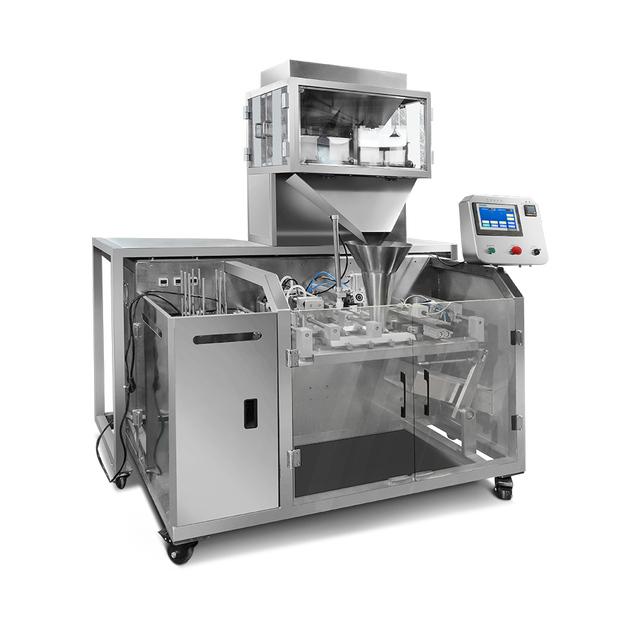
In a vertical filler, product is maintained around the auger and screw rotation moves a controlled quantity toward the outlet. The short downward route can align directly with a forming tube or open pouch. This compact relationship can simplify timing between dose completion and bag sealing. Performance depends on screw pitch and diameter, funnel geometry, agitation, product head, speed profile, cutoff behavior, and the dose range assigned to that hardware.
Gravity acts in the same general direction as discharge, which can help flow but also allows fine powder to trickle after the command if clearances or product behavior are unsuitable. Hopper level and aeration may change screw loading. Observe startup, refill, low product, stop, and restart. A vertical arrangement should not be approved solely because it is common; it must control the actual powder without excessive dust, compaction, leakage, or intervention.
An inclined conveyor can receive powder at operator or process level and move it upward to a filler hopper. This may improve bulk loading layout and reduce manual lifting, but it adds product residence, a sloped tube, support structure, controls, and cleaning work. Feed rate should follow downstream demand so the receiving hopper is neither starved nor overfilled. Level signals and the response to a full or stopped filler need clear logic.
Powder can remain along the tube or return toward the inlet after stopping, depending on design and material. Fines may migrate, blends can segregate, and cohesive product may compact. Inspect the inlet, screw, bearings or seals outside contact zones, outlet transition, and access for complete emptying. If an inclined screw itself meters doses, confirm how product head and cutoff are controlled at the discharge rather than assuming conveyor behavior is precise dosing.
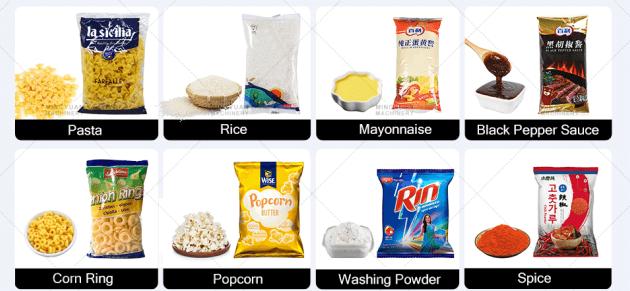
Characterize bulk density, particle distribution, cohesion, moisture response, aeration, abrasiveness, and blend stability. A screw applies mechanical movement that can change an aerated powder or separate components with different sizes and densities. The effect depends on residence time and geometry. Sample product before and after the proposed route, not only finished package weights.
For blends, assess composition using the buyer's approved method through a run and around refill. For fragile agglomerates, compare size distribution. Sticky powder may coat flights and gradually reduce effective volume. These observations determine whether agitation, special surfaces, slower transfer, shorter residence, or a different supply concept deserves testing. Product name alone cannot predict the response.
Accuracy claims should be tied to the exact screw, funnel, product state, dose, hopper level, and verification method. A vertical auger may dose directly while an inclined conveyor merely supplies it, so only the final metering device should be credited for package-weight control. If both concepts meter product, compare sequential results over the same range and annotate adjustments, refill, pauses, and interventions.
Very small and large doses may need different screws or speed profiles. Bag tare and scale capability should be accounted for. Do not compare a few selected samples or average away a trend. The powder packing machine should be evaluated as the combined supply, dosing, bag-forming, and sealing system because powder lost or delayed between components can affect finished output.
A direct vertical filler can reduce horizontal product travel but often sits high above the package machine. Safe access may require a platform and adequate removal space for the auger and hopper. An inclined supply screw uses floor length and support structure while potentially placing its loading hopper lower. Check ceiling height, aisles, guard opening, lifting aids, product delivery, and routes for removed parts in the real plant layout.
Cleaning should be witnessed from a production state. Determine how each route drains, what remains in flights and transitions, which parts are removable, and whether tools or lifting devices are needed. Long diagonal tubes can be awkward to inspect; vertical components can be heavy to lower. The better layout is the one the plant can clean, verify, and reassemble reliably within its product-change requirements.
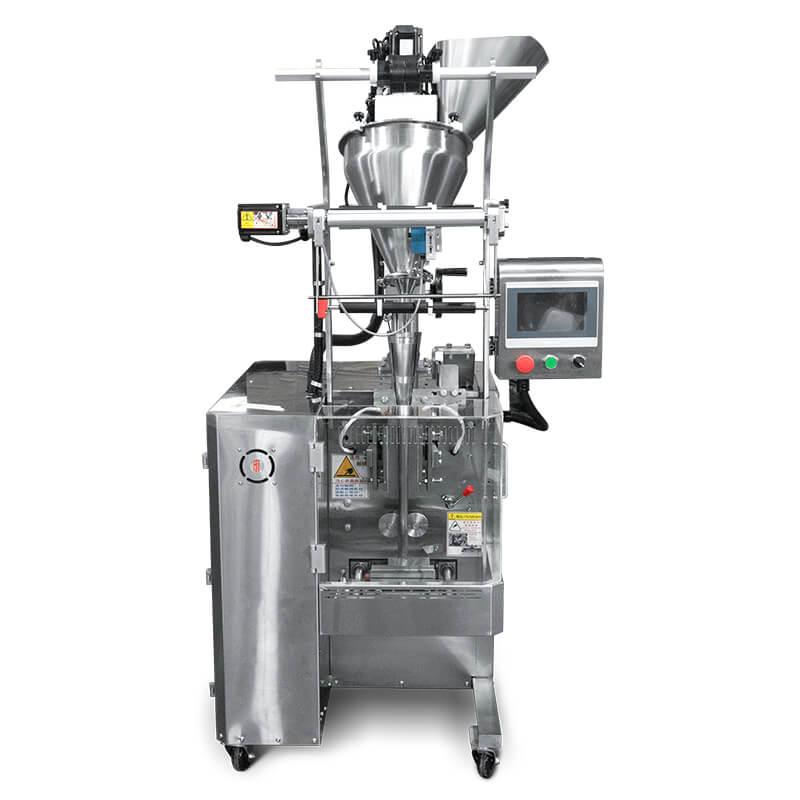
The final dose must enter an open package and clear before sealing. Review outlet height, chute geometry, dust containment, bag support, and communication between feeder and packer. A transfer screw that refills continuously needs buffering from the intermittent package cycle. A metering auger needs a completed-dose signal and defined response when no valid bag is present.
After an alarm, identify product already inside the route and the disposition of the current pouch. Fine powder can continue falling into a cross seal after the screw stops. Test stop and restart, then inspect seal bands, weights, codes, and spillage. A mechanically efficient screw arrangement is not acceptable if its integration creates uncontrolled packages.
Give suppliers identified powder lots, the full dose range, package material, cleaning standard, layout, and operating schedule. The comparison table distinguishes orientation effects from the evidence that must be demonstrated.
| Question | Vertical arrangement | Inclined arrangement | Trial evidence |
|---|---|---|---|
| Primary function | Often direct metering above the packer | Often elevation or transfer to another hopper | Approved process flow and control description |
| Product movement | Shorter downward dosing path | Longer sloped route with additional residence | Before-and-after product condition samples |
| Space | Greater overhead and service-height demand | More floor length and support footprint | Scaled layout with access envelopes |
| Cleanout | Heavy elevated parts may need lowering aids | Tube and transitions may retain product | Witnessed emptying, cleaning, and inspection |
| Package result | Depends on complete supply, screw geometry, cutoff, timing, and bag interface | Sequential weights, clean seals, and event recovery | |
Record accepted packs and operator work, then list the parts and settings required for each product. If an inclined conveyor plus vertical filler is the best solution, evaluate it as one system rather than forcing a false either-or choice. Keep every untested powder outside the approved operating range.
Is a vertical screw more accurate than a diagonal screw? Orientation alone does not establish accuracy. Metering design, powder state, screw geometry, head pressure, cutoff, range, and verification method determine results.
Why use an inclined screw at all? It can elevate powder from a convenient loading point to an upper hopper or serve a specific transfer design, reducing some manual handling when properly integrated.
Can the same screw handle every powder? Wide differences in density, cohesion, particle size, abrasiveness, and dose may require another screw, funnel, agitation method, or feeder concept.
Which arrangement is easier to clean? That depends on removal method, access, weight, tube length, residue, and the plant's cleaning standard. Witness both procedures.
What should be checked after restart? Verify product flow, consecutive doses, seal cleanliness, code, spillage, alarms, and the disposition of packs made during recovery.
Document product left after stopping and the method used to empty it. Recovery yield, disposal, and the first clean dose after restart can materially affect short campaigns even when both screw arrangements perform similarly during stable running.
Energy use and product recovery can be included in the comparison when the buyer has a defined measurement method. An inclined transfer route may run for longer periods to refill a buffer, while a direct auger may cycle with each dose. Measure both at equivalent accepted output and include powder left inside the equipment at campaign end. This avoids selecting from motor ratings that do not represent the complete production duty.
Vertical and inclined screws differ in route and layout more than in a simple ranking of quality. A vertical auger often meters directly above the pouch, while an inclined unit often transfers product to another stage. Either can be part of a reliable line when its role and controls are clear.
Compare the full product path, run representative powders, and witness cleanout and restart. The preferred design is the one that maintains product condition, controllable dosing, clean packaging, and practical plant access under the buyer's real schedule.

YISEN MACHINERY - The ONE-STOP VFFS PACKING MACHINE SOLUTION SUPPLIER
 Tel: +8617350750975
 Email: info@vffspackingmachinery.com
 MP/WhatsApp: +8617350750975
 Manufacturer Address:Meixi Road, Tongan District, Xiamen,Fujian,China