

Hot Keyword:
Author:YISEN Pouch Packing Machine Manufacturer TIME:2024-11-07
Future-ready machines will combine adaptable mechanics, better inspection, more structured data, and clearer operator guidance. Buyers should still test every improvement with real granules and production packaging. Software can help manage variation, but it cannot remove the limits created by fragile pieces, sticky surfaces, poor film, inadequate cleaning access, or an uncontrolled downstream line.
The most useful innovation in granule packaging is technology that increases accepted output while reducing product damage, unplanned intervention, changeover uncertainty, and avoidable material or utility loss. A faster controller or larger display has little value if the physical product path, package seal, and maintenance process remain unstable.
Machine cycles do not account for underweight packages, broken product, mixed-component imbalance, product in seals, bad codes, rejected bags, or packs lost after discharge. Development should therefore connect feeder, filler, bagger, inspection, and downstream events to an accepted-output definition. The buyer must state the quality rules, because a control system cannot optimize an undefined result. Rate, yield, intervention, and pack quality should be viewed together.
A useful performance record identifies product and packaging lots, machine recipe, installed parts, operator actions, refill events, stops, rejects, and downstream availability. It distinguishes material variation from a mechanical fault and shows whether a correction improved the finished result. Future controls may calculate these relationships more quickly, but the foundation remains accurate sensors, disciplined pack disposition, and data that production and quality teams trust.
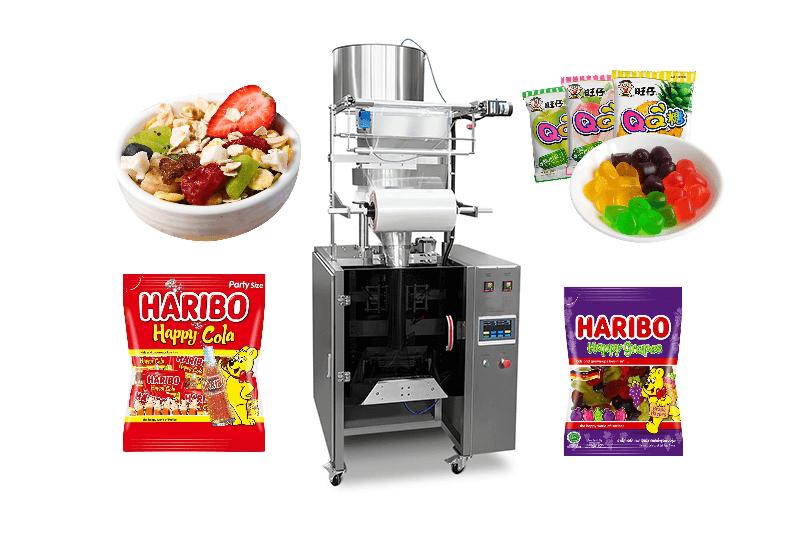
Granules range from dense salt and rice to fragile chips, sticky dried fruit, irregular candy, and blended components. Future feeding systems may use better level sensing, load feedback, vibration control, gate profiles, and recipe guidance to respond to changing flow. Adaptation should remain inside tested limits. An algorithm that increases feeder energy can improve supply while also increasing breakage or segregation, so product condition must be part of the control objective.
Development trials should challenge low and high hopper levels, refill, normal product variation, pauses, and restart. Compare sequential doses and samples taken before and after the feed path. Record the action produced by each input and provide a stable approved recipe when automatic adaptation is unavailable. The relevant granular packing machine range gives a basis for discussing hardware, while product evidence determines whether adaptive functions create genuine saleable yield.
Flexible production is moving from hand-written setup notes toward identified change parts, guided adjustments, recipe access control, digital checklists, and first-off verification. Mechanical design remains decisive. Parts must be reachable, cleanable, difficult to install incorrectly, and protected in storage. Reference points should be visible and stable. A screen that lists an adjustment does not help if the operator cannot reach it or if several similar funnels can be mixed.
Measure changeover from the last accepted package of one item to the first released package of the next. Include product recovery, cleaning, line clearance, film or pouch replacement, code data, tooling, recipes, inspections, and rejected setup packs. Future automation may verify parts or guide tasks, but the buyer should first simplify the physical sequence. A complex digital procedure should not preserve unnecessary mechanical work.
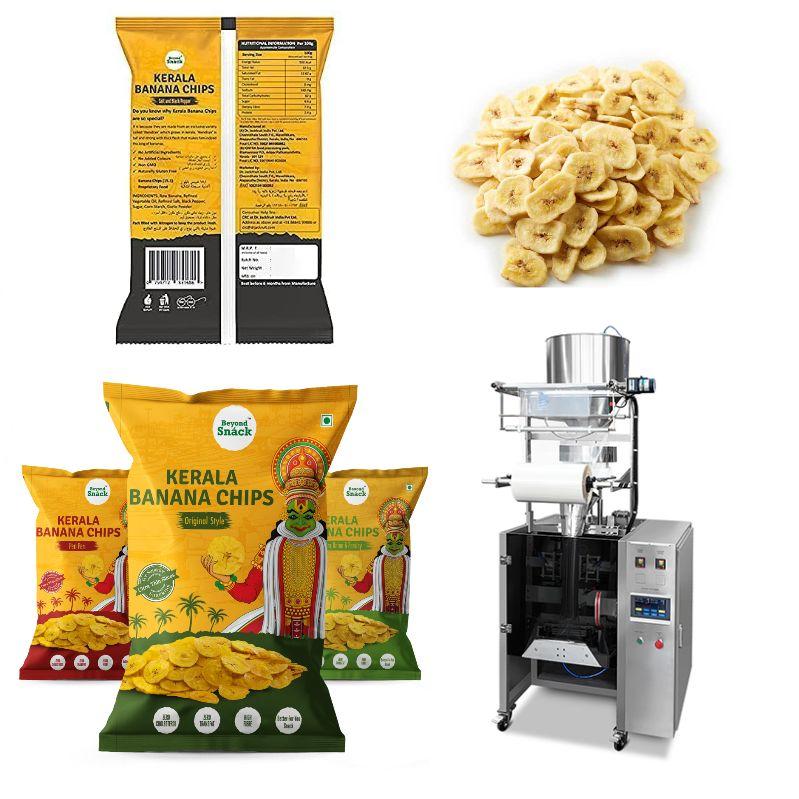
Inspection technology is developing beyond isolated alarms toward coordinated line decisions. A weight, code, package-presence, seal, or vision check can stop production, reject one unit, or mark a production interval for review. The action must match the fault and machine state. Detection that leaves questionable packs mixed with accepted output does not improve control, regardless of sensor sophistication.
Challenge the system deliberately with known conditions and reconcile every rejected package. Confirm trigger timing, physical reject movement, bin status, alarm message, access level, and restart rule. Some quality characteristics cannot be assessed automatically at line speed and still need off-line sampling. The best design combines available inspection with a clear limitation statement, not a promise that a camera or artificial intelligence sees every possible defect.
Connected equipment can store recipes, events, weights, temperatures, counts, rejects, maintenance work, and energy data. Before connecting the line, identify who will use each record, how often it is reviewed, what limit matters, and what action follows. A large dashboard without ownership adds software maintenance but may not change production. Data identity and time alignment are essential when feeder, bagger, coder, inspection unit, and case packer report separate events.
Protect manual locks, approved recipes, user permissions, backups, and restoration procedures. Networked or remote functions need appropriate site review and a supported behavior when communication is unavailable. Suppliers should explain data definitions and retention rather than providing only screenshots. The buyer should confirm that normal users and automated reporting see the same accepted-pack basis, preventing conflicting versions of performance.
Film tracking, accurate cutoff, reduced dosing giveaway, stable gas flow, efficient compressed air use, controlled heaters, and idle-state management can reduce resource consumption. Claims should be normalized by accepted output and package requirements. A lighter film may use less material but fail tracking or seal tests. Lower gas flow may reduce consumption but not meet the buyer's validated atmosphere plan. Energy-saving idle modes must return without creating questionable first packs.
Establish a baseline using defined products, packages, campaign length, and inspection results. After a change, repeat the same conditions and report product loss, packaging loss, gas, air, and energy alongside yield. Avoid combining unrelated improvements into one figure that cannot be reproduced. Resource monitoring is most useful when it identifies a specific leak, drift, warm-up practice, or setup loss that the operating team can correct.
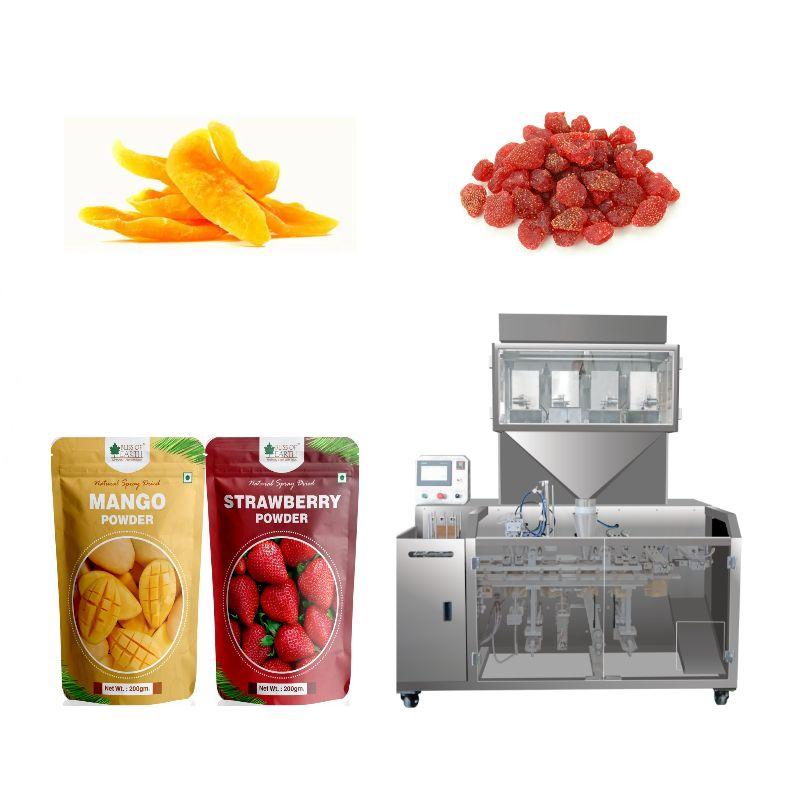
Future granule lines are likely to use modular feeders, weighers, baggers, coders, inspectors, conveyors, and secondary packaging. Modularity can support portfolio changes and staged investment, but every connection needs mechanical dimensions, product flow, signals, guarding, line control, cleaning access, and responsibility. A component that works alone can create unstable product supply or blocked discharge when integrated.
Agree on line states such as ready, run, starved, blocked, fault, cleaning, and manual operation. Test filled-product transfers and failure scenarios, not only communication during empty cycling. Maintain approved interface drawings and software versions. When a module is replaced later, repeat the affected risk review and finished-pack checks. Standard connectors are helpful, but they do not prove the new module handles the same product or packaging range.
Condition monitoring may identify changes in vibration, motor load, vacuum, temperature response, seal pressure, dosing trend, or repeated alarms before a visible failure. Predictive methods need reliable sensors, known normal condition, accurate maintenance records, and confirmed failure modes. They should not compensate for dirty equipment, uncontrolled adjustments, missing inspections, or inconsistent spare parts.
Start with a small number of consequential components and compare alerts with physical findings. Define who reviews the result and whether the response is inspection, planned replacement, or continued monitoring. Avoid automatic part replacement from an unexplained score. The decision table shows how an innovation can move from attractive feature to controlled production tool.
| Development area | Baseline | Pilot evidence | Scale-up question |
|---|---|---|---|
| Adaptive feeding | Dose, damage, refill events, and interventions | Same products tested with controlled setting response | Does accepted yield improve across normal variation? |
| Integrated inspection | Existing defect discovery and reject handling | Challenge units plus reconciled disposition | Are known failures detected without uncontrolled rejects? |
| Guided changeover | Complete task time, errors, and first-off results | Repeated transitions by trained operators | Does guidance reduce variability and setup loss? |
| Resource monitoring | Film, product, gas, air, and energy at equal quality | Post-change data under matched campaigns | Is the saving reproducible and operationally useful? |
| Predictive maintenance | Normal condition and verified failure history | Alerts compared with physical inspection | Does warning create enough time for a planned action? |
Will artificial intelligence operate the whole line without people? Advanced software may assist settings or diagnostics, while approved recipes, safeguards, inspection, operators, and physical trials remain necessary.
Is higher speed the main direction of development? Stable accepted yield, gentler handling, faster controlled changeover, inspection, maintainability, and resource use can be more valuable than maximum cycles.
Can older machines receive new digital functions? Some equipment may support retrofits after controls, safety, data, mechanical compatibility, support, and return-to-service requirements are reviewed.
Which records should a plant collect first? Start with accepted packs, rejects by cause, stops, interventions, product and packaging lots, changeovers, and maintenance findings.
How should a new technology be accepted? Define the problem, measure a baseline, pilot the exact feature, compare equivalent conditions, and retain a supported fallback.
Human factors should be included in every technology pilot. Compare alarm comprehension, recipe selection, cleaning access, manual recovery, training time, and the number of decisions operators must make under pressure. An innovation that performs well only with its development engineer present is not yet a robust production solution. Repeat the trial with normal trained users and record where additional guidance or design simplification is required.
Granule packaging will become more connected, inspectable, adaptable, and data driven. Useful progress still starts with stable mechanics and a defined finished pack. New controls should protect product condition, package quality, changeover, maintenance, or resource use in a way the buyer can measure.
Build reliable event and quality records before pursuing prediction, and test innovations on representative products rather than demonstrations designed around the technology. Scale only the features that improve accepted production without hiding new complexity or unsupported dependencies.

YISEN MACHINERY - The ONE-STOP VFFS PACKING MACHINE SOLUTION SUPPLIER
 Tel: +8617350750975
 Email: info@vffspackingmachinery.com
 MP/WhatsApp: +8617350750975
 Manufacturer Address:Meixi Road, Tongan District, Xiamen,Fujian,China