

Hot Keyword:
Author:YISEN Pouch Packing Machine Manufacturer TIME:2024-11-07
The correct configuration depends on the largest, lightest, most fragile, and most bridge-prone pieces in the approved product range. Buyers should test those boundaries in finished packages.
A granule line adapts to irregular particles by using generous and smooth product passages, a feeder that can distribute variable pieces, a dosing method tolerant of shape and density differences, controlled drop height, and enough package opening to keep product away from the seal. Adaptation is mostly mechanical and process-specific; it cannot be achieved by software settings alone.
Measure length, width, thickness, shape, density, and normal variation rather than using one nominal size. Include curls, hooks, flat pieces, elongated items, clusters, fines, and damaged product. A piece can pass a round opening in one orientation and bridge it in another. Retain samples that represent realistic maximum dimensions and awkward shapes.
Add surface and strength information. Rough, sticky, oily, dusty, static-prone, or fragile pieces interact differently with chutes and gates. Define acceptable damage and whether a broken piece remains saleable. An approved range should describe both dimensions and behavior so future products are not accepted merely because their average size looks similar.
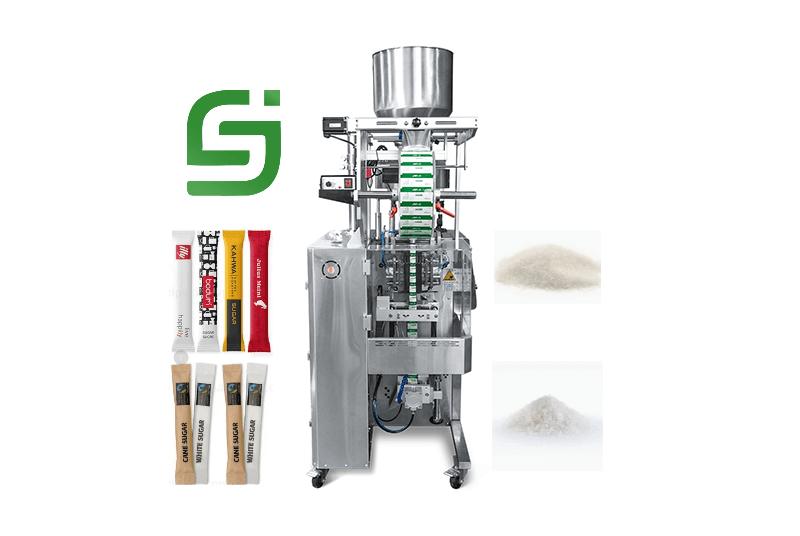
Irregular particles can form temporary arches at hopper outlets, interlock in narrow transitions, or flow in sudden slugs. Watch the product at low and high hopper levels and after a pause. A design that runs only when an operator taps the hopper is not self-sustaining. Agitation or vibration may help but can damage pieces or separate a mixture.
Bulk tests should include a representative quantity. A handful poured through a tube does not reproduce pressure, residence, and orientation inside a production hopper. Observe whether fines migrate downward or large pieces remain at the top. The feeder should restore flow without requiring unsafe access or unpredictable manual disturbance.
Trace every conveyor, elevator bucket, hopper, gate, chute, and turn. Use smooth transitions and openings larger than the qualified product envelope with suitable allowances. Reduce unnecessary free fall and sharp impact. A larger passage is not sufficient if a fast gate can trap pieces or a lip creates a ledge.
Check access for inspection and removal of a blockage under safe isolation. Clear covers can help observation where appropriate, while sensors can detect high or low level before flow is lost. Controls should stop upstream supply without overfilling the next device. Record the route used during the trial so the installed layout does not introduce additional transfers.
Combination weighing is often considered for variable discrete pieces because multiple partial quantities can be combined toward a target. Its feeders, buckets, gates, and discharge funnel must still accept the largest pieces and avoid trapping. Volumetric or counting methods may fit other products, but variability and orientation must be demonstrated.
Balance quantity result with damage and usable output. Increasing vibration can improve head supply while creating breakage; slower gates may protect product but allow a piece to hold the opening. Sample each operating event and inspect empty or partial doses. A result selected from good bags cannot show how often the system hesitated or rejected product.
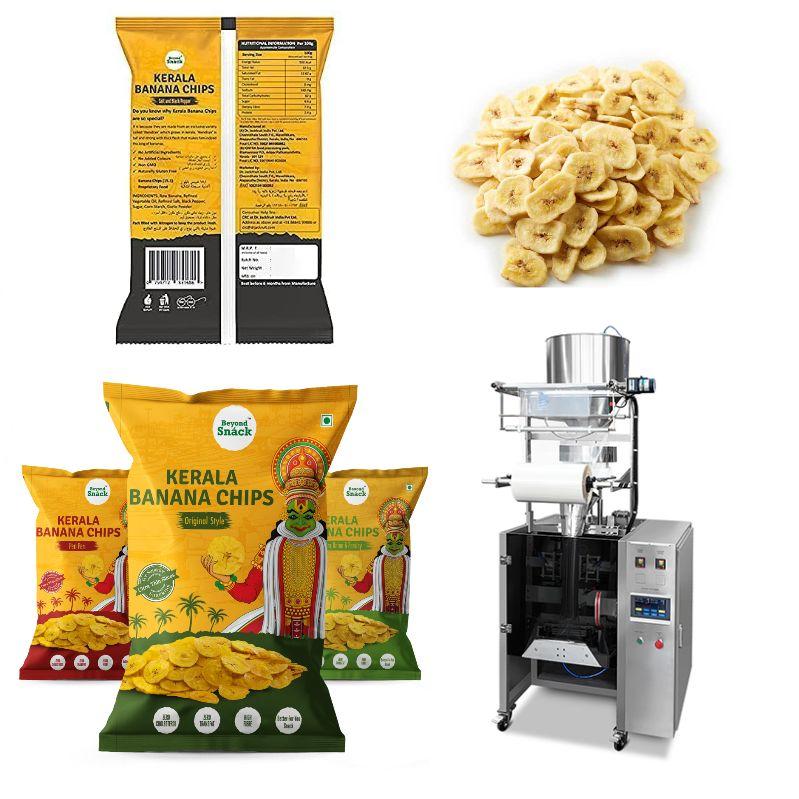
The forming tube, fill funnel, pouch opening, and intended headspace must accommodate the particle envelope. Long or flat pieces can bounce sideways and remain across the transverse seal. Coordinate the product-release signal with bag formation and allow time for pieces to settle. Air displacement can also lift light fragments toward the jaws.
Inspect rejects for trapped product, puncture, abrasion, wrinkle, or a seam pulled by a protruding piece. More heat cannot solve a physical obstruction. Where packages are premade, confirm reliable opening and support. Where bags are made from rollstock, confirm forming geometry and film strength against sharp or angular products.
Snack mixes, hardware kits, dried foods, or other combinations may contain components with different size and density. Conveying and vibration can separate them before dosing. Define the composition requirement and sampling method with the product owner. Stable total weight does not prove that each bag contains an acceptable mix.
Test startup, mid-run, refill, low supply, and end of batch. Observe whether one component empties earlier or collects in a particular hopper region. The solution may involve upstream blending control, gentler transfer, shorter hold time, or a dedicated counting strategy. Packaging should not be expected to recreate a blend that has already separated.
Create a trial lot containing realistic largest pieces, fines, fragile items, and normal variation. Use commercial film or pouches and the smallest package opening in scope. Record incoming condition, setup, ordered quantity or composition samples, stops, manual interventions, blocked locations, damage, seal defects, and accepted output.
| Particle challenge | Configuration response to evaluate | Acceptance evidence |
|---|---|---|
| Long or hooked pieces | Wide passages and gates that avoid pinching | No recurring bridges or damaged product |
| Flat light pieces | Controlled vibration, air, and drop timing | Stable transfer without pieces in the seal |
| Fragile product | Reduced drops and gentle feeder energy | Incoming-to-packed damage comparison |
| Mixed sizes and densities | Limited segregation through route and buffer | Representative composition across the run |
| Sharp angular granules | Suitable contact path, film, and discharge support | No unacceptable puncture or abrasion |
Include a stop and restart because pieces can settle into a bridge during the pause. If an operator must clear the route, assess safe access and keep the event in the output calculation.
Link each family to feeders, chutes, funnels, former, bag size, recipe, cleaning method, and release checks. Mechanical components should be identified and protected in storage. A recipe may restore vibration and timing but cannot enlarge a narrow opening or detect a mismatched gate.
The granule packaging machine proposal should name the exact product envelope it has demonstrated. Ask for drawings of minimum passages, changeover instructions, blockage response, recommended spares, and maintenance access. Treat any future irregular particle outside the envelope as a new engineering review.
Can vibration solve every bridging problem?
No. It can also interlock, damage, or segregate product. Review hopper geometry, openings, surface, product condition, and feed control before increasing energy.
Is weight accuracy enough for a mixed product?
No. Composition may vary while total mass remains correct. Define and test representativeness through the whole run.
Why do pieces enter the seal only after speeding up?
Product may have less settling time, more bounce, or delayed gate closure. Review release timing, drop, headspace, and physical clearance.
How should the largest particle be specified?
Use realistic length, width, thickness, shape, and orientation data from representative lots, including clusters and awkward pieces.
What proves successful adaptation?
Repeatable accepted bags through normal events with controlled quantity or composition, acceptable damage, no recurring bridges, and clean seals provide useful proof.
Static can make light or flat particles cling to plastic surfaces, each other, or the package mouth. Observe seasonal and material effects and confirm grounding or ionization measures only where properly designed for the application. Surface coatings and cleaning residues can also alter friction. Do not solve cling by adding uncontrolled air that blows pieces toward the seal.
Package quantity changes the behavior of irregular pieces. A small portion may lack enough combinations for stable weighing, while a large dose can pile above the available headspace. Test both limits with their actual bags. Larger packs may need support as product enters and while the hot seam cools; smaller packs may need tighter timing to prevent one late piece from reaching the jaws.
Cleaning and line clearance should expose every pocket where odd shapes can lodge. Pay attention to bucket hinges, gate edges, flexible boots, chute joints, former supports, and areas below the sealer. Count recovered pieces by type during a changeover when mix integrity matters. Safe, tool-controlled access is preferable to operators using improvised hooks or air to dislodge retained product.
Scale-up from pilot to production should preserve the tested product route. A higher elevator, larger buffer, longer chute, or faster infeed can introduce new damage and segregation even when the bagger is unchanged. Compare installed elevations and interfaces with the trial record. Site acceptance should repeat boundary samples and the interruption events most likely to create bridges.
Sensor selection should reflect irregular product. A photoelectric device may respond differently to open gaps, dark pieces, reflective coatings, or dust on its lens. Test detection with realistic variation and define the machine's response to uncertainty. Avoid increasing sensitivity until normal product triggers nuisance stops.
Spare parts should cover product-specific wear and blockage points, such as gates, feeder surfaces, bucket components, chute liners, sensors, and bag-forming parts. Confirm exact revisions and practice replacement on planned maintenance. The release check must include the particle condition that originally challenged the component.
Keep photographs and representative boundary pieces with the approved setup. Future teams can compare a proposed product directly instead of relying on an ambiguous description such as irregular granules.
Irregular particles require a defined three-dimensional envelope, gentle open passages, suitable dosing, and enough package clearance. Test flow, damage, composition, and sealing together with difficult product lots. Adaptation succeeds when the line handles variation without constant intervention and the approved mechanical setup remains tied to each product family.

YISEN MACHINERY - The ONE-STOP VFFS PACKING MACHINE SOLUTION SUPPLIER
 Tel: +8617350750975
 Email: info@vffspackingmachinery.com
 MP/WhatsApp: +8617350750975
 Manufacturer Address:Meixi Road, Tongan District, Xiamen,Fujian,China