

Hot Keyword:
Author:YISEN Pouch Packing Machine Manufacturer TIME:2024-11-22
The machine category comes after this definition. Starting with a model or price can hide whether the filler can control the product or whether the intended bag can receive it without breakage and trapped pieces.
Choose a granule packaging machine by matching product behavior to the dosing method, matching the finished package to the bag-handling architecture, and proving the combination at the required accepted output. Particle size, fragility, bulk-density variation, target weight, bag opening, seal cleanliness, changeover, and factory layout should all appear in the purchasing specification.
Record particle-size bands, largest piece, shape, bulk density, fragility, surface oil or seasoning, static, dust or fines, moisture, and tendency to bridge. For mixtures, list the components and permitted distribution. Provide normal and difficult production samples rather than a small hand-selected batch.
State target mass, permitted variation, maximum giveaway concern, expected product temperature, and batch size. Identify whether vibration or long residence causes separation. The supplier can then evaluate hopper, feeder, weighing hoppers, gates, chutes, and product-contact finish.
Include cleaning and cross-contact requirements. Nuts, seeds, candy, pet food, hardware, and chemical granules can all need different product-contact materials and sanitation methods even if their size appears similar.
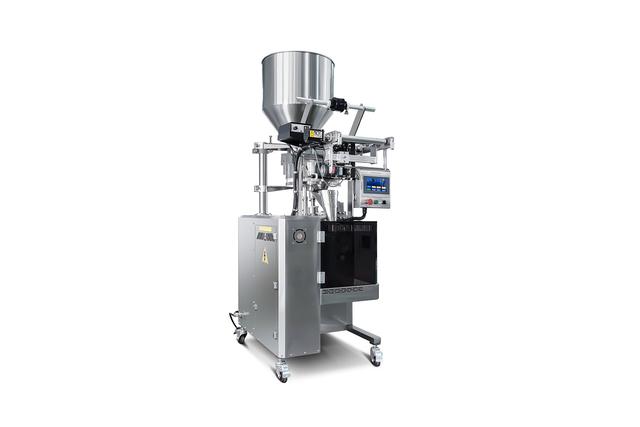
Volumetric cups can suit stable, free-flowing granules when density and piece arrangement remain controlled. Linear or multihead weighing systems may suit products where mass measurement, range, or combination control is important. Counters can handle uniform discrete pieces. Special feeders may be required for sticky, fragile, elongated, or mixed products.
Compare individual results at the smallest and largest targets. An average near the setpoint can conceal a wide spread. Check product damage and composition at the same time; a highly accurate total made from broken or segregated product is not acceptable.
Review feeder-to-packer communication. The filler should release only when a bag is ready, and the bagger should understand dose completion or fault. Define what happens after a missed bag, partial discharge, low product level, or measurement alarm.
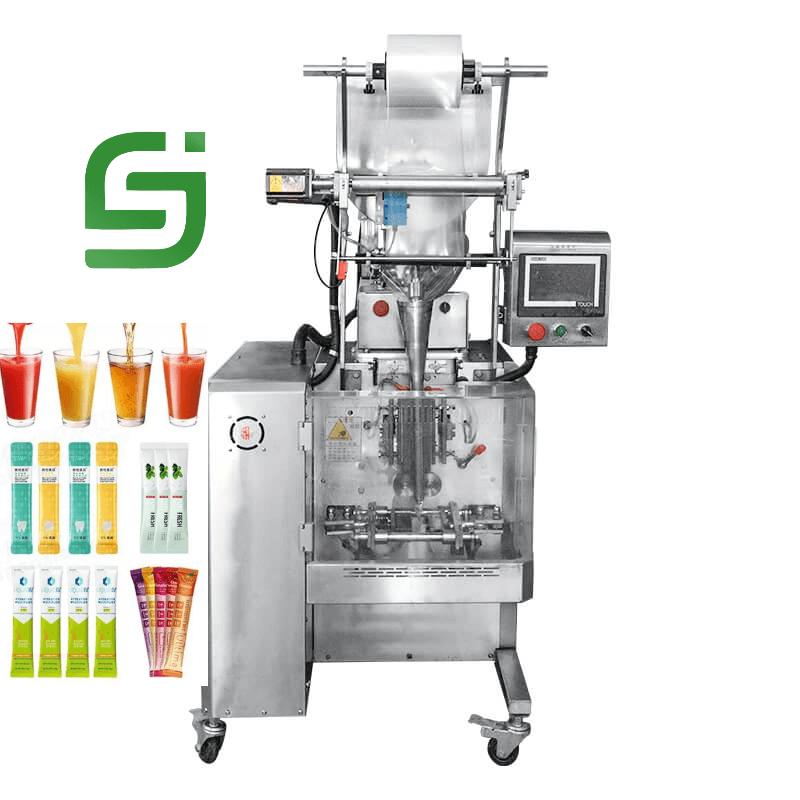
Vertical form-fill-seal equipment makes a bag from rollstock and can suit pillow, gusseted, or other supported formats. A premade-pouch system handles converter-made doypacks, zipper bags, and related formats. Sachet equipment serves smaller sealed portions. Each route has a different format envelope and material supply model.
Provide bag drawings with width, length, gusset, opening, seal bands, filled thickness, target, and material. The largest piece must pass through the filler outlet and bag opening. Headspace must keep granules below the top seal.
Film or pouches must be validated for barrier, puncture resistance, tracking or pickup, print registration, sealing, and distribution. The machine builder can prove runnability; the product owner should substantiate shelf-life and market requirements.
Machine capacity includes target range, package range, and good packs produced in a defined time. A small portion may challenge weighing resolution and package registration. A large fill can require more dosing time, bag support, settling, and seal cooling. List a demonstrated point for each critical SKU.
Calculate demand by shift after allowing for product loading, packaging changes, cleaning, quality checks, and format conversions. Choose enough operating margin without basing the business case on continuous maximum motion.
If many products share the line, model the actual mix. A high output for one free-flowing SKU does not prove capacity for a fragile or bulky product that dominates sales.
Define fill control, seal integrity, code, dimensions, appearance, product breakage, composition, and permitted waste. Select inspection and sampling based on risk. Checkweighing, metal detection, vision, code verification, and reject confirmation can be integrated where required, but every device needs a defined response.
Trace how the correct pack reaches the reject point. At higher output or multiple lanes, item tracking becomes important. A detector without a reliable reject and confirmation arrangement does not complete the control.
Ask how recipes, user permissions, alarms, and batch data are managed. The aim is repeatable approved settings and clear investigation, not an unrestricted collection of editable parameters.
Measure room height for the weigher, platform, and elevator. Check maintenance clearance, roll or pouch loading, product access, guarding, discharge elevation, and installation route. Confirm electrical supply, air, extraction, network, and downstream interface.
Witness product-contact disassembly and cleaning. Evaluate tool needs, part weight, storage, drying, inspection, and first-off release. For abrasive granules or dusty products, review wear parts and containment. For allergens, include the site's changeover requirements.
The chosen granular packing machine should include manuals, drawings, training, a spare-parts plan, and named responsibility for the filler, bagger, elevator, printer, inspection, and conveyor interfaces.
| Decision category | Supplier must define | Buyer should verify |
|---|---|---|
| Product handling | Feeder, filler, clearances, contact materials | Weight, composition, damage, blockage with samples |
| Package range | Formats, dimensions, materials, change parts | Smallest opening, largest filled bag, difficult film or pouch |
| Usable capacity | Output conditions for each critical SKU | Accepted packs during a sustained witnessed period |
| Changeover and hygiene | Tasks, parts, tools, recipe and cleaning method | Complete timed change with first-off approval |
| Integration and support | Interfaces, documents, spares, training, service scope | Ownership matrix and recovery procedure |
Select the finest or fastest-flowing product, largest irregular pieces, fragile SKU, mixed product, smallest target, largest bag, and any material with a narrow seal window. Not every variable requires a separate full run, but the protocol should combine them into representative challenge cases.
Specify reference instruments, sample frequency, individual-data reporting, package tests, output calculation, and treatment of planned stops. Include product and packaging replenishment, a pause and restart, alarm checks, format change, and cleaning demonstration.
Retain labeled packs and close actions against evidence. Confirm delivered recipes and hardware match the tested configuration. A thorough test makes the final choice auditable and gives commissioning teams a known performance baseline.
Total cost should be calculated by the SKU mix rather than by purchase price alone. Include product giveaway, packaging waste, labor, cleaning time, format parts, floor space, utilities, routine spares, and planned service. A lower-priced filler that requires a high giveaway setting can be expensive over sustained production.
Supplier capability is easier to judge through specific deliverables. Request an approved layout, functional description, format matrix, utility list, parts schedule, software backup plan, manuals, training outline, and acceptance protocol. General assurances are difficult to test or enforce.
Review safety with the final elevated arrangement. Product elevators, weighers, platforms, roll loading, and maintenance access introduce work above floor level. Guarding and access must support replenishment and cleaning without creating improvised climbing or lifting. The plant should conduct its own required safety review.
Noise, dust, and product loss also influence the work environment. Observe transfer points during the trial and ask where extraction connects. Containment that is adequate for a coarse clean product may be insufficient for a recipe containing fines or seasoning.
Plan recipe governance before startup. Decide who may change target, feeder settings, seal temperatures, and timing; how changes are approved; and how backups are stored. Protect factory-test recipes until the site has reproduced them and completed controlled commissioning adjustments.
Schedule the first production campaigns to build confidence. Run a representative but manageable SKU, verify shift handover and sanitation, then introduce harder products according to the acceptance matrix. This staged approach reveals integration and training gaps without promising the full portfolio on the first day.
After commissioning, compare actual results with the business assumptions. Accepted output, changeover, giveaway, breakage, and downtime should feed a review with supplier and factory teams. Closing early-life issues preserves the selection evidence and improves the next purchase specification.
Contract language should connect performance to supplied samples and approved conditions. State who provides product and packaging, what happens if their specification changes, how unresolved actions affect shipment, and which tests are repeated on site. This avoids converting a technical acceptance plan into an informal demonstration when schedules become tight.
Include a rollback or recovery plan for control changes made during commissioning. Keep the factory-tested backup, record site revisions, and verify restoration. When an adjustment creates a new fault, technicians can return to a known baseline rather than reconstructing settings from memory.
Is a multihead weigher always the best granule filler?
No. It is a strong candidate for many products, but target, piece behavior, accuracy, output, cleaning, space, and cost should determine the method.
Can the same machine pack nuts and salt?
Possibly, but filler settings or hardware, product paths, film, cleaning, and cross-contact controls differ. Both require separate trials.
How much spare capacity should be purchased?
Base margin on demand variability, planned downtime, SKU mix, and demonstrated output. Avoid assuming every product runs at the advertised maximum.
What is the most important bag dimension?
No single dimension is enough. Opening, width, length, gusset, headspace, seal bands, and filled thickness work together.
Who should attend the acceptance test?
Include people responsible for production, quality, maintenance, engineering, and the package or product so decisions cover the whole operating process.
A good granule-machine decision links one product dossier to one dosing and package process, then tests the difficult edges of the range. When proposals are compared through the same quality, capacity, cleaning, and integration evidence, buyers can distinguish genuine fit from broad specifications and select a line their factory can operate predictably.

YISEN MACHINERY - The ONE-STOP VFFS PACKING MACHINE SOLUTION SUPPLIER
 Tel: +8617350750975
 Email: info@vffspackingmachinery.com
 MP/WhatsApp: +8617350750975
 Manufacturer Address:Meixi Road, Tongan District, Xiamen,Fujian,China