

Hot Keyword:
Author:YISEN Pouch Packing Machine Manufacturer TIME:2026-08-21
The most valuable design often connects familiar mechanisms more coherently rather than introducing unproven complexity. An innovation should have a fallback, maintenance plan, and acceptance method.
Useful innovation in an inner-and-outer tea bag line is design that makes tea handling gentler, setup more repeatable, defects easier to detect, cleaning more accessible, and complete-pack data more actionable. Novel screens or a long option list are secondary. Buyers should judge each feature by the production problem it solves and by evidence from the intended tea, materials, and operators.
Start with a measured constraint: leaf breakage, variable dose, filter drift, tag tangles, outer-seal rejects, slow cleaning, long format change, hard diagnosis, or limited traceability. State the current result, required improvement, product family, package, operators, and facility boundary. This creates a testable reason for any proposed design.
Separate function from marketing terminology. “Smart feeding” should identify its sensors, actuators, limits, alarm, and response to abnormal flow. “Quick change” should list parts, tools, tasks, and last-good to first-good time. If the supplier cannot explain how a feature closes the stated problem, it may add risk without value.
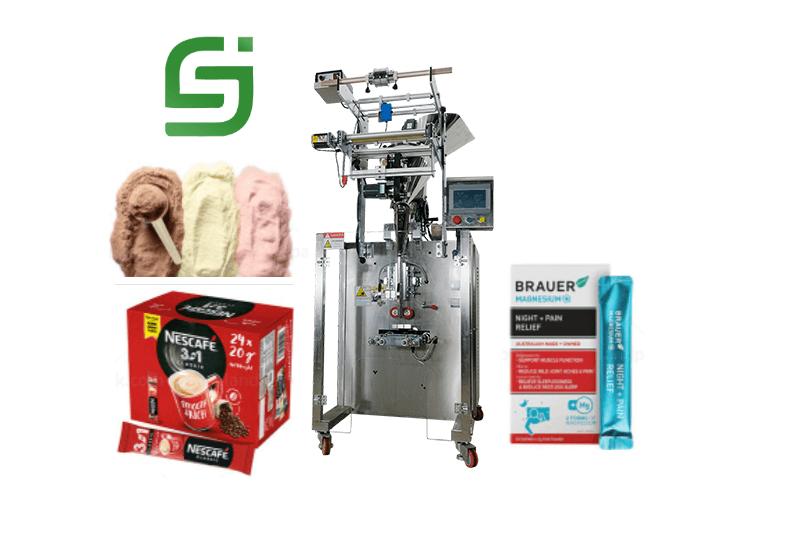
Innovative product handling may use smoother chutes, shorter drops, controlled vibration, product-level feedback, or interchangeable dosing parts. The design must match leaf dimensions, density, fragility, dust, static, and mixed inclusions. Automatic correction needs limits so it cannot hide a bridge, buildup, or changed tea lot.
Compare incoming and packed leaf condition, ordered quantity, blend composition, and accepted output. Include refill, low level, stop, and restart. A feeder that protects leaves only at a slow demonstration condition has not solved production. Preserve the installed route and settings for site acceptance.
Inner filter and outer protective materials have different tension, friction, curl, registration, sealing, and cutting needs. Separate but coordinated drives and sensors can improve control when their references and failure responses are clear. Material changes must remain within the qualified range; automation cannot make an unsuitable roll perform reliably.
Ask how the system manages roll loading, splices, end-of-roll, missed print marks, drift, and restart. Check whether operators can see the actual path and access guides safely. Data about tension or registration is useful when it leads to an inspection or controlled action, not when it merely creates another value on the screen.
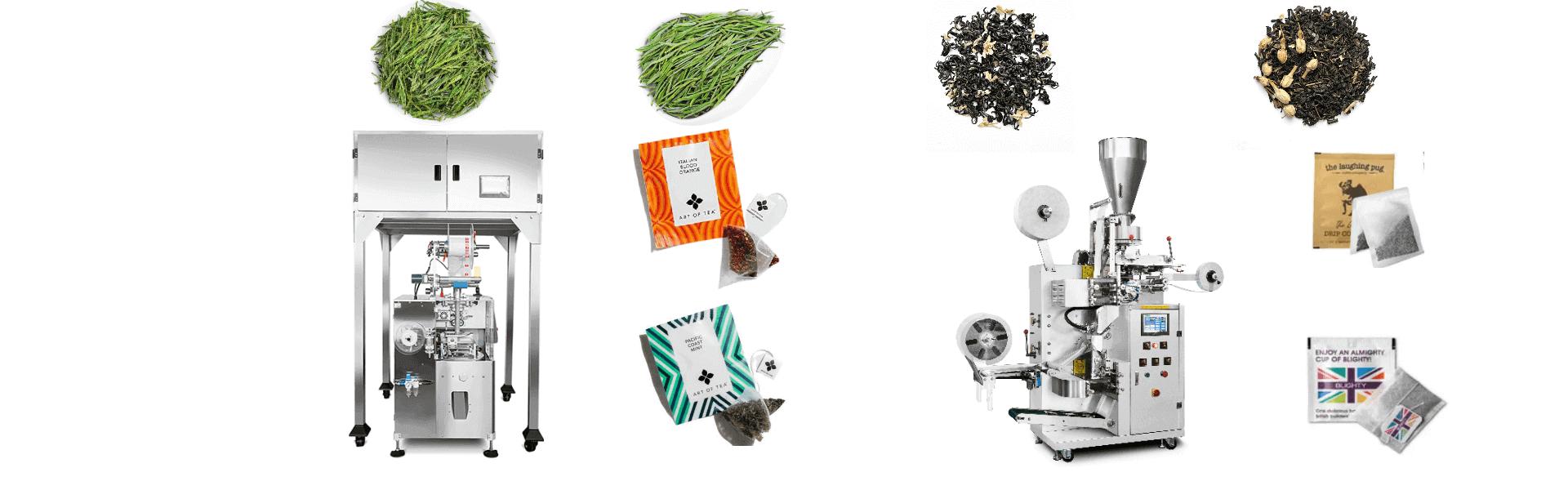
Tags and thread can create intermittent faults because they are light, flexible, printed, and replenished separately. Design improvements may include clearer routing, positive references, controlled tension, presence checks, easier component loading, or better access to cutters and attachment parts. The selected components still need dimensional and material consistency.
Challenge double tags, missing components, roll joints, thread break, and a tag outside orientation. Define whether the machine stops, rejects, or continues, and which partial packages are affected. Innovation is valuable when it prevents tea and outer material from being added to an already invalid inner bag.
Modules can group product-contact parts, forming sets, attachment components, or outer-film guides by format. Good modules have clear identity, protected storage, safe handling, durable references, and connections that cannot be confused. A removable assembly is not quick-change if it is heavy, difficult to clean, or requires repeated alignment.
Pair physical modules with controlled recipes and setup verification. The control can guide tasks and load parameters, while the operator confirms tea, parts, materials, code, and line clearance. Measure the complete conversion, including cleaning and quality release, and check whether the same team can repeat it without supplier adjustment.
Inspection can identify tea presence, material marks, tag or thread, code, seal region, or rejected packages according to the installed devices. Every check needs a known defect set, challenge method, false-reject review, line action, and state when the sensor is dirty or unavailable. Do not infer capabilities beyond the witnessed test.
Production data can classify accepted packs, station rejects, stop reasons, recipes, replenishment, and changeover. Define each counter and connect it to physical product. A cycle is not an accepted pack. Use data to prioritize causes, while preserving samples and maintenance observations for diagnosis.
Tea residue reaches hoppers, dosing components, funnels, formers, guards, tag mechanisms, sensors, jaws, and the frame below the product path. Innovative access means these areas can be inspected and cleaned under the approved method without dismantling unrelated references or requiring unsafe reach. Removable parts need identification and controlled reassembly.
Maintenance access should expose wear and allow heaters, cutters, belts, sensors, guides, and pneumatic parts to be serviced. Route cables and hoses away from product and movement while keeping them inspectable. The supplier should demonstrate common tasks with the final guards and options installed, not an open prototype.
Use representative tea, filter roll, tag, thread, and outer material. Test normal output plus difficult events: low product, refill, material end or splice, tag miss, thread break, registration loss, coder unavailable, seal-temperature deviation, downstream blockage, cleaning, format change, and restart. Record product disposition and the first accepted complete pack.
| Proposed innovation | Problem it should solve | Acceptance challenge | Lifecycle question |
|---|---|---|---|
| Adaptive tea feed | Starvation or surge at dosing | Changing level, refill, difficult leaves | Can buildup or sensor drift be diagnosed? |
| Independent material control | Inner or outer tracking variation | Roll splice, restart, approved material limits | Are drives and sensors locally supportable? |
| Attachment detection | Missing tag or thread | Known component faults and false-reject test | How is the device cleaned and challenged? |
| Modular change parts | Long or inconsistent conversion | Site team completes full changeover | How are modules stored and replaced? |
| Production analytics | Unknown loss and stop causes | Compare counters with physical observations | Who owns data, backup, and review? |
Acceptance should also test the fallback when an optional feature is unavailable. Essential safety and local operation must remain defined. An innovation that cannot be maintained or bypassed through an approved degraded mode can become the line's largest single failure risk.
Does a larger touchscreen make the line more intelligent?
No. Useful intelligence connects reliable evidence to a controlled action, clear alarm, product decision, and recoverable process.
Should every tea line use remote support?
Only with a justified purpose, approved access, security, session control, local visibility, data ownership, and a known response to connection loss.
Are tool-free changes always better?
They can reduce time, but references must remain secure and verifiable. A tool-free adjustment that drifts or is set ambiguously is not an improvement.
How can innovation be compared between suppliers?
Issue one problem-based requirement and challenge matrix, then compare complete-pack evidence, operator tasks, maintenance, fallback, and lifecycle support.
What prevents a new feature from becoming obsolete?
Documented parts, software, backups, standards, local support, replacement paths, and contractual lifecycle information reduce but cannot eliminate obsolescence risk.
Human factors should be tested with the people who will run and maintain the line. Review reach, visibility, component weight, loading height, screen language, alarm wording, confirmation of critical changes, and access under isolation. A feature can be technically effective yet fail because the normal task is awkward or ambiguous.
Connected controls require security and ownership. Define user accounts, remote access, network boundaries, logging, backups, updates, and the machine state if communication fails. Essential local operation and safety should not depend on an unverified external service. Technology teams and production should agree on support responsibilities before connection.
Modular equipment needs lifecycle planning. Record module revisions, interfaces, software compatibility, calibration or verification, cleaning methods, lifting aids, and spare parts. A future module should have a documented integration and acceptance path. Mechanical fit alone does not prove that controls, guards, product tracking, and quality decisions remain correct.
Build the business case from the measured problem. Estimate accepted-output gain, reduced material loss, cleaning or conversion improvement, staffing effect, training, service, software, and obsolescence. Innovation should be chosen when evidence and lifecycle cost support it, not because it appears more advanced than a stable conventional solution.
Pilot features should be isolated from the production baseline until their effect is understood. Record software, hardware, settings, materials, and manual support used during the pilot. A successful experiment becomes an approved design only after risks, documents, spares, training, and repeatability are closed.
Innovation review should include a removal path. If a proprietary sensor or module becomes unavailable, determine whether production can continue through an approved alternative and what quality checks replace it. Designing recovery before purchase reduces dependence on one unsupported component.
Ask how the proposed design will be verified after maintenance. Sensors, modules, and controls may restore motion while their quality function remains uncertain. Define challenge pieces, test records, product segregation, and authorization before the line returns to routine tea production.
Future design reviews should compare promised benefits with actual production data and remove features whose support burden exceeds their demonstrated contribution.
Innovative tea packaging design earns its place when it solves a defined loss, quality, changeover, hygiene, or diagnostic problem with repeatable evidence. Review the mechanism, user action, failure response, maintenance, and future support. The inner and outer bag tea packaging machine becomes more capable through coherent engineering, not novelty alone.
Pilot evidence should guide each redesign.

YISEN MACHINERY - The ONE-STOP VFFS PACKING MACHINE SOLUTION SUPPLIER
 Tel: +8617350750975
 Email: info@vffspackingmachinery.com
 MP/WhatsApp: +8617350750975
 Manufacturer Address:Meixi Road, Tongan District, Xiamen,Fujian,China