

Hot Keyword:

Author:YISEN Pouch Packing Machine Manufacturer TIME:2025-05-14
Craftsmanship is visible in the product path, seal geometry, tooling alignment, cleanability, containment strategy, and quality evidence. It should not be reduced to an unsupported speed or compliance claim.
Nicotine pouch production technology combines controlled blend supply, small-dose metering, permeable pouch material handling, sealing and cutting, and transfer to any subsequent inspection or container-packing process. Its main engineering advantage is repeatability through a defined product and material window. Because nicotine products can involve significant exposure and regulatory obligations, suitability must be assessed by qualified specialists for the intended market and facility.
Document particle distribution, bulk density, moisture, flow, cohesion, dust, ingredient segregation, temperature, target quantity, and changes during holding. The product owner should define exposure limits, protective measures, cross-contamination rules, legal classification, and release requirements. Machine suppliers need this information to design the product circuit but should not invent regulatory or formulation decisions.
Use representative material only under approved handling. Upstream blending and conditioning determine whether the dosing hopper receives a uniform product. Packaging cannot restore a mixture that has separated. Define hold time, transfer, refill, and batch-end handling so each trial sample has known context.
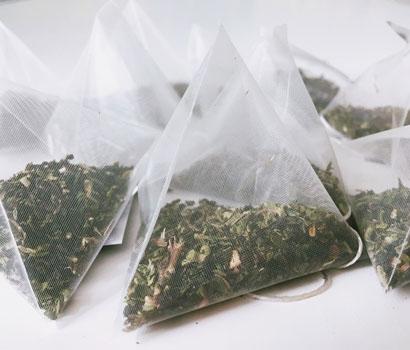
The pouch substrate must meet the product's functional and quality specification while also unwinding, guiding, forming, sealing, and cutting on the machine. Supply width, thickness, roll construction, core, winding direction, joints, surface behavior, and tolerances. Soft or permeable material may stretch, wrinkle, shed fibers, or track differently from conventional packaging film.
Inspect edge condition, tension, guide contact, and cleanliness. Excessive tension can distort pouch dimensions, while weak control can move the seal and cut. Test commercial material through normal roll changes or splices where relevant. Retain samples from different web positions and roll stages.
Small-dose systems require stable hopper condition and tooling matched to the blend. Depending on design, screws, cavities, weighing, or other principles may be used. Observe refill aeration, settling, sticking, buildup, and wear. A nominal dosing resolution does not prove finished-pouch repeatability with the actual formulation.
Measure ordered samples from startup, stable running, low supply, refill, stop, and restart. Use a validated or otherwise approved measurement approach within the manufacturer's quality system. Preserve lane or station identity if the machine has repeated dosing channels. Investigate trends rather than hiding them with frequent correction.
Material is presented around forming and sealing tooling, receives the measured product, closes, and is divided into individual pouches according to the machine design. Product should remain below the seam while the pouch develops its intended shape. Fill level, air, material tension, seal position, and cut alignment influence appearance and integrity.
Inspect seam continuity, dimensions, weight or quantity, cut edge, loose fibers, product loss, and any opening or handling properties required by the specification. The seal method and process window must be qualified for the supplied substrate. More energy cannot correct material folded or product trapped across a seam.
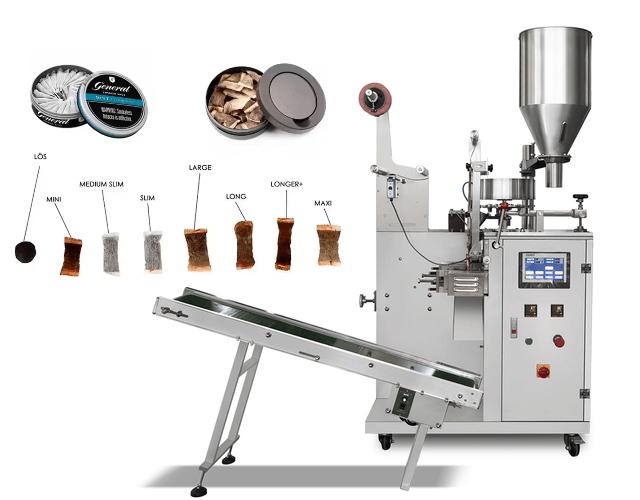
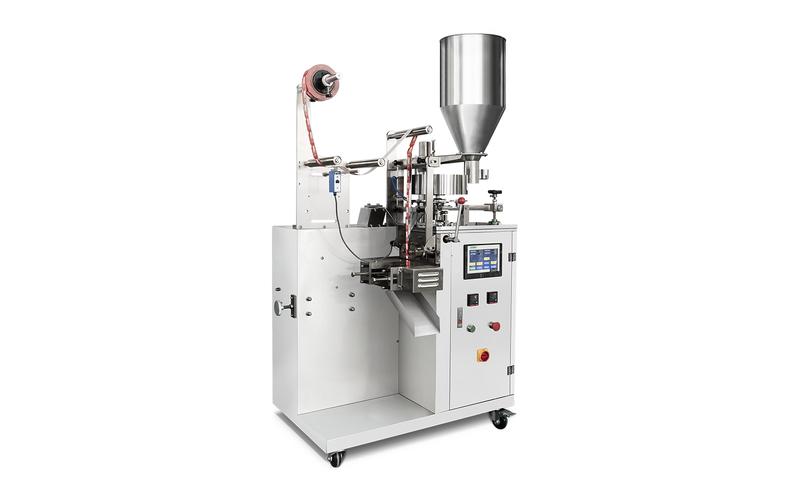
Review charging, transfer, hopper, dosing, forming, rejects, sampling, and cleaning through a product-risk assessment. Covers and extraction interfaces need defined performance and maintenance. Determine how operators handle dust, filters, remaining product, disposable items, and protective equipment. A polished enclosure does not establish containment.
Inspect contact surfaces, joints, seals, fasteners, hollow spaces, tools, and removal routes. Cleaning must address residue inside dosing components and outside the direct path where dust can settle. The responsible manufacturer defines cleaning acceptance and verification. Parts should be identified and stored to prevent incorrect reassembly or batch crossover.
Recipes can link dosing, material advance, sealing, cutting, alarms, and product identifiers. User access should separate operation, approved adjustment, maintenance, and engineering changes. The physical tooling and substrate must still be checked. Backups, versions, clock, records, and remote access should follow the user's requirements and security controls.
Inspection devices may check presence, quantity, seal, dimensions, or other defined attributes depending on the supplied line. Each needs a written defect set, challenge method, reject response, and failure state. Data should preserve affected-product decisions, not merely count cycles.
Build a protocol around representative blend conditions, commercial substrate, intended dimensions, dosing tooling, run events, cleaning, and inspection. Record every adjustment, alarm, manual intervention, reject, and open point. Product safety and regulatory tests should remain within the responsible organization's approved processes.
| Technology area | Evidence to inspect | Uncontrolled risk |
|---|---|---|
| Blend supply | Uniform flow through refill and hold | Segregation, compaction, airborne dust |
| Small-dose metering | Ordered finished-pouch results | Density shift, buildup, tooling wear |
| Material handling | Tracking, tension, dimensions, roll transitions | Stretch, wrinkles, fiber or edge damage |
| Sealing and cutting | Seam, product clearance, cut and shape samples | Contamination, misalignment, incomplete closure |
| Cleaning and containment | Witnessed access and specified verification | Exposure, residue, cross-contamination |
Acceptance should link results to the exact configuration. Different blend, substrate, size, dose, or containment condition may require a new assessment rather than copying the nearest recipe.
Review alignment, finish, joints, guards, access, cable and hose routing, part identification, tool changes, documentation, and the ability to inspect wear. Good craftsmanship supports repeatable setup and cleaning, but must be proven through operation. Ask technicians to demonstrate disassembly, reference restoration, and troubleshooting under the agreed safety procedures.
The nicotine pouch machine scope should identify product feed, dosing, substrate handling, forming, sealing, cutting, containment interfaces, inspection, discharge, controls, documents, spares, training, and acceptance. State exclusions and responsibility for regulated-product qualification clearly.
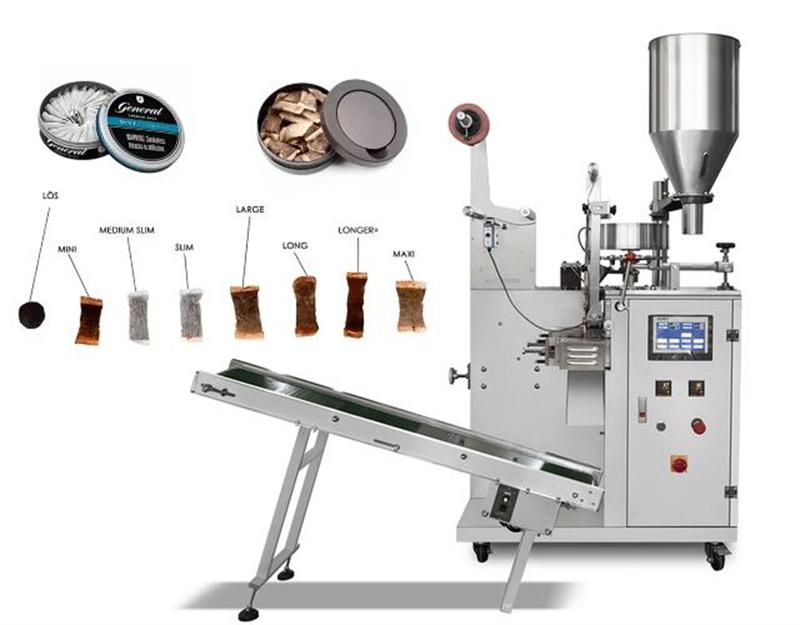
Does the machine determine whether a nicotine product is legal?
No. The manufacturer and qualified advisers must determine market, product, facility, labeling, and regulatory obligations. Equipment evidence supports only its defined functions.
Why is blend uniformity important before dosing?
A stable total quantity does not guarantee representative composition if ingredients segregate. Upstream preparation and transfer need controlled evidence.
Can one substrate recipe fit every pouch material?
No. Thickness, stretch, surface, permeability, sealing response, width, and roll quality can change handling and require separate qualification.
What should happen after dosing-tool replacement?
Verify part identity and installation, protect containment, restore the approved recipe, and inspect ordered finished samples before normal release.
Which claim should buyers treat cautiously?
Unverified speed, accuracy, containment, compliance, and material-flexibility statements should remain open until linked to a defined test and configuration.
Exposure control must cover nonroutine events. Define response to a split product container, blocked dosing path, damaged filter, rejected pouch accumulation, loss of extraction, and maintenance inside the enclosure. Procedures should identify isolation, protective equipment, decontamination, waste, affected product, and authorization to resume. These decisions require the user's occupational and product-safety experts.
Regulatory assessment should include the finished product, claims, ingredients, packaging, labeling, manufacturing site, and target jurisdiction. Equipment construction can support requirements but cannot confer market authorization. Ask suppliers for factual design and material information; avoid marketing language that implies approval by association. The manufacturer remains responsible for obtaining qualified legal and quality advice.
Subsequent processing may condition, inspect, count, and place pouches into cans or other containers. Define transfer orientation, dwell, environmental exposure, inspection, rejects, count accuracy, container closure, and line interfaces. A stable primary pouch can be damaged or mixed if downstream accumulation is uncontrolled. Acceptance should extend to the contracted endpoint.
Validation planning should trace user requirements to design and tests appropriate to the quality system. Include product supply, dose, material handling, seals, dimensions, containment, cleaning, controls, inspection, and recovery. Deviations require documented assessment rather than repeated tuning until a selected sample passes. Preserve configuration and material identity for every result.
Long-term performance depends on wear and material consistency. Track dosing clearances, seals, cutters, guides, tension parts, extraction condition, and changes in the pouch substrate. Trend defects against maintenance and supplier lots. When a replacement component changes geometry or surface, assess its effect on dose, shape, containment, and cleanability before full production.
Commercial evaluation should include controlled raw-material loss, substrate yield, cleaning time, containment consumables, quality sampling, rejects, spares, service, and downstream equipment. Nominal output alone does not describe the cost of a regulated process. A slower configuration with simpler cleaning and stronger evidence may fit a given portfolio better than a complex high-rate design.
Reject and waste handling must maintain containment and product accountability. Define whether off-spec pouches are destroyed, sampled, or reworked under an approved process; do not allow open rejects to accumulate near accepted output. Record the reason, quantity, batch, and final disposition according to the manufacturer's system.
Tooling storage should protect precision surfaces and prevent cross-use between strengths, pouch sizes, or formulations. Identify screws, cavities, forming parts, seal sets, and cutters with controlled references. After installation, verify material path, dose, dimensions, seams, and containment before releasing the recipe.
Environmental conditions during production should be recorded where they affect blend flow, static, material handling, or containment. Humidity and temperature can alter both product and substrate significantly. The facility should maintain its approved operating window and investigate excursions before compensating with recipe changes.
Nicotine pouch technology succeeds when blend control, small-dose metering, substrate handling, sealing, containment, and records form one qualified process. Buyers should inspect physical craftsmanship and challenge the complete cycle with representative materials. Clear responsibility boundaries are essential because regulated-product suitability extends far beyond the packaging machine.
Material evidence should govern pouch decisions.

YISEN MACHINERY - The ONE-STOP VFFS PACKING MACHINE SOLUTION SUPPLIER
 Tel: +8617350750975
 Email: info@vffspackingmachinery.com
 MP/WhatsApp: +8617350750975
 Manufacturer Address:Meixi Road, Tongan District, Xiamen,Fujian,China