

Hot Keyword:
Author:YISEN Pouch Packing Machine Manufacturer TIME:2025-05-26
The equipment should not be judged as a generic sachet line. Moisture, cut size, compaction, web porosity, seam feel, cleaning, and transfer into cans or cartons create application-specific requirements.
A snus bag packaging machine feeds a moist portion product, meters it, forms a porous pouch around the dose, closes the seams, separates the portion, and delivers it for counting or secondary packing. Its main advantage is controlled, repeatable portion production when the product condition, web material, dosing system, closure method, and downstream handling are engineered together.
The bulk product can vary in moisture, particle or fiber distribution, density, stickiness, temperature, and compressibility. These properties influence bridging, adhesion, feeder response, dose shape, and residue. Define acceptable ranges and supply representative samples after normal storage and transport.
The hopper and feeder should maintain a stable product head without excessive agitation. Level sensing prevents starvation, while suitable movement limits compaction and separation. Product exposed to room air can dry or change, so maximum hopper residence and handling of remaining material should be part of the operating procedure.
Observe low-product and refill conditions. A stable mid-hopper run can hide variation created when fresh product enters or the feeder approaches empty. Acceptance sampling should include these events.
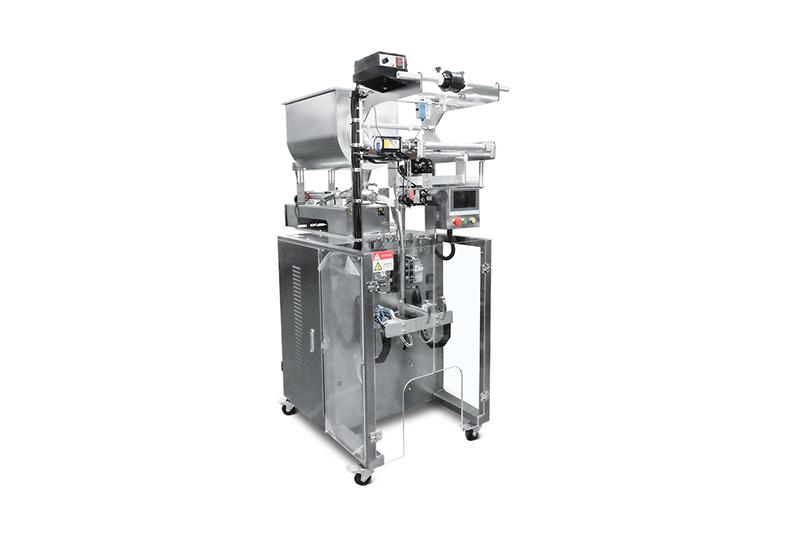
The dosing assembly must deliver the target amount and place it within the pouch area. Performance depends on feeder geometry, cavities or measuring elements, scraper or cutoff action, product level, and recipe. The smallest and largest portions can need different parts or settings.
Measure consecutive finished portions. Review average, spread, low and high results, loose product, shape, and compaction. An acceptable mass can still create an uncomfortable thick portion or a thin uneven one. Define dimensions and hand-feel attributes with the product owner.
Product must stay out of the future seam. Fine moist material can smear across the web or collect on dosing parts. The process should contain residue and provide accessible cleaning before buildup changes the dose.
The pouch material is a functional machine component. Width, thickness or basis weight, porosity, friction, strength, heat response, roll winding, splice, and storage condition affect transport. Identify the exact grade and converter used for approval.
Unwind and tension control keep the web aligned as it enters forming parts. Excess tension can stretch or narrow delicate material; insufficient control can wrinkle or misplace seams. Observe roll changes, acceleration, normal splices where permitted, and behavior near the core.
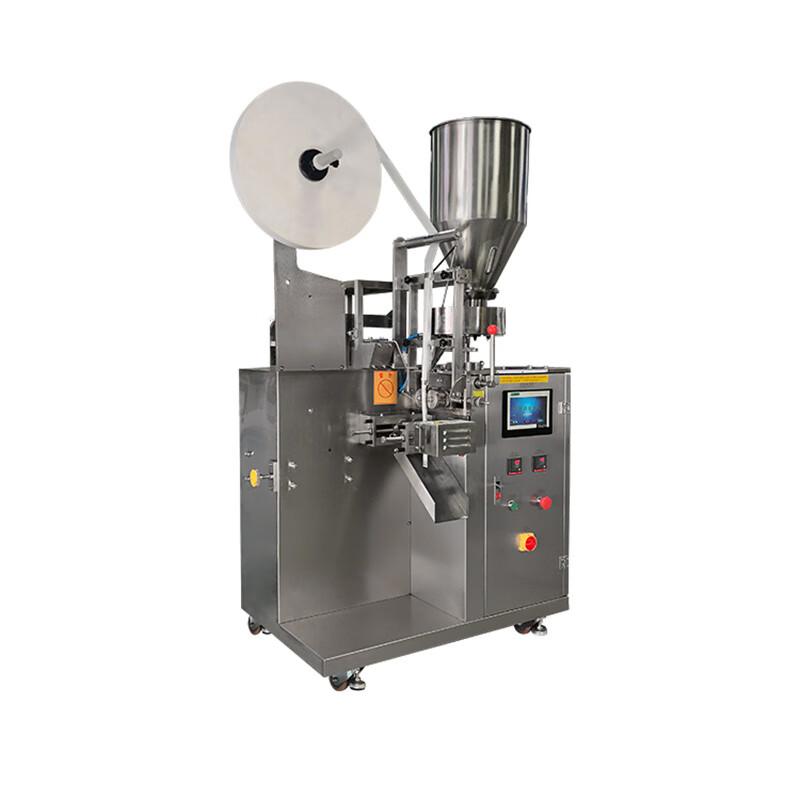
Alternative materials need separate qualification even when they look similar. A different fiber blend, surface, or sealing response can alter machine settings and finished seam feel. Store approved rolls under defined humidity and wrapping conditions.
Closure depends on material, surface cleanliness, temperature or other applied energy, contact time, pressure, and alignment. The seam should remain continuous through normal handling without scorching, thinning, excessive stiffness, or loose fibers. Use acceptance methods appropriate to the portion and consumer use.
Product contamination is a major risk. Timing, dose position, web control, and cleaning should prevent material from crossing the seam. Sensors may monitor temperature or web position, but the response to an excursion must identify affected portions.
Cutting or separation should produce consistent dimensions and edges. Knives, perforation, or another configured method require maintenance as the web creates wear. Inspect pieces after normal conveying, because a portion can open or fray after it leaves the closure station.
Closed portions may enter counting, buffering, can filling, cartoning, or inspection. The transfer route should prevent overlaps, folds, crushed seams, and excessive accumulation. Count accuracy and container presentation depend on controlled separation.
Challenge downstream stops. Portions may back up while the primary machine continues or waits. Define buffer capacity and signals so material does not pile against a fragile discharge. Restart should not mix uncertain portions with approved stock.
When final containers require a set count, verify missing, double, or damaged-portion detection and rejection. Traceability should link the primary recipe and product batch to the secondary package.
A recipe can store dosing, web, closure, cutting, and transfer settings for a controlled product and material code. Protect critical parameters through user permissions and change records. Backup and restoration should be demonstrated before production depends on the system.
Useful sensors can detect material end, web position, closure temperature, product level, missing portions, or downstream blockage. Each alarm needs a defined action: stop, reject, hold, inspect, or call maintenance. Data without a containment decision does not protect product.
Sample by time and event. Startup, refill, roll change, stop, restart, cleaning, and component replacement deserve additional checks. Trend weight, seam defects, web stops, and cleaning frequency by recipe to identify gradual deterioration.
Inspect the path from hopper to closed portion. Product-contact components should be removable or cleanable under the validated sanitation method. Look for grooves, ledges, hidden fasteners, and surfaces where moist material can remain. Witness disassembly, inspection, drying, storage, and reassembly.
Flavor or formulation change includes product recovery, line clearance, cleaning, old web removal, change parts, new recipe, material loading, and first-off approval. Measure the full sequence. A quick screen selection is only one small part of changeover.
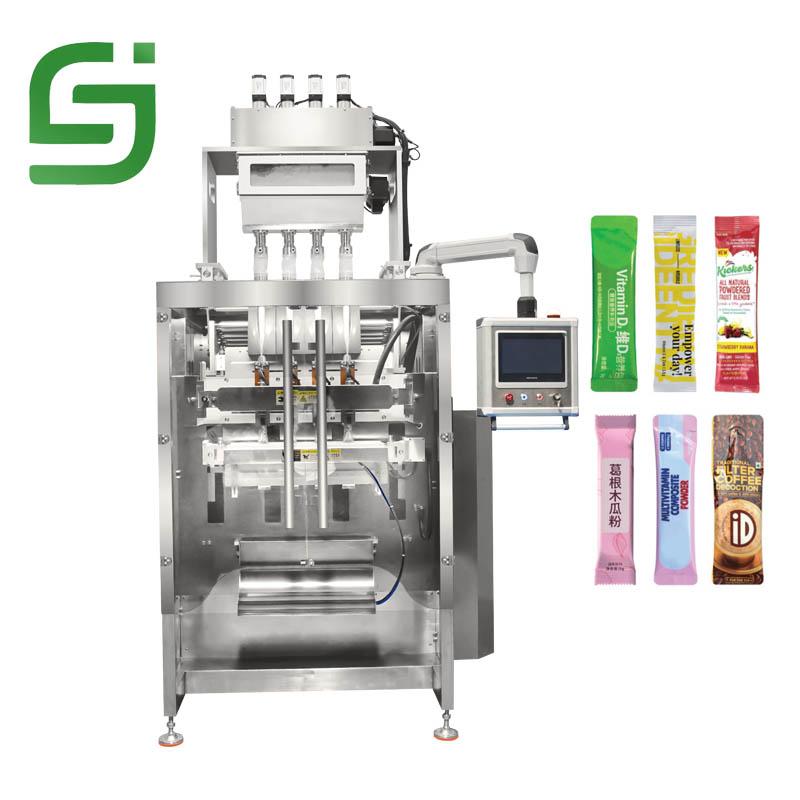
The sachet stick packing machine should have identified cleaning tools, approved seals and lubricants, spare closure and cutting parts, and a setup sheet. Maintenance access should keep electrical and hot components protected from unsuitable sanitation methods.
| Potential advantage | Required machine function | Evidence to verify value |
|---|---|---|
| Consistent user portions | Stable feeding, controlled dosing, defined pouch geometry | Individual mass, thickness, shape, and loose-product data |
| Repeatable porous pouch quality | Web guidance, clean seams, controlled separation | Roll trial with seam and edge checks after conveying |
| Efficient secondary packing | Separated discharge, count control, buffer handshake | Integrated can or carton run including a downstream stop |
| Faster product conversion | Accessible contact parts, controlled recipes, clear line clearance | Witnessed complete changeover with passing first-off portions |
| Better process visibility | Meaningful alarms, event records, recipe governance | Fault challenges with verified containment and restoration |
Advantages should be compared with the actual product portfolio. More electronic adjustment can improve repeatability but does not remove cleaning or material limits. Higher nominal speed may increase seam contamination or downstream accumulation. A longer run reveals whether the benefits continue after residue and normal replenishment appear.
For factory acceptance, include the most difficult moisture condition, smallest and largest portions, approved web, roll replacement, planned stop, restart, recipe change, cleaning, and secondary transfer. Record all adjustments and retain samples from the final configuration.
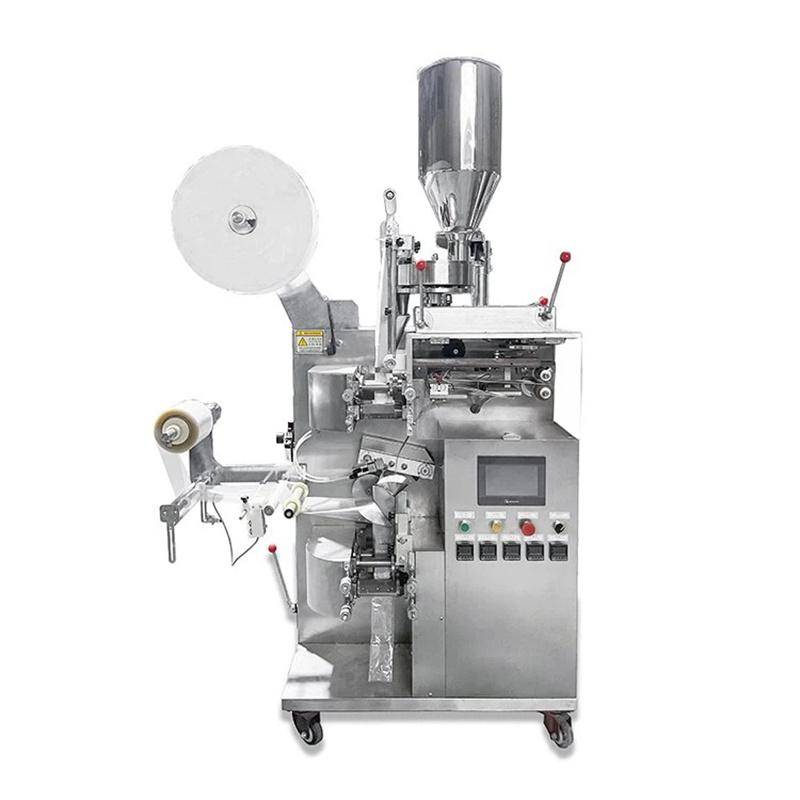
Confirm guarding, elevated access, utilities, manuals, software backup, training, recommended spares, and interface ownership. The practical advantage is a process that factory staff can restore and maintain, not a feature available only during a supplier demonstration.
Storage control supports the web-forming function. Porous rolls can change with humidity or lose shape when stacked poorly, while product can dry during long exposure at the hopper. Define protective wrapping, conditioning, maximum open time, and disposition of part-used material. These limits should accompany the recipe because they influence the next run before any machine setting changes.
Secondary packaging should be included in portion acceptance. Count systems, can fillers, and conveyors need individual pouches to arrive separated and in a manageable orientation. Challenge a downstream stop, verify buffer capacity, and inspect portions after restart. Good primary seams can still fold or open when accumulation is uncontrolled.
Preventive maintenance should focus on surfaces that influence the portion directly: feeder clearances, dosing parts, web guides, heaters or closure tools, temperature sensors, knives, belts, and discharge devices. Trend weight variation, seam faults, residue, and web stops against operating hours. This evidence distinguishes wear from product or material changes.
Line-status rules must explain how uncertain portions are contained after power loss, web break, missing dose, or closure alarm. Operators need a defined hold boundary and restart sample. Without that control, automated production can mix affected material into an otherwise conforming secondary pack.
Approved reference portions can support setup comparison, but they should be replaced when storage changes their dimensions, seam, moisture, or feel. Current measurement remains the release method.
Can an ordinary powder sachet machine make snus portions?
Not automatically. Moist product behavior, porous web, portion shape, closure feel, residue, hygiene, and downstream counting need a purpose-matched configuration.
What product condition should be used for testing?
Use normal production material and the most difficult approved moisture or cut condition, preserved during transport so the trial remains representative.
Is portion weight the only important result?
No. Thickness, shape, seam continuity, loose material, web damage, dimensions, and downstream count also determine an acceptable portion.
Why should the line be tested after a downstream stop?
Accumulation can fold, overlap, or open portions. The test proves buffer behavior, machine handshaking, containment, and restart control.
Can a new porous web use the existing recipe?
Only after specification review and a trial confirm transport, forming, closure, cutting, consumer feel, and storage behavior on the exact material.
Snus portion equipment combines moist-product feeding, precise dosing, delicate web control, clean closure, separation, and downstream count. Its advantages become real when each function is validated under difficult production events and can be repeated after cleaning or changeover. That evidence gives buyers a dependable operating boundary for portions, materials, and future recipes.

YISEN MACHINERY - The ONE-STOP VFFS PACKING MACHINE SOLUTION SUPPLIER
 Tel: +8617350750975
 Email: info@vffspackingmachinery.com
 MP/WhatsApp: +8617350750975
 Manufacturer Address:Meixi Road, Tongan District, Xiamen,Fujian,China