

Hot Keyword:
Author:YISEN Pouch Packing Machine Manufacturer TIME:2026-09-07
Plan rollstock artwork around the forming and sealing geometry of the quoted tea pouch packing machine. The artwork file must reserve seal zones, cut tolerance, registration marks, coding space, and splice recovery allowance before cylinders or digital production files are released.
Artwork approval is an engineering gate, not only a graphic-design milestone. Buyers should connect the printer's repeat length and web construction to the machine's film path, bag length control, sensor capability, seal width, and cutter position. A signed digital proof is useful, but the final decision requires the commercial roll to run through the intended configuration.
Planning note: Before the converter starts a production quantity, hold a joint artwork review with purchasing, quality, production, the film converter, and the machine supplier. Use one numbered checklist that covers web orientation, repeat length, eyemark, seal clearances, code area, regulatory panels, and revision status. Assign each unresolved point to an owner and prevent release until the drawing, proof, and machine data agree. This meeting should also define the pilot-roll quantity, who supplies the final tea, where the trial will occur, and how unused printed film will be controlled if the trial fails. These details protect the buyer from committing a large rollstock order to artwork that the line cannot register or seal consistently.
Acceptance note: Include a controlled rejection path in the print-release plan. When the pilot roll misses registration, sealing, coding, or cut limits, record whether the drawing, converter output, sensor setup, or machine geometry caused the result. State who may authorize revised film and which measurements must be repeated. This prevents the team from accepting an informal adjustment that later disappears when another roll, operator, or recipe enters production.
Request a drawing that shows unwind direction, film face, forming route, longitudinal seal, cross seals, cut line, bag length, usable print panel, and any gusset or notch. Graphic designers need these boundaries before they position brand elements or regulatory text.
Working method: Overlay the artwork on the machine drawing at full scale. Mark nominal dimensions and tolerances separately. Confirm which side of the web is printed, which surface contains sealant, and how the image appears after the web folds around the forming tube.
Evidence to retain: Archive the approved overlay, bag drawing, web direction sample, and revision history. Include a physical mockup folded in the same orientation as the machine will form it.
Decision boundary: A flat artwork PDF can look correct while producing an inverted panel or a logo across a seal. Folding direction must be reviewed explicitly.
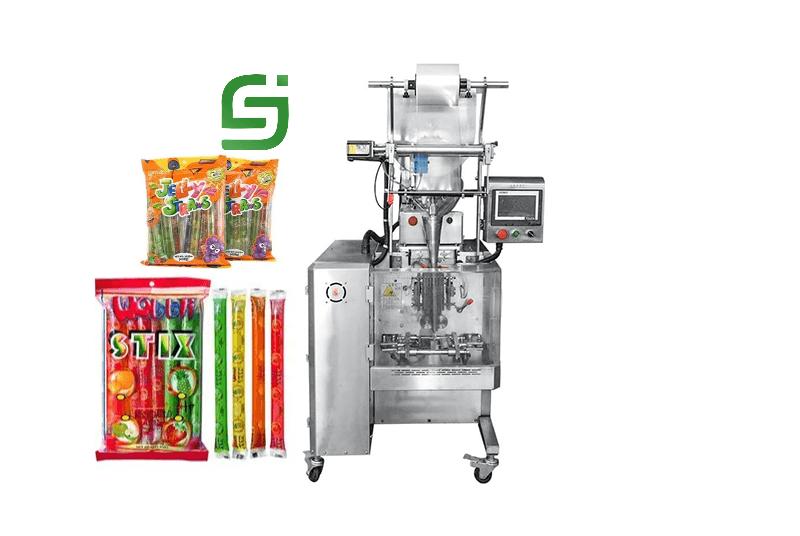
Ink, varnish, contamination, or excessive layer buildup in a sealing zone can change heat transfer and closure quality. Define clear areas for the back or fin seal and both transverse seals, including realistic registration movement rather than a zero-tolerance drawing.
Working method: Ask the film converter to identify the sealant layer and print construction. Compare the machine supplier's required seal width with the design margin. Keep small text, barcodes, and critical graphics away from areas that may wrinkle or be trimmed.
Evidence to retain: Measure seal-zone clearance on finished samples from both sides of the accepted registration range. Retain examples at the approved limits rather than preserving only perfectly centered bags.
Decision boundary: The machine cannot compensate for artwork that places essential information inside a functional seal allowance. Resolve that conflict before print production.
A registration mark needs adequate contrast, stable dimensions, a quiet surrounding area, and a position visible to the installed sensor. Metallic backgrounds, transparent film, repeated dark graphics, or glossy reflections can reduce detection stability.
Working method: Confirm sensor type, mark color, mark size, travel direction, and the distance between the mark and the intended cut. Provide the supplier with the final background colors. During testing, challenge the sensor across the full roll, including lighter and darker print variation.
Evidence to retain: Record sensor model, threshold or teach settings, mark dimensions, print repeat, correction values, and any false triggers. Preserve film sections from the start, middle, and end of the tested roll.
Decision boundary: An eyemark that works when hand-fed may fail at speed. Approval requires automatic tracking under normal web tension and production lighting.
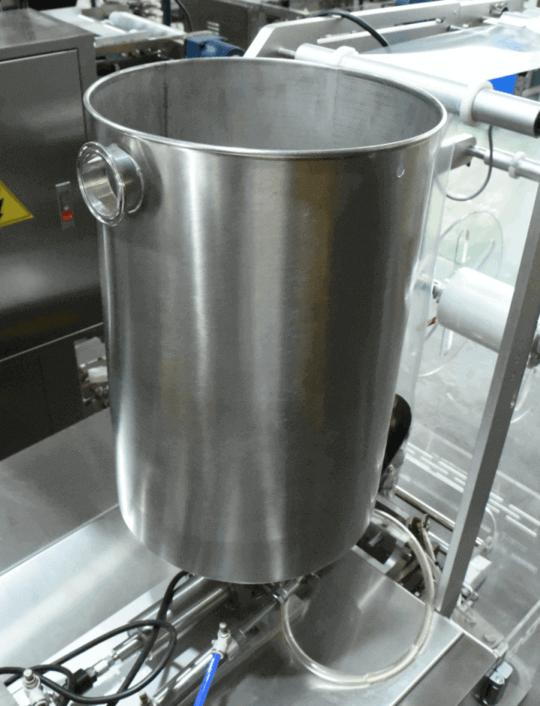
Coding space must suit the selected printer, ribbon or ink, film surface, and pouch movement. The code area should remain flat enough for transfer, clear of seals and folds, and accessible without forcing the printer into an unstable mechanical position.
Working method: Define code content, maximum line count, character height, print direction, contrast, and verification method. Test the longest realistic code, not a short sample. Review startup codes, speed changes, and the first packs after ribbon or consumable replacement.
Evidence to retain: Keep code samples with adhesion or rub-test results and link them to printer settings and film lot. Record missed, faint, smeared, displaced, or incomplete codes as separate defects.
Decision boundary: Review the available tea pouch packing machine options, then confirm the coding device and bracket are included in the actual commercial scope.
| Decision area | Items to lock | Acceptance evidence |
|---|---|---|
| Web orientation | Print face, sealant face, unwind direction | Folded mockup and machine web diagram |
| Registration | Eyemark, repeat, correction range | Consecutive print-to-cut measurements |
| Functional zones | Longitudinal seal, cross seal, trim | Clearance at both registration limits |
| Coding panel | Printer method, longest code, surface | Readable and durable code samples |
Artwork repeat and commanded bag length must agree within a correction range the machine can control. If the converter's repeat drifts or the web stretches, the controller may chase the mark until a graphic, seal, or cut falls outside its approved window.
Working method: Specify nominal repeat, manufacturing tolerance, bag length, correction limit, and acceptable print-to-cut position. Test several consecutive repeats before loading the roll. During the run, observe whether corrections remain small and centered rather than accumulating in one direction.
Evidence to retain: Plot print-to-cut measurements over time and note stops, speed changes, and splices. Retain samples at the worst accepted positions and identify the roll location.
Decision boundary: Do not solve a converter repeat problem by widening machine correction without review. Large corrections can affect bag length, seal placement, and usable film.
Good artwork can still run poorly when rolls telescope, vary in tension, contain damaged edges, use unsuitable cores, or arrive wound in the wrong direction. Splices can also interrupt registration or create a seal defect if their location and tape are uncontrolled.
Working method: Issue a roll specification covering width, core, maximum diameter, winding direction, edge alignment, tension consistency, splice tape, splice angle, and marking method. Inspect incoming rolls before they reach production.
Evidence to retain: During acceptance, run at least one representative roll segment and perform a planned splice recovery when the line supports it. Record waste, rethreading time, registration recovery, and any rejected bags.
Decision boundary: A successful short run from the center of a perfect roll does not validate incoming-roll variability. Purchasing controls belong in the artwork release package.
The final film trial should include forming, filling, registration, sealing, cutting, coding, and downstream handling. Empty pouches do not reveal product dust, headspace, drop impact, or the way a filled pack travels into checking and collection equipment.
Working method: Run the intended tea and target dose through setup, stable output, refill, stop, and restart. Inspect graphics, dimensions, seals, code, cut, and pack appearance. Include the most difficult product and smallest artwork margin in the test matrix.
Evidence to retain: Count accepted finished pouches and categorize every rejection. Save roll details, machine recipe, environmental conditions, samples, and interventions in one trial report.
Decision boundary: Approval is configuration-specific. Another forming set, film laminate, bag size, or printer can require a focused retest even when the brand artwork is unchanged.
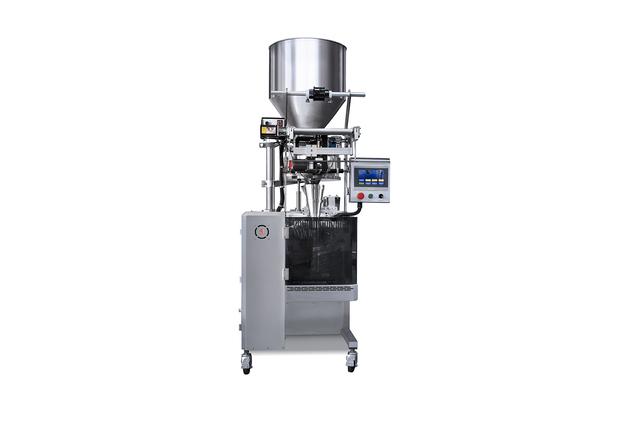
Printed rollstock can remain in inventory for months, so artwork and machine changes need disciplined revision control. The plant should know which roll revision matches each recipe, forming set, market label, and coding requirement.
Working method: Assign an artwork number and revision to the machine recipe and receiving record. Require review when bag length, seal width, eyemark, code area, film structure, or regulatory panel changes. Quarantine obsolete rolls and define disposition.
Evidence to retain: Store signed proofs, converter specifications, test reports, retained samples, and release dates. Add a first-article check for every new print batch before high-volume use.
Decision boundary: Do not rely on file names such as final or revised. A controlled identifier and approval record prevent the wrong film from entering production.
Who should approve tea pouch rollstock artwork? The buyer's brand or regulatory owner, film converter, machine supplier, and production or quality representative should approve the parts relevant to them.
Can the registration mark be hidden inside the design? It may be visually integrated only if the sensor still receives reliable contrast and a quiet detection area across normal print variation.
Why test the longest date code? A short code may fit while the production code exceeds the print area, loses clarity, or reaches a fold or seal.
Should artwork be released before a commercial film trial? A controlled pilot quantity may be needed for testing, but full production should wait until the actual roll passes the agreed machine and pack checks.
What changes require artwork revalidation? Review changes to repeat length, bag size, eyemark, film structure, winding, seal zones, coding area, printer, or forming hardware.
Connect rollstock artwork to the tea pouch packing machine before committing to a large print order. The release package should combine web geometry, seal clearances, eyemark rules, coding space, roll construction, commercial-film trials, and revision control. Approve measurable finished-pouch results rather than a flat proof alone.

YISEN MACHINERY - The ONE-STOP VFFS PACKING MACHINE SOLUTION SUPPLIER
 Tel: +8617350750975
 Email: info@vffspackingmachinery.com
 MP/WhatsApp: +8617350750975
 Manufacturer Address:Meixi Road, Tongan District, Xiamen,Fujian,China