

Hot Keyword:
Author:YISEN Pouch Packing Machine Manufacturer TIME:2025-02-28
A good request for quotation tells suppliers what will be packed, which premade bags are approved, how finished packs are released, and how often production changes. It then asks for evidence using representative samples. This selection route makes technical differences visible before commercial comparison and reduces the chance of buying options that do not solve a defined packaging need.
Choose a Doypack packing machine by matching one documented product-and-pouch portfolio to a demonstrated filling, handling, sealing, and changeover configuration. Machine size or a maximum cycle figure is not a sufficient selection method because the difficult pouch, product, or cleaning task usually sets the practical boundary.
Begin with a list of products and sellable packs expected during the equipment's planning horizon. For each item, record the pouch code, nominal fill, typical batch size, expected run frequency, code position, closure feature, and secondary packing route. Mark launch items separately from confirmed production so optional capacity does not quietly become a mandatory cost. The smallest pouch, largest dose, weakest package material, and shortest campaign may each challenge a different part of the line.
Convert commercial descriptions into observable requirements. "Premium appearance" may mean controlled pouch orientation, no scuffing, an aligned top seal, and a readable code. "Flexible production" may mean two changeovers per shift with documented line clearance. "Automated output" may include coding, inspection, counting, and discharge rather than only filling. When these outcomes are written, suppliers can propose a configuration against the same target instead of interpreting broad terms differently.
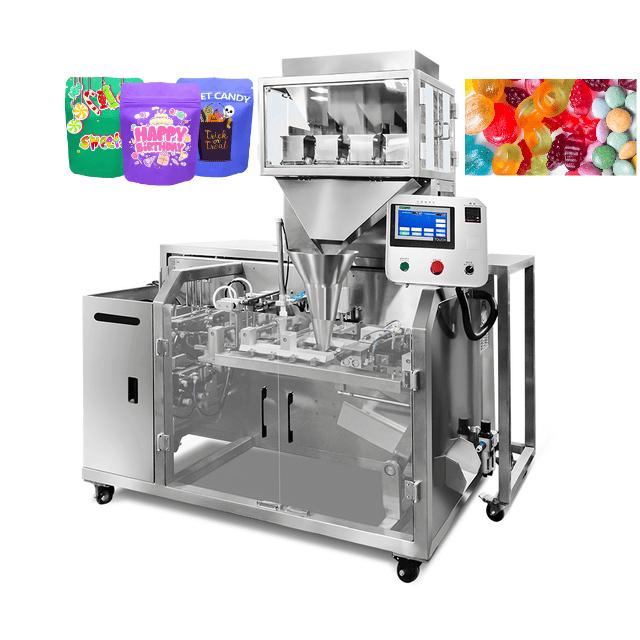
Machine choice follows product behavior more closely than marketing category. Free-flowing granules, fragile pieces, dusty powders, clear oils, sauces with particulates, and sticky pastes require different metering and cutoff principles. Capture bulk density or viscosity ranges, particle dimensions, temperature, aeration, dust, drip, stringing, foam, and sensitivity to breakage. Also note how the product is supplied to the filler, because unstable refill or head pressure can undermine otherwise suitable dosing equipment.
Create groups only when products can reasonably share contact parts, operating settings, and cleaning methods. A broad machine may accept several filler types, but that does not mean a single filler handles every recipe well. Identify dedicated parts, separate circuits, or future modules explicitly. Use difficult retained samples for trials, including normal variation from ingredients or storage. A supplier should state the tested product condition, not just report that a named category ran successfully.
Provide controlled pouch drawings and production samples. Width and height matter, but bottom gusset, top clearance, zipper, spout, tear notch, hang hole, corner shape, film stiffness, surface friction, sealant, print registration, and opening behavior can be equally important. Measure where the machine grips the bag and whether a feature enters that area. An attractive prototype made from different material cannot prove that production bags will separate, open, fill, and seal consistently.
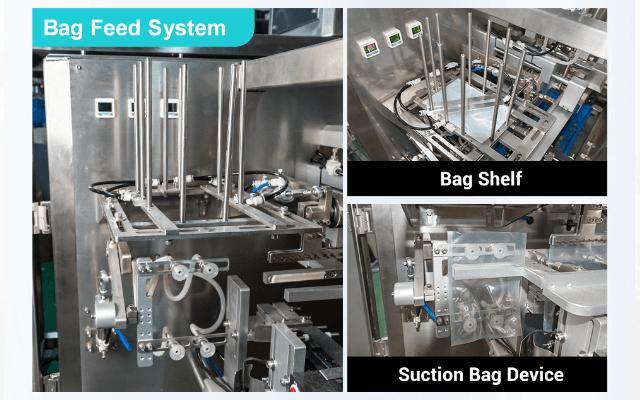
Ask suppliers to run the extreme formats and any pouch known to curl, cling, or open poorly. Observe magazine loading, double separation, pickup, opening confirmation, support during filling, top presentation, sealing, and discharge. Define incoming checks with the pouch converter and retain samples from the approved lot. If material construction or geometry later changes, evaluate its effect on the machine recipe before release. This is more reliable than widening guides or changing vacuum settings whenever a new lot behaves differently.
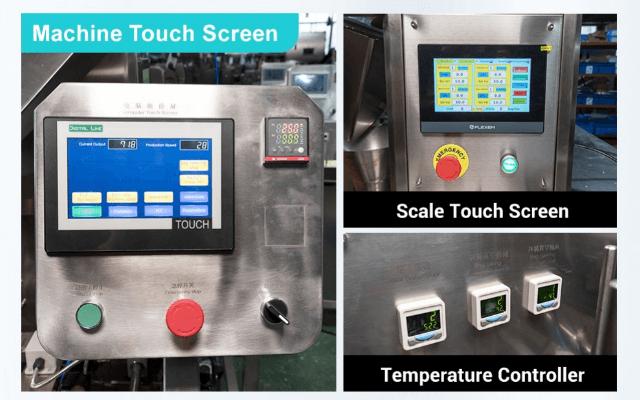
A station list should follow the package route. It may include pouch magazine, pickup, opening, filling, settling, top cleaning, gas handling, zipper closing, heat sealing, cooling, coding, inspection, and discharge. Not every project needs every function. An unused station adds controls and maintenance, while an omitted function can create manual work or quality risk. For each proposed station, write the pack condition entering it, the action performed, the confirmation available, and what happens after a failed event.
Pay particular attention to the filler interface and seal area. The nozzle or chute needs adequate opening clearance, and the dose must settle without pulling the pouch from its support. Dust, crumbs, strings, and droplets should be controlled before top sealing. Seal settings must be developed with approved material and protected through access levels. If cooling or downstream support is necessary for a fresh seal, include it in the tested configuration rather than treating discharge as the end of the process.
Practical output is the number of packs accepted under agreed inspection rules. Estimate it by product and pouch combination, including replenishment, startup checks, routine stops, cleaning, size changes, and downstream availability. A nominal machine rate measured without product does not account for a slower filler, difficult pouch opening, settling time, or code verification. For a multi-format business, annual output may depend more on campaign planning and changeover discipline than on the highest short demonstration.
Ask for trial records showing consecutive pouches, interventions, rejects, and operating states. Separate machine-cycle availability from finished-pack yield so causes are clear. Fragile snacks, dusty powder, and viscous sauce may each set a different stable pace on the same pouch platform. Use those observed results in the production model and keep assumptions labeled. Avoid converting a supplier's rated maximum into a guarantee for materials and products that were not demonstrated.
Witness a complete transition between two planned products or pouch sizes. Start with remaining product and packaging at the line, then include drainage or recovery, removal of contact parts, cleaning, inspection, reassembly, guide adjustment, change-part installation, recipe selection, line clearance, and first-off approval. Note required tools and difficult access points. A demonstration that begins with a clean empty machine omits much of the work that determines usable production time.
Check how change parts are identified and stored, whether settings have clear reference points, and which adjustments require maintenance authority. For allergen or sensitive recipe boundaries, the buyer's sanitation method controls acceptance. First-off pouches should be checked for dose, seal, code, appearance, and feature function before normal output resumes. A fast mechanical adjustment offers little benefit if cleaning or release remains uncertain.
Confirm floor dimensions, access aisles, ceiling height, equipment elevations, line direction, operator positions, and routes for product and pouch replenishment. Utility requirements should cover the exact options proposed, not a basic machine. Define upstream product supply and downstream conveyors, inspection, counting, or case packing. Flexible pouches may require support and controlled spacing after sealing, so test transfers with filled packages.
Interface ownership belongs in the purchase scope. State who provides signals, guarding between machines, rejects, coding triggers, accumulation logic, data connections, installation work, and commissioning samples. Review cleaning access in the layout, including removal space for filler parts. A machine that fits on a drawing may still be awkward to service if doors, platforms, or adjacent equipment block routine tasks.
Issue one requirement matrix and ask each candidate to mark compliance, proposed method, exclusion, and evidence. The Doypack packing machine range helps buyers understand the available pouch-handling concept, while the final model and options should be chosen only after sample review. The decision table below keeps commercial comparison connected to the operating need.
| Selection area | Buyer provides | Supplier demonstrates | Approval record |
|---|---|---|---|
| Product range | Representative and difficult samples | Stable dosing, clean transfer, and controlled cutoff | Sample log and filler configuration |
| Pouch portfolio | Production lots and controlled drawings | Pickup, opening, filling support, sealing, and discharge | Approved pouch list with limits |
| Pack quality | Dose, seal, code, and appearance criteria | Consecutive accepted pouches through planned states | Inspection sheet and retained packs |
| Changeover | Cleaning and line-clearance standard | Complete transition between chosen formats | Task list, parts list, and first-off result |
| Line integration | Layout, utilities, and connected equipment data | Interface design and filled-pouch transfer | Approved drawings and responsibility list |
Close open points before shipment with a named owner, due date, and required proof. Include manuals, training, recommended spares, software backups, and support boundaries. Price comparisons should normalize filler scope, code equipment, inspection, conveyors, change parts, installation, and testing. This prevents a low initial quotation from appearing complete when essential interfaces sit outside it.
Which information should be sent with an inquiry? Send product behavior, dose range, pouch drawings and samples, planned production mix, quality checks, utilities, layout, cleaning rules, and required connected equipment.
Should selection start with machine speed? No. First establish whether the configuration can handle the product and pouch, make an acceptable pack, change over safely, and integrate with the line. Then compare accepted output.
Can future pouch sizes be included? They can be listed as optional requirements, but suppliers need dimensions, features, material information, and samples. Unspecified future flexibility should not be assumed.
Why run more than one pouch lot? Production variation in stiffness, curl, friction, and opening can reveal feeding limits that one carefully selected lot does not show.
What belongs in factory acceptance? Use agreed samples, installed options, consecutive-pack inspections, operating events, changeover work, alarm recovery, documentation review, and a written open-point process.
The right Doypack system is the one that proves it can run the buyer's defined product and pouch combinations, maintain the required pack condition, and support realistic changes and cleaning. Selection becomes clearer when package features, filler behavior, station functions, and line interfaces are treated as one connected scope.
Prepare the portfolio matrix before discussing models, send representative materials, and compare suppliers through the same witnessed evidence plan. That work replaces broad flexibility claims with an approved operating envelope and gives the project team a practical foundation for purchase, acceptance, training, and production release.

YISEN MACHINERY - The ONE-STOP VFFS PACKING MACHINE SOLUTION SUPPLIER
 Tel: +8617350750975
 Email: info@vffspackingmachinery.com
 MP/WhatsApp: +8617350750975
 Manufacturer Address:Meixi Road, Tongan District, Xiamen,Fujian,China