

Hot Keyword:
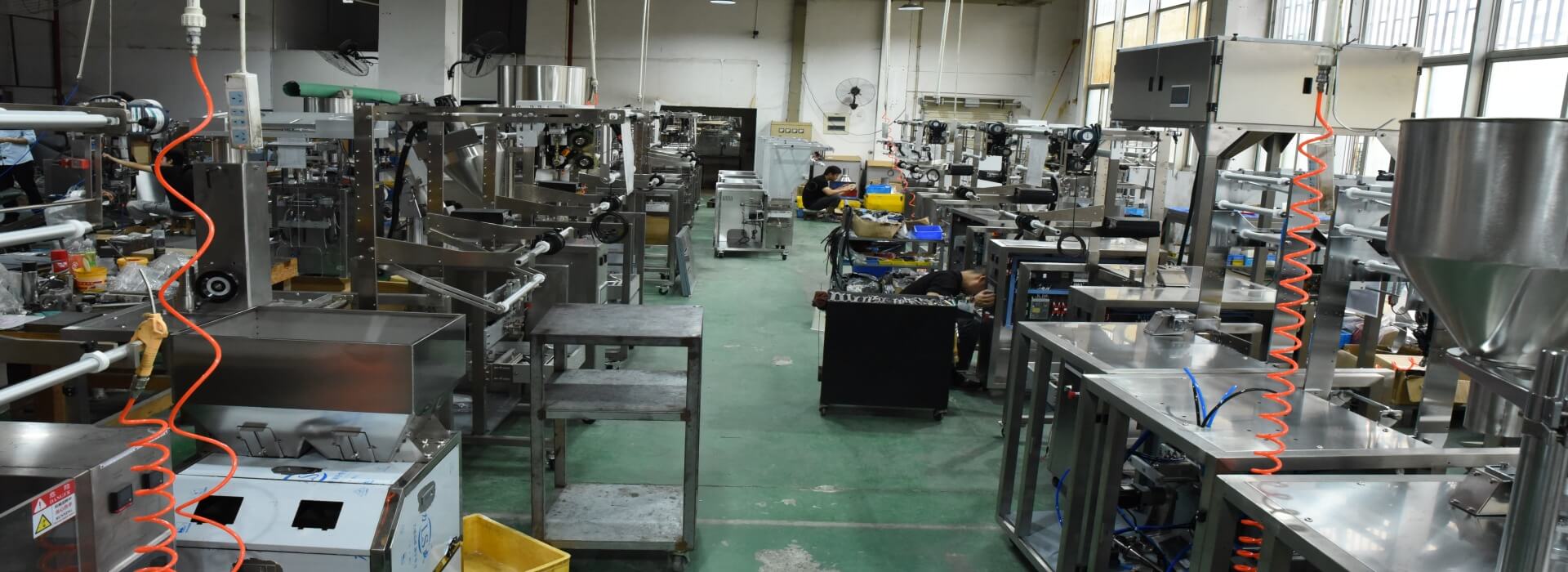
Author:YISEN Pouch Packing Machine Manufacturer TIME:2024-09-12
Buyers should first decide whether they need rollstock bags, premade pouches, valve bags, or a portioning system, then define the filler and downstream checks around that choice. The categories below explain the operating differences without assuming that one configuration automatically protects aroma, shelf life, or production yield.
Coffee packaging machines differ mainly by the coffee form, package format, dosing method, and atmosphere or closure functions they must control. Whole beans, ground coffee, and portion packs do not move or dose the same way, so the right machine is the line that preserves the approved product while making the intended retail pack consistently.
Whole roasted beans are discrete pieces that can chip and release surface oil. Ground coffee behaves as a powder whose flow changes with grind distribution, roast, oil, temperature, and time after grinding. Portion products introduce another package and forming process beyond filling a retail bag. Record bulk density, target dose, particle or bean condition, dust, static, oiliness, product temperature, and the time between roasting or grinding and packing. Those facts determine which contact surfaces, feeders, and cleaning access need evaluation.
Product supply is part of the type decision. A line fed directly from processing equipment faces different buffering and refill behavior from one supplied in small batches. Long conveying routes may segregate grounds or damage beans. Hopper residence and agitation should be reviewed with quality staff. The packaging supplier can demonstrate mechanical handling, but the coffee producer must approve flavor, aroma, and shelf life using its own product specifications and validation program.
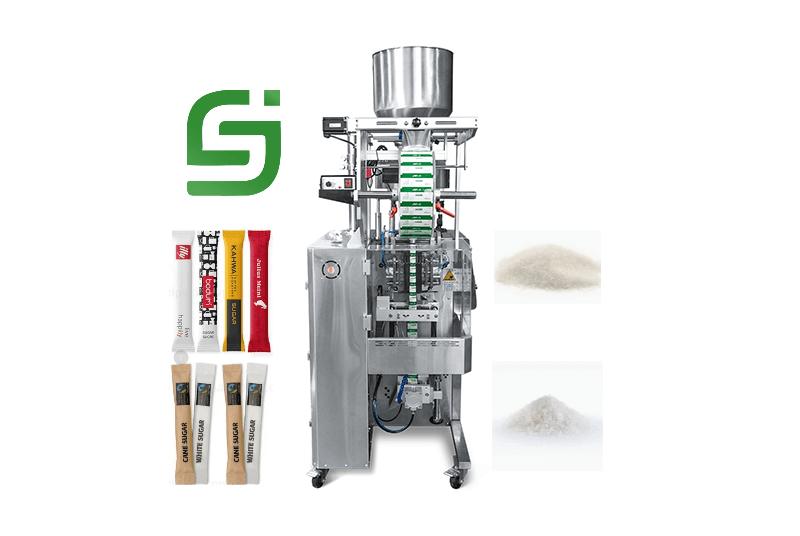
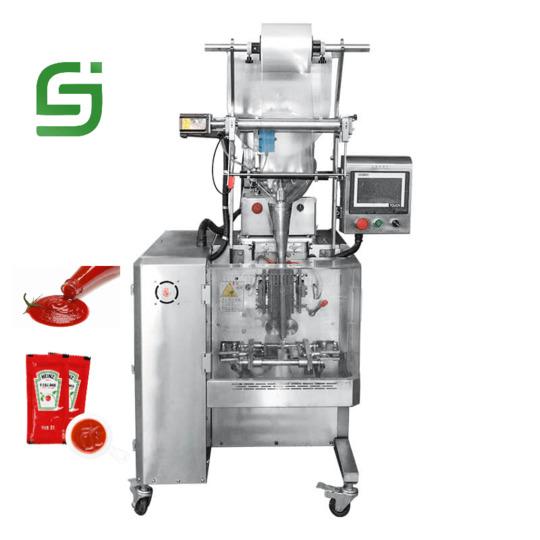
A vertical form-fill-seal line unwinds printed film, controls tension and registration, shapes the web around a forming set, makes a longitudinal seal, doses coffee into the tube, and creates cross seals that separate bags. This route can suit repeated bag production when the film structure, bag dimensions, filler, and cycle are compatible. Different bag styles require appropriate forming and sealing arrangements; they should not be inferred merely because the base machine is vertical.
Check film width, thickness, stiffness, friction, sealant response, print repeat, and any registered features. The forming tube must provide adequate clearance for beans or grounds without creating an unnecessarily long drop. Ground coffee can trail into the cross-seal zone, while beans may be trapped if the product column has not cleared. Trials should include roll changes, splices, registration recovery, planned stops, and restart rather than only an uninterrupted short run.
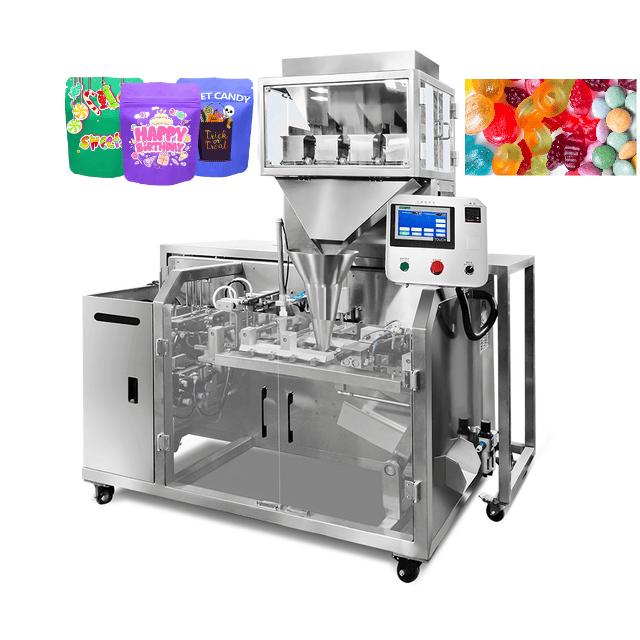
Premade equipment separates completed pouches from a magazine, opens them, fills them, controls the top, seals, and discharges. This concept can be useful when the bag converter supplies complex graphics, a stand-up gusset, zipper, or another approved feature. The machine must still handle production variation in curl, stiffness, friction, opening, and feature position. A pouch that looks correct by hand may not feed consistently at the magazine.
Provide controlled drawings and multiple pouch lots. Observe pickup, double separation, opening confirmation, filler clearance, top-seal presentation, and transfer of the filled pack. If a degassing valve is part of the package, its location must avoid grippers, folds, code areas, and other machine contact points. Responsibility for valve application and verification should be explicit, especially when it occurs before the pouches arrive at the filling site.
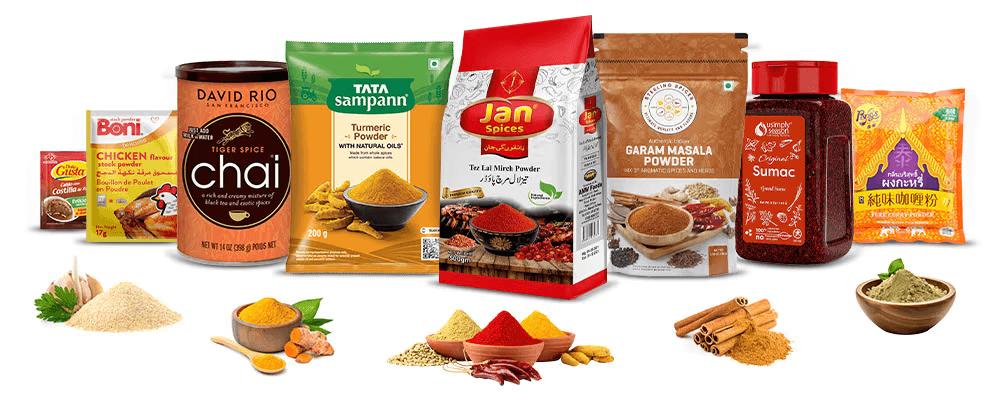
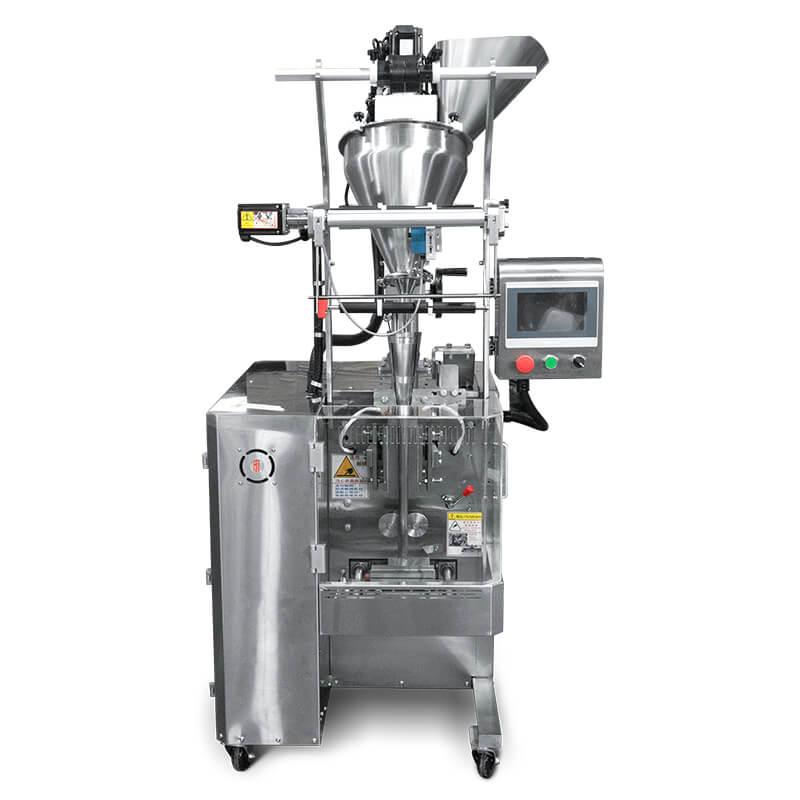
Whole beans are often assessed with weighing systems designed for discrete product, while ground coffee may be evaluated with an auger or another powder-compatible dosing method. These are application starting points rather than fixed rules. Dose range, product flow, allowable giveaway, bean damage, dust, refill conditions, and cleaning determine suitability. A very wide weight range may require separate contact parts or settings to keep the dosing device inside a practical operating window.
Run consecutive samples and identify the coffee condition, filler parts, hopper level, recipe, and scale method. Check startup, stable production, refill, low supply, stop, and restart. For grounds, observe buildup and aeration; for beans, compare breakage before and after handling. Do not hide bag tare variation inside dosing results. The verified powder packing machine category is relevant when reviewing ground-coffee filling concepts, but exact suitability requires product trials.
Freshly roasted coffee may release gas, and packaging designs may use a one-way valve or controlled atmosphere approach. The machine can support an installed valve-compatible pouch or gas-flushing arrangement, yet package performance depends on valve specification, barrier material, seal integrity, coffee condition, storage, and distribution. Buyers should define who selects the package system and how it is validated. A machine option cannot by itself prove freshness duration.
If gas flushing is included, specify gas source, quality, flow control, nozzle position, timing, measurement method, and sampling point. Excess flow can disturb light grounds or increase operating cost without establishing a better result. Valve location should remain functional after filling, sealing, case packing, and transport. Test complete packs under the producer's quality plan and retain samples tied to material and coffee lots.
Coffee dust and bean fragments must clear the sealing region before jaws close. Bag length, fill level, chute cutoff, settling, static, and local extraction may influence contamination. Seal heat, pressure, dwell, alignment, and cooling should be developed with approved film. Inspect startup and restart packs because machine temperatures and product flow may differ from a stable run. The finished seal should be judged by a documented method, not appearance alone.
Coding needs a flat, accessible location that does not interfere with a valve, zipper, gusset, or seam. Confirm content, legibility, trigger response, and code disposition after an alarm. Finished bags should move without folding the closure or scuffing graphics. Integration with checkweighing, detection where applicable, counting, and case packing should be tested using filled packages at their normal shape.
Coffee residue remains in feeders, hoppers, augers, weigh buckets, chutes, forming parts, and guards. Oilier products may cling where dry grounds flow away. Define product recovery, disassembly, cleaning method, inspection, reassembly, and line clearance with the buyer's quality team. If different roast or flavor profiles require separation, the acceptance standard must be visible in the changeover plan rather than left to operator judgment.
Packaging changes also involve film rolls or pouch stock, forming sets, guides, recipes, code data, and first-off approval. Witness a complete transition between two planned products. Store clean contact parts and size tooling so they remain identifiable and protected. The ability to change formats is a meaningful machine-type advantage only when the next coffee pack can be released accurately and without packaging mix-ups.
Use one requirement sheet for every candidate and identify untested conditions. The decision table keeps the machine concept tied to product and packaging evidence rather than a generic type name.
| Packaging route | Best question to test | Required sample | Evidence to retain |
|---|---|---|---|
| Rollstock VFFS | Can film form, register, fill, and seal with the planned coffee? | Production film and difficult product | Roll data, recipe, sequential packs, and event log |
| Premade pouch | Do pouch lots separate, open, support filling, and close? | Boundary sizes with actual features | Approved drawings, pouch lots, and retained bags |
| Bean weighing | Are dose and bean condition stable through refill? | Representative roast and size range | Weight sequence and damage comparison |
| Ground-coffee dosing | How do aeration, oil, and hopper level affect output? | Real grind states and target doses | Filler parts, settings, weights, and cleaning notes |
| Valve or gas option | Does the complete package meet the buyer's validated plan? | Finished bags from identified lots | Package test and storage records |
Count accepted packs under stated conditions and include replenishment, stops, rejects, cleaning, and downstream constraints. A rated machine speed is useful for initial screening but cannot replace the witnessed result. Commercial comparison should normalize fillers, atmosphere options, coding, inspection, change parts, installation, manuals, training, and spare parts.
Is one packaging machine suitable for beans and grounds? A shared bag platform may be possible, while each coffee form can require a different filler, contact parts, cleaning method, and operating recipe.
When is a premade pouch system useful? Consider it when approved bags arrive with finished graphics or features and the production mix justifies automated pouch pickup, opening, filling, and top sealing.
Does gas flushing guarantee fresh coffee? No. It is one packaging function. Coffee condition, barrier, valve, seals, residual atmosphere, storage, and producer validation determine performance.
Which coffee should be used for trials? Include the products most likely to challenge flow, dust, oil buildup, bean damage, dose range, or cleaning, not only an easy demonstration sample.
How should machine types be compared? Compare accepted packs, product condition, material use, interventions, changeover work, inspection results, and complete scope under the same documented test.
Coffee equipment types are combinations of package route and product handling. Rollstock lines form bags as they run; premade systems handle finished pouches; filler selection differs for beans and grounds; valve or gas functions belong to a validated package system. Each choice changes the evidence a buyer needs.
Define the coffee, package, closure features, production mix, and quality checks before asking for a model. Trials with real materials then reveal whether the proposed type preserves product, controls seals, changes over cleanly, and supplies the finished-pack data required for approval.

YISEN MACHINERY - The ONE-STOP VFFS PACKING MACHINE SOLUTION SUPPLIER
 Tel: +8617350750975
 Email: info@vffspackingmachinery.com
 MP/WhatsApp: +8617350750975
 Manufacturer Address:Meixi Road, Tongan District, Xiamen,Fujian,China