


Hot Keyword:
Author:YISEN Pouch Packing Machine Manufacturer TIME:2025-03-05
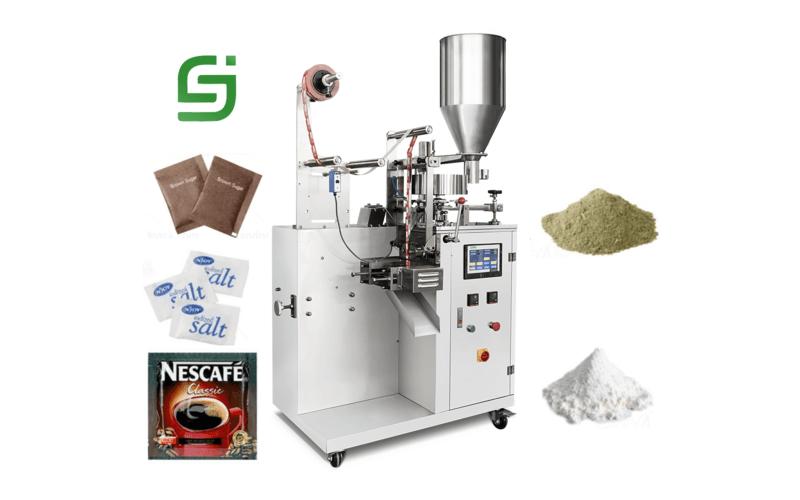
A sachet stick pack machine creates narrow, easy-to-dispense unit packs from roll film and can automate dosing, forming, sealing, cutting, coding, and counting. It is efficient when the product flows through a compact filling path and the film runs inside a stable sealing window. Convenience comes from the finished format, while engineering success depends on product-specific dosing and clean, repeatable longitudinal seals.
A stick pack is formed around a slim tube with a longitudinal back or fin seal and horizontal end seals. Its narrow profile suits products poured or squeezed through a small opening, such as sugar, instant drink powder, granules, liquid concentrates, gels, or selected supplements. The compact cross-section can use film efficiently, but it leaves less room for bulky particles and demands accurate alignment.
Width, length, seal margins, tear features, and dose volume must work together. A light aerated powder may require a longer stick than its weight suggests. A viscous gel needs a tube and cutoff that fit the narrow web. Consumer opening and dispensing should be tested so a material-saving design does not create difficult tearing, spillage, or residue.
Check package volume immediately after filling and again after the product settles. Powder that appears comfortably below the seal during a bench test can expand when aerated by the production feeder, while dense granules may strike the tube and rebound toward the closure. Build enough headspace for the demonstrated product condition rather than shortening the stick from a static density calculation. Printed artwork also needs a controlled quiet zone around the longitudinal seam, end cuts, registration mark, tear notch, and any required code.
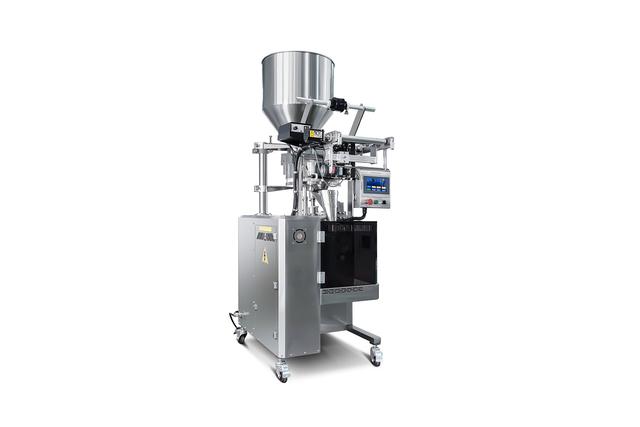
Augers meter many powders, volumetric devices or small weighers serve granules, and pumps or pistons deliver liquids and gels. The filler must fit above or beside the forming section without creating a long uncontrolled drop. Dose range, bulk density, viscosity, particles, foam, dust, and cleaning determine the correct product path. Multi-lane equipment also needs consistent distribution among lanes.
Test the full set of lanes individually. A common supply manifold can create different pressure or fill timing from the center to the outer lanes. Auger or cup wear may also vary. Collect ordered samples by lane, not only a mixed average. Any automatic correction should retain lane identity so technicians can locate the physical cause instead of shifting all settings.
Product replenishment should be included in dosing tests because hopper level and manifold pressure can change all lanes at once or affect them unevenly. Record startup, steady running, refill, low supply, a planned stop, and restart in sample order. For liquids, inspect bubbles, drips, and cutoff tails at every nozzle. For powders, map dust deposits and check whether extraction removes saleable material. For granules, compare piece damage and distribution. These observations distinguish a true filler variation from a bag weight change caused by product density or retained residue.
Food applications include coffee, drink mixes, sugar, salt, seasoning, sauces, honey-like products, and nutritional powders. Personal-care and household products may include samples or unit doses where chemical compatibility and use instructions are addressed. Health-related applications can require tighter containment, documentation, and environmental controls that must be defined by the product owner.
Not every product suits a narrow tube. Large pieces can bridge, fragile inclusions can break, and highly aerated powder may trap dust near seals. A gel with particles may need a wider passage than the chosen stick allows. Test worst-case product at normal operating temperature. The format should follow dispensing and protection needs rather than being selected only for appearance.

Multi-lane machines can create several sticks during one web index, providing high output in a compact footprint. Efficiency depends on stable product supply, synchronized dosing, registration, sealing, cutting, and downstream counting. If one lane fails frequently, the whole web may become waste. Record lane-specific rejects and interventions instead of quoting only cycles multiplied by lane count.
Film efficiency includes startup threading, registration adjustment, roll ends, splices, trim, defective lanes, and samples. Measure consumed material against accepted sticks. A narrower seal may reduce use but must remain robust across temperature and pressure variation. The lowest film consumption is not beneficial if leakage, miscuts, or secondary-pack rejects rise.
The long seam and two end closures require compatible laminate, clean surfaces, stable heat, pressure, dwell, alignment, and cooling. Powder dust or liquid tails can create channels. Filling tubes, extraction, product settling, and cutoff timing should keep seal areas clear. Jaw flatness and temperature uniformity become more demanding across a wide multi-lane web.
Inspect each lane and both sides of the web after thermal stabilization. Map failures to jaw position. Use a leak, peel, burst, or other method suited to the product and pack. Sticks should cool before cutters, counters, and cartoners bend them. A fresh end seal can be weakened by a poorly aligned downstream guide even when it passed visual inspection at the jaws.
Create a lane map that connects heater zones, temperature sensors, jaw segments, forming tubes, and cutters to finished samples. Check the map after warmup, at normal output, following a brief stop, and after film speed changes. A controller may report the expected value even when a loose sensor or damaged heater creates a colder region. If one edge lane fails, verify pressure and alignment before applying a global temperature increase. Retain marked sticks from every position so maintenance can compare a later defect with the qualified pattern instead of relying on visual memory.
Changing stick width can require forming tubes, longitudinal seal positions, knives, guides, dose parts, and a different printed web. Product changes add hopper emptying, contact-part cleaning, line clearance, recipe selection, and first-off approval. Multi-lane components must return to their correct position; part identification prevents one tube or auger from being installed in the wrong lane.
Time the full conversion using trained operators. Include roll handling, printer setup, code checks, test sticks, weight sampling by lane, and secondary-pack release. A highly productive machine may be inefficient for many small orders if setup and sanitation consume most available hours. Campaign planning and organized change-part storage are therefore part of the convenience calculation.
Individual sticks are light, flexible, and easily overlapped. Discharge spacing, counting sensors, belts, and guides need to maintain separation without tearing seals. Secondary packs may contain a fixed count, mixed flavors, or oriented sticks. Challenge missing, double, and overlapping conditions. A correct machine counter should be verified against the final carton, not assumed from upstream cycles.
Codes must remain legible after cutting and handling. Confirm that registration keeps the mark away from seals and tear areas. Rejects need a controlled destination, and partial groups after a stop should be cleared according to a written method. If operators manually complete cartons, traceability and count verification must remain intact.
Use production product and printed film at smallest and largest planned doses. Include startup, supply refill, roll splice, planned stop, restart, and changeover. Identify the exact Sachet Stick Pack Machine filler, forming tubes, lane count, printer, extraction, and counting equipment. Calculate accepted sticks after all inspections.
| Test area | Lane-level check | Record |
|---|---|---|
| Dosing | Ordered weights or volumes by lane | Results tied to lane and time |
| Registration | Print, cut, and seal positions | Samples from web edges and center |
| Seal quality | Longitudinal and end-seal tests | Failure map across lanes |
| Material use | Film consumed per accepted stick | Startup, splice, and reject waste |
| Counting | Missing, double, overlap challenges | Final group or carton results |
Retain samples, raw data, settings, film lot, product condition, and intervention log. Repeat critical results after installation with local utilities and operators. The approved envelope should name product, dose, stick dimensions, lane configuration, and speed so future changes trigger a controlled review.
What is the difference between a stick pack and a sachet?
A stick is usually narrow and elongated, while sachets can be wider or differently shaped. Both are small flexible unit packs.
Can one multi-lane machine fill different products in each lane?
Some specialized designs may, but common systems distribute one product across lanes. Mixed products require explicit engineering and cleaning review.
Why can outer lanes behave differently?
Web temperature, pressure, alignment, product distribution, and component wear may vary across the machine width.
How is real lane output calculated?
Count all accepted sticks after dosing, sealing, coding, cutting, counting, and secondary-pack checks over a defined run.
Are stick packs suitable for large particles?
Usually only within forming-tube and seal-clearance limits. Large or fragile pieces often favor a wider sachet or pouch.
Stick packaging can deliver compact portions, efficient roll-film use, high multi-lane output, and convenient dispensing when the product suits a narrow path. The engineering task is to keep every lane supplied, measured, sealed, coded, cut, and counted consistently. Product-and-film trials with lane-level data are essential because a web average can hide defects that determine actual saleable output. Lane-specific records preserve the cause of deviations for later maintenance.

YISEN MACHINERY - The ONE-STOP VFFS PACKING MACHINE SOLUTION SUPPLIER
 Tel: +8617350750975
 Email: info@vffspackingmachinery.com
 MP/WhatsApp: +8617350750975
 Manufacturer Address:Meixi Road, Tongan District, Xiamen,Fujian,China