

Hot Keyword:
Author:YISEN Pouch Packing Machine Manufacturer TIME:2024-11-11
Brands should therefore connect the packaging investment to a defined customer segment, measurable product experience, and evidence from actual production. Shape alone is easy to imitate.
Triangle tea packaging can strengthen market competitiveness when it creates a consumer-relevant product difference that the factory can repeat: visible leaf quality, controlled portions, convenient brewing, reliable outer protection, consistent branding, and a format suited to the sales channel. The machine does not create demand on its own. Its value is the ability to manufacture a validated offer with predictable quality and campaign economics.
Identify the buyer and use occasion: office, hotel, gift, specialty retail, travel, wellness range, restaurant, or direct-to-consumer subscription. Customers may value visible ingredients, less mess than loose tea, a premium ritual, portion control, or fast service. Use research from the target channel rather than assuming every shopper interprets a pyramid as superior.
Translate the chosen value into package features. A hospitality pack may prioritize fast opening and clear identity; a gift set may emphasize material appearance and tag design; a whole-leaf range may need more internal room. Features without a consumer purpose add component cost and changeover while making the production portfolio harder to control.
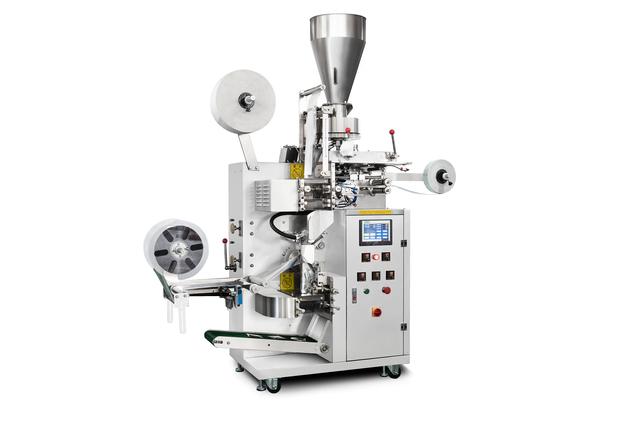
Transparent or visually open mesh can make leaf size and inclusions part of the product presentation, but only when feeding preserves them. Define breakage, dust, blend uniformity, and bag fill level. A pyramid filled with fines does not support a whole-leaf story, while excessive product can prevent leaf expansion.
Use representative tea lots and compare incoming with finished bags under the product owner's method. Observe the largest leaves, flower pieces, fruit, or herbs through replenishment and batch end. The machine configuration should protect product appearance consistently, not only during a slow promotional sample run.
Bag dimensions, dose, mesh, string, tag, and attachment influence how the consumer places, moves, and removes the tea. Define cup or pot use, string length, tag grip, dripping, and opening of any outer pouch. Product specialists should set the brewing evaluation conditions and assess whether the package delivers the intended experience.
Convenience also depends on reliability. A detached string, open seam, trapped tag, or difficult outer notch can erase the format's advantage. Include user handling in package development and then convert the accepted result into production dimensions and defect limits.
The outer pouch provides a canvas for brand, variety, origin, brewing instruction, code, and opening cues while supporting the product protection defined by the packaging program. Align artwork with machine registration, seal widths, cut variation, tag and string placement, and secondary cartons. Keep critical information away from tolerated mechanical zones.
Material texture, transparency, metallic appearance, reduced-material structures, or other design choices affect handling and sealing. Test commercial rolls. Marketing and sustainability statements need their own substantiation; the machine trial can show registered artwork and sealed packages, not prove every consumer or environmental claim.
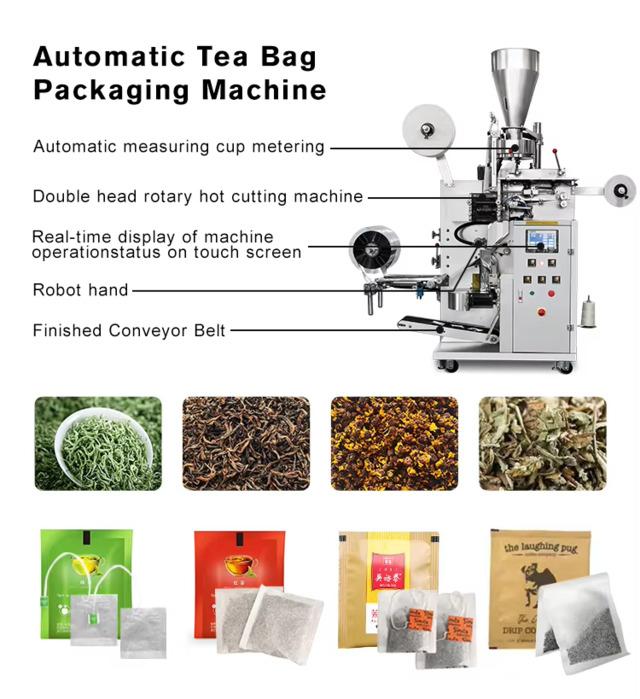
A common inner size and tooling platform can help launch several teas when leaf behavior, quantity, filter material, and consumer use remain within the qualified range. Outer artwork and code can differentiate varieties. New products still need review for density, particle size, fragility, blend segregation, allergen or flavor cleaning, and package fit.
Rank launches by demand certainty and group campaigns to reduce tea and material changeovers. Too many short variants create obsolete printed film, tag errors, startup waste, and cleaning. Competitiveness comes from reliable availability and relevant choice, not the maximum number of stock-keeping units.
Define defects visible to customers and those affecting function: wrong tea or code, inconsistent dose, broken leaf, distorted pyramid, weak inner seam, detached string, reversed tag, misregistered outer pouch, seal failure, or poor opening. Sample the complete package and trace rejects to their station.
Maintain tooling references, approved materials, recipes, and first-off standards. If converter lots or tea suppliers change, assess the effect before increasing production. Consistency supports repeat purchase because the consumer receives the same portion, appearance, and handling experience across campaigns.
Separate packaging facts from product or marketing claims. The line can demonstrate dose results, leaf damage, dimensions, attachment, seals, code, accepted output, and changeover. Sensory preference, shelf life, sustainability, price premium, and consumer response require their own qualified evidence.
| Competitive proposition | Packaging evidence | Additional business evidence | Warning sign |
|---|---|---|---|
| Visible premium ingredients | Controlled leaf condition and bag fill | Target-customer response | High breakage or inconsistent blends |
| Convenient brewing | Secure string, tag, seams, easy outer opening | User evaluation in intended setting | Tangles, detachment, difficult tear |
| Reliable freshness protection | Qualified outer material processed with clean seals | Product stability program | Unsupported shelf-life language |
| Distinctive shelf presence | Repeatable form, artwork, code, and clean finish | Channel and design research | Features not linked to a buyer need |
| Flexible tea portfolio | Verified recipes, tooling, and conversion results | Demand and inventory plan | Too many low-volume materials |
Use this division when building product pages, sales training, and acceptance documents. It protects credibility and shows exactly which proof must come from manufacturing, tea development, packaging, or market research.
Model accepted packs, tea yield, filter and outer material, tags, labor, cleaning, changeover, inspection, secondary packaging, inventory, maintenance, and rejects. Premium components and shorter campaigns can increase unit cost. Compare the proposed selling proposition and demand with this complete cost rather than assuming the format earns a higher price.
A triangle tea packaging machine should be tested with the real product and branded materials before the business case is approved. Request itemized tooling, options, spares, training, and acceptance. Scalability means repeating approved packs as demand grows, not operating briefly at an unverified maximum speed.

Review downstream operations as part of the commercial offer. Triangle bags and outer sachets may need counting, cartoning, gift-box loading, or assortment building. Orientation and code must remain correct, and the secondary pack should protect the intended retail appearance. Manual finishing can remain valid for small premium runs when it is included honestly in labor and capacity planning.
Does triangle packaging guarantee a premium price?
No. Price depends on customer value, tea quality, brand, channel, evidence, competition, and cost. The package supports but does not guarantee positioning.
Can transparent mesh prove better tea?
It can display ingredients, while quality and sensory conclusions require product evidence. Packaging should preserve the leaf rather than imply unsupported superiority.
How many varieties should a new line launch?
Begin with products backed by demand and qualified materials. Add varieties through controlled review instead of creating avoidable printed inventory and changeovers.
Which factory metric supports competitiveness best?
No single metric is sufficient. Combine accepted output, consistent quality, yield, changeover, delivery reliability, and unit campaign cost.
What should be verified before making freshness claims?
Use qualified package and product stability evidence. Machine sealing samples are one input, not a complete shelf-life conclusion.
Competitive benchmarking should compare relevant consumer and production attributes, not copy visible geometry. Review serving experience, leaf presentation, package protection, artwork, material use, order size, and channel price while respecting intellectual property and local requirements. Then decide which difference the brand can support consistently rather than chasing every feature in the market.
A controlled pilot launch can test assumptions before a large material commitment. Use qualified production packs, monitor consumer or channel feedback through appropriate business methods, and compare actual campaign yield and labor with the forecast. Keep pilot material and code clearly separated from normal products. Market response does not replace machine acceptance, and machine acceptance does not prove market response.
Supplier resilience affects customer service. Premium mesh, printed tags, and outer film may come from several specialized sources. Review lead times, minimum quantities, lot consistency, approved alternates, storage, and obsolescence. A differentiated product that cannot be replenished reliably may lose listings despite excellent primary packaging.
Service and spare-part planning also protect competitiveness. Long outages can disrupt seasonal launches and retailer commitments. Identify components whose failure stops forming, attachment, outer wrapping, or coding; keep correct revisions and backups; and train local staff in diagnosis. Delivery reliability is part of the product proposition even though customers never see the machine.
Protect the product story during scale-up. Larger hoppers, faster feeders, wider material orders, and different operators can alter leaf condition or presentation. Site acceptance and early campaigns should repeat the key consumer attributes demonstrated during development, not assume that more output preserves them automatically.
Competitiveness also depends on the ability to change without confusing the market. Control artwork versions, tags, date codes, variety names, and cartons across launches. A wrong or mixed identity can damage trust more than a minor visual defect, so line clearance and reconciliation belong in the commercial plan.
Retain competitive product samples only through approved business and quality controls, and date the comparison so changing markets do not become permanent machine requirements.
Triangle tea packaging can improve competitiveness when it delivers a customer-valued experience and the factory repeats it economically. Protect visible leaves, make brewing convenient, control branding, and limit portfolio complexity. Clear separation between packaging evidence and market claims gives the business a credible product story and a realistic investment case.
Market evidence should guide package choices.

YISEN MACHINERY - The ONE-STOP VFFS PACKING MACHINE SOLUTION SUPPLIER
 Tel: +8617350750975
 Email: info@vffspackingmachinery.com
 MP/WhatsApp: +8617350750975
 Manufacturer Address:Meixi Road, Tongan District, Xiamen,Fujian,China