

Hot Keyword:
Author:YISEN Pouch Packing Machine Manufacturer TIME:2024-11-22
A multifunctional sauce line combines a common package-handling platform with controlled recipes, adjustable timing, and interchangeable product or format modules. It may cover several viscosities, quantities, pouch sizes, or sauce families, but only within a tested matrix. Multifunctionality is created by planned interfaces and repeatable changeover; it is not evidence that one filler can run every liquid, paste, and particulate recipe unchanged.
The first step is to define what multi means for the business. It may mean ketchup and chili sauce in one pouch family, several fill weights of mayonnaise, both flat sachets and premade stand-up pouches, or integration with different coders and downstream packs. Each interpretation changes the design. Prepare samples showing viscosity at filling temperature, particles, foam, stringing, oil separation, shear sensitivity, sanitation concerns, and normal lot variation. Add package drawings, laminate, headspace, closures, campaign schedule, output needs, utilities, room constraints, and release checks. Separate required launch products from future possibilities. Current products should receive parts, recipes, and acceptance criteria; future items should follow a documented upgrade and trial route instead of being counted as qualified capacity. Commercial planning should also account for campaign economics and material supply. A rare shaped pouch may require high converter minimum orders, while a common flat sachet can be easier to source but provide a different consumer experience. Estimate demand by product-format row, not only total annual sauce volume. Check whether upstream cooking and holding can supply each recipe at the stable temperature and rate used during machine tests. Downstream inspection, counting, cartoning, and pallet patterns must accept the widest and least stable pouch without damaging warm seals. Review how off-spec sauce and partly filled packs are contained after an alarm; recovery rules can differ by recipe. Finally, define support for custom modules, including drawings, part numbers, software compatibility, lead times, remote access conditions, and the service skills available locally. These details decide whether the promised range remains economical and maintainable after the original commissioning team leaves.
Pouch or film transport, guarding, control hardware, sealing frame, coding position, and discharge can serve several approved products when their operating ranges overlap. The common platform provides mechanical references and timing, while product-contact and package parts adapt the process. Platform limits include pouch width and length, gripper range, film path, jaw dimensions, available dwell, filler space, electrical and pneumatic capacity, and control inputs. Buyers should ask for these limits in drawings rather than relying on the word flexible. A future module may not fit if headroom, wash area, load, or communication capacity was never reserved. Design review should show how modules are lifted, connected, identified, stored, and protected when not installed.
A pump or piston arrangement may suit many sauces, but valve bore, cylinder or pump range, hose size, nozzle, tank conditioning, and cutoff must match each recipe. Smooth ketchup, aerated mayonnaise, seeded mustard, chunky salsa, and hot oil-based sauce pose different issues. Particles need clear passage; thick product needs adequate pressure without excessive shear; thin sauce can drip; foam consumes headspace; hot filling changes flow and component temperature. Multifunctionality may require alternative valves, nozzles, metering ranges, agitation, or dedicated contact sets. Run difficult lots at realistic temperature and hold time. Record every physical product part with the recipe so operators do not assume that a screen selection changes the wetted path.
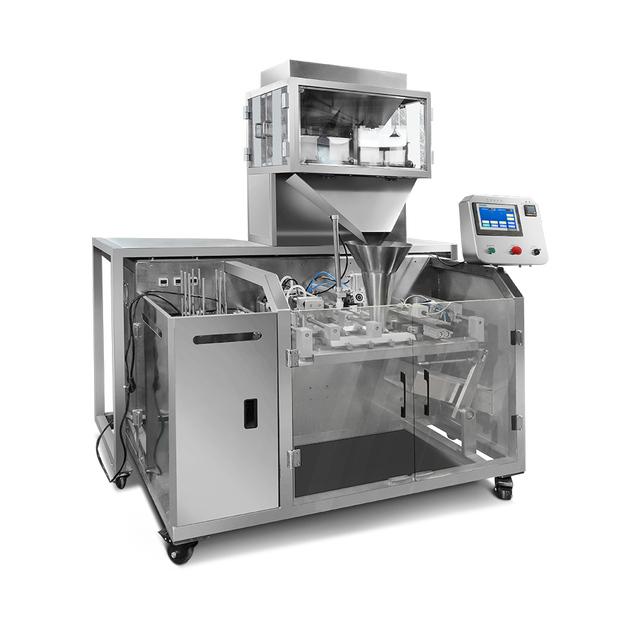
Flat sachets, pillow bags, premade stand-up pouches, zipper bags, and spouted packs use different forming or handling methods. One platform rarely covers all of them without major modules or a different architecture. Within an approved family, guides, formers, grippers, opening cups, nozzle height, bag support, jaws, cutters, and coder position may change with dimensions. Test smallest and largest formats plus the least headspace. The pouch converter should supply tolerances and material specifications because curl, stiffness, print repeat, gusset, and zipper location affect handling. Identify format parts and store them with a setup sheet and reference pack. The correct flexibility claim is a list of product-package combinations, not separate lists of sauces and bags that have never been tested together.
Controls can store metering values, valve and nozzle timing, pouch dimensions, sensor positions where adjustable, settling delays, sealing parameters, coder data, and alarm limits. Access should be controlled by role, and the commissioned recipes should be backed up with their software version. The operator must still confirm installed contact parts, pouch tooling, film, cleaning status, and code. Interlocks should prevent filling when no valid pouch is present and contain suspect packs after a fault. During acceptance, challenge low product, pouch-opening failure, seal-temperature deviation, downstream blockage, and loss of a connected module. Recovery instructions should explain which work in process is discarded or inspected. Multifunctionality is credible when each recipe leads to a known physical configuration and controlled restart.
Sauce at the pouch mouth is a common boundary across products and formats. Fill profile, nozzle withdrawal, suck-back where suitable, particles, foam, settling, and headspace determine whether the laminate reaches the jaw cleanly. Material construction and sealant layer define the sealing window. Do not transfer jaw settings from one pouch simply because dimensions are close. Inspect channels, wrinkles, product contamination, zipper function, top alignment, cooling, and response after handling. Spouted pouches and fitments require additional interface checks. The owner should define integrity and shelf-life evidence for each product-package system. Machine flexibility supports trials and repeatable settings; it does not turn one successful seal into approval for all laminates.
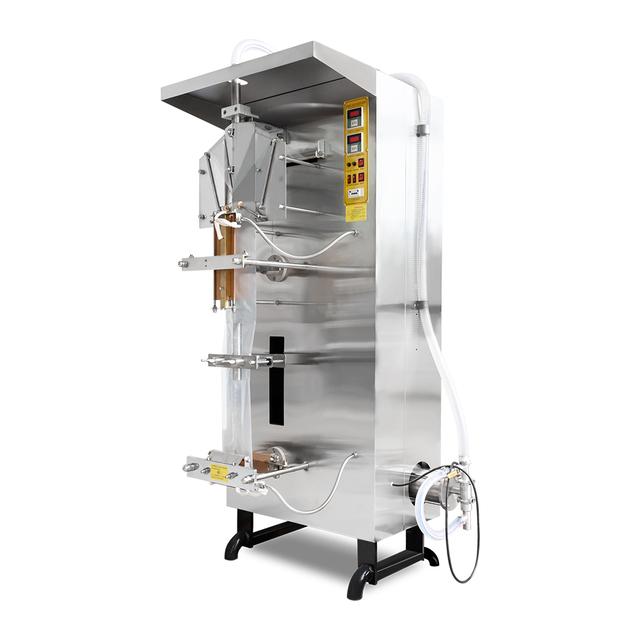
Measure conversion from the last approved pack of one run to the first released pack of the next. Include draining, recovery, cleaning, disassembly, inspection, module replacement, pouch or film setup, recipe and code selection, priming, and quality checks. Frequent allergen, color, fragrance, or particulate changes may justify dedicated contact sets even when one set could be washed. Quick connections should be secure, compatible, drainable, and easy to inspect. Heavy parts need lifting provisions and protected storage. Observe the changeover with intended staff rather than a specialist demonstration team. Record tools, parts, adjustments, and difficulties. A line that changes products safely in a predictable period is more multifunctional in practice than a broad machine that depends on undocumented expert intervention.
The matrix becomes the contract between sales, engineering, operations, and quality. Every row should point to samples, parts, recipe, cleaning route, and acceptance evidence.
| Matrix field | Example question | Required evidence |
|---|---|---|
| Sauce condition | What viscosity, temperature, and particle range was run? | Identified sample lot and trial observations |
| Filling setup | Which pump, valve, hose, nozzle, and settings apply? | Installed-part list and consecutive fill results |
| Package setup | Which pouch, guides, jaws, and headspace were used? | Drawing, material reference, and retained packs |
| Changeover | How is the next row cleaned, built, and released? | Timed checklist and first-off approval |
| Output | What acceptable rate was sustained under named conditions? | Run log with rejects, stops, and interventions |
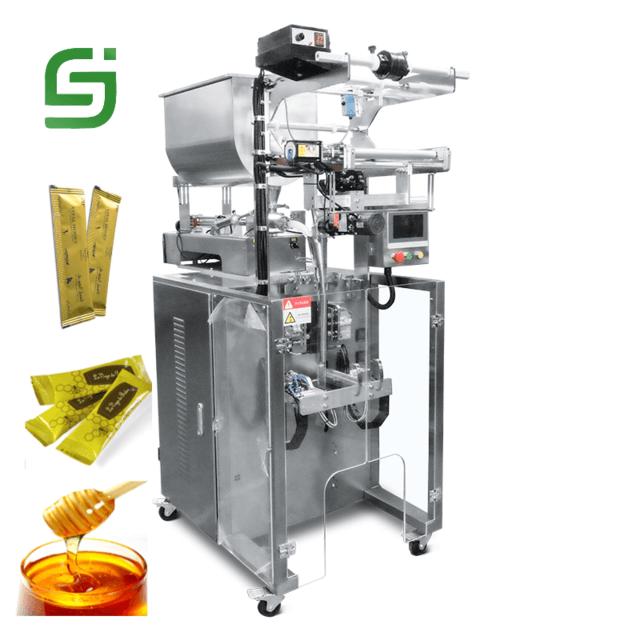
The quotation should name launch products, quantities, packages, installed modules, future provisions, contact materials, utilities, controls, interfaces, cleaning boundary, guarding, documents, training, spares, and exclusions. The sauce packaging machine range is useful for platform comparison, while the selected line must be closed against the product-package matrix. Conduct a factory test with the most different required combinations, not several easy samples from one family. Witness startup, normal operation, refill, stop, restart, and changeover. Preserve good and defective packs, setup sheets, drawings, component identifiers, software backups, calibration or check records, and open-item closure. This package lets future staff add a product through engineering review rather than informal trial and error.
Can one sauce machine fill both thin dressing and thick paste? It may do so with an appropriate metering range, valve and nozzle options, product supply, cutoff, and settings. Both range extremes need witnessed tests.
Does multifunctional mean all pouch styles are available? No. Each machine architecture has defined forming or pouch-handling limits. Approved formats should be listed with dimensions, tooling, and material references.
How many saved recipes should be created? Create recipes only for qualified configurations and link each one to physical parts, package material, cleaning status, and first-off checks.
What is the most important flexibility test? A representative product-and-format changeover reveals whether modules, cleaning, setup, code, and release can be repeated by the plant team.
How should future sauce products be added? Review samples, safety and sanitation needs, filler passage, package, seal, controls, and output; then test and update the controlled matrix before production.
Multifunctional sauce packaging is achieved through a bounded common platform, suitable product and package modules, disciplined recipes, and documented changeovers. The product-package matrix keeps claims specific and exposes combinations that still need proof. Buyers who test difficult extremes and preserve the installed configuration gain practical flexibility without confusing optional potential with qualified production. The same records give production a reliable baseline for troubleshooting, operator training, spare-parts planning, and controlled expansion when market requirements change. That continuity is especially valuable when recipes, packaging suppliers, or shift personnel change over time. It makes future decisions auditable.

YISEN MACHINERY - The ONE-STOP VFFS PACKING MACHINE SOLUTION SUPPLIER
 Tel: +8617350750975
 Email: info@vffspackingmachinery.com
 MP/WhatsApp: +8617350750975
 Manufacturer Address:Meixi Road, Tongan District, Xiamen,Fujian,China