

Hot Keyword:
Author:YISEN Pouch Packing Machine Manufacturer TIME:2024-12-03
The most useful technology upgrades for triangle tea packaging equipment are those that make tea feeding, material control, sealing, inspection, changeover, and maintenance more repeatable. Buyers should not treat automation, sensors, data, or new materials as benefits by themselves. Each upgrade needs a defined problem, interface, acceptance method, and support plan. The right roadmap starts with current loss evidence and product strategy, then selects technology that can be proven on the intended tea and package.
Define the present product and package matrix, accepted output, reject causes, changeover work, cleaning, recurring faults, material limitations, and support concerns. Then state the expected upgrade result in measurable terms. Examples include reducing a known mesh-tracking loss, restoring recipes more reliably, detecting missing tags, or handling an approved new tea cut.
Separate equipment condition from technology limitation. Worn jaws, unstable air, damaged guides, poor material, or weak maintenance can make an existing line perform below design. Restore a known mechanical baseline before deciding that a new control platform or vision system is required.
Also define what must remain unchanged: tea quality, bag geometry, seal integrity, consumer opening, footprint, utilities, operator access, and production approvals. An upgrade that solves one fault by creating a new cleaning or material restriction is not automatically progress.
Modern drive and motion arrangements can provide repeatable positions, acceleration profiles, and timing for film feed, forming, sealing, cutting, tag handling, and envelope transfer. Their value depends on mechanical condition and correct references. A servo cannot compensate indefinitely for loose parts, contamination, or an unsuitable material path.
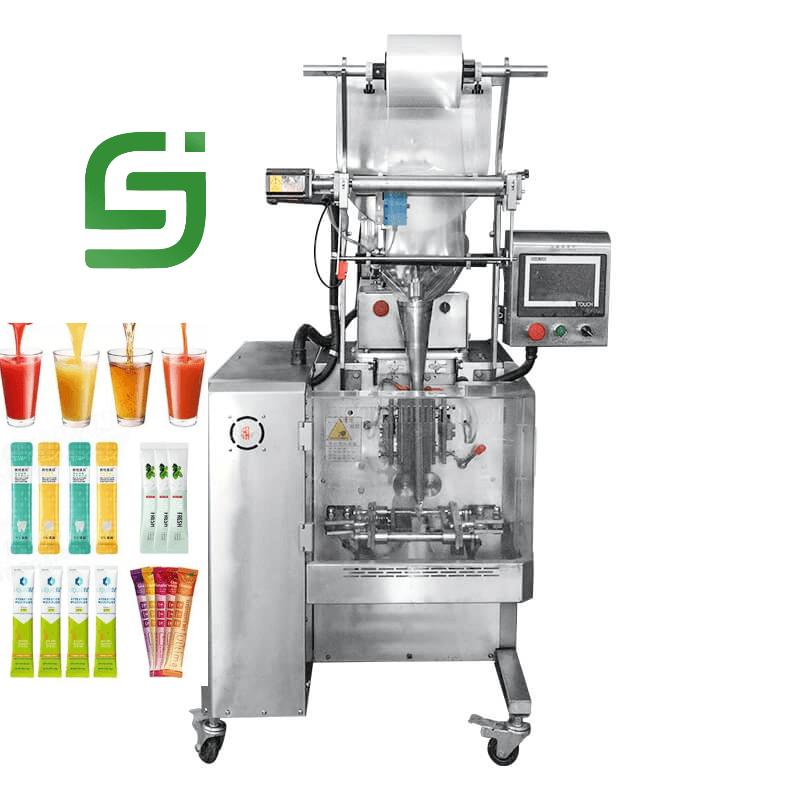
Assess which adjustments belong in a recipe and which still require physical setup. Position feedback can reduce trial-and-error changeover when approved references are stored, but operators must verify installed parts and first-off packages. Access levels should protect engineering values while allowing authorized routine operation.
For a retrofit, review electrical capacity, cabinet space, safety circuits, controller compatibility, software ownership, backups, spare drives, and supplier support. Replacing one motion component can affect the entire sequence and validation boundary.
Tea dosing remains product-specific. Fannings, rolled leaves, broken leaf, flowers, stems, fruit pieces, and blends differ in density and flow. Upgrade options may involve feeding geometry, weighing, volumetric components, vibration control, level sensing, or gentler transfer. Selection should follow samples and required quantity range.
A triangle tea packaging machine should preserve blend distribution and leaf condition as well as total dose. Ordered samples through refill and restart reveal whether the upgrade improves stability. Check fines or breakage before and after the complete product path.
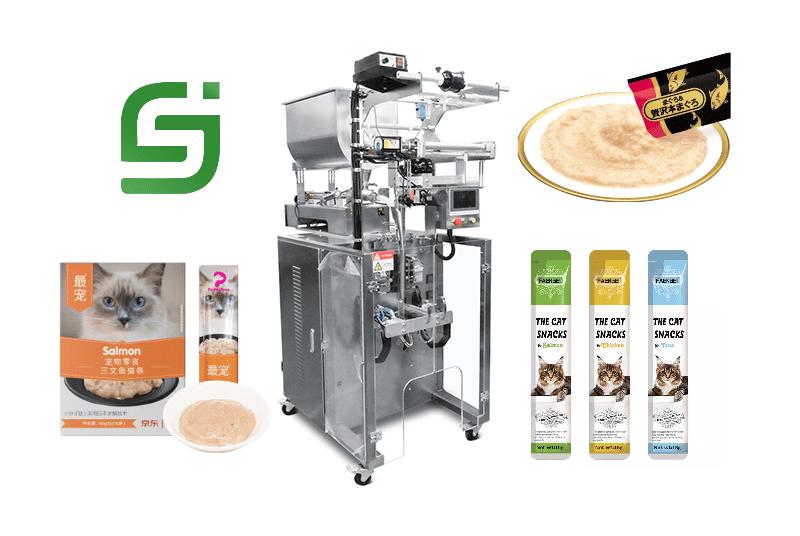
Do not expect a control algorithm to fix bridging, segregation, or an undersized passage without physical changes. Product supply, hopper level, feeder, dosing device, and transfer timing need a coordinated solution.
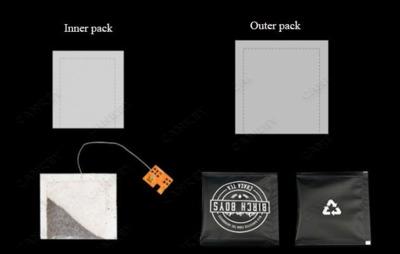
Tea brands may evaluate different filter meshes, papers, threads, tags, and outer-envelope structures for product, consumer, supply, or environmental reasons. A material described as recyclable, compostable, plant-based, or otherwise different still needs evidence for product compatibility, sealing, storage, brewing function, and machine behavior. The packaging owner coordinates those validations.
Machine review covers roll dimensions, stiffness, friction, thickness, curl, tension, registration, forming, heat-seal window, cutting, static, and residue. One material may need another jaw surface, heater response, tension setting, guide, or cutter. Upgrade claims should name the tested specification rather than promise all future materials.
Build material trials around startup, steady running, roll change, stop, and restart. Retain accepted samples and lot information. Incoming substitutions should trigger review when they change a qualified property.
Sensing can confirm film marks, product level, material presence, temperature, air condition, tag presence, envelope position, or other application-specific states. Vision may inspect print, placement, shape, or selected defects when lighting, contrast, field of view, and reject timing support the task. Detection value depends on what happens next.
For every device, define the defect, detection point, false-accept and false-reject risk, line response, affected packages, challenge method, and operator action. A camera that creates alarms without reliable rejection or traceability can reduce output without protecting quality.
| Upgrade area | Decision evidence | Acceptance focus |
|---|---|---|
| Motion and recipes | Changeover loss and position variation | Repeatable setup with protected references |
| Tea dosing | Ordered quantity and blend results by product | Stable dose through refill without harmful breakage |
| Material capability | Final specifications and production rolls | Tracking, forming, sealing, cutting, and brewing function |
| Inspection | Named detectable defect and risk | Challenge test, reject control, and affected-pack handling |
| Production data | Recurring losses requiring a decision | Accurate event records that lead to corrective action |
Inspection should complement process control. Detecting a missing tag is useful, but recurring missing tags still require root-cause work at material feed, attachment, cutting, or transfer.
A connected control system can record recipes, counts, stops, alarm history, reject categories, and maintenance indicators. Data becomes useful when definitions are consistent. If most events are recorded as generic operator stops, the system cannot identify a failing envelope feeder or repeated mesh splice loss.
Decide which values operators need at the machine, which trends maintenance reviews, and which summaries production uses. Avoid collecting fields with no owner or response. Protect recipe and software backups and define how control changes are authorized and restored.
Condition-based maintenance can use meaningful evidence such as heater recovery, repeated sensor faults, drive load, air leakage symptoms, or reject trends. It should support, not replace, physical inspection and the manufacturer's maintenance requirements.
Tea supply, the inner-bag machine, thread and tag functions, envelope packaging, coding, inspection, counting, cartoning, and conveying may come from different modules. Technology upgrades should define ready, run, stop, fault, low-material, and downstream-blocked states across those boundaries.
A downstream stop should not allow tea or inner bags to accumulate unpredictably. An inspection reject should remain traceable. If an upstream feeder runs out, the line should enter a known state and identify packages requiring review after restart. Test these sequences instead of checking only normal continuous operation.
Cybersecurity, remote access, user accounts, backups, and update responsibility belong in the project scope where network functions exist. Remote support can be valuable, but the owner should control authorization and know how production continues when the connection is unavailable.
Score each candidate against quality risk, accepted-output loss, product strategy, material readiness, changeover, cleaning, maintainability, spare availability, software support, installation downtime, training, and validation work. Mandatory safety or quality needs should be gates rather than weighted away by lower cost.
Consider whether to retrofit or purchase a new platform. A mechanically sound line with supported controls may justify a focused upgrade. A machine with widespread wear, obsolete components, limited guarding, or insufficient format range may make a large retrofit difficult to validate and support. The decision is site-specific.
Use a staged plan where possible. Prove the highest-value change, update documents, train staff, and measure sustained performance before adding another layer. This isolates results and avoids a project in which multiple new systems fail without clear ownership.
Validation effort should be included in the upgrade schedule. Changes to motion, sealing, inspection, filler control, or software may affect previously approved products and formats. Identify which recipes need regression testing, what samples will be retained, and who approves return to production. An upgrade is incomplete when hardware is installed but the existing product matrix has not been checked against the new baseline.
Plan obsolescence and recovery before accepting a connected or proprietary system. Request software backups, parameter exports, license terms, supported operating environment, replacement paths, and a controlled restore test. The plant should know what happens after a failed controller, drive, storage device, or update. Technology is more future-ready when the factory can recover a documented configuration rather than depend on one engineer's laptop.
Operators should participate in upgrade acceptance. Their ability to read alarms, select the correct recipe, replenish materials, recover an approved routine fault, and verify first packages shows whether the interface improves control or simply moves complexity behind another screen.
Does more automation always increase tea bag output?
No. Output improves only when the upgrade addresses the actual limiting station and remains stable through material changes, refill, stops, and cleaning.
Can a vision system guarantee package quality?
It can inspect defined visible features under controlled conditions. Product dose, hidden seal integrity, and undetectable defects require other controls.
Will upgraded controls run every new filter material?
No. Physical forming, friction, sealing, cutting, and brewing requirements still need specification review and trials.
When is a retrofit preferable to a new machine?
When the mechanical platform and safety basis remain sound, the problem is focused, interfaces are understood, and parts and software can be supported.
What should be measured after an upgrade?
Measure the named quality result, accepted packages, rejects by cause, interventions, changeover, restart, and maintenance performance against the original baseline.
Technology upgrades should make a proven tea-packaging process easier to control, inspect, change, and maintain. Start with loss and portfolio evidence, verify product and material limits, define sensor and line responses, and plan software and spare support. A staged acceptance test then separates a useful upgrade from a technology label that adds complexity without improving accepted triangle tea bags.

YISEN MACHINERY - The ONE-STOP VFFS PACKING MACHINE SOLUTION SUPPLIER
 Tel: +8617350750975
 Email: info@vffspackingmachinery.com
 MP/WhatsApp: +8617350750975
 Manufacturer Address:Meixi Road, Tongan District, Xiamen,Fujian,China