

Hot Keyword:
Author:YISEN Pouch Packing Machine Manufacturer TIME:2025-04-25
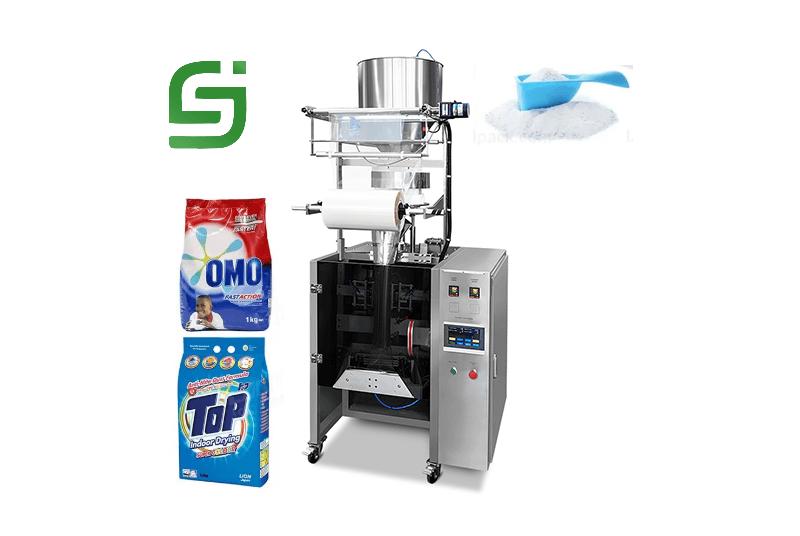
A detergent soap packing machine for powder or granulated detergent automates product supply, dosing, bag formation or pouch handling, sealing, coding, and discharge. Its design should follow the actual formula, because free-flowing granules, dusty powder, concentrated blends, and perfumed products behave differently. Buyers should verify dust controls, filler range, package compatibility, contact materials, cleaning, line interlocks, and accepted output with representative detergent. This guide does not assume that equipment for powder is suitable for liquid soap or solid bars.
Detergent terminology can be ambiguous. This equipment category commonly addresses dry powder and granular products. Liquid detergent requires liquid-filling components, and wrapped soap bars use solid-product handling. State product form explicitly before requesting a proposal.
For dry detergent, provide bulk density range, particle sizes, dust, moisture response, abrasiveness, flow, static, perfume or oil, and mixed granules. Note bridging, flooding, compaction, or segregation seen in current handling. Explain how product arrives from blending, storage, or an upstream conveyor.
Different scents, colors, active ingredients, or concentration grades may require separate cleaning and recipe control. The quality and safety teams should establish carryover limits and material restrictions. Product samples for testing should include a difficult normal lot.
The line may include a feed hopper, conveyor or elevator, buffer, dosing system, packaging machine, code printer, discharge conveyor, and inspection selected by the producer. Each interface needs a signal and physical flow description. Upstream equipment should not starve or overload the filler; downstream stops should not leave product spilling into an invalid bag.
Define high- and low-level logic, no-bag/no-fill behavior, film or pouch end response, coder fault, seal-temperature alarm, reject handling, and restart. Identify who supplies and controls each item. Separately purchased components often fail at their boundary rather than inside the main machine.
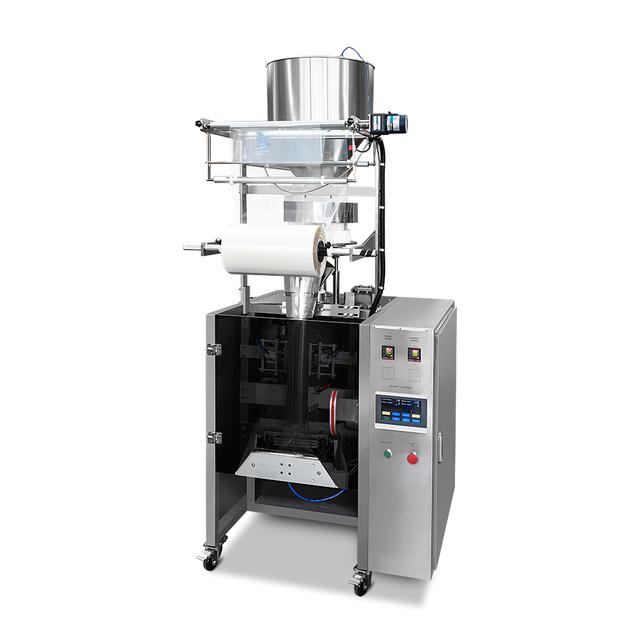
Draw the actual factory layout with loading, guard, service, cleaning, and component-removal space. Include utility points and operator routes. A compact footprint is not valuable if maintenance cannot reach the filler or electrical panels.
Auger fillers can suit many detergent powders when screw geometry, tube, agitation, and drive range match product and dose. Suitable granular detergents may use weighing arrangements. Volumetric cups depend on repeatable density. Mixed products need evaluation for segregation and composition as well as total quantity.
Test the smallest dose, largest dose, lowest-density volume, and difficult flow. Observe ordered results around hopper refill and restart. A wide average range on a brochure does not prove stable control at both ends. Alternate screws, cups, gates, or fillers may be required.
A detergent soap packing machine must leave the filling stream enough time to clear the seal zone. Dust, late granules, or an overfull bag can contaminate closure. Dosing and bag motion should be accepted as one cycle.
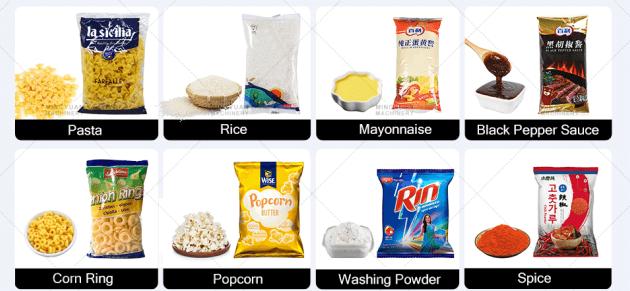
Vertical form-fill-seal equipment converts rollstock into bags and can serve approved pillow, gusseted, or related formats. Premade-pouch machines fill finished converter bags and can support features such as zippers or stand-up construction. Each route has different material supply, changeover, and fault patterns.
Define width, length, gusset, target quantity, bulk volume, headspace, laminate, print repeat, code area, and case orientation. The product and packaging owner validates moisture barrier, strength, compatibility, and distribution. The equipment supplier tests forming or pouch handling and sealing.
Use intended printed material. Film stiffness, friction, sealant, registration, and pouch curl affect operation. Heavy bags may need support during filling and discharge so their own load does not stress a fresh seal.
Limit free fall and enclose transfer where the application permits. A suitable fill tube and controlled extraction can reduce airborne powder. Extraction design should follow the site's safety assessment and should not pull an unknown amount of saleable detergent away from the package.
Review electrical enclosures, sensors, cable entries, pneumatics, bearings, and ventilation for the expected environment. Keep product away from sealing faces and optical sensors. Cleaning access should reach hoppers, screws, tubes, formers, guards, jaws, and frame ledges.
| System area | Main dry-detergent risk | Required evidence |
|---|---|---|
| Bulk feed | Aeration, compaction, surge, or segregation | Stable filler supply through normal replenishment |
| Metering | Density change, poor flow, or unsuitable range | Ordered quantity samples at configuration extremes |
| Bag filling | Dust and product in the closure | Clean seal bands and controlled product cutoff |
| Machine environment | Dust entering controls or accumulating on surfaces | Access, enclosure, extraction, and housekeeping review |
| Product change | Color, perfume, allergen, or ingredient carryover | Observed cleanout and approved first-off release |
A practical control system stores approved product-pack recipes, shows actionable alarms, manages filler and bagger sequence, and prevents unsafe or invalid operation. Access levels should protect critical dosing and sealing values. Recipe names should link to physical format parts and product condition.
Useful monitoring may include product level, package material, registration, temperature, coder status, guard state, and downstream readiness. Every signal needs a defined response and affected-pack rule. An impressive dashboard has little value if operators cannot tell what to do after a fault.
Production counts should distinguish accepted output, planned startup waste, and rejects where the system supports it. Data can guide improvement only when causes and manual interventions are recorded consistently.
Product removal extends through the upstream conveyor, buffer, hopper, agitator, filler, tubes, forming region, guards, and collection areas. The manufacturer should provide access and component guidance; the detergent producer validates its cleaning method and release criteria. Wet and dry methods have different equipment implications.
Physical change parts need labels and protected storage. Recipes should identify the required auger, former, guides, pouch settings, or seal components. After assembly, inspect fasteners, sensors, guards, and alignment before power-up.
First-off bags should be checked for product identity, quantity, dimensions, print, code, seal cleanliness, integrity method, and appearance. Record change duration from last accepted old pack to first accepted new pack when evaluating flexibility.
Select test combinations covering density, dust, flow, smallest controlled dose, largest volume, demanding printed material, and a realistic changeover. Supply enough product to observe refill and accumulation. Agree on sampling, package tests, and accepted-output counting before the run.
Include startup, continuous operation, product replenishment, film or pouch loading, stop, and restart. Record quantity results, segregation, dust, material waste, seals, code, rejects, alarms, and operator actions. Demonstrate upstream and downstream interlocks where equipment is present.
List all test substitutions and site responsibilities. Final documentation should include approved product-format matrix, layouts, utility data, recipes, parts, cleaning guidance, preventive maintenance, spares, training, and unresolved conditions. This evidence is the useful definition of machine capability.
Plan a site test after installation using normal bulk feed, utilities, operators, and downstream equipment. Factory trials cannot always reproduce transfer distance, ambient dust, storage condition, or local package handling. Site acceptance should close those specific gaps without reopening requirements already demonstrated under equivalent conditions.
Train production and maintenance roles separately but let them practice fault handoffs together. Operators should recognize bridging, low product, material tracking, seal contamination, and invalid code; technicians should diagnose filler wear, sensors, utilities, heaters, and alignment. Quality staff define sampling and release. Clear ownership prevents every interruption from becoming a supplier call or an unauthorized setting change.
Review the first sustained production campaigns. Compare actual detergent consumption, giveaway, bag waste, dust cleanup, change time, alarms, and accepted output with the purchase assumptions. Use that evidence to refine preventive checks and spare stock while retaining the validated product and package boundaries.
Incoming-material control should cover both detergent and bags. A shift in powder density, moisture, perfume coating, or granule ratio can disturb dosing. A different film friction, sealant, thickness, registration mark, or pouch curl can disturb handling. Recording both lot identities helps the team avoid changing machine settings to compensate for an unapproved input.
Set a review path for new products. Product development should provide samples, behavior data, package drawings, cleaning impact, and demand before promising a launch date. Engineering then decides whether an existing family and recipe are supported, a change part is needed, or another supplier test must be arranged.
Can this equipment package liquid detergent?
Not with a dry-powder filler alone. Liquid products require a compatible liquid path, metering system, nozzle, package, and cleaning configuration.
Is every granular detergent suitable for weighing?
No. Particle behavior, dust, density, segregation, dose, feed control, and required accuracy determine whether a proposed weigher is appropriate.
What should happen if no valid bag is present?
The filler should be inhibited and the fault handled according to a defined sequence so product does not enter the machine or good-output stream.
Can dust extraction replace cleaning?
No. It may reduce airborne material at selected points, but product-contact and machine surfaces still need an approved inspection and cleaning procedure.
How should two suppliers be compared?
Give them the same detergent, package, matrix, and acceptance method, then compare accepted output, defects, access, changeover, documentation, and support boundaries.
Dry detergent packaging depends on stable material handling from bulk supply through a controlled filler and into a qualified bag. Define the product form, select the dosing core, contain dust, protect closures, write useful interlocks, and make changeover verifiable. A line trial using difficult production conditions gives buyers a far stronger guide than a list of automatic functions without context.

YISEN MACHINERY - The ONE-STOP VFFS PACKING MACHINE SOLUTION SUPPLIER
 Tel: +8617350750975
 Email: info@vffspackingmachinery.com
 MP/WhatsApp: +8617350750975
 Manufacturer Address:Meixi Road, Tongan District, Xiamen,Fujian,China