

Hot Keyword:
Author:YISEN Pouch Packing Machine Manufacturer TIME:2025-05-14
Equipment capability does not establish product safety, nicotine content, labeling compliance, or permission to sell. The manufacturer needs qualified regulatory and quality review, validated analytical methods, and controlled ingredients. The machine supplier should demonstrate how the proposed line handles representative blend and packaging material under documented operating states.
A nicotine pouch production line portions a specified blend into porous pouch material, forms or closes the small unit, and transfers it for inspection, counting, and secondary packing. Mechanical repeatability must be coordinated with formulation control, moisture, hygiene, worker protection, traceability, and the current legal requirements of every intended market.
Before discussing machine rate, document blend specification, portion basis, moisture range, pouch-material code, unit dimensions, seam or closure method, secondary container, label, batch identity, and release authority. Identify markets separately because requirements can differ and change. Obtain current qualified advice for product composition, warnings, packaging, marketing, age restrictions, notifications, taxes, and any other applicable obligations.
The machine's role is narrower: receive approved material, portion it within the defined process, make a pouch unit, detect specified faults, and provide records. It should not calculate or imply a safe nicotine dose. The buyer controls formulation, ingredient identity, blend uniformity, analytical testing, exposure assessment, and finished-product release. Keep this boundary in the purchase specification so a mechanical trial is not presented as regulatory validation.
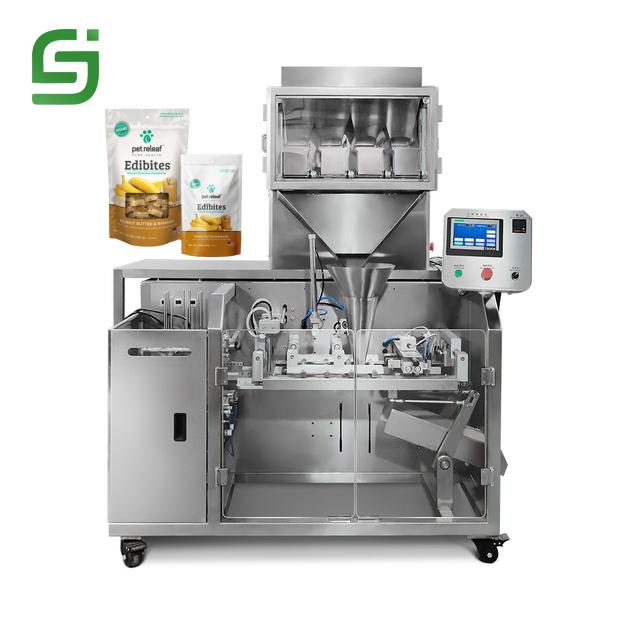
The product may contain powders, fibers, salts, flavors, humectants, or other approved ingredients. Its flow can change with moisture, time, temperature, compaction, and mixing. Record particle distribution, bulk density, cohesion, static, dust, adhesion, and the condition at which the blend is released to packaging. A small fresh sample may not represent a production batch held or transferred before filling.
Supply equipment should avoid segregation and maintain a suitable feeder state. Observe hopper level, refill, bridging, tunneling, buildup, and the product remaining after a stop. If agitation is used, determine whether it changes density or composition. Samples from the start, middle, and end of a run can support the manufacturer's quality plan. The machine supplier should record the exact hopper, agitator, transfer, and recipe used during acceptance.
Small portions can expose feeder resolution, product-head effects, trickle after cutoff, and package tare. The proposed dosing principle and contact parts must suit the blend, range, and cleaning boundary. An auger or another controlled feeder may be evaluated, but no device should be approved from its general category. Test realistic moisture and hopper conditions plus the smallest and largest intended portion.
Collect results sequentially and mark refill, pause, adjustment, alarm, and restart. Use the buyer's verified measurement or analytical method and distinguish package material from net product. Weight control alone may not prove composition if the blend can segregate, so quality specialists determine additional sampling. Link every result to batch, parts, settings, and lane or position where relevant.
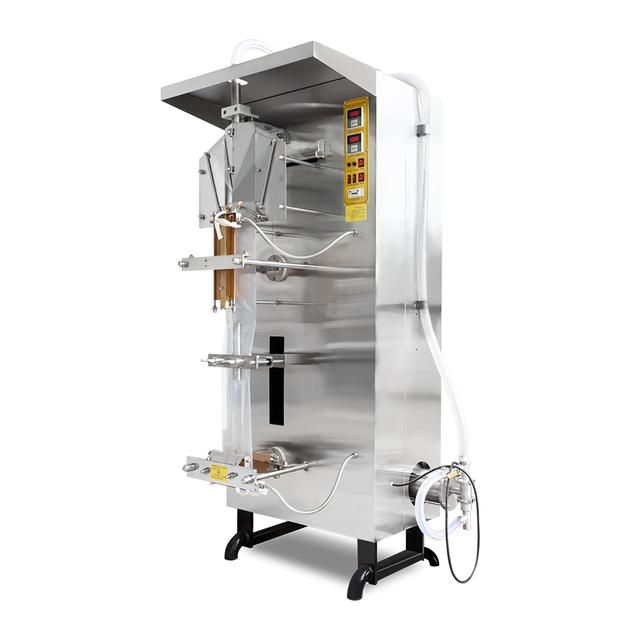
The line guides a specified porous web or pouch material, presents it to forming components, receives product, creates seams or closures, and separates individual units according to the design. Material basis weight, thickness, porosity, strength, friction, seal response, roll quality, and splice can influence tracking and unit integrity. Test production-intended material; a convenient substitute can behave differently.
Confirm unit length, width, fill space, seam geometry, cuts, and product clearance. The blend should remain inside the intended area rather than crossing the closure. Settings for heat, pressure, dwell, ultrasonic action, or another process depend on the machine and material and require supplier guidance plus buyer approval. Retain units from startup, steady production, stop, and restart for the selected integrity and handling checks.
Moisture can influence blend flow, adhesion, dosing, pouch handling, and finished characteristics. Define environmental and product-condition limits through the manufacturer's quality program. The packaging line may need enclosed routes, local extraction, controlled waiting, or cleaning practices, but these features must be assessed with the actual blend. Extraction should not change product composition or spread material to an uncontrolled destination.
Review product-contact metals, polymers, seals, joints, hoppers, dosing parts, chutes, forming areas, guards, and collection points. Provide safe access and an approved cleaning procedure. Nicotine-containing material can create worker-exposure considerations, so site specialists must define handling, protective, waste, and emergency controls. A general sachet machine description is not evidence that a line meets those needs.
Possible checks include pouch presence, portion result, seam condition, dimensions, cut, appearance, or other buyer-defined characteristics. The exact inspection method depends on the unit and quality plan. Very small packs and soft porous material can be difficult to handle and inspect automatically, so detection limits should be stated honestly. Off-line sampling and analytical release may remain necessary.
Challenge known fault conditions and confirm reject timing, physical separation, bin status, count reconciliation, and alarm response. After a feeder or material fault, identify the affected interval and segregate uncertain units. An inspection sensor is useful only when the line keeps detected failures from accepted output and when operators understand what the device does not check.
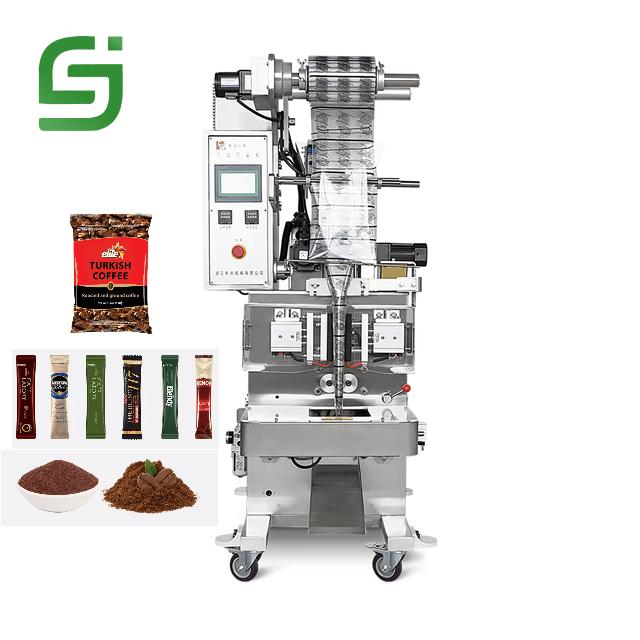
Individual pouches may move to counting, accumulation, container filling, closure, labeling, coding, and case packing. Soft units can overlap, cling, fold, or lose orientation, which affects count and transfer. Define the intended quantity, container, headspace, tamper feature where applicable, label, code, and reject route. Run the complete process rather than approving loose pouch production alone.
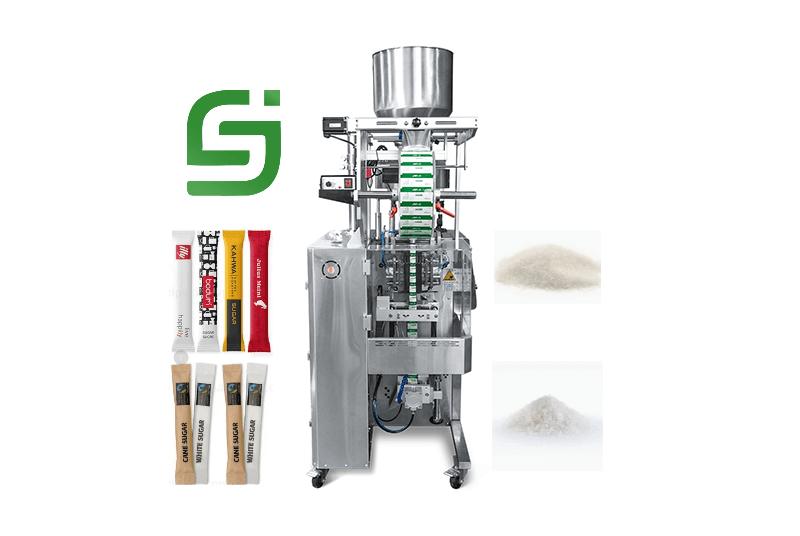
Protect identity during product and packaging changes. Clear previous units, containers, closures, labels, code data, and work in progress. Verify the correct batch and packaging at first-off release. Count verification and reconciliation rules belong to the buyer's quality system. The sachet stick packing machine category can help frame small-pack mechanics, while nicotine-specific product, legal, exposure, and release controls remain separate buyer responsibilities.
A supplier trial should use identified blend and production-intended pouch material in the proposed line. Include product supply, portioning, forming, unit transfer, inspection, rejects, counting, and secondary packing included in scope. Test replenishment, a planned stop, an alarm, restart, and a batch or material change. The table separates mechanical evidence from responsibilities that stay with the manufacturer.
| Process area | Machine evidence | Manufacturer control | Approval question |
|---|---|---|---|
| Blend supply | Stable feed through refill and normal waiting | Approved formulation, uniformity, moisture, and batch release | Is the feeder receiving a defined material? |
| Portioning | Sequential output linked to parts and events | Verified measurement and analytical methods | Does the process remain inside its approved portion boundary? |
| Pouch making | Controlled material path, seams, cuts, and dimensions | Approved contact material and unit-integrity criteria | Does the unit remain intact through intended handling? |
| Inspection and rejects | Challenged detection and reconciled separation | Sampling plan, device limits, and product disposition | Are questionable units kept from normal output? |
| Secondary package | Stable transfer, count, container handling, and coding | Correct label, legal review, traceability, and release | Is identity preserved to the finished saleable unit? |
Keep an open-point register and label untested products, moisture states, materials, and formats. Factory acceptance does not replace commissioning under site conditions. After installation, repeat affected checks with approved utilities, environment, staff, upstream supply, and downstream packaging. Preserve software, recipes, parts lists, manuals, and retained samples with the handover.
Does the machine determine nicotine content? No. Formulation, blend uniformity, portion control, analytical methods, and quality release belong to the manufacturer's controlled process.
Can any porous nonwoven material be used? Material must be specified and tested for forming, closure, contact, strength, and the manufacturer's finished-product requirements.
Why does moisture require attention? It can influence flow, adhesion, portioning, pouch handling, cleaning, and finished characteristics, so it needs a defined control plan.
What should happen after a feeder alarm? Identify affected product and units, segregate uncertain output, correct the cause, and complete documented restart checks.
Does equipment purchase include market compliance? No. Requirements vary and can change. Obtain current qualified legal and regulatory advice for each intended market.
Product and batch changes require an explicit material-accounting route. Recover or dispose of remaining blend under the manufacturer's controls, identify partially made units, clear the feeder and forming path, reconcile pouch material and secondary labels, and inspect the line before the next batch. Cleaning verification should address product-contact components and surrounding locations where fine material can settle. Waste containers, extraction filters, cleaning materials, and protective equipment need controlled handling consistent with the site's exposure and disposal procedures.
Training should distinguish operating authority from product-release authority. Machine operators may load materials and respond to approved alarms, maintenance may open and repair specified components, and quality roles may assess samples and batch disposition. These responsibilities should be documented and practiced during acceptance scenarios. Clear boundaries reduce the risk that a mechanically successful restart is mistaken for approval of product whose identity, composition, or packaging status remains uncertain.
Nicotine pouch equipment is a precision packaging system inside a broader controlled manufacturing process. Mechanical functions cover blend handling, portioning, pouch formation or closure, inspection, counting, and secondary transfer. Product safety, content, regulatory status, labeling, and release remain manufacturer responsibilities.
Separate those boundaries in the specification, then test the complete installed path with representative materials and ordinary interruptions. Traceable samples and honest inspection limits provide a stronger basis for acceptance than a short run of selected good units.

YISEN MACHINERY - The ONE-STOP VFFS PACKING MACHINE SOLUTION SUPPLIER
 Tel: +8617350750975
 Email: info@vffspackingmachinery.com
 MP/WhatsApp: +8617350750975
 Manufacturer Address:Meixi Road, Tongan District, Xiamen,Fujian,China