

Hot Keyword:
Author:YISEN Pouch Packing Machine Manufacturer TIME:2026-03-08
Some features overlap: a stand-up pouch can also have a zipper or spout, and a gusseted bag can use different seal layouts. Buyers should work from a finished drawing rather than a label alone.
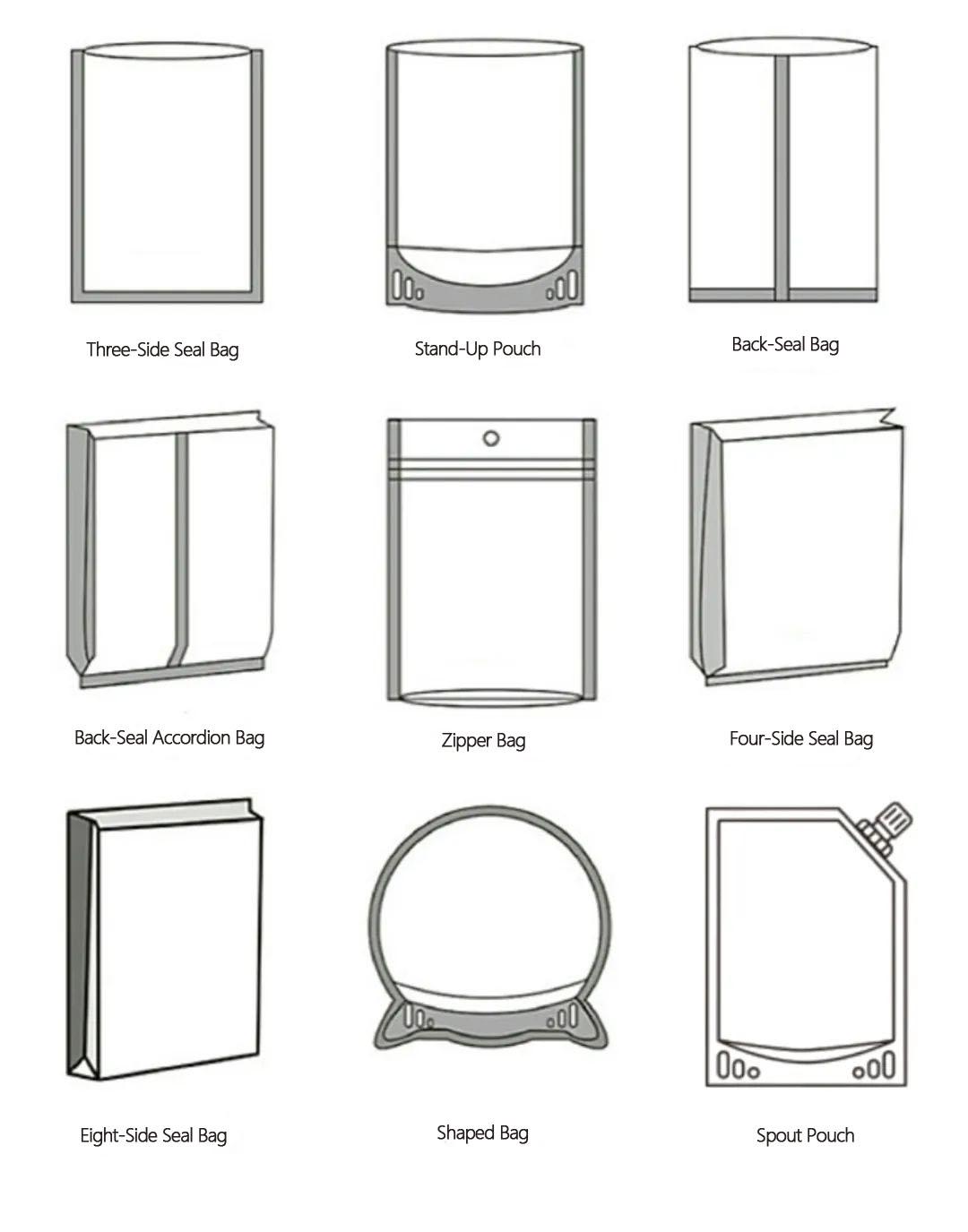
Nine widely encountered flexible bag formats are three-side-seal, four-side-seal, back-seal or pillow, side-gusseted, stand-up, zipper, flat-bottom or eight-side-seal, shaped, and spout pouches. These names describe geometry or features, not universal performance. The best format depends on product protection, filling opening, shelf presentation, consumer use, sealing, material supply, and the machine that must handle it.
A bag name may refer to the number and position of seals, a bottom or side structure, a closure, or a dispensing feature. It does not fully define dimensions, film structure, barrier, tolerances, opening, sealant, artwork, code, or handling. Two suppliers can use similar commercial terms for packages that behave differently on equipment.
Create a controlled drawing showing finished width and length, gussets, seal widths, zipper or spout, notch, hang hole, fill opening, headspace, print orientation, code area, and cut. Add converter presentation: rollstock or premade, core and winding for film, or bundle direction for pouches. This is the document the package and machine teams can test.
A three-side-seal pouch is commonly supplied or created with three closed edges and one filling or closing side, depending on the process. It offers broad front and back panels with edge seals. Small foods, powders, liquids, personal-care items, and other products may use the construction when the opening and laminate suit filling.
A four-side-seal bag presents sealed margins around all sides after filling. The symmetrical frame can support a deliberate appearance, but usable internal area, sealing stations, and product clearance must be considered. Multi-lane sachet equipment may create repeated edge-sealed packs from rollstock. Every lane's registration, dose, seams, and cuts require evidence.
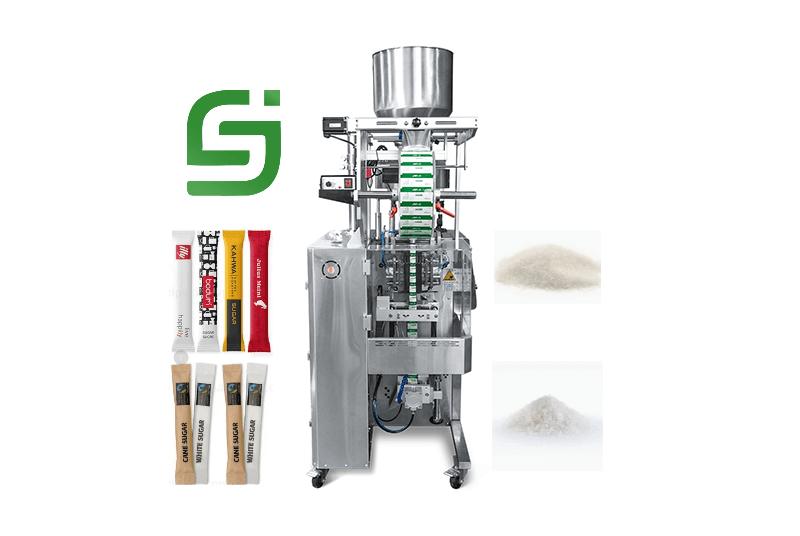
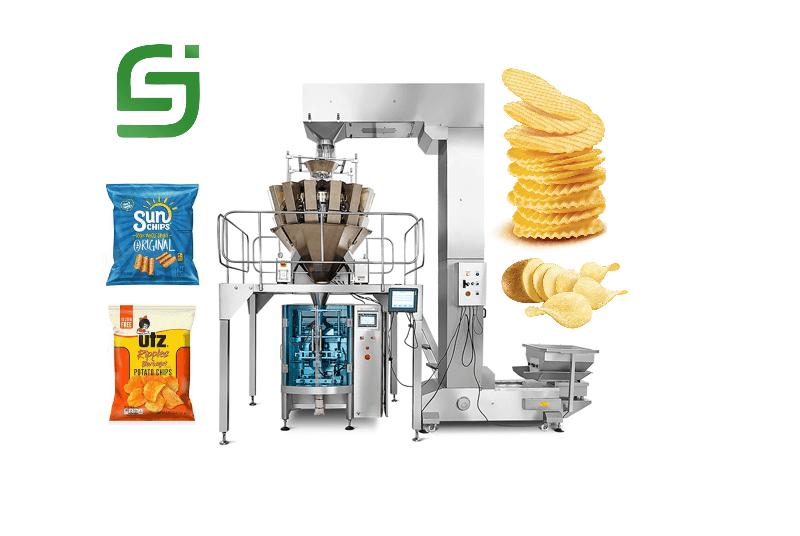
Back-seal or pillow bags are commonly formed around a tube from rollstock, with a longitudinal seam and transverse top and bottom seals. They are used for many powders, granules, snacks, and other products because the format can be created directly in the packaging cycle. The back seam occupies panel space and must be oriented with artwork and downstream handling.
Product size, fill volume, film width, former, bag length, headspace, and seal process define the practical range. A sharp granule can puncture material, a dusty powder can contaminate the transverse seam, and a fragile snack can break during the drop. The apparent simplicity of the bag does not eliminate product-specific engineering.
A side-gusseted or accordion-style bag folds material inward along the sides. The gussets expand as product enters, creating more volume and a different shelf shape than a flat pillow bag. Coffee, bakery goods, dry foods, pet products, and other applications may use this family when the package and process are qualified.
Gusset formation and alignment must remain consistent. Product can catch in folds, artwork can distort, and the bag may not stand or brick as intended if fill distribution is uneven. Define bottom and top behavior, any clips or valves, and downstream shaping. Test the package after settling and handling.
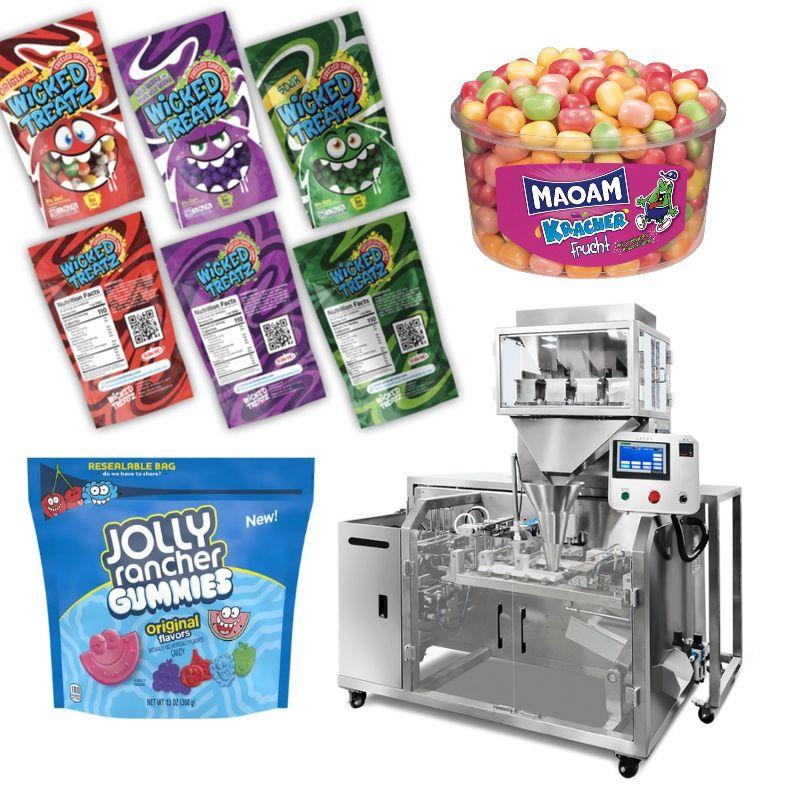
A stand-up pouch uses a bottom structure that opens to create a base. It can display broad printed panels and may include a zipper, notch, or spout. Premade versions arrive with their shape already converted, while some equipment can create specific stand-up constructions from rollstock. These routes are not mechanically equivalent.
Check bottom-gusset opening, product distribution, filled stability, top headspace, and package weight. A pouch can look upright when hand-filled but lean after automated dosing or shipping. The machine must pick or form it consistently, support it during filling, and protect its hot top seal during discharge.
A zipper pouch gives the consumer a reclosable feature after the primary seal is opened. It is a feature rather than one exclusive bag geometry. Zippers can be supplied in premade pouches or introduced through specialized rollstock processes. Product protection before first opening still depends on the primary sealed package and qualified material.
The machine must open the zipper for filling where required, keep product away from its tracks, flatten the top, and seal at the correct position. Test zipper engagement, top-seal removal, notch, consumer opening, and repeated closure according to the product specification. Powder, crumbs, and sticky sauces create different contamination risks.
Flat-bottom or eight-side-seal pouches use multiple panels and seals to create a stable base and distinct front, back, side, and bottom surfaces. They can offer strong display geometry for coffee, pet food, snacks, and other products. Their converter complexity and panel registration usually require precise drawings and tolerances.
Review pickup, opening, fill support, side and bottom-panel behavior, top sealing, and discharge. The format's appearance can be compromised by underfilling, excessive headspace, skewed holders, or a top seam outside the artwork. Packaging quality should be inspected after realistic transport, not only at the machine.
Shaped pouches use a contour beyond a basic rectangle to create a visual or functional form. Curves and cutouts can reduce the gripping or sealing area and may require dedicated holders or dies. Establish safe edges, orientation, fill opening, code location, and downstream handling. Novelty should not remove the space needed for dependable machine control.
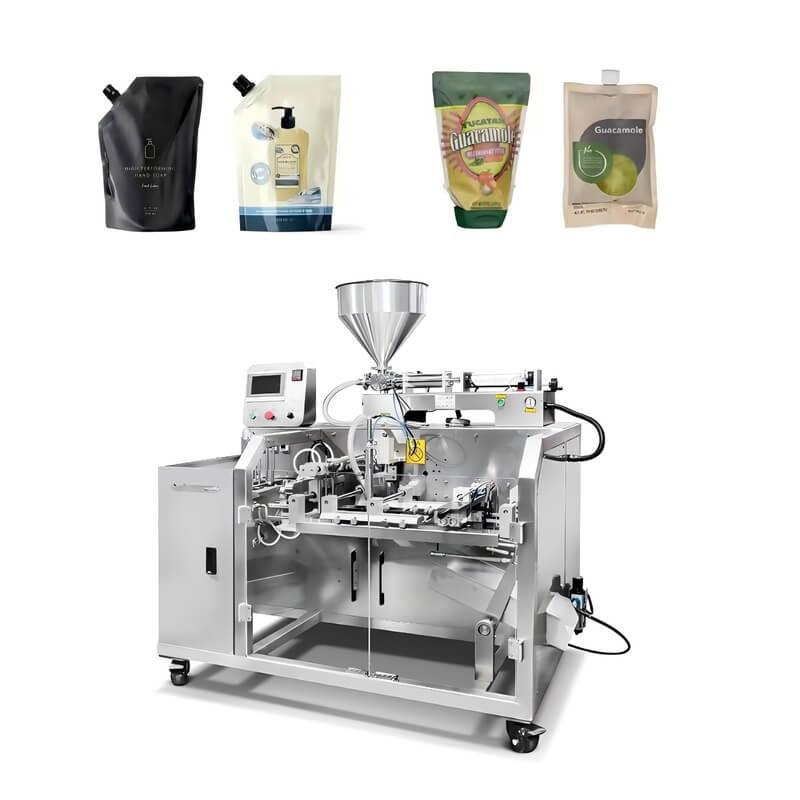
Spout pouches combine a flexible body with a dispensing fitment. Product may enter through the top or spout depending on design, and the fitment changes pickup, filling, capping or sealing, leak testing, and discharge. Liquids, gels, and some powders may use spouts, but chemical compatibility and closure performance need product-specific evidence.
Compare formats through product protection, quantity, consumer use, display, transport, converter capability, material use, filling opening, seal contamination, coding, changeover, accepted output, and recycling or disposal goals defined by the business. No format wins every criterion.
| Bag type | Potential reason to consider it | Machine question to test |
|---|---|---|
| Three- or four-side seal | Flat panels and defined edge seams | Can product enter cleanly and all seals align? |
| Back-seal or pillow | Direct rollstock formation | Does the former and product drop suit the contents? |
| Side-gusseted | Expandable volume and shaped presentation | Do folds form and fill without product traps? |
| Stand-up or flat-bottom | Stable display and multiple panels | Does the base open and remain stable after handling? |
| Zipper, shaped, or spout | Reclosing, dispensing, or differentiated form | Can special features feed, stay clean, and seal reliably? |
The pouch packing machine family can include different methods for these formats. Use commercial samples in a witnessed trial and list the exact bag constructions and sizes approved. Do not infer that one pouch label guarantees compatibility.
Is a stand-up pouch always premade?
No. Premade stand-up pouches are common, while certain machines and constructions can form stand-up features from rollstock. Confirm the exact process.
Can a zipper pouch also have a flat bottom?
Yes. Names often describe separate features that can coexist. A drawing is needed to define the actual package.
Which bag uses the least material?
The answer depends on product protection, dimensions, construction, strength, waste, and accepted packs. Compare qualified designs rather than names alone.
Why can a pouch work by hand but fail on a machine?
Automated pickup, opening, forming, filling, sealing, and timing expose curl, friction, tolerances, and clearance that hand packing can compensate for.
What should be sent to a machine supplier?
Provide drawings, commercial samples, material data, product samples, quantity, operating conditions, code, downstream needs, and written acceptance checks.
Material structure should be selected with package specialists for the product's contact, barrier, strength, printing, sealing, and distribution needs. Mono-material aspirations, recyclable streams, reduced thickness, or other environmental goals may change stiffness and the sealing window. Test the chosen commercial construction rather than assuming a sustainability claim also proves machine performance or local recyclability.
Run package trials through startup, material replenishment, normal output, stop, restart, and downstream handling. Record accepted quantity, appearance, code, seals, opening features, and damage by format. Compare the smallest and largest sizes, plus the feature most likely to interfere with filling. Keep converter lot and machine setup connected to retained samples.
Portfolio planning can reduce unnecessary bag types. If several products can share one qualified geometry and material without compromising protection or use, changeover and inventory may improve. Conversely, forcing every product into one format can create poor headspace, difficult filling, or weak shelf presentation. Make the common-platform decision with evidence from products at both ends of the range.
Ask converters and machine suppliers to review failure samples together. Curl, static, sealant transfer, gusset error, pickup marks, or jaw impressions may cross company boundaries. A shared defect vocabulary and retained lot information helps the buyer identify whether material, conversion, setup, or machine condition needs correction.
The nine common bag types provide a useful vocabulary, but construction details and combined features define the real package. Select geometry from product protection and consumer use, then confirm converter tolerances and machine handling with commercial samples. A controlled drawing and trial are more reliable than choosing equipment from a bag name.

YISEN MACHINERY - The ONE-STOP VFFS PACKING MACHINE SOLUTION SUPPLIER
 Tel: +8617350750975
 Email: info@vffspackingmachinery.com
 MP/WhatsApp: +8617350750975
 Manufacturer Address:Meixi Road, Tongan District, Xiamen,Fujian,China