

Hot Keyword:
Author:YISEN Pouch Packing Machine Manufacturer TIME:2026-06-20
Choose a double chamber tea bag machine for export production by defining the finished folded filter bag, tea cut and dose, thread and tag, optional outer envelope, printed materials, destination requirements, and local support before comparing output. The double chamber format uses a folded construction that creates two connected tea-containing areas according to the machine design. Its commercial value depends on reliable dosing, folding, attachment, sealing or closure, cutting, presentation, and export-ready documentation rather than the machine name alone.
Provide a finished reference showing filter-bag dimensions, chamber construction, tea quantity, thread length and position, tag dimensions and artwork, outer envelope if used, code, retail count, and case orientation. Mark critical seal, fold, attachment, and cut references. State consumer opening and brewing expectations.
Destination requirements can involve labeling, food-contact material, package performance, traceability, language, or customer specifications. The tea producer or importer should confirm them with qualified local expertise. The machine supplier demonstrates the agreed package process; it should not be expected to define every market obligation.
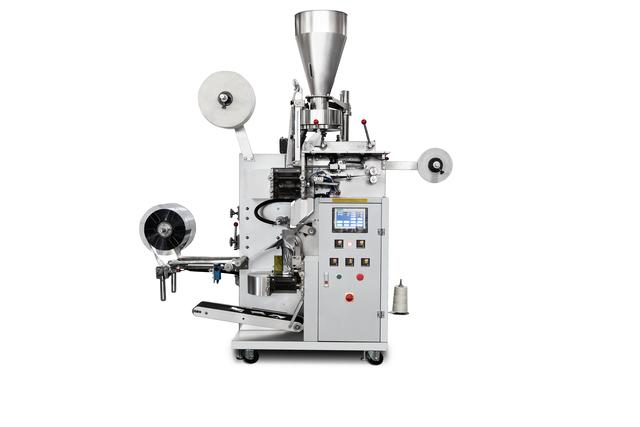
Separate launch destinations and formats from possible future markets. A bag accepted for one customer does not automatically cover another filter paper, tag, envelope, code, or case presentation.
Double chamber equipment often handles a defined range of broken leaf or related tea grades, but actual suitability depends on the filler and bag path. Long leaves, bulky herbs, stems, sticky inclusions, or fine powder may bridge, dust, fail to enter the chambers, or contaminate closures.
Describe cut, largest particle, bulk density, fines, flow, moisture sensitivity, fragility, blend composition, and target quantity. Provide representative production tea, including the difficult normal lot. Observe product condition before and after feeding.
A tea bag packaging machine should produce ordered dose results through startup, hopper refill, stable running, and restart. For blends, total weight may need composition checks. The approved filler setup, hopper level, and recipe should be documented by product code.
The machine feeds filter material through tension and guiding components, meters tea into the intended positions, folds or forms the double chamber, creates the specified closure, and separates the tea bag. Exact mechanisms differ by model and may use heat-sealing, crimping, stapling, or another approved method. Buyers should confirm the quoted construction rather than assume one process.
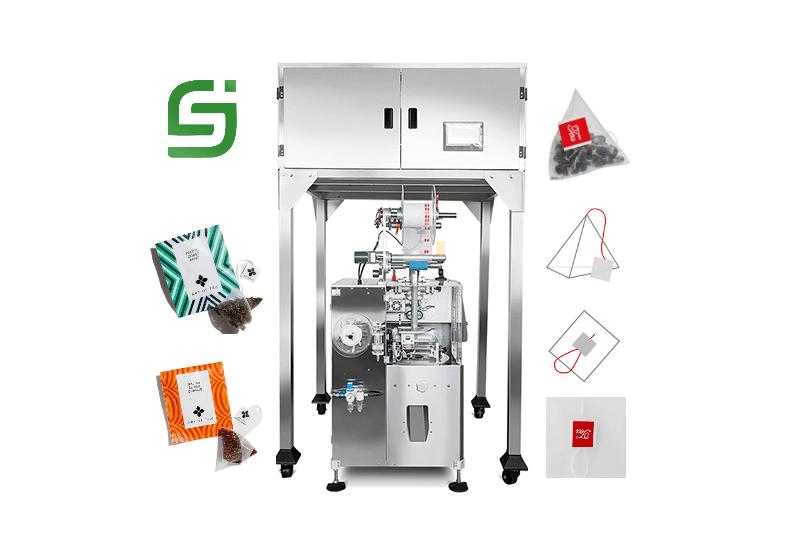
Filter-paper width, thickness, stiffness, porosity, friction, curl, roll quality, and closure response affect operation. Use production material. The tea brand validates brewing, retention, food-contact, and shelf requirements; the machine trial verifies feed, formation, attachment, cutting, and appearance.
Inspect chamber symmetry, tea distribution, folds, closure position, edge, and leakage of particles. Tea should not occupy critical attachment or seal areas. A correct total dose can still be poorly distributed between chambers, so the producer should define the acceptance method.
Thread and tag are central to consumer use and brand presentation. Specify thread material and length, tag stock, dimensions, artwork orientation, registration, attachment point, and finished position. Confirm whether the machine's method involves knots, heat, mechanical attachment, or another design.
Thread tension should avoid tangles and excessive pull on the filter bag. Tags must feed and separate consistently. Final printed stock is needed for trials because stiffness, friction, winding, ink, registration, and thickness can affect handling.
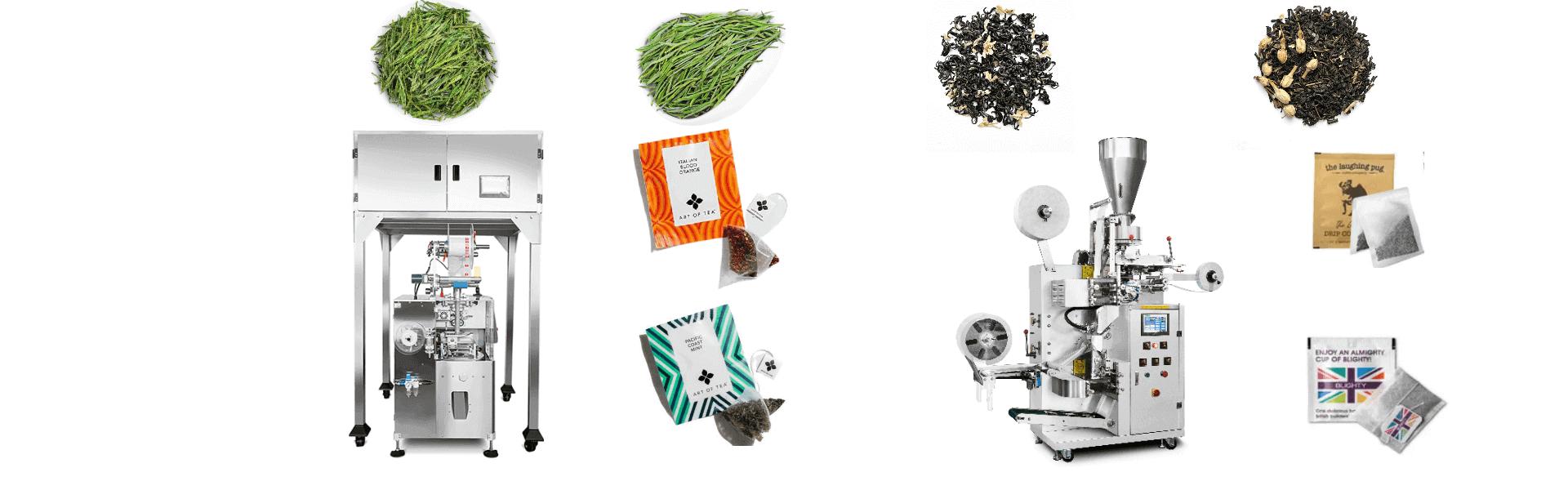
Check that thread and tag do not enter an unintended outer seal or become hidden incorrectly. Retain complete failed units when troubleshooting. A missing or displaced tag can originate from material feed, attachment, cutting, detection, or transfer.
An outer envelope can provide a printed surface and additional protection according to the approved package design. It adds material feeding, inner-bag transfer, registration, sealing, cutting, coding, and inspection. Decide from product, distribution, customer, and commercial requirements rather than treating it as a universal export feature.
Material selection should address the tea owner's barrier, strength, compatibility, and shelf validation. The equipment supplier needs final envelope width, repeat, stiffness, friction, sealant, curl, marks, and artwork. Confirm tag and thread placement inside or outside the envelope design.
| Export selection item | Buyer must define | Acceptance evidence |
|---|---|---|
| Tea and dose | Cut, density, blend, target, and quality method | Ordered samples through refill and restart |
| Filter bag | Material, dimensions, chambers, closure, and brewing function | Formation, distribution, retention, cut, and appearance |
| Thread and tag | Materials, length, artwork, position, and attachment | Feed reliability and consumer-use presentation |
| Outer envelope | Barrier, print, code, seal, and retail requirement | Transfer, registration, closure, and finished integrity |
| Export support | Destination, utilities, language, service, and site resources | Documents, training, spares, shipment, and site tests |
Translate orders into accepted tea bags per shift, allowing for product and material refill, roll and tag replacement, cleaning, changeover, quality checks, normal rejects, stops, and restart. Nominal cycles describe only part of the line. Tag or envelope stations may set the usable pace.
Map operator tasks and technical resources. More automated counting, cartoning, or inspection can reduce repeated work but adds interfaces and maintenance. The factory needs trained staff, parts, documents, and a fault-recovery method appropriate to the consequence of downtime.
Confirm utilities, floor access, product supply, finished discharge, inspection, rejects, and case packing. Define signals between modules. A downstream stop should not create an uncontrolled accumulation of unwrapped inner bags.
Normalize tea feeder, dosing unit, filter-bag machine, thread and tag system, envelope module, coder, counting or cartoning if included, conveyors, inspection selected by the buyer, change parts, spares, documents, installation, training, and support. Mark buyer and third-party responsibilities.
Request station drawings, approved material list, product-format matrix, utilities, control sequence, fault and reject logic, changeover method, component identity, and exclusions. Check safety configuration and applicable documentation with qualified project stakeholders.
Export support should include configuration-specific manuals, electrical and pneumatic drawings, parts list, recipe and software backups, screen and document language, shipment preservation, installation scope, remote-access controls, escalation, and post-warranty responsibility. Score evidence, not only factory appearance.
Use difficult representative tea, final filter paper, thread, printed tag, and outer envelope where required. Agree on dose sampling, chamber distribution, closure or seal checks, tag position, envelope inspection, coding, accepted output, rejects, and interventions. Include startup, refill, material replenishment, stop, and restart.
Demonstrate a meaningful product or format change and cleaning. Challenge missing-material and station-fault responses where safe and agreed. Open selected envelopes to inspect hidden inner bags. Record settings, parts, samples, lots, substitutions, and open conditions.
Before shipment, preserve the accepted baseline, inventory accessories, create backups, and document machine condition. Site acceptance uses local utilities, operators, materials, and connected equipment to close differences from the factory trial. Critical product or package failures remain gates.
Ask the filter-paper, thread, tag, and envelope suppliers to notify the tea producer before changing qualified properties. A new paper porosity, stiffness, roll winding, tag thickness, thread finish, or envelope sealant can alter both machine behavior and consumer presentation. Incoming controls should compare production deliveries with the specifications and samples used during acceptance.
Export documentation should connect machine output to the buyer's traceability process. Define code content and location, product and material lot records, sampling, reject reconciliation, case count, and release. The packaging machine can apply or detect selected information, while the exporter owns the complete regulatory and customer record.
Review spare and wear items by station: tea feeder and dosing parts, filter-paper guides, folding and closure components, cutters, thread and tag feed, envelope handling, heaters or sensors where fitted, drives, pneumatics, and controls. Stock decisions follow consequence and lead time. Configuration-specific part numbers are essential when support crosses borders.
Train local staff to preserve evidence during faults. A complete failed unit, its orientation, machine station, material lot, alarm, and recent event help remote diagnosis. Repeated adjustment without samples or records makes support slower and can move the machine away from the export-approved baseline.
Review early export orders after distribution feedback becomes available. Compare bag appearance, chamber integrity, tag use, envelope condition, code readability, case counts, and complaints with retained production records. Confirmed trends should feed back into material control and machine maintenance.
Can a double chamber line pack whole-leaf tea?
Only when leaf dimensions, volume, feed, dose, chamber forming, and closure are proven. Many long or bulky leaves may require another format.
Is an outer envelope mandatory for export?
No universal rule applies. The decision follows destination, customer, product protection, branding, and validated package requirements.
Do all machines attach thread and tags the same way?
No. Mechanisms and materials differ, so obtain the process drawing and test the intended thread and printed tag.
How should output be compared?
Count accepted complete tea bags under named tea, materials, format, and normal operating events, with rejects and interventions visible.
What should be finished before international shipment?
Close factory tests, approve configuration, preserve settings and backups, inventory parts, complete documents, and record shipping condition and site actions.
Double chamber equipment for export must coordinate tea, filter construction, chamber distribution, thread, tag, optional envelope, coding, and support as one package system. Define the destination pack before comparing machines, then test commercial materials through normal production events. A normalized supplier scope and planned site acceptance give exporters evidence that the delivered configuration can be operated and maintained after shipment.

YISEN MACHINERY - The ONE-STOP VFFS PACKING MACHINE SOLUTION SUPPLIER
 Tel: +8617350750975
 Email: info@vffspackingmachinery.com
 MP/WhatsApp: +8617350750975
 Manufacturer Address:Meixi Road, Tongan District, Xiamen,Fujian,China