

Hot Keyword:
Author:YISEN Pouch Packing Machine Manufacturer TIME:2024-08-30
A honey pouch packing machine does not remove honey's stickiness. It manages it by keeping product condition predictable, using a positive and cleanable flow path, controlling the end of each dose, and preventing drips from reaching the pouch seal. The effective design depends on the honey variety, temperature, crystallization state, pouch format, and cleaning method. Buyers should judge the system by stable filling and clean seals during a representative run, not by an empty-machine demonstration.
Honey resists flow, stretches into threads, clings to contact surfaces, and can continue moving after the metering device is told to stop. Its behavior can change with formulation and temperature. Crystals or suspended ingredients create further variation. These effects influence hopper discharge, pump load, dose repeatability, nozzle cutoff, pouch cleanliness, and sanitation.
The first task is to describe the production honey rather than call it simply "viscous." Provide samples from the expected operating range and record whether they are filtered, creamed, partially crystallized, flavored, or mixed with particles. State the condition at filling and the time product may remain in the supply system. A solution developed around one warm, uniform sample may be unsuitable for a cooler or more crystallized batch.
Also define the defect that the project must control. Slow output, weight variation, strings between nozzle and pouch, top-seal contamination, leakage, and difficult cleaning have different causes. A feature that improves one may not resolve the others.
Honey generally flows more readily when warmer, but the packaging line must follow product-quality and process limits established by the producer. Heating should never be presented as an unrestricted cure. If controlled warming is used, the hopper, pipework, pump, and waiting time need a coordinated operating method so the product reaching the nozzle remains reasonably consistent.
Insulated or temperature-managed components may reduce cooling in the path, subject to the application. Sensors should be located where their readings represent the process being controlled. A display showing hopper temperature does not prove that honey in a long hose or idle nozzle has the same condition. The food technologist should approve any temperature exposure that could affect flavor, color, enzymes, or other product attributes.
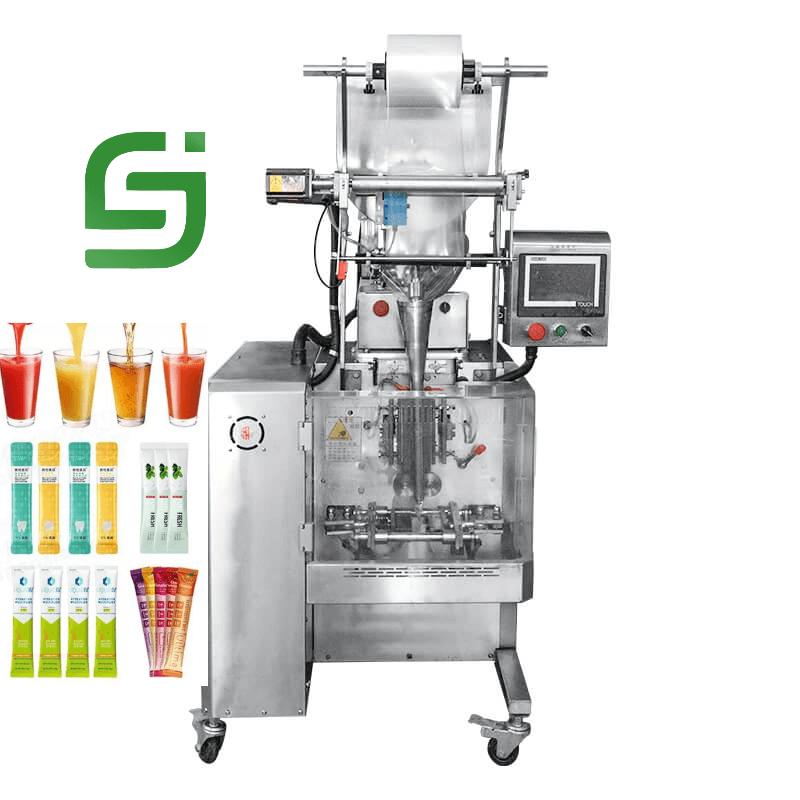
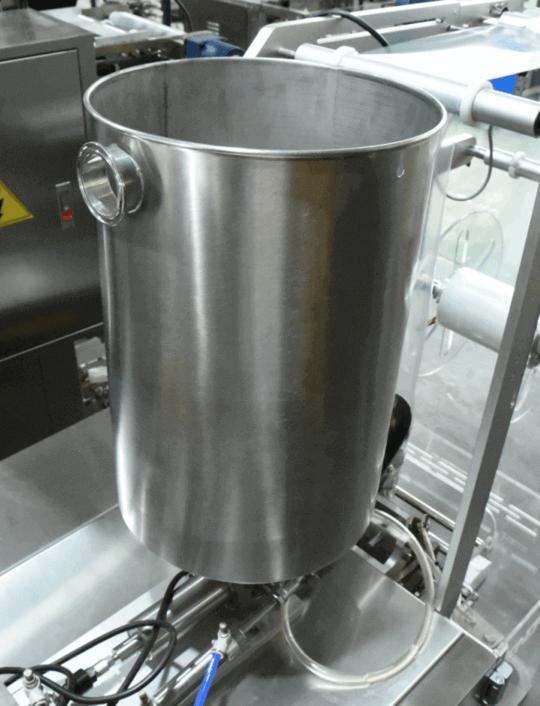
Maintain a stable head of product or controlled pump supply. Large level changes can alter pressure at the metering device. After a prolonged stop, recirculation or a defined restart procedure may be necessary if the system design allows it. These decisions should be tested rather than improvised by operators.
A smooth, short product path gives sticky honey fewer places to collect. Review hopper outlet geometry, valves, hose or pipe bends, joints, seals, pump connections, and the nozzle interior. Abrupt restrictions can increase resistance and leave product behind. Components should be sized for the required dose and cycle, yet still allow safe removal or cleaning.
Product-contact materials and seals must suit the food, cleaning agents, and operating conditions. Hygienic suitability cannot be inferred from appearance alone. Ask how dead spaces are minimized, where the line drains, which parts are opened, and how operators verify that residue has been removed. If parts are heavy or hot, the changeover plan must include safe handling.
A honey pouch packing machine should not depend on excessive pressure to force product through an undersized route. High resistance can burden the pump, deform flexible connections, worsen cutoff, and make filling sensitive to small condition changes. The path and metering system need to be selected together.
Viscous products are often handled with piston or suitable pump-based fillers because their displacement can be controlled. The correct choice still depends on dose range, required repeatability, product condition, particles, and cleaning. Chamber size, valve design, seal materials, and drive control affect the useful operating window.
The filler should receive a stable supply and complete its movement within the pouch machine's available cycle. Verify performance at the smallest and largest intended doses. A large metering chamber operated at a tiny fraction of its range may be difficult to control; a small chamber pushed to its limit may not fill quickly enough. Multi-dose filling is possible in some systems, but it changes cycle timing and should be evaluated with the actual pack.
Air is a frequent source of misleading results. It can enter during transfer, after a hopper runs low, or through an unsuitable suck-back action. Compressed air in the dose changes apparent volume and can cause splashing. Priming and low-level response should be part of the operating procedure.
The final fraction of a dose often determines whether the machine stays clean. A positive shutoff nozzle can isolate the product stream close to the outlet. A controlled suck-back function may retract a small tail, provided it does not pull air into the product path. Nozzle shape, opening area, closing speed, and distance from the pouch all influence string formation.
Timing must allow the stream to finish before the pouch moves or the sealing faces close. The nozzle may enter the pouch to reduce splash and withdraw after cutoff, depending on format. Alignment matters: even a clean cutoff will soil the film if the outlet is aimed near an edge or the pouch opening is unstable.
Do not respond to every drip by increasing suck-back or accelerating motion. Inspect valve wear, trapped particles, product temperature, pressure, and nozzle cleanliness. An aggressive setting can introduce air or produce a less repeatable next dose. The accepted setup should balance clean separation with filling consistency.
A seal needs clean, correctly presented film and suitable pressure, temperature, and dwell for the chosen material. Honey in the seal band can create channels even when the jaw settings are otherwise correct. Protecting the zone begins before sealing: control fill height, pouch support, nozzle placement, cutoff, and the movement from filling station to sealing station.
Provide enough headspace for expected product movement without underusing the package. The correct value is format-specific. In premade pouches, gripper alignment and pouch opening affect how the top edges meet. In a formed sachet, product fall and jaw timing must keep the stream clear. Drip trays or guards can manage an abnormal event, but they should not be the normal destination for every dose tail.
| Sticky-product symptom | Process area to examine | Useful evidence |
|---|---|---|
| Slow or incomplete dose | Product condition, restrictions, and filler capacity | Cycle trace with representative honey |
| Weight varies after refill | Air removal and supply pressure | Ordered weights before and after replenishment |
| Strings follow the nozzle | Shutoff design, distance, and cutoff timing | Video and pouch inspection during automatic running |
| Honey reaches top seal | Headspace, alignment, splash, and pouch transfer | Seal-zone observations linked to rejected packs |
| Long sanitation time | Retention, drainage, and removable components | Observed cleanout using the proposed procedure |
Sticky residue makes access and drainage important. Map the product path from hopper to nozzle and identify every component that must be opened, flushed, removed, brushed, or visually inspected. The producer's hygiene team should define the approved cleaning chemistry and verification method; the machine design should make that method possible without damaging seals or electrical parts.
Plan what happens to honey remaining at the end of a run. Recovery may be possible from some areas, while residue in other components must be treated according to site procedure. Trying to recover every trace can add contamination or safety risk. Clear boundaries are preferable to ad hoc operator decisions.
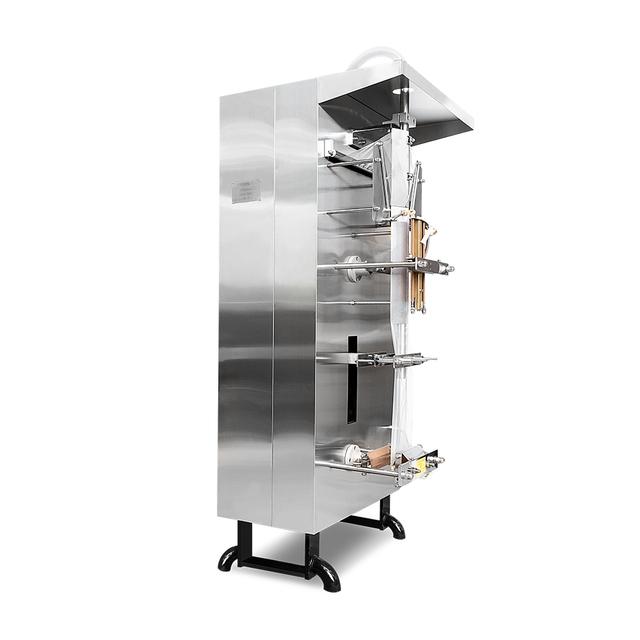
Restart deserves its own checks. Components must be dry or otherwise ready under the validated procedure, seals correctly assembled, and the filler primed. First-off packs should be checked for quantity, trapped air, pouch cleanliness, and seal condition. Cleaning is complete only when the next run can begin under control.
Send the supplier representative honey, intended pouch material, target doses, and information about operating condition. Include the most difficult normal variant rather than only a free-flowing sample. Agree on how the product will be supplied to the filler during the test so that a manually topped-up hopper does not hide an unstable production interface.
The run should include startup, continuous operation, a controlled stop, restart, and a normal refill. Inspect ordered fill results, visible strings, nozzle drips, seal contamination, package leakage, and residue accumulation. If settings are changed during the trial, record why and repeat enough output to judge the new condition.
Finally, perform the proposed cleanup. A successful filling demonstration with an impractical sanitation process is not a successful production solution. List unresolved assumptions, including any substitute film, different product temperature, or missing upstream equipment, and close them before final acceptance.
Must honey always be heated before pouch filling?
No. Temperature management depends on product behavior and quality limits. Any warming method and exposure should be approved by the honey producer and demonstrated with the real process.
What causes a thin honey string after filling?
Product rheology, nozzle geometry, valve closure, outlet distance, pressure, and timing can all contribute. Diagnosis should observe the complete cutoff event.
Can stronger sealing compensate for honey on the film?
It is not a reliable remedy. The process should prevent contamination, while sealing parameters are qualified for clean film and the chosen laminate.
How is crystallized honey handled?
Provide representative samples and define the acceptable product condition. Crystals can affect flow, valves, nozzles, and cleaning, so compatibility requires a specific trial.
Why does filling change after the hopper is replenished?
Refilling can alter pressure or introduce air. Review supply control, priming, low-level response, and the ordered pack measurements around the event.
Honey stickiness is controlled through the whole filling route: stable product condition, suitable displacement, low-retention contact geometry, decisive nozzle cutoff, protected seal space, and a proven sanitation method. None of those features should be accepted as a generic claim. A trial using the intended honey and pouch should show clean dosing through starts, stops, and refills, followed by a workable cleanup. That evidence is the sound basis for choosing a sticky-product packaging configuration.

YISEN MACHINERY - The ONE-STOP VFFS PACKING MACHINE SOLUTION SUPPLIER
 Tel: +8617350750975
 Email: info@vffspackingmachinery.com
 MP/WhatsApp: +8617350750975
 Manufacturer Address:Meixi Road, Tongan District, Xiamen,Fujian,China