

Hot Keyword:
Author:YISEN Pouch Packing Machine Manufacturer TIME:2024-09-18
The most useful format list connects each bag to ketchup condition, fill target, material, opening, seal band, and commercial use. This reveals which products share a platform and which require different equipment.
A tomato ketchup pouch packing machine can handle formats such as small sealed sachets, pillow-style pouches, three- or four-side-seal packs, and premade stand-up pouches when the installed machine architecture, filler, and seal system are designed for them. One machine will not automatically run every format. Rollstock and premade-pouch systems follow different package paths and should be chosen around the intended range.
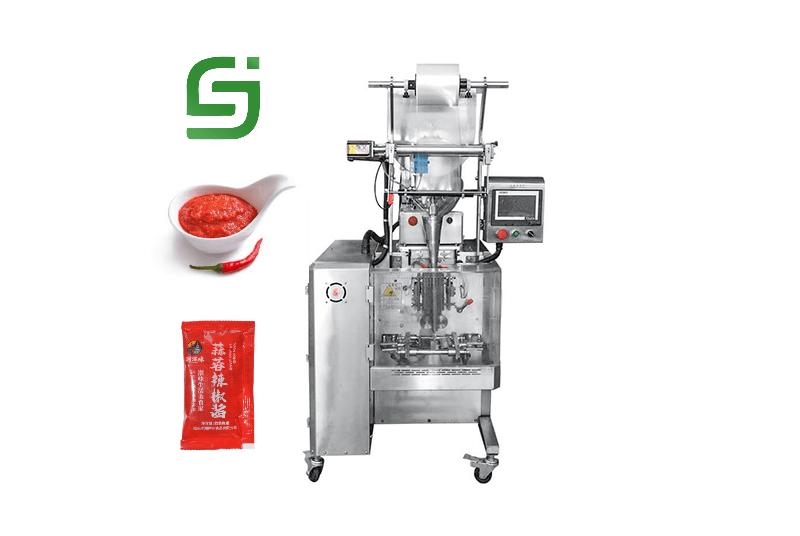
A rollstock machine unwinds flexible material, controls registration, forms it around guides, creates longitudinal and cross seals, doses the ketchup, and cuts finished packs. This route can be efficient for repeated sachets or pouches with a geometry the forming set can produce. Package dimensions are tied to film width, print repeat, sealing arrangement, and forming hardware.
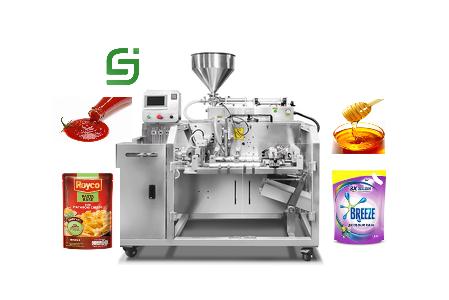
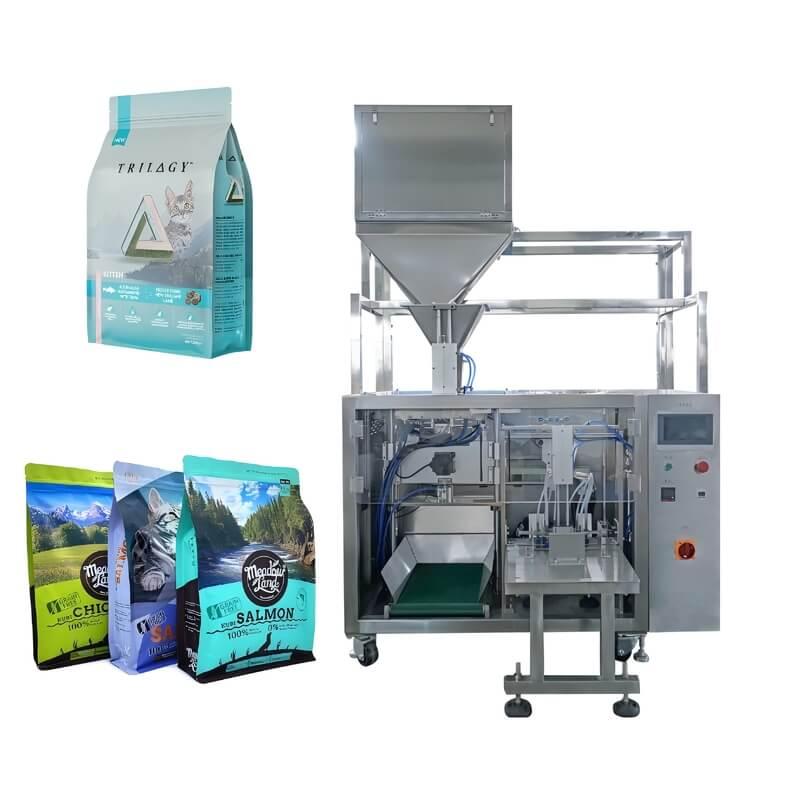
A premade-pouch machine instead removes finished empty bags from a magazine, grips and opens them, fills them, and closes the top. The converter has already made the side seals, bottom gusset, shape, zipper, and other features. This route supports complex retail formats but adds pickup and opening requirements.
When a project says it needs “several bags,” sort them into these routes first. Some variation can be managed by change parts and recipes within one platform; a change from formed sachets to shaped zipper doypacks is usually a change of packaging process, not just a screen selection.
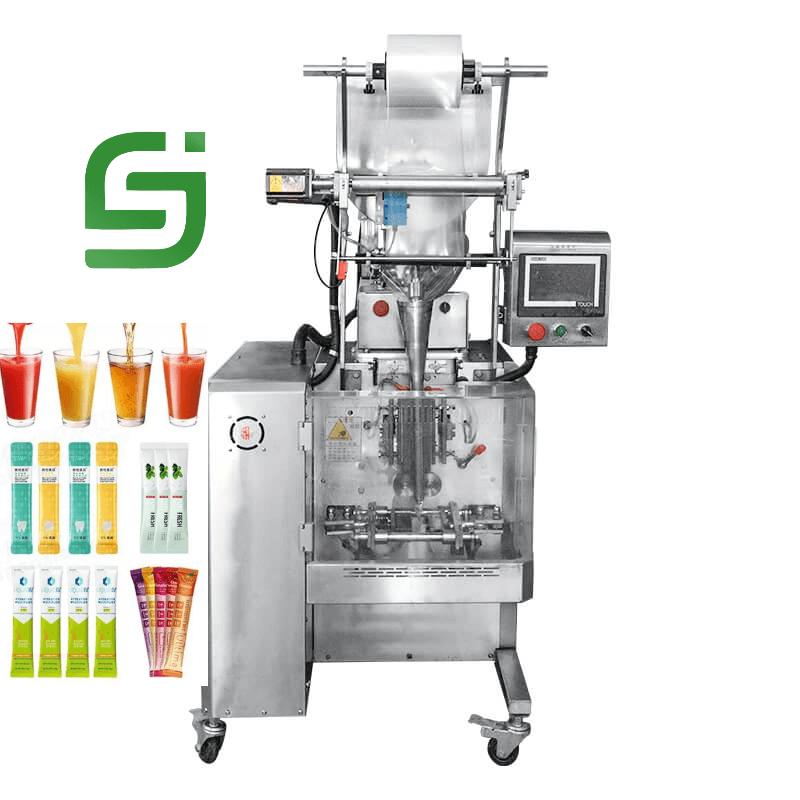
Three-side-seal or four-side-seal sachets are common candidates for single-use portions where compact size, clean dispensing, and individual distribution matter. The exact seam layout depends on the machine. Narrow stick-like packs may also be possible on equipment designed for the required film width and liquid filler, but a viscous sauce needs enough opening and a clean product path.
Small formats amplify details. A modest absolute fill difference can be significant relative to the target. The nozzle has little clearance, and a small drip can cross much of the seal band. Printed registration and cut position are visually important because the pack face is short.
Test sachets at the lowest normal ketchup temperature and with the most challenging particle condition. Inspect tear behavior and user opening as well as machine seals. A package that survives production but is difficult to open or dispense has not met the full commercial need.
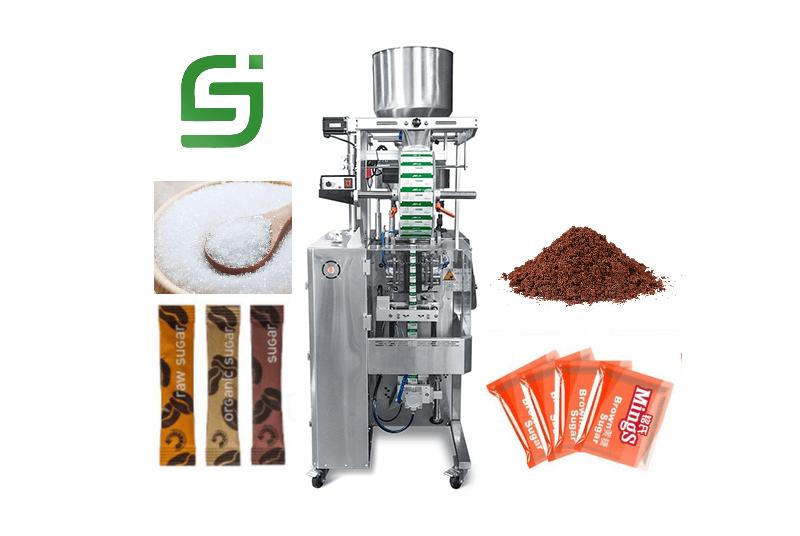
A pillow pouch is created around a forming path with a longitudinal seam and top and bottom cross seals. It can suit products and fill sizes where that shape provides sufficient volume and acceptable presentation. Side or bottom gussets may increase usable volume or improve shape on compatible equipment, but the actual geometry must be shown on a drawing.
These formats depend strongly on film stiffness, friction, sealant response, and the relationship between filled volume and headspace. Ketchup must settle far enough below the upper cross seal. The line may need a controlled fill profile, nozzle cutoff, or pouch support to avoid smearing sauce upward.
Do not assume that enlarging the bag automatically creates a higher capacity. Forming limits, film pull, longer dosing time, seal load, and downstream support may set the practical ceiling.
A stand-up pouch uses a bottom gusset to create a base when filled. It offers broad print faces and can be supplied with a zipper or other converted features. For ketchup, the filling opening must accommodate the nozzle and product stream while leaving enough clean material for the final top seal.
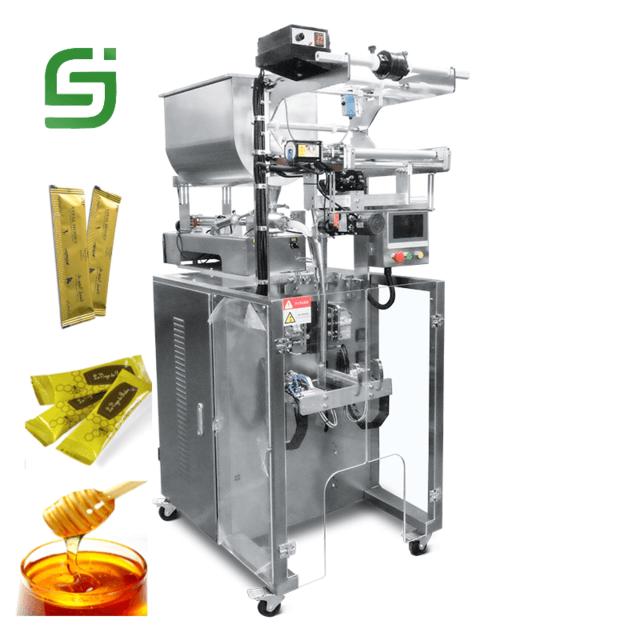
Pouch stiffness and flatness affect magazine feeding. Vacuum devices must separate one pouch, and grippers must control it through opening, filling, and sealing. A gusset that has not opened fully changes volume and may cause product to rise too close to the mouth.
Large doypacks may require bottom support because relying on the side grippers alone can distort a heavy filled pouch. The top seal needs suitable cooling before the pack is bent or collected. These operational details should appear in the format trial, not be left until installation.
A zipper adds consumer reclosure but also creates a thicker region near the top. The machine must open the zipper for filling when supplied closed, keep ketchup away from it, return it to the intended state, and make a top seal above it. Zipper location and mouth width are therefore critical dimensions.
Tear notches, rounded corners, hanging holes, spouts, or shaped outlines change conversion and handling. A conventional premade-pouch machine may accommodate some features while others need specialized feeding or filling. Spouted pouches, for example, can involve filling through a fitment rather than an open top and should be treated as a distinct application.
Ask the pouch converter and machine builder to review the same drawing. This prevents a feature from being placed where a gripper, vacuum cup, sensor, code area, or seal jaw needs clear material.
Viscosity, temperature, particle size, and fill target influence pump selection and nozzle size. A narrow sachet may need a smaller nozzle and careful cutoff; a larger pouch may accept a wider path but require longer filling and settling. Particles must pass without blockage or damage.
Headspace is a process allowance, not unused marketing area. It permits opening, clean filling, and reliable top sealing. Establish the maximum product level after normal settling and during a brief stop. Air movement or pouch squeezing can lift sauce toward the seal even when the static fill appears safe.
The chosen sauce packaging machine should also fit the laminate. Film structure, thickness, friction, barrier, and sealant determine tracking and closure behavior. Validate final printed material, because plain trial film does not reproduce every production property.
| Format candidate | Typical project reason | Critical validation point |
|---|---|---|
| Small three- or four-side sachet | Single-use portion and compact distribution | Fill resolution, mouth cleanliness, cut and tear performance |
| Pillow pouch from rollstock | Standard formed pack and continuous film supply | Forming stability, headspace, longitudinal and cross seals |
| Gusseted formed pouch | Additional volume or improved filled shape | Gusset formation, product settling, finished dimensions |
| Premade stand-up pouch | Retail presentation and converter-made features | Pickup, opening, bottom support, top-seal integrity |
| Zipper doypack | Reclosure for a multi-use package | Zipper opening, contamination control, layered seal region |
Prepare a matrix with pouch code, architecture, dimensions, material, feature positions, fill target, ketchup condition, change parts, recipe, and acceptance tests. Identify the smallest opening, largest fill, thickest seal region, and most temperature-sensitive material. Those cases form the core trial set.
During testing, record pickup or tracking failures, incomplete opening, drips, fill variation, seal contamination, code and cut defects, waste, and accepted output. Include a stop and restart because sauce may continue to move in the nozzle or pouch while the line pauses.
Retain labeled finished packs and the final settings for each accepted format. Confirm the included hardware and the operator steps needed to change between them. This turns a marketing format list into a controlled production range.
Secondary packaging can eliminate an otherwise attractive format. Check whether sachets lie flat enough for counting, whether pillow pouches fit the carton, and whether filled doypacks remain upright through accumulation. Include case count, conveyor guides, and expected compression in the development trial. A package should not be approved in isolation from the route that ships it.
Artwork version control also becomes important when one line runs several shapes. Eye marks, code areas, tear guidance, and seal clear zones must be correct for each format. Use scanned material codes or another controlled verification where the plant requires it, and challenge the line with the wrong recipe or film during commissioning to confirm the alarm response.
Format cost should include converter waste, printed inventory, machine setup waste, product loss, secondary packaging, and quality sampling. A technically possible pouch can remain commercially unsuitable if demand is too small for its print order or if every run requires long sanitation. Use forecast batch sizes when narrowing the format family.
Can one machine make sachets and fill premade doypacks?
Usually these formats use different package-handling architectures. A combined project may require separate machines or a specifically engineered system whose full range is demonstrated.
Are spouted pouches the same as open-top doypacks?
No. A spout may require filling through the fitment and a different handling method. Treat it as a separate format during equipment selection.
Which pouch is best for single-use ketchup?
The answer depends on dose, opening experience, distribution, material, and line economics. Small sealed sachets are common candidates, but the package should be validated for the intended market.
Can a zipper be added later?
Only after reviewing pouch conversion, opening sequence, gripper clearance, fill cleanliness, and final seal geometry. It is not merely an artwork change.
Why test the largest and smallest bags?
They expose different limitations in dosing, opening, headspace, support, registration, and sealing that a middle size may not reveal.
Ketchup can be packed in several flexible formats, but each belongs to a defined machine route and operating window. Sort candidates into rollstock or premade handling, document their dimensions and features, match filling to the sauce, and test difficult extremes. The result is a realistic format matrix that protects both package design and daily output.

YISEN MACHINERY - The ONE-STOP VFFS PACKING MACHINE SOLUTION SUPPLIER
 Tel: +8617350750975
 Email: info@vffspackingmachinery.com
 MP/WhatsApp: +8617350750975
 Manufacturer Address:Meixi Road, Tongan District, Xiamen,Fujian,China